The Role of Magnesium Glycinate in Reducing Nighttime Muscle Cramps for Athletes
You’re losing magnesium fast at night, especially if you train hard-sweat, stress, and muscle repair all deplete your stores. Magnesium glycinate helps prevent cramps by calming nerves and relaxing muscles when you need it most. It’s highly absorbable, gentle on the stomach, and stays in your system longer than other forms. Taking 200–400 mg before bed aligns with your body’s overnight needs. Athletes report fewer cramps and better recovery within weeks. There’s more to evaluate about timing and form choice.
Notable Insights
- Athletes lose magnesium rapidly due to intense training, sweat, and high metabolic demand, increasing nighttime cramp risk.
- Magnesium glycinate promotes muscle relaxation and prevents cramps by regulating nerve signals and blocking excess calcium in muscle cells.
- Taking 200–400 mg of magnesium glycinate 30–60 minutes before bed optimizes overnight neuromuscular support.
- Glycinate’s superior bioavailability and gentle digestion make it more effective than oxide or citrate forms for sustained magnesium levels.
- Athletes report fewer night cramps, better sleep, and improved recovery within weeks of consistent magnesium glycinate use.
Why Athletes Run Low on Magnesium Glycinate at Night
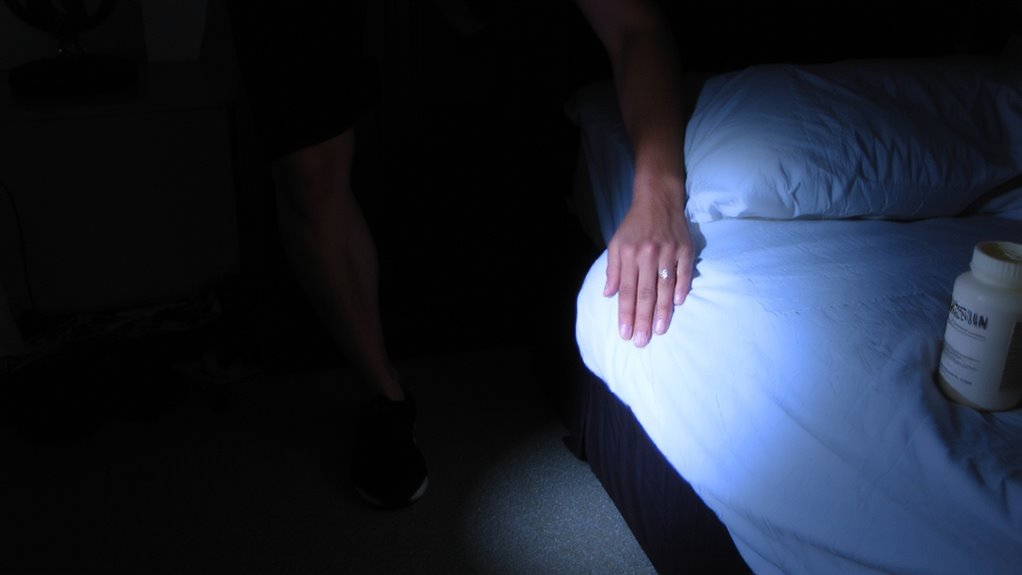
While you’re pushing through intense training sessions and chasing recovery, your body’s magnesium stores-especially in the form of magnesium glycinate-can quietly deplete overnight, leaving you vulnerable to muscle cramps when you need rest the most. Magnesium depletion accelerates due to prolonged physical stress, sweat loss, and increased metabolic demand, all common in high-performance athletes. Even during sleep, your nervous system remains active, managing muscle repair and regulation-a process that counts as nocturnal exertion. This unseen activity further drains magnesium, essential for neuromuscular control. Standard recovery gear like compression wear or foam rollers won’t address this biochemical gap. Without targeted replenishment, especially with a highly bioavailable form like magnesium glycinate, nighttime cramping becomes more likely. Athletes relying solely on physical recovery tools may overlook this internal deficit, undermining their rest and adaptation. Optimizing recovery means considering both gear and nutrition-particularly magnesium-to support true physiological balance.
How Magnesium Glycinate Prevents Nighttime Cramps

You already know your body keeps working hard even after you’ve stopped training-repairing muscles, balancing electrolytes, and managing nerve signals while you sleep. Magnesium glycinate helps by supporting smooth muscle relaxation and steady nerve function, both essential for preventing nighttime cramps. The glycinate form is especially effective because it’s well absorbed and gentle on the stomach. It calms overactive nerve signals that can trigger involuntary contractions, reducing the likelihood of sudden cramps. Magnesium acts as a natural calcium blocker in muscle cells, which helps muscles stay relaxed instead of tensing up. For athletes, this means fewer disruptions during recovery. Unlike other forms, magnesium glycinate doesn’t cause digestive upset, making it ideal for consistent use. When muscle relaxation and nerve function are balanced, your recovery process stays uninterrupted-leading to better sleep and performance over time.
When and How Much to Take for Night Cramps

Why do some athletes still wake up with cramps despite training smart and eating well? It often comes down to dosage timing and consistency. Your body needs magnesium available when it’s most vulnerable-during sleep. Taking magnesium glycinate too early or too late can reduce its impact. For ideal intake, aim for 200–400 mg about 30–60 minutes before bed. This window supports muscle relaxation and improves sleep quality.
Here’s a simple guide:
| Body Weight | Ideal Intake (mg) | Dosage Timing |
|---|---|---|
| < 150 lbs | 200 | 60 min before bed |
| 150–180 lbs | 300 | 45 min before bed |
| 181–220 lbs | 350 | 30 min before bed |
| > 220 lbs | 400 | 45 min before bed |
| Athlete with frequent cramps | 400 | 30–60 min before bed |
Why Glycinate Beats Other Magnesium Forms
Getting the timing and dose right matters, but so does choosing the right form of magnesium-because not all supplements deliver the same results. You’re better off with magnesium glycinate, thanks to its bioavailability superiority and stellar absorption efficiency. Unlike oxide or citrate forms, glycinate binds magnesium to glycine, an amino acid that enhances uptake and reduces gastrointestinal irritation. This means more elemental magnesium reaches your muscles when you need it most-overnight. Other forms may pass through your system too quickly or cause discomfort, undermining recovery. Glycinate’s chelated structure supports consistent serum levels, promoting neuromuscular regulation without laxative effects. For athletes focused on fitness recovery, that’s a game-changer. It’s not just about taking magnesium-it’s about taking the right kind. With glycinate, you get targeted support aligned with your body’s physiology, making it the top-tier choice for nighttime cramp prevention.
Athletes Report Fewer Cramps With Magnesium Glycinate
Nighttime cramps can derail even the most disciplined training regimen, but athletes consistently report fewer episodes when using magnesium glycinate. You’ve likely noticed a drop in cramp frequency within just a few weeks of regular supplementation. This form of magnesium doesn’t just support muscle function-it also promotes relaxation, which enhances sleep quality. Better sleep means more effective recovery, letting you train harder with less disruption. Studies and athlete testimonials align: users experience fewer involuntary contractions, especially during overnight rest. Because magnesium glycinate is gentle on the stomach and highly bioavailable, you’re more likely to stick with it and see consistent results. While fitness recovery gear like compression sleeves and foam rollers helps physically, addressing internal imbalances is equally critical. Magnesium glycinate fills that role well, offering a science-backed edge. It’s not a miracle fix, but it’s a reliable, measurable upgrade to your recovery protocol-simple, effective, and increasingly essential in athletic circles.
On a final note
You’ll find magnesium glycinate effective for nighttime cramp relief, especially if you’re an athlete under physical stress. Its high bioavailability and gentle digestion make it superior to oxide or citrate forms. Taken 30–60 minutes before bed, 200–400 mg supports muscle relaxation and recovery. Users report fewer nocturnal cramps, likely due to glycinate’s dual role in magnesium replenishment and nervous system regulation. For recovery-focused regimens, it’s a reliable, well-tolerated supplement that complements proper hydration and electrolyte balance.