Progressive Eccentric Lunges for Athletes With History of Patellofemoral Pain
You should do eccentric lunges to rebuild patellofemoral control, focusing on a slow 3–4 second descent to boost quad and glute engagement. Keep your knee aligned over the second toe to avoid valgus collapse, using a mirror for feedback. Progress only when pain-free, increasing load by 5–10% or depth gradually-not both at once. Proper footwear and a non-slip surface help maintain stability. Pair with hip and quad work for balanced support, and you’ll find out how to optimize the full routine step by step.
Notable Insights
- Perform eccentric lunges with a 3–4 second descent to enhance quad and glute activation while minimizing patellofemoral stress.
- Maintain knee alignment over the second toe to prevent valgus collapse and reduce joint loading.
- Use mirrors or video feedback to correct form and ensure consistent, safe movement patterns.
- Progress by increasing time under tension before adding load or depth to respect tissue tolerance.
- Advance load by 5–10% only after pain-free execution, avoiding simultaneous increases in depth and weight.
Do Eccentric Lunges for Patellofemoral Pain
Why do so many athletes with patellofemoral pain still struggle despite consistent rehab? You’re likely missing targeted eccentric control work. Standard rehab often skips the slow, controlled loading your knee needs to adapt. Eccentric lunges challenge the quads and glutes while decelerating movement, boosting muscle activation exactly where it counts. This isn’t just strength-it’s neuromuscular retraining. You’re teaching your body to absorb force efficiently, reducing strain on the kneecap. Studies show improved pain and function when eccentric exercises are prioritized over concentric-only moves. It’s not about grinding through pain; it’s about precision. When performed correctly, eccentric lunges build resilience in the patellofemoral joint. They bridge the gap between basic therapy and sport-specific demand. For athletes returning to cutting, jumping, or sprinting, this phase is non-negotiable. You need that controlled descent to prepare for real-world impact. Eccentric lunges aren’t flashy gear-they’re functional training with measurable payoff.
Perform the Eccentric Lunge Safely
You’ve likely already started incorporating eccentric lunges to address patellofemoral pain, recognizing their value in building controlled strength and joint resilience. To perform them safely, focus on lunge speed-slowing the descent phase to 3–4 seconds enhances muscle engagement and reduces compressive forces on the kneecap. This tempo improves neuromuscular control, essential for athletes retraining movement patterns. Equally critical is knee alignment: your knee should track in line with your second toe, avoiding valgus collapse. Misalignment increases patellofemoral stress and undermines rehab progress. Use a mirror or video feedback to monitor form consistently. Proper footwear with balanced cushioning and lateral support can aid stability during the lunge, reducing slip risk and enhancing proprioception. A non-slip surface further safeguards control. These small safeguards amplify training effectiveness while protecting joint health throughout the eccentric loading phase. Consistency with precision beats intensity here.
Fix These Common Form Mistakes
While you’re building strength and control with eccentric lunges, it’s easy to overlook subtle form breakdowns that can undermine your progress and increase injury risk. A common issue is poor knee alignment-your knee should track over your second toe, not cave inward or flare outward during the descent. Letting it collapse medially adds stress to the patellofemoral joint, especially under load. Equally important is foot positioning: your front foot should be flat, with the heel and forefoot grounded, promoting stability and even force distribution. If your foot rolls or your toes point excessively outward, control diminishes and compensation begins. You’ll notice imbalances faster when recording your form or using a mirror. Correcting these errors isn’t just about technique; it’s about reinforcing neuromuscular control. Proper knee alignment and consistent foot positioning maximize gains while safeguarding joint health.
Progress Without Knee Flare-Ups
Maintaining proper form during eccentric lunges sets the foundation, but even with clean technique, pushing progression too quickly can spark knee discomfort. You need to respect tissue tolerance-especially with a history of patellofemoral pain. Prioritize knee alignment throughout the movement; guarantee your kneecap tracks over your second toe without caving inward. That helps distribute load evenly and protects joint surfaces. Muscle balance around the hip and knee is just as vital-weak glutes or tight quads can shift stress back to the patella. Gradually increasing time under tension before altering depth or load allows your body to adapt without flare-ups. Monitor for swelling or persistent tenderness after sessions-it’s a sign you’ve outpaced recovery. Consistency with control beats aggressive advancement every time. Let joint feedback guide your pace, not ego. Using well-designed knee sleeves can provide additional support and help maintain joint stability during loaded movements.
Know When to Add Weight or Depth
Once you’ve built consistent control through several sessions without discomfort, it’s time to contemplate progressing your lunges-either by increasing depth or adding external load, but not both at once. For load progression, start with 5–10% increments using a vest or dumbbells, ensuring form stays clean and pain-free. Sudden jumps in weight can overload the patellofemoral joint, so gradual addition supports tendon adaptation. When focusing on range optimization, deepen the lunge incrementally only if you maintain neutral pelvic alignment and heel contact. Full range isn’t necessary if control declines-quality trumps depth. Monitor knee drift and trunk sway closely; these often worsen with aggressive progression. Prioritize symmetry and tempo, especially during the eccentric phase. If symptoms return, scale back immediately-regression is part of smart training. Use what feels stable, not heroic.
Combine With Hip and Quad Exercises
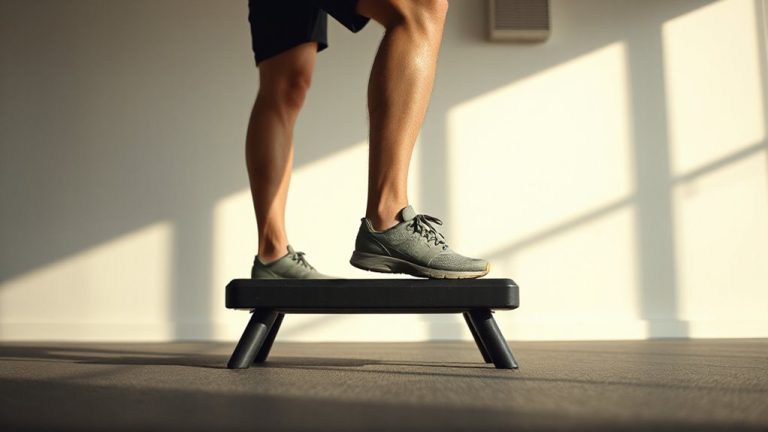
Since lunges already engage your quads and hip flexors, pairing them with complementary lower-body movements can amplify strength gains and movement efficiency-especially when you’re aiming to build resilient, athletic legs. Adding exercises like clamshells or banded walks boosts hip activation, which supports better knee alignment during lunges and reduces strain on the patellofemoral joint. You’ll also want to include movements such as wall sits or step-ups to enhance quad engagement without excessive joint load. This combination improves muscle balance, promotes joint stability, and supports smoother eccentric control. When performed in a structured sequence, these exercises condition your neuromuscular system for more efficient force distribution. Using fitness gear like resistance bands or elevation pads can refine technique, but consistency and proper form matter more than equipment. Progressive overload works best when hip activation and quad engagement are prioritized equally, ensuring sustainable progress and injury resilience.
On a final note
You’ve seen how progressive eccentric lunges can help athletes with patellofemoral pain build strength without aggravating the knee. When performed correctly, they enhance quad and hip control, improving load tolerance. Pairing them with proper recovery and reliable training gear-like supportive footwear and soft-tissue tools-boosts long-term results. But consistency and form matter more than equipment. Progress slowly, monitor symptoms, and integrate complementary exercises to maintain gains and reduce re-injury risk effectively.