Lumbar Mobility Drills With Quadruped Spinal Arching
You build lumbar mobility and spinal control with quadruped arching like the cat-cow stretch, a drill that enhances joint articulation and reduces stiffness. It activates core stabilizers and trains your spine to move through flexion and extension with precision. Ideal for morning or pre-workout routines, it integrates breath with motion for peak coordination. Avoid rushing or misaligning your spine to maximize benefits-proper form releases deeper neuromuscular engagement and safer movement patterns you can refine further.
Notable Insights
- Perform quadruped spinal arching with controlled, segmental movement to enhance lumbar mobility and spinal awareness.
- Coordinate inhalation with cow phase (spinal extension) and exhalation with cat phase (spinal flexion) for optimal neuromuscular engagement.
- Use a neutral starting position on hands and knees, ensuring wrists align under shoulders and knees under hips.
- Integrate lumbar mobility drills into morning routines or warm-ups to reduce stiffness and prepare the spine for movement.
- Modify intensity by reducing range of motion or cushioning knees, and avoid rushing to maintain proper articulation and alignment.
What Is the Cat-Cow Stretch (And Why It Works)?
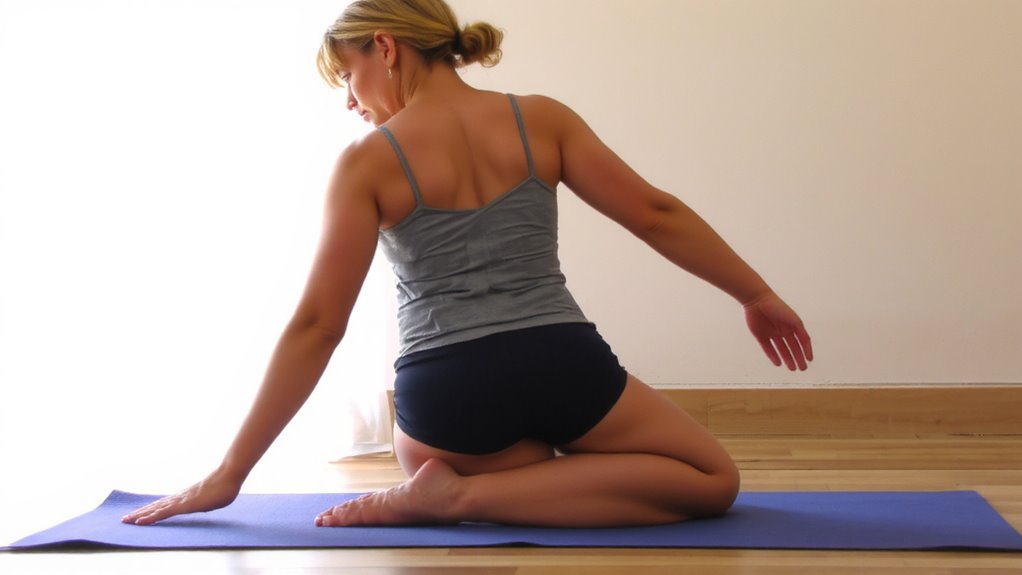
Why do so many fitness routines start with the cat-cow stretch? Because it builds spinal awareness and primes your body for movement. When you move between the arched (cat) and dipped (cow) positions on all fours, you’re not just warming up-you’re training your spine to articulate through each joint deliberately. This controlled joint articulation improves coordination and helps reduce stiffness, especially if you’ve been sitting all day. You’re also teaching your body to differentiate between spinal extension and flexion, which supports safer, more effective movement later in your workout. Unlike passive recovery tools or foam rollers, cat-cow actively engages your nervous system and core stabilizers. It doesn’t require gear, but consistent form matters. Over time, this drill enhances mobility, especially when performed mindfully. It’s simple, yes-but its value lies in precision, not complexity. That’s why it works.
Why Lumbar Mobility Improves Daily Movement
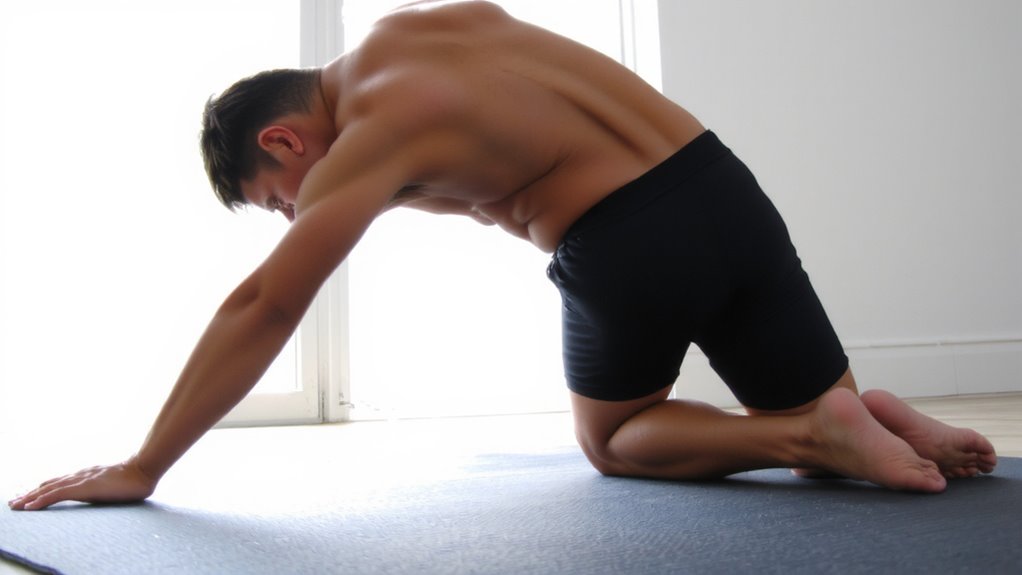
When you move with stiff lumbar joints, everyday actions-from tying your shoes to lifting a grocery bag-require compensation that stresses other parts of your body, especially your hips and lower back. Improving lumbar mobility lets your spine move through its full range, reducing strain and lowering injury risk. Greater flexibility in this region supports better posture alignment, helping you stand and sit taller with less effort. It also enhances core stability, as mobile joints allow muscles to fire more efficiently during movement. You’ll notice smoother shifts between motions, whether bending, twisting, or reaching. Over time, this translates to more fluid, pain-free function in daily life. Unlike rigid supports or recovery gear that limit motion, functional mobility builds resilience from within. It’s not just about flexibility-it’s about control, balance, and how well your body adapts to real-world demands.
When to Do Spinal Arching: Routine & Timing
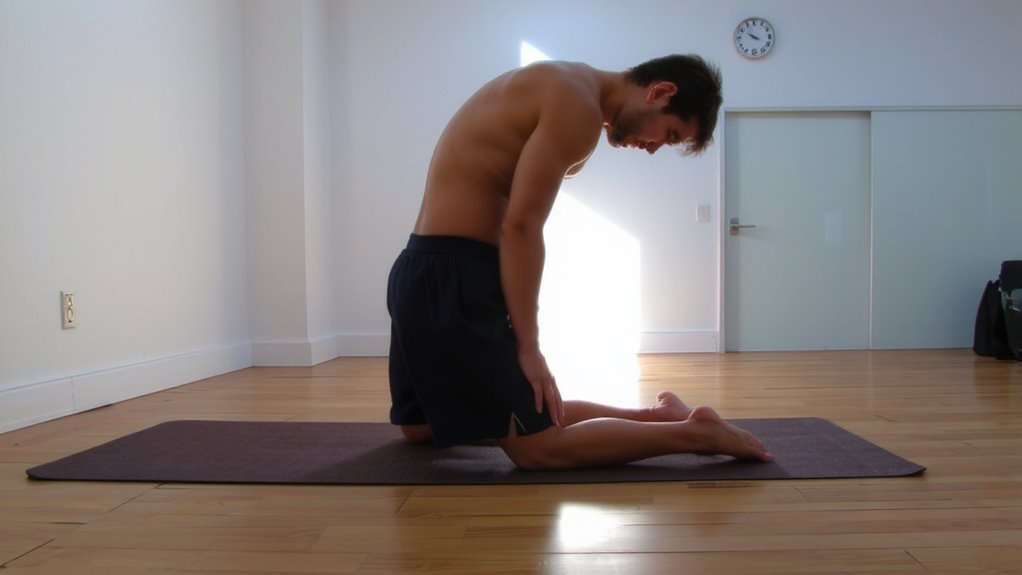
How often should you incorporate spinal arching into your routine? For most people, performing this drill daily-especially in the morning or before physical activity-supports effective routine integration and prepares the spine for movement. Ideal timing often aligns with moments when your body is stiff, such as after prolonged sitting or upon waking. Doing spinal arching as part of a dynamic warm-up enhances blood flow and joint lubrication, priming the lumbar region for safer loading. If you’re using fitness recovery tools like foam rollers or massage balls, consider spinal arching afterward to reintroduce gentle motion. While consistency matters, avoid overdoing it; 5–10 slow, controlled reps usually suffice. Listen to your body-routine integration shouldn’t lead to fatigue. Used strategically, this mobility drill supports long-term spinal health without interfering with strength or recovery protocols. For enhanced flexibility gains, pairing this drill with dedicated stretching equipment can improve overall mobility outcomes.
How to Perform the Cat-Cow Safely
A well-executed cat-cow sequence hinges on proper form and mindful movement, especially since it’s often used to mobilize the lumbar spine in both clinical and fitness settings. Start on all fours with wrists under shoulders and knees under hips. Inhale as you drop your belly, lifting your gaze and tailbone-this is the cow phase-ensuring your back extends without overarching. Exhale as you round your spine toward the ceiling, tucking your chin and pelvis-the cat phase-engaging your core fully. Your movements should be smooth, not jerky, emphasizing joint isolation to target the lumbar vertebrae specifically. Breathing coordination is essential; it enhances spinal rhythm and reduces compensatory motion. Move segmentally, vertebra by vertebra, to maximize mobility and minimize strain. Avoid collapsing into the shoulders or flaring ribs excessively. Consistent practice with precision improves neuromuscular control, making this drill a reliable tool for safe lumbar articulation.
Modifications for All Flexibility Levels
You can adapt the cat-cow drill to suit your current mobility level without losing its effectiveness for lumbar articulation. If you’re stiff or new to movement work, beginner modifications-like reducing the range of motion or placing a cushion under your knees-help maintain proper form while protecting joints. These adjustments make the movement accessible without compromising spinal awareness. For those with greater control and flexibility, advanced variations include slowing the tempo to increase time under tension or integrating thoracic extension cues to enhance segmental mobility. Some performers also add resisted bands across the upper back to challenge postural muscles further. While fitness gear like yoga mats with alignment markers supports technique, it’s not essential. The drill’s value lies in consistent, mindful execution, not equipment. Tailoring intensity guarantees long-term benefits across all flexibility levels.
Cat-Cow Mistakes That Reduce Benefits
Why does a drill as simple as cat-cow sometimes fail to deliver expected gains in spinal mobility? Because common mistakes undermine its effectiveness. You might rush through the motion, neglecting proper spinal alignment, which reduces segmental movement and turns it into a sloppy rock rather than a controlled mobility drill. Without clear, intentional arching and rounding, you’re not engaging the right muscles or freeing stuck vertebrae. Another issue is poor breathing coordination-inhaling during extension and exhaling during flexion isn’t just poetic; it enhances neuromuscular control and oxygen flow. Holding your breath or reversing the pattern limits core activation and decreases mobility benefits. In the end, letting your shoulders collapse or hiking your hips throws off alignment, placing strain on joints instead of mobilizing the spine. Fix these, and cat-cow becomes a precise tool, not just filler.
On a final note
You’ve likely found the cat-cow stretch effective because it gently enhances lumbar mobility, aiding everyday movement and recovery. When performed correctly, this drill supports spinal health without straining joints. Pairing it with quality fitness gear-like a supportive mat-improves comfort and alignment. Consistency matters more than intensity, so integrate it daily. Avoid common form errors, and consider modifications to match your flexibility, ensuring lasting benefits and reduced stiffness over time.