Using Low-Impact Cycling as a Tool to Maintain Aerobic Base While Facilitating Mental Detachment From Competition Stress
You’re using low-impact cycling to maintain your aerobic base while stepping back from competition pressure. Easy rides in Zone 1 preserve cardiovascular fitness, boost mitochondrial efficiency, and lower cortisol without adding strain. Steady pedaling and fresh air reduce mental fatigue, helping you regain focus and emotional balance. By prioritizing rhythm over results, you support recovery while staying active. It’s effective, sustainable, and primes you for a smarter return to intensity-there’s more to optimizing this balance.
Notable Insights
- Low-impact cycling maintains aerobic fitness through steady, Zone 1 efforts that preserve cardiovascular adaptations without added stress.
- Rhythmic, mindful riding promotes mental detachment by shifting focus from performance metrics to breath and movement awareness.
- Regular easy rides sustain mitochondrial efficiency and oxygen delivery while minimizing physical and psychological strain.
- Exposure to nature during scenic, low-intensity rides reduces cortisol levels and supports emotional recovery from competitive pressure.
- Active recovery rides enhance blood flow to muscles, aiding physical restoration and creating mental space away from training goals.
How Low-Impact Cycling Prevents Burnout
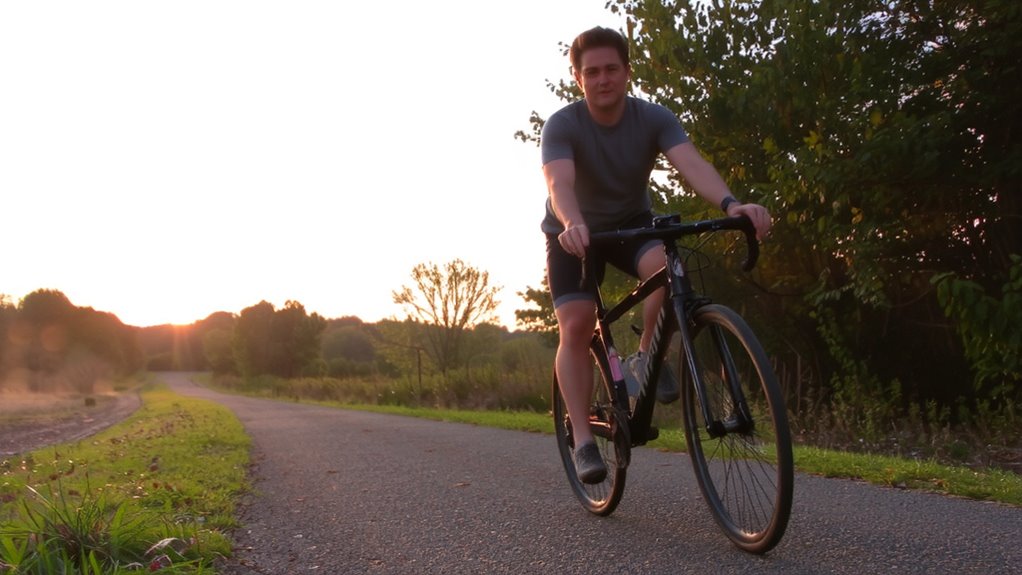
Ever wonder why so many people turn to cycling when they’re feeling overwhelmed? Low-impact cycling offers a reliable path to mental clarity and emotional balance, especially when burnout threatens. Unlike high-intensity training, easy spinning reduces physical stress while keeping your body in motion-ideal for recovery without stagnation. You maintain aerobic benefits subtly, but more importantly, you give your mind space to reset. The rhythmic pedaling, steady breath, and exposure to open air regulate your nervous system, easing cognitive fatigue. Research shows such movement lowers cortisol, helping restore emotional balance. When you’re using your bike not to train, but to decompress, you shift focus from output to presence. It’s not about power meters or pace; it’s about consistency and mental detachment. This deliberate ease-backed by ergonomic saddles, breathable fabrics, and simple route planning-makes cycling a sustainable shield against mental exhaustion.
Why Easy Rides Maintain Aerobic Fitness

While high-intensity efforts often dominate fitness conversations, it’s the easy rides that quietly preserve your aerobic base without compounding fatigue. You’re still stimulating cardiovascular adaptation, just at a sustainable pace. These low-stress sessions enhance aerobic efficiency by improving oxygen delivery and mitochondrial function over time. Your heart, lungs, and capillaries adapt gradually, building resilience without the wear and tear of hard intervals. Unlike maximal efforts, easy cycling keeps cortisol in check while reinforcing endurance pathways. Recovery isn’t passive-it’s an active process where your body consolidates gains. Low-impact rides on quality fitness gear, like well-maintained bikes with ergonomic fit, make consistency easier. You’ll maintain steady cadence and effort with less joint strain, supporting longer adherence. The result? A stable aerobic foundation that doesn’t sacrifice mental well-being. It’s not about pushing harder-it’s about riding smart, staying steady, and letting physiology do its work.
Burnout Signs That Demand a Break

A telltale shift in your performance and mood can signal the onset of overtraining, and ignoring these cues risks more than just stalled progress-it can unravel weeks of consistent effort. Emotional exhaustion and loss of motivation aren’t just mental hurdles; they’re physiological red flags. When your enthusiasm fades and every ride feels like a chore, it’s time to step back. These symptoms often precede injury and prolonged performance dips. Consider these common indicators:
| Symptom | Performance Impact | Recovery Response |
|---|---|---|
| Persistent fatigue | Reduced power output | 3–5 days off |
| Irritability | Poor focus on workouts | Active recovery rides |
| Sleep disturbances | Slower tissue repair | Light activity + hydration |
| Loss of motivation | Missed training sessions | Mental reset break |
| Emotional exhaustion | Decreased enjoyment | Mindful cycling |
Recognizing these signs early preserves long-term fitness gains.
How to Ride for Recovery (Not Results)
Why do the quiet spins between hard efforts matter just as much as your interval sessions? Because recovery rides aren’t about output-they’re about restoration. You’re not chasing pace or power; you’re rebuilding. Focus on mindful pedaling: smooth, deliberate strokes that reinforce neuromuscular coordination without strain. Keep intensity low-aim for Zone 1, where your heart rate stays at 60–65% of max. This stimulates blood flow, clears metabolic residue, and supports aerobic base without adding fatigue. Choose scenic routes to disengage mentally; natural surroundings reduce cortisol and enhance psychological recovery. A simple bike with comfortable geometry and wide tires improves ride quality on rough paths, making it easier to stay relaxed. Skip the data obsession-leave the stopwatch off. These rides succeed not by metrics, but by how refreshed you feel afterward. Recovery isn’t passive-it’s strategic regeneration done right. For beginners, starting with a best beginner exercise bike can make establishing this recovery habit more accessible and comfortable.
Use Daily Rides as Active Recovery
You’ve already seen how intentional, low-intensity spins support physical and mental restoration between hard workouts-now consider making those easy rides a daily habit rather than just a recovery add-on. Daily low-impact cycling enhances circulation, reduces muscle stiffness, and sustains aerobic conditioning without taxing your system. It’s also a perfect chance for recreational exploration and scenic relaxation-riding park trails or quiet backroads with no pace pressure. The right recovery bike makes this sustainable: lightweight frames, upright geometry, and smooth-rolling tires reduce strain.
| Feature | Benefit | Example Use Case |
|---|---|---|
| Comfort saddle | Reduces soft tissue pressure | 45-min waterfront ride |
| Wide tires (32mm+) | Improves shock absorption | Rough urban paths |
| Internal gearing | Low maintenance, all-weather use | Daily commute |
| Upright position | Supports relaxed breathing | Scenic hillside trail |
These rides keep your legs fresh and mind clear-ideal for long-term balance.
Knowing When to Resume Intensity
How do you know when it’s safe to shift gears-both literally and metaphorically-after days of easy spinning? Listen to your body’s signals: consistent energy, improved sleep, and reduced muscle soreness suggest training readiness. If you’re still dragging or mentally fatigued, pushing intensity too soon risks burnout. Monitor your heart rate and perceived exertion during a few easy rides-steady, controlled responses indicate you’re prepared. Use performance pacing as a gauge: can you sustain moderate efforts without gasping or fading? That’s a sign your aerobic base is intact and your nervous system has recovered. Avoid jumping straight into high-intensity intervals; instead, ease into tempo rides. Quality bike components, like responsive drivetrains and accurate power meters, help maintain consistent pacing. Resume hard efforts only when both body and mind respond positively-rushing back undermines recovery gains and increases injury risk. Timing matters as much as effort.
On a final note
You’re giving your body what it needs: recovery with purpose. Low-impact cycling keeps your aerobic base strong while easing mental strain, especially when ridden at conversational effort. It’s not about watts or intervals-it’s consistency, joint-friendly motion, and blood flow. Paired with smart gear like moisture-wicking apparel and a well-maintained drivetrain, these rides enhance recovery. Over time, this approach boosts resilience, making return-to-intensity phases smoother, safer, and more effective.