Managing Training Load in Collegiate Tennis Players to Avoid Overuse Shoulder Injuries
You’re pushing your shoulder to the limit with every serve and overhead, and without smart load management, you’re risking rotator cuff damage. Track your stroke volume and intensity using wearables or RPE logs to catch overuse early. Pair that with shoulder-specific warm-ups-like band pull-aparts and scapular push-ups-to maintain joint stability. When data shows a spike in workload or you report tightness, scaling back is not a weakness-it’s smart training. Smart recovery protocols and precision-tuned prep keep you resilient all season, and there’s a proven strategy behind staying injury-free.
Notable Insights
- Correct stroke technique to prevent uneven shoulder stress and reduce repetitive strain during overhead motions.
- Prioritize rotator cuff strengthening and scapular stability to enhance joint support and avoid impingement.
- Implement dynamic warm-ups with band exercises to activate key shoulder muscles before training.
- Monitor daily training load using wearable sensors and session RPE to detect excessive shoulder stress.
- Adjust training volume based on soreness, fatigue, and objective data to prevent overuse injuries.
Why Collegiate Tennis Players Get Shoulder Injuries

Why do so many collegiate tennis players end up sidelined with shoulder injuries? You’re pushing your body daily, and when poor technique goes uncorrected, it places uneven stress on your shoulder joint. Repeating flawed strokes multiplies that strain over time, especially during serves and overheads. Combine that with inadequate rest, and your muscles never fully recover-tissue breakdown outpaces repair. You might think pushing through fatigue builds toughness, but without recovery windows, your shoulder’s resilience drops sharply. Recovery isn’t just about sleep; it’s active regeneration, and fitness gear like percussion massagers or compression sleeves can support it-but they’re not substitutes for proper mechanics or downtime. Coaching feedback and motion analysis help fix technique, while smart scheduling protects recovery time. Ultimately, managing training load means balancing intensity with restoration, so your body adapts, not breaks down. Incorporating targeted recovery tools like best massage guns can help reduce muscle tension and improve circulation between training sessions.
How Overuse Weakens the Rotator Cuff

You’re hitting the court hard, day after day, and each powerful serve and aggressive overhead taxes the small but essential muscles around your shoulder. Repetitive motion leads to muscle fatigue, reducing the rotator cuff’s ability to stabilize the joint during dynamic swings. When these muscles weaken, the humeral head presses upward, increasing pressure on the tendons beneath the acromion-a key factor in developing impingement syndrome. Over time, this compression causes inflammation, pain, and reduced performance. What starts as mild soreness can progress to chronic dysfunction if recovery isn’t prioritized. Collegiate athletes often push through discomfort, unknowingly accelerating tissue breakdown. Proper training load management helps prevent this decline, preserving rotator cuff integrity. Ignoring early signs of muscle fatigue risks long-term damage, especially in overhead sports like tennis where shoulder demands are exceptionally high.
Prevent Injuries With Shoulder-Specific Warm-Ups and Strength
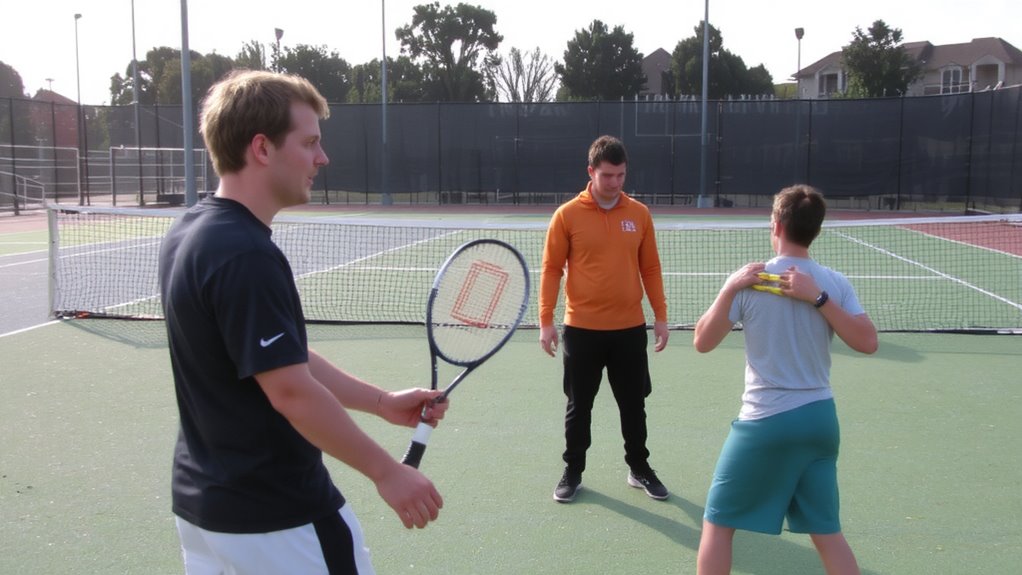
While it’s easy to jump straight into drills or match play, skipping a proper shoulder-specific warm-up increases your risk of injury, especially given the repetitive overhead demands in tennis. You need dynamic flexibility exercises-like arm circles and band pull-aparts-to activate the right muscles and prep your joints for motion. These movements prime your rotator cuff and enhance blood flow, reducing strain during explosive serves and overheads. Equally important is building scapular stability through controlled strengthening drills, such as scapular push-ups and rows. Strong, stable scapulae support ideal shoulder mechanics and distribute load more evenly across the joint. Without this foundation, even moderate training volume can lead to tissue breakdown. Incorporating resistance bands and light dumbbells into your routine improves neuromuscular control. When done consistently, these warm-ups don’t just feel routine-they become essential, proactive defense against shoulder wear.
Monitor Daily Load to Reduce Shoulder Stress
A solid warm-up and consistent strength work lay the groundwork, but they can’t fully protect your shoulders if your daily training load isn’t managed carefully. You need real-time load monitoring to catch excessive strain before injury strikes. Tracking metrics like stroke count, serving intensity, and practice duration gives you objective data to guide decisions. Stress tracking tools-like wearable sensors and session RPE logs-help identify patterns that might lead to overuse. Ignoring these signals increases your risk of rotator cuff issues and tendinopathy. Coaches who integrate daily load monitoring see fewer shoulder complaints and better long-term performance. It’s not about reducing work-it’s about working smarter. When you quantify stress, you adapt proactively. Equipment like accelerometer-based sleeves or smart garments can enhance accuracy, but even simple logs are effective if used consistently. Ultimately, daily awareness keeps you on the court, not in rehab.
Adjust Training Using Player Feedback and Data
How do you know when to push through a tough training block or scale back to prevent injury? You rely on consistent player feedback and objective data analysis. Athletes’ subjective reports-like soreness or fatigue levels-help identify early signs of shoulder strain. Pair that with workload metrics, such as stroke volume, velocity, and heart rate variability, and you get a clearer picture of functional readiness. This combination lets you adjust drills, volume, or intensity in real time. Ignoring feedback risks overreaching; disregarding data risks misjudgment. Smart programming blends both: when a player reports shoulder tightness and their load data shows a 25% spike in overhead motion, scaling back makes sense. Regular check-ins and wearable tech enhance precision, ensuring training matches recovery capacity. You’re not guessing-you’re responding. That’s how you maintain performance without compromising joint health.
Keep Shoulders Healthy All Season Long
Since shoulder health directly impacts serve velocity, stroke consistency, and overall match performance, maintaining it throughout the season isn’t optional-it’s a strategic necessity. You need consistent shoulder mobility work, not just on game days but as part of your daily warm-up and cool-down routines. Dynamic stretches and band exercises improve joint range, reducing strain during repetitive overhead motions. Pairing this with monitored training loads prevents overuse and speeds injury recovery if issues arise. Recovery isn’t passive-using fitness recovery tools like foam rollers and percussion guns helps maintain soft tissue quality, supporting joint stability. Smart gear, like compression sleeves with targeted support, can enhance circulation and proprioception. But effectiveness depends on proper use and integration into a planned regimen. Neglecting shoulder maintenance increases breakdown risk, disrupts training continuity, and slows return-to-play timelines. Stay proactive-you’ll perform better and stay on the court longer. Incorporating best recovery bands can further accelerate muscle relief and support shoulder recovery after intense training sessions.
On a final note
You’ll reduce shoulder injuries by managing training load smartly. Monitoring daily stress, using player feedback, and tracking data help balance performance and recovery. Shoulder-specific warm-ups and strength work support rotator cuff resilience, while consistent recovery practices enhance adaptation. Quality fitness gear-like compression sleeves or rehab bands-adds practical support when used correctly. Combined, these strategies keep your shoulders healthy all season, letting you train harder, smarter, and with less risk.