The Complete Guide to Foam Rolling the IT Band for Runners in Active Recovery
You’re better off foam rolling your glutes and quads than pressing directly on the IT band, since it’s dense fascia that won’t stretch or lengthen from pressure. Use a high-density roller 3–5 times weekly, spending 30–60 seconds per leg with slow, controlled passes. Avoid rolling over the knee or hip to prevent irritation. Pair this with dynamic stretches like leg swings for better recovery. There’s more to optimizing your routine than pressure alone.
Notable Insights
- The IT band is a dense fascial structure, not a muscle, that stabilizes the knee during running and can develop pain from overuse.
- Foam roll the IT band area slowly, using moderate pressure and pausing 20–30 seconds on tender spots for effective myofascial release.
- Avoid aggressive rolling or prolonged pressure on the knee and hip to prevent irritation of nerves and bursae.
- Perform foam rolling 3–5 times weekly, 30–60 seconds per leg, especially after runs, for consistent recovery benefits.
- Combine foam rolling with dynamic stretches and glute/quad work, as these support IT band health more than direct rolling alone.
What Is the IT Band? (And Why Runners Need to Care)
Think of the IT band as your leg’s unsung stabilizer-a dense, fibrous strip running from your hip to just below your knee along the outer thigh. This anatomy overview reveals it’s not a muscle but a collagen-rich fascia designed to support movement efficiency. For runners, it bears repetitive stress with every stride, helping stabilize your knee and transmit forces from glutes and hips. But because it’s relatively inflexible, tightness or overuse can trigger common injuries like IT band syndrome, marked by sharp lateral knee pain. You’re especially at risk if you increase mileage too quickly or have weak hip abductors. While foam rolling is widely used in fitness recovery, it won’t “lengthen” the IT band-research suggests it’s too dense for that. Still, the right gear, like a firm cylindrical roller, may help manage discomfort by affecting surrounding tissue. Prevention, though, beats treatment: strength, form, and recovery balance matters most.
How to Foam Roll Your IT Band: Step-by-Step
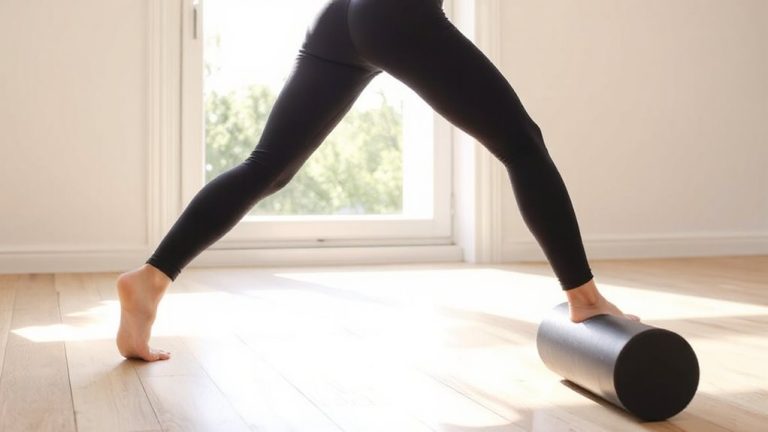
While the IT band itself resists stretching and can’t be markedly lengthened through rolling, using a foam roller may still ease discomfort by targeting the muscles surrounding it-particularly the tensor fasciae latae and gluteal fibers. Position yourself on your side, support your weight with your forearm and opposite leg, and place the roller just below your hip. Slowly roll down toward the knee, focusing on tender areas. Pause for 20–30 seconds where you feel tension, allowing the pressure to create myofascial release. A high-density foam roller delivers effective deep tissue work without collapsing under body weight, making it ideal for regular recovery. While harder rollers increase intensity, they may overwhelm sensitive users. Consistency matters more than force-daily rolling with moderate pressure often yields better long-term results than aggressive, infrequent sessions. This routine supports mobility and may reduce irritation linked to repetitive strain. For optimal results, choose a high-density foam roller based on your experience level and recovery needs.
Avoid These Foam Rolling Mistakes
A common mistake people make when foam rolling the IT band is applying too much pressure too quickly, which can trigger muscle guarding and increase soreness instead of reducing it. Using improper pressure-especially with high-density foam rollers or massage guns-can irritate the tissue rather than soothe it. You don’t need to tolerate intense pain; moderate pressure with consistent movement works better. Another issue is incorrect duration: rolling for too long in one spot, say over 30 seconds, may cause inflammation instead of relief. Aim for 30 to 60 seconds per leg, focusing on rhythmic, controlled motions. Avoid targeting the IT band directly at the knee or hip, where nerves and bursae are sensitive. Instead, work the surrounding muscles like the glutes and quads. Proper form and gear choice matter-opt for a medium-density roller for balanced effectiveness and comfort. For deeper muscle relief without excessive strain, consider using a best massage gun with adjustable speed settings and interchangeable heads.
How Often to Foam Roll After Running
You’ve avoided the common pitfalls of foam rolling-now let’s talk about fitting it into your routine effectively. For maximum recovery, aim to foam roll your IT band 3–5 times per week, especially after runs. The ideal frequency duration is 30–60 seconds per leg, no more-excessive rolling can irritate the tissue. Consistency matters more than intensity; a brief daily session beats marathon weekly efforts. Pair your rolling with a structured routine that includes rest days to allow your body to adapt. High-density foam rollers deliver better feedback and durability, supporting long-term use. While frequency and duration are adjustable, skipping sessions undermines gains. Think of foam rolling as maintenance, not a quick fix. Over time, consistent use reduces tightness and improves mobility. Stick with it, and you’ll notice smoother runs and faster recovery. Your routine doesn’t need to be long-just deliberate and steady.
Stretches That Boost IT Band Recovery
Since foam rolling alone isn’t always enough to resolve IT band tightness, incorporating targeted stretches can substantially enhance recovery by improving flexibility and reducing tension in the surrounding musculature. Dynamic stretches like leg swings, walking lunges, and hip circles help prepare the leg for movement, increasing blood flow and promoting muscle activation in the glutes, hips, and thighs-areas critical to IT band function. Unlike static holds, these movements mimic real running mechanics, making them more effective post-run. You’ll notice improved range of motion and less lateral knee pull when you consistently integrate these stretches. The synergy between foam rolling and dynamic stretching enhances neuromuscular engagement, supporting faster recovery and better movement patterns. While foam rollers address tissue density, dynamic stretches recalibrate how your muscles fire during motion. Using both methods maximizes recovery efficiency, especially when done within 30 minutes after running. Your gear should support mobility-not replace smart movement strategies.
When Foam Rolling Isn’t Enough
Why does your IT band still feel tight despite consistent foam rolling? Because foam rolling alone may not address deeper muscular restrictions or biomechanical imbalances. If tightness persists, it might be time to contemplate a deep tissue massage, which targets the underlying fascia and muscle layers more effectively than self-myofascial release. Chronic tension could also stem from glute weakness, poor hip alignment, or overtraining-issues a foam roller can’t correct. That’s where a physical therapy evaluation becomes essential. A licensed therapist can identify movement dysfunctions, prescribe corrective exercises, and guide recovery with hands-on techniques. While high-density foam rollers are useful tools, they’re not cure-alls. Relying solely on them risks masking symptoms instead of treating root causes. For runners in active recovery, combining professional care with proper gear maximizes long-term mobility and performance. A best back massagers choice can complement therapy by offering targeted relief between sessions.
On a final note
You’re better off skipping direct IT band foam rolling-it’s dense fascia, not muscle, so mashing it offers little benefit and often worsens irritation. Instead, focus on the TFL, glutes, and quads; these muscles actually respond to rolling and influence IT band tension. Pair smart myofascial release with targeted stretches and strength work for real recovery gains. Foam rollers vary, but firmer ones last longer and maintain texture. For long-term resilience, gear matters less than consistent, intelligent recovery habits.