A Targeted Routine for Hip Flexor Mobility After Prolonged Sitting
After prolonged sitting, test your hip flexor flexibility with a kneeling lunge-tightness or pelvic tilt signals restriction. Roll your hips and glutes for 60 seconds with a medium-firm foam roller to release fascial adhesions, then perform dynamic lunges, leg swings, and hip circles to activate mobility. Follow with glute bridges or banded walks to reactivate underused muscles and restore balance. Pair this routine with timed standing breaks and ergonomic seating for lasting alignment-there’s a smarter way to stay mobile, and it starts with how you move.
Notable Insights
- Perform a 60-second kneeling lunge test to assess hip flexor tightness and identify asymmetries.
- Roll hip flexors and glutes for one minute using a medium-firm foam roller to release tension.
- Do 10 dynamic lunges per leg to actively stretch hip flexors and engage the posterior chain.
- Activate glutes with bridges or banded walks to counteract sitting-induced muscle shutdown.
- Take standing breaks every 30–45 minutes and sit with proper alignment to prevent re-tightening.
Check Your Hip Flexor Flexibility in 60 Seconds
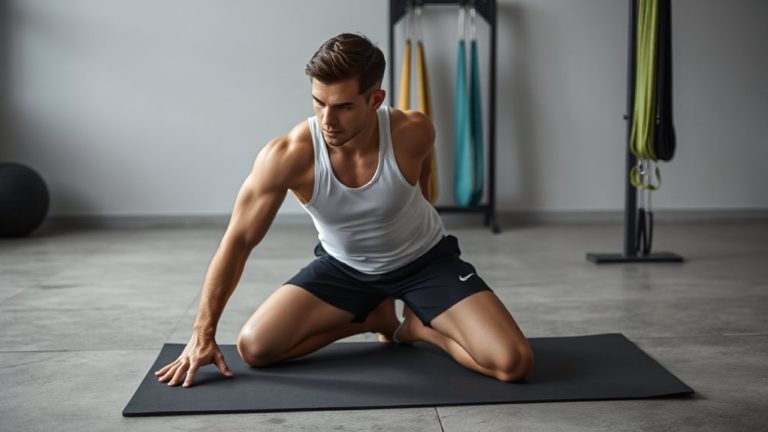
A quick 60-second assessment could reveal a key mobility gap you didn’t know you had-one that’s silently affecting your posture and movement efficiency. Start by kneeling on one knee, the other foot flat ahead, and gently shift your hips forward. If discomfort flares or your pelvis tilts excessively, you likely have tight hip flexors. This test targets the psoas and rectus femoris, both essential in hip anatomy. Poor muscle symmetry between sides often shows here-common in desk workers-and can lead to lower back strain. Evaluating both hips uncovers imbalances invisible during daily activity. Unlike basic foam rollers, dedicated recovery tools like hip hooks or mobilization bands help identify restriction points more precisely. These tools aren’t gimmicks; when used correctly, they enhance self-assessment accuracy. Checking flexibility regularly not only informs your training but improves long-term joint health. You don’t need fancy gear, but targeted tools support better feedback.
5-Minute Routine to Release Tight Hips
How often do you actually release tension in your hips, or do you just stretch and hope for the best? True mobility starts with releasing tight fascia, not just pulling on muscles. That’s where foam rolling comes in-it’s not just trendy, it’s effective when done correctly. Spend 60 seconds targeting your hip flexors and glutes with slow, controlled rolls to break up adhesions and improve tissue quality. Pair this with a dynamic warmup like leg swings or walking lunges to activate movement patterns and prep your hips for real function. Unlike passive stretching, these methods prime your body for activity and recovery. Foam rollers vary in density, but a medium-firm one offers the right balance for most people. When used consistently, this minute routine enhances circulation, reduces stiffness, and supports long-term joint health-especially after sitting all day. A high-quality foam roller recommendation can make a noticeable difference in effectiveness and comfort during your routine.
Fast Stretches to Loosen Tight Hip Flexors
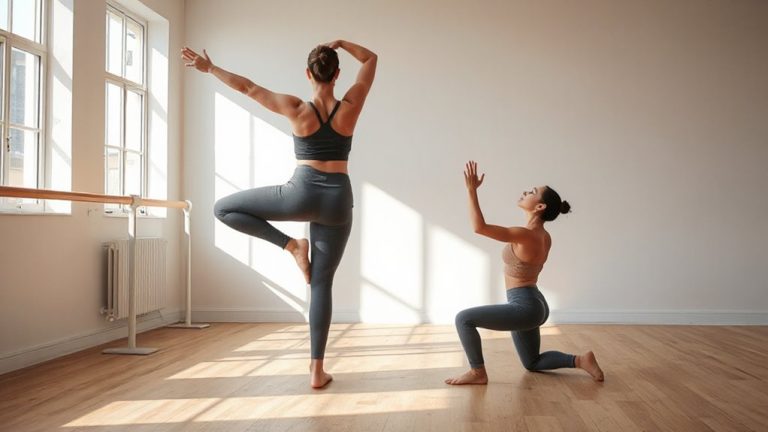
You’ve already rolled out the tension-now it’s time to lengthen what’s been released. Incorporate dynamic lunges and standing hip circles to actively stretch tight hip flexors. These movements improve range of motion and prepare the joints for functional activity. Dynamic lunges engage the posterior chain while stretching the anterior hip, promoting balanced mobility. Standing hip circles mobilize the joint capsule, releasing residual stiffness from sitting.
| Movement | Reps/Sets |
|---|---|
| Dynamic Lunges | 10 per leg |
| Standing Hip Circles | 15 per direction |
| Forward-Back Swings | 12 per leg |
| Lateral Leg Swings | 10 per side |
Perform each exercise with control-rushed form reduces effectiveness. These fast stretches deliver ideal results when done consistently, especially post-sitting. They require no fitness gear, making them practical for any environment. Their design supports sustainable recovery, fitting seamlessly into tight schedules without sacrificing performance.
Activate Your Glutes to Balance Hip Muscles
If you’re spending hours seated, your glutes are likely shutting down while your hip flexors tighten-creating an imbalance that undermines both posture and performance. Glute activation is essential to restore muscle balance and prevent compensatory movement patterns that can lead to strain. Simple exercises like glute bridges, clamshells, or banded lateral walks re-engage these underused muscles efficiently. When done consistently, they improve pelvic alignment and reduce anterior pelvic tilt often caused by tight hip flexors. This shift enhances functional movement, whether you’re walking, lifting, or running. Muscle balance isn’t just about symmetry-it’s about ensuring opposing muscle groups work harmoniously. Without proper glute activation, even the best mobility work on hip flexors falls short, since the neuromuscular system remains skewed. You’ll notice better control and stability once your glutes fire correctly, laying the foundation for safer, more effective movement throughout your day.
When to Do This Routine for Best Results
Timing your hip flexor mobility routine right can make a noticeable difference in how well your body responds, especially after consistently activating your glutes to counteract the effects of prolonged sitting. The ideal timing is either immediately after sitting for an extended period or as part of your post-workout cooldown, when muscles are warm and more receptive to stretching. Performing this routine in the morning can also prepare your hips for daily movement. For consistency tips, aim for daily practice-even five minutes helps. Pairing it with a habit like post-sitting breaks or after hydration reminders increases adherence. While fitness recovery tools like foam rollers may enhance results, the routine’s effectiveness relies more on regularity than gear. Stick with it, and you’ll likely notice improved hip extension and reduced stiffness. Consistency beats intensity here-daily attention yields better long-term mobility than occasional, longer sessions.
Prevent Hip Flexor Tightness When Sitting All Day
While seated work environments dominate modern life, combatting hip flexor tightness demands proactive strategies that go beyond occasional stretching. You need consistent attention to sitting posture and hip alignment throughout the day. Slouching or perching forward shortens hip flexors over time, reducing mobility and increasing strain. Position your hips at a 90-degree angle, feet flat, and back supported to maintain proper alignment. A lumbar-support cushion or ergonomic chair can help sustain this posture, but even premium gear won’t correct poor habits. You must actively reset your position every 30–45 minutes. Fitness recovery isn’t just post-work stretching-it’s about minimizing strain before it starts. Even effective recovery tools like foam rollers or massage guns can’t compensate for hours of misalignment. Stay mindful, sit tall, and let equipment support-not replace-your effort. Incorporating a best desk footrest can further promote optimal leg positioning and reduce lower body tension during long sitting periods.
Desk-Friendly Habits to Keep Hips Mobile
How often do you actually move when you’re stuck at your desk? Not enough, probably. Prolonged sitting tightens your hip flexors, but small, consistent habits can help. Start with ergonomic seating-adjust your chair so your hips sit slightly above your knees and your feet rest flat. This position reduces strain and encourages better alignment. Even with great setup, though, you need movement. Take standing breaks every 30 to 45 minutes; they’re essential. Stand, stretch, or walk briefly to reset muscle tension. These breaks boost circulation and maintain hip mobility. Pair them with simple desk-friendly moves like seated knee lifts or hip circles. Over time, these habits reduce stiffness and support recovery. They’re not flashy, but their cumulative effect outperforms most recovery gear. Consistency beats complexity when keeping hips mobile.
On a final note
You’ve likely felt the stiffness from long hours at your desk-tight hip flexors affect posture and movement. This routine helps restore mobility fast. Stretching and glute activation reduce strain, supporting overall joint health. Consistent use improves flexibility and balance. Pair it with quality recovery tools, like foam rollers or resistance bands, for better results. Over time, you’ll notice improved comfort and control. It’s practical, efficient, and scientifically sound-ideal for anyone serious about long-term fitness recovery and functional movement.