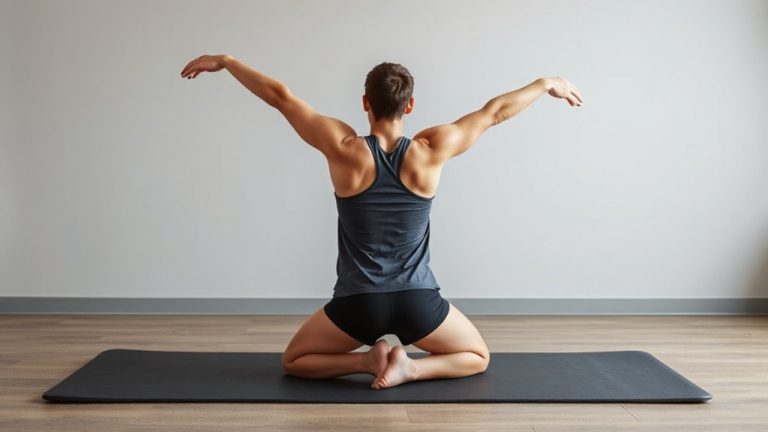
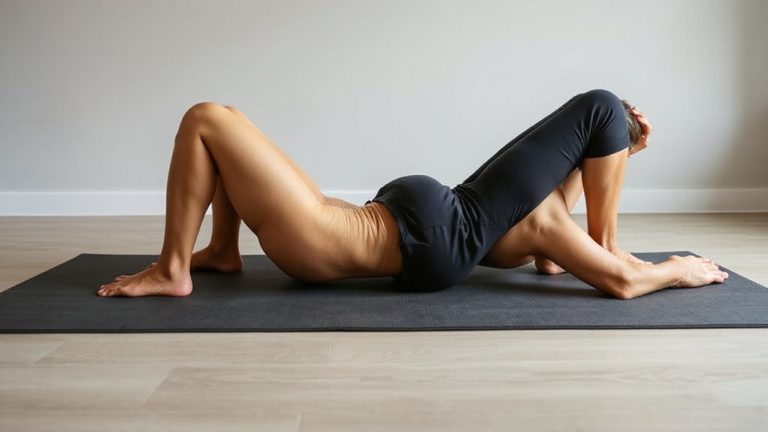
Supine Rocking With Arms Clasped Behind Thighs to Nurture SI Joint Comfort
You stabilize your lower back by lying on your mat, knees bent, clasping your arms behind your thighs-not shins-to protect your lumbar spine. Gently rocking side to side, you encourage natural pelvic motion, easing SI joint tension while syncing breath to movement. This rhythm resets alignment, boosts circulation, and calms nervous system activity. Used consistently, it complements recovery tools like foam rollers. There’s more to discover about optimizing this technique for daily relief.
Notable Insights
- Clasp hands behind thighs, not shins, to gently rock and reduce SI joint strain.
- Rock side to side with knees guiding motion to improve pelvic alignment and mobility.
- Maintain diaphragmatic breathing to enhance muscle relaxation and support joint comfort.
- Use small, controlled movements to avoid jerking and protect the lower back.
- Perform in morning or evening to relieve SI joint tension and support spinal health.
How Supine Rocking Relieves SI Joint Pressure
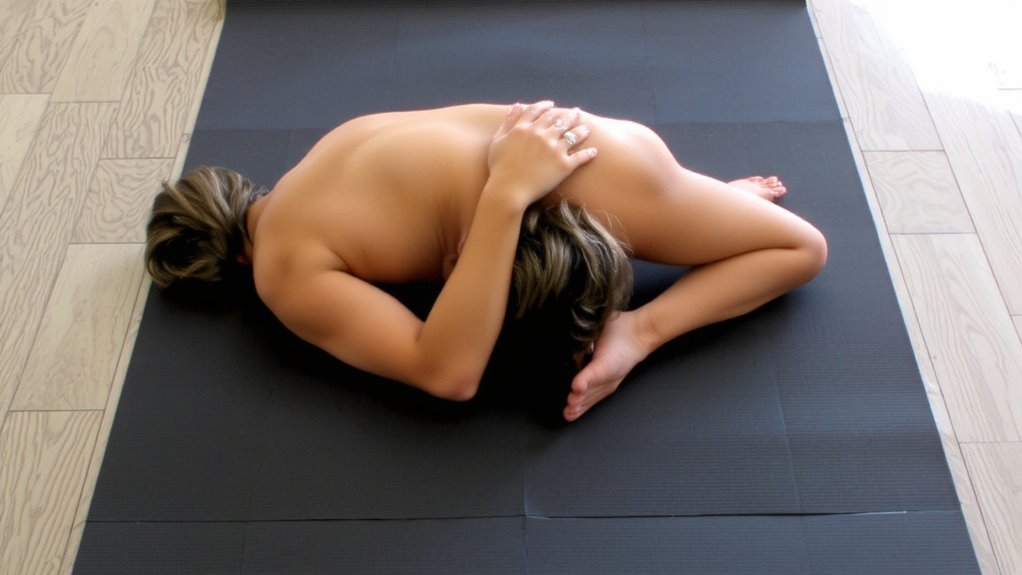
While your body is at rest, gentle movement can still make a big difference-especially when it comes to easing stress on the sacroiliac (SI) joint. Supine rocking helps restore natural spinal alignment by encouraging the pelvis and lower spine to move in a controlled, rhythmic motion. This subtle oscillation supports muscle relaxation, particularly in the glutes, hips, and lower back-areas that often tighten and contribute to SI joint discomfort. As you rock, tension dissipates, and joint mobility improves without strain. The movement’s simplicity makes it effective for fitness recovery, especially when used alongside supportive recovery gear like foam rollers or massage balls. Unlike high-effort stretches, supine rocking doesn’t require strength or flexibility, so it’s accessible whether you’re rehabbing or maintaining. It’s a practical addition to recovery routines, promoting both biomechanical balance and nervous system calm-key components in long-term joint health. For optimal results, pairing this movement with a high-density foam roller can enhance myofascial release and further support SI joint comfort.
How to Perform Supine Rocking Safely
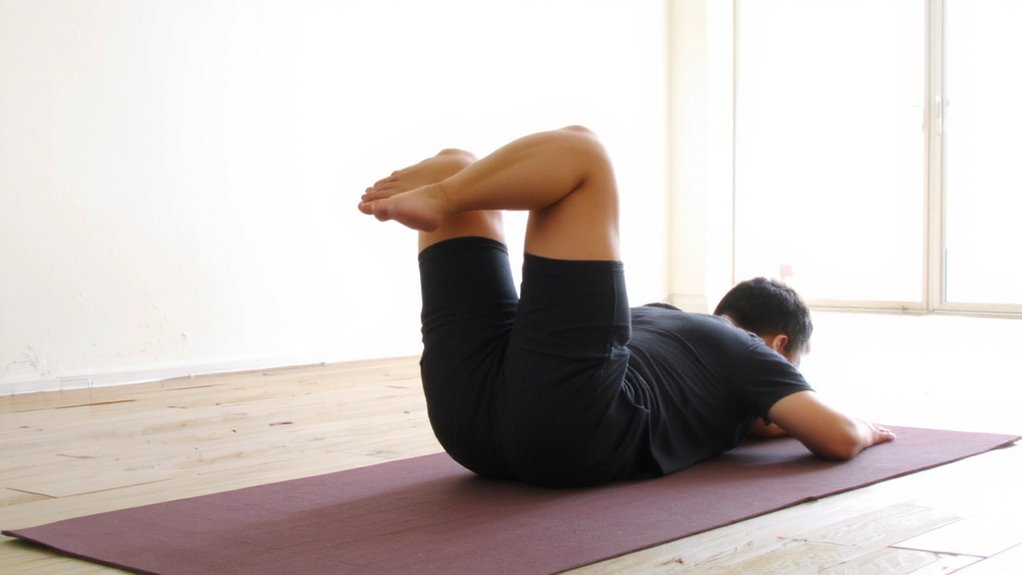
You’ve already seen how supine rocking eases pressure on the SI joint by encouraging gentle motion that restores alignment and relaxes tight muscles. To perform it safely, start by lying on your back with knees bent and feet flat. Clasp your hands behind your thighs, not your shins, to maintain proper alignment and reduce lumbar strain. Rock gently side to side in a rhythmic motion, letting your knees guide the movement. Keep your head and shoulders relaxed on the floor to avoid tension. Controlled breathing enhances effectiveness-inhale deeply through the nose, exhale slowly as you rock. This technique supports spinal mobility without overloading the joints. Using a firm, nonslip mat improves stability and comfort, making it a practical addition to fitness recovery routines. Done correctly, supine rocking integrates breath, movement, and alignment for sustainable SI joint relief.
Common Mistakes to Avoid
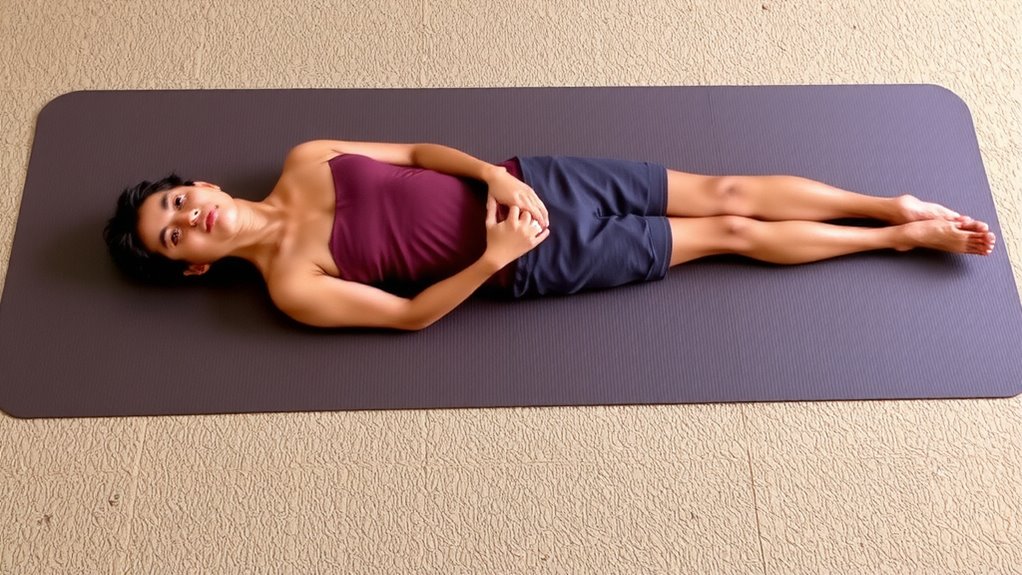
Though subtle in execution, supine rocking can lose effectiveness or even cause strain when performed with poor technique. You might unknowingly engage in improper breathing, holding your breath or panting lightly, which disrupts oxygen flow and reduces muscle relaxation-key for SI joint release. Instead, maintain steady, diaphragmatic breaths to support rhythmic movement. Another frequent error is relying on excessive momentum; forcefully rocking your body increases joint compression and defeats the stretch’s gentle purpose. You’re not trying to build inertia but to encourage subtle, controlled oscillations that soothe ligament tension. Avoid jerking motions or using your arms to yank your legs. Keep movements small and deliberate, letting your pelvis rock naturally. Proper form guarantees the exercise nurtures stability rather than provoking irritation. Mind these details, and the technique will serve its recovery-focused design effectively.
Best Times to Do the Stretch
When done at strategic points in your day, supine rocking can enhance its recovery benefits, especially since your sacroiliac joint responds well to gentle motion after periods of stagnation. Including it in your morning routine helps reset joint alignment after hours of stillness, easing stiffness and improving mobility for the day ahead. You’ll likely notice better movement patterns and reduced tension when you start the day this way. Doing the stretch as a bedtime practice also makes sense-it releases accumulated lower back and pelvic stress, promoting relaxation. The rhythmic motion supports nervous system downregulation, which aids sleep quality. While you don’t need special fitness gear, a firm mat improves comfort and effectiveness. Both timing strategies outperform sporadic use, with consistency amplifying joint stability and long-term comfort. For most, combining morning activation with evening release delivers best recovery outcomes, aligning movement with your body’s natural rhythms.
Combine With: Top SI Joint Stretches
While supine rocking lays a solid foundation for SI joint relief, pairing it with other targeted stretches can substantially enhance recovery by addressing multiple sources of tension and imbalance. You’ll benefit most when combining this movement with stretches like the supine figure-four, pelvic tilts, and seated piriformis stretch-each designed to reduce strain across the sacroiliac joint. Incorporating proper breathing techniques helps relax tight muscles and improves stretch depth, especially during sustained holds. Focus on slow, diaphragmatic breaths to support muscle engagement and joint stability throughout each stretch. These movements work best when performed in sequence, allowing controlled release of gluteal, hip, and lower back tension. Used together, they promote better alignment and neuromuscular coordination, improving both recovery and functional mobility. Consistency matters more than intensity-regular practice with mindful execution delivers measurable improvements in SI joint comfort and daily movement efficiency.
Ideal Candidates for This Stretch
You’re likely a good fit for supine rocking if you’re dealing with mild to moderate SI joint discomfort, especially when it’s tied to muscle tightness or postural imbalances. This gentle stretch helps release tension around the pelvis and can improve joint mobility over time. However, a medical consultation is essential if you have a history of spinal injuries or recent surgeries.
| Beneficial For | Not Recommended For |
|---|---|
| Tight hip flexors | Severe osteoporosis |
| Postural strain | Acute SI joint inflammation |
| Recovery-phase athletes | Known contraindicated conditions |
Avoid this move if contraindicated conditions like disc herniation or ligament instability are present. Always prioritize form and listen to your body. This stretch works best as part of a broader fitness recovery routine, especially when supported by appropriate recovery gear like supportive mats or pelvic stabilizers.
On a final note
You’ve likely found that supine rocking eases SI joint stress by gently mobilizing the pelvis. When done correctly, it supports alignment and recovery, especially when paired with proper gear like nonslip mats. It’s effective post-exercise or during prolonged sitting. Just avoid over-rocking or flaring the knees too wide. For many, this stretch offers subtle but meaningful relief, making it a practical addition to a responsible recovery routine.