Using a Foam Roller on the Peroneals to Address Ankle Instability
Your peroneals help stabilize your ankle by resisting inward rolling, and foam rolling keeps them responsive. Use a medium-density or textured roller to improve tissue quality and nerve signaling, rolling slowly from below the knee toward the ankle-avoid the fibula and joint. This boosts muscle efficiency and coordination. Skip common errors like rushing or over-pressuring. Pair rolling with stretching and strengthening for best results-your next step sharpens long-term ankle resilience.
Notable Insights
- Foam rolling the peroneals enhances tissue quality and supports ankle stability by improving muscle function.
- Target the outer calf below the knee, avoiding the fibula and ankle bone during rolling.
- Use slow, controlled movements to increase neuromuscular responsiveness and reduce adhesions.
- Pause on tender spots for 20–30 seconds to release tension and improve fascial glide.
- Progress from soft to firm rollers to gradually build tolerance and prevent muscle guarding.
Why the Peroneals Are Key to Stable Ankles
Stability starts with the right muscles doing the right job-and when it comes to your ankles, the peroneals play a starring role. These muscles, located along the outer calf and ankle, are vital for controlling foot alignment during movement. Understanding peroneal anatomy reveals two key players: peroneus longus and brevis, which run down the fibula and attach to the foot’s underside. Their primary muscle function? To evert the foot and resist excessive inward rolling-common in sprains. When weak or delayed in activation, they compromise joint integrity, increasing instability risk. Strong, responsive peroneals act like dynamic ankle braces, constantly adjusting to uneven terrain. You rely on them whether you’re walking on trails or cutting laterally in sports. Their role isn’t flashy, but it’s foundational. Prioritizing their performance isn’t just smart recovery-it’s essential prevention. Proper training and maintenance keep them functioning efficiently, supporting long-term mobility and resilience.
How Foam Rolling Improves Ankle Stability
While it might seem counterintuitive to roll out a muscle group for better joint support, foam rolling the peroneals can actually enhance ankle stability by improving tissue quality and neuromuscular responsiveness. You’re not just releasing tightness-you’re promoting fascial hydration, which helps maintain smooth muscle glide and joint coordination. Tight peroneals can restrict nerve gliding, irritating the superficial fibular nerve and dulling proprioception. By rolling consistently, you reduce adhesions and support clearer nerve signaling, leading to faster, more accurate muscle reactions when your ankle wobbles. This isn’t a quick fix, but a practical recovery strategy that complements strength work. Over time, better tissue resilience means your ankle can handle uneven terrain with less risk. Think of it as maintenance: like oiling a hinge, you’re ensuring everything moves efficiently. Used correctly, foam rolling becomes a reliable tool in your fitness recovery toolkit-functional, accessible, and backed by biomechanical principles. For best results, choose a roller with appropriate density and texture, such as a high-density foam roller.
Pick the Right Foam Roller for Peroneals
A good foam roller can make all the difference when targeting the peroneals, and not all rollers deliver the same results. Your choice should balance foam density and roller texture to match your sensitivity and recovery goals. A softer roller works well for beginners, while firmer densities offer deeper penetration for tight peroneal muscles. Texture also matters-smooth rollers provide broad pressure, whereas grids or ribs target specific trigger points effectively. For those seeking enhanced muscle release, consider a vibrating foam roller as it combines dynamic pressure with traditional rolling techniques.
| Roller Type | Foam Density | Roller Texture |
|---|---|---|
| Soft Cylinder | Low | Smooth |
| Medium Grid | Moderate | Textured Grid |
| High-Density | High | Smooth |
| Vibrating Roller | High | Textured |
| Mini Roller | Moderate | Smooth or Slightly Textured |
Choose based on comfort, durability, and how precisely you need to target the peroneals.
How to Foam Roll Your Peroneals (Safely)
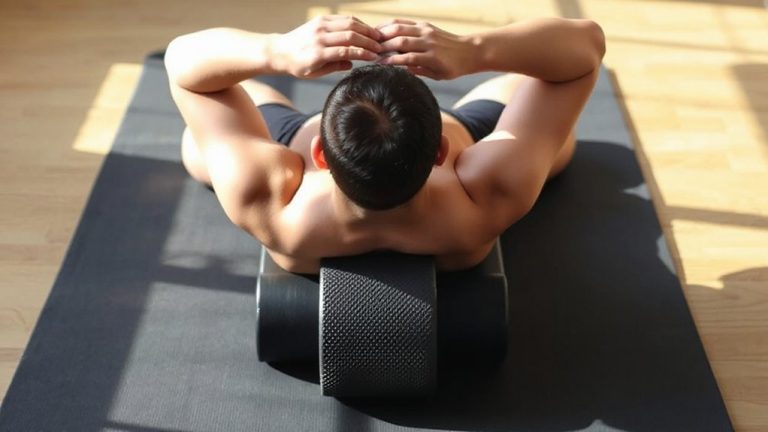
Your peroneal muscles respond best to foam rolling when technique takes priority over pressure, so it’s worth getting the positioning right before leaning into the roller. Start by sitting on the floor with your foam roller under your outer calf, just below the knee. Support your weight with your hands behind you and slowly roll downward toward the ankle, stopping before the foot. Maintain proper positioning by keeping your leg relaxed and foot slightly flexed to avoid joint strain. Apply gradual pressure-begin with light passes, then increase intensity only if discomfort remains manageable. Never roll directly over the ankle bone or fibula; focus on the muscular band alongside it. Using a medium-density roller helps balance effectiveness and comfort. Consistent, controlled movements enhance blood flow and tissue release without irritation, making recovery safer and more effective.
Don’t Make These Peroneal Foam Rolling Mistakes
Why do some people walk away from foam rolling feeling worse instead of recovered? Often, it’s due to improper pressure and incorrect technique. You might be pressing too hard, causing your peroneals to tighten instead of release-a common issue when using high-density rollers without progression. Applying too much force can irritate nerves or bruise tissue, especially along the outer calf where muscles are lean. Incorrect technique, like rolling too fast or targeting the wrong area, reduces effectiveness and increases injury risk. You should roll slowly, pausing at tender spots for 20–30 seconds. Avoid the ankle bone and focus just above it. Using a softer roller first helps modulate pressure. Quality gear matters, but even the best roller fails if used poorly. Master control and form before intensity.
From Release to Rehab: Stretch and Strengthen Peroneals
Now that you’ve released tension in your peroneals with proper foam rolling, it’s time to rebuild stability through targeted stretching and strengthening. Focus on peroneal activation and eccentric loading to restore functional control and prevent re-injury. Below are key rehab movements:
| Exercise | Purpose |
|---|---|
| Standing calf stretch | Improves ankle dorsiflexion, reducing strain on peroneals |
| Seated band eversion | Enhances peroneal activation with low-load precision |
| Single-leg balance on foam pad | Challenges proprioception and muscle responsiveness |
| Slow resisted inversion (eccentric) | Builds tendon resilience via controlled eccentric loading |
| Step-downs with control | Integrates strength and stability in dynamic motion |
These moves shift you from passive release to active support. Consistent practice improves neuromuscular coordination and ankle integrity. Equipment like resistance bands and balance pads enhances effectiveness, but form matters more than gear. Prioritize control-you’ll see better outcomes with disciplined, progressive rehab.
On a final note
You’re likely to see better ankle stability when you consistently foam roll your peroneals, especially with a firm, medium-density roller that offers targeted pressure without bruising. This simple recovery step boosts circulation and reduces muscle tightness, supporting rehab and performance. Just avoid over-rolling or improper form-precision beats pressure. Paired with stretching and strengthening, it’s a practical, evidence-backed addition to any recovery routine focused on function and long-term joint health.