Monitoring Sleep Quality and Perceived Recovery to Adjust Training Loads During Hamstring Rehab
You can’t effectively adjust training loads during hamstring rehab without tracking sleep quality and perceived recovery-poor sleep spikes inflammation and slows tissue repair, while wearables and daily ratings reveal how well your body is adapting. Monitoring HRV, rest quality, and soreness helps you decide when to push or pull back, ensuring you don’t overload healing muscle. Smart rehab balances data with how you feel, and there’s a proven way to fine-tune it further.
Notable Insights
- Track sleep duration and quality using wearables to support optimal tissue repair and muscle regeneration during hamstring rehab.
- Combine objective data like HRV and resting heart rate with subjective ratings of soreness and energy for accurate recovery insights.
- Prioritize consistent sleep of at least seven hours to minimize inflammation and maximize growth hormone release for healing.
- Use declining HRV, elevated resting heart rate, or increasing pain as signals to reduce training load and prevent setbacks.
- Adjust rehab intensity based on trends in sleep quality, perceived recovery, and pain response to eccentric movements.
How Sleep Affects Hamstring Recovery
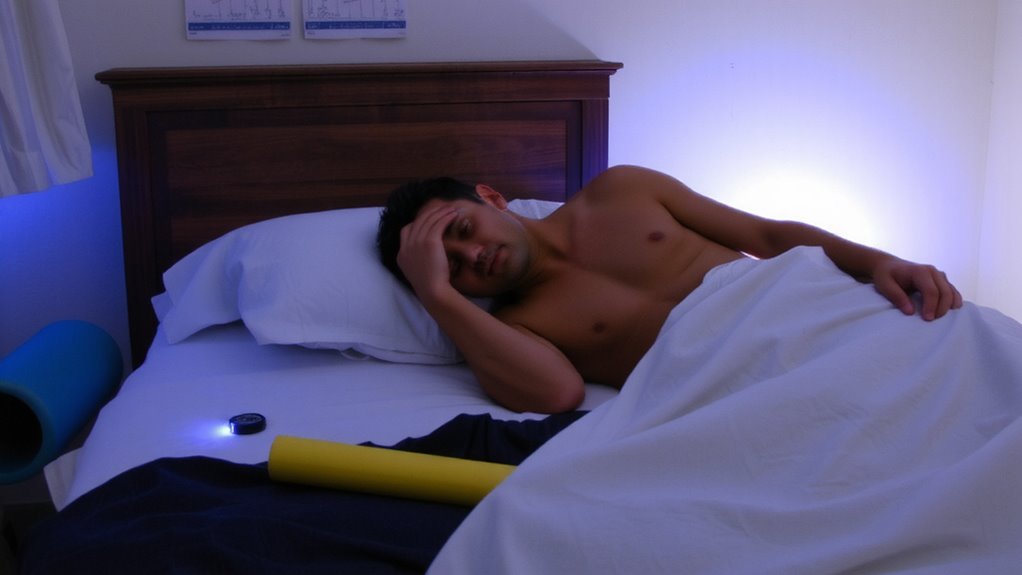
While you’re focused on rehabbing your hamstring, skimping on sleep could be undermining your progress without you even realizing it. Your body relies on adequate sleep duration to regulate key recovery processes, especially tissue repair and muscle regeneration. When you consistently get less than seven hours, inflammation levels rise, which can prolong discomfort and delay healing in injured muscles. Sleep isn’t passive-it’s when your nervous system resets and growth hormone peaks, both essential for effective recovery. Athletes wearing recovery trackers often see clear patterns: poor sleep correlates with increased soreness and reduced readiness scores. Though compression gear and foam rollers help manage symptoms, they can’t compensate for poor sleep. Optimizing your rest isn’t just supportive-it’s foundational. You wouldn’t skip rehab exercises, so why neglect sleep? Treating sleep as a non-negotiable part of recovery gives your hamstring the best shot at a full and timely comeback.
Why Poor Sleep Delays Healing
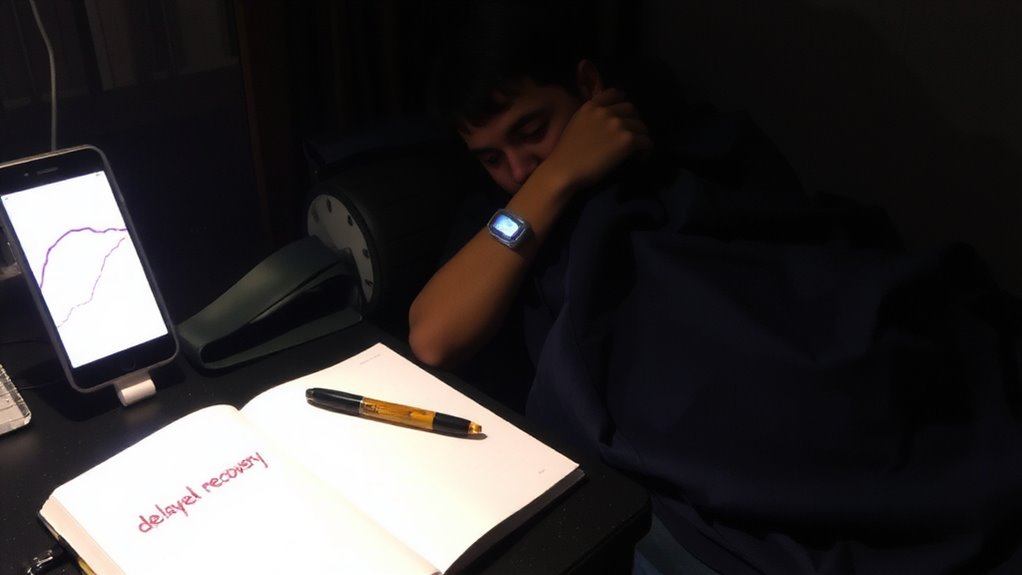
When you’re trying to heal a strained hamstring, skimping on sleep doesn’t just leave you tired-it actively slows tissue repair by disrupting critical physiological processes. Poor sleep throws off inflammation regulation, leaving your body stuck in a heightened inflammatory state that delays recovery. It also triggers hormone imbalance, reducing growth hormone release and increasing cortisol, which breaks down muscle instead of building it. Without deep, restorative sleep, your body can’t efficiently repair microtears or strengthen connective tissue. You’re not just under-recovering-you’re working against your own physiology. Athletes who prioritize sleep show faster healing times, likely because consistent, high-quality rest supports immune function and metabolic balance. Ignoring sleep is like rehabbing with the handbrake on: the gear might track your load, but without recovery, progress stalls. Sleep isn’t passive-it’s a key part of the repair protocol.
Recovery Tracking Tools That Work
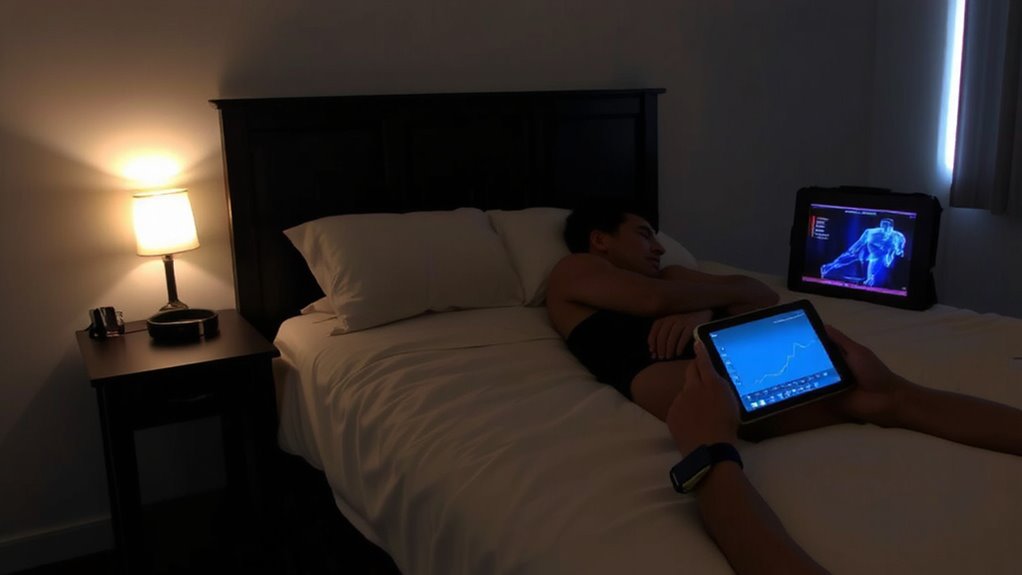
How do you really know if your body’s recovering, not just going through the motions? Tracking recovery effectively means combining wearable feedback with subjective ratings for a complete picture. Devices like WHOOP or Garmin offer data on heart rate variability, resting heart rate, and sleep duration-useful indicators of physiological stress. Yet they’re not flawless; signal accuracy can vary with skin type or movement. Pairing this wearable feedback with daily subjective ratings-like muscle soreness or energy levels on a 1–10 scale-adds context algorithms can’t capture. Together, they help detect patterns you might miss, such as declining recovery scores after intense sessions. While wearables provide objective trends, subjective ratings ground the data in real-world experience. Neither alone is perfect, but combined, they offer a practical, responsive system to monitor hamstring rehab progress-helping you stay informed, not just reactive.
When to Push or Back Off Training
You’ve got the data-your wearable shows sleep quality, HRV trends, and resting heart rate, while your daily logs track soreness and energy levels. When sleep drops and HRV declines, it’s a red flag: pushing training intensity could backfire. If your pain levels stay below 2/10 during and after exercise, and recovery markers are steady, you’re likely safe to progress. But watch for rising pain levels-even slight increases-especially during eccentric movements, as that’s often a sign to ease up. Elevated resting heart rate or poor sleep over two to three nights? That’s your body asking for a reduction in load. Smart wearables help, but they’re most valuable when paired with honest self-assessment. You don’t need high-end gear for this, but consistent tracking does help spot patterns. Ultimately, balancing rehab means respecting the data while listening to your body’s signals. Incorporating a best massage gun can further support recovery by reducing muscle tension and improving circulation.
Adjusting Rehab Based on Recovery Data
Why do some athletes bounce back faster while others stall, even with identical rehab programs? The answer often lies in recovery data. Your sleep consistency directly impacts tissue healing and neuromuscular function-poor or irregular sleep slows progress. When you track this consistently, you gain insight into daily readiness. Pair that with perceived exertion and mood logs, and you’ll spot patterns in training responsiveness. Some athletes thrive with aggressive loading, while others need subtler progressions; data helps differentiate. Wearables and recovery apps offer real-time feedback on heart rate variability and rest quality, but their real value is in long-term trend analysis. Overreliance on gadgets without context can mislead, but combined with subjective feedback, they sharpen decision-making. Adjusting rehab isn’t just about injury status-it’s about aligning load with recovery capacity, using objective and subjective cues to match your body’s actual readiness.
Creating a Smart Hamstring Rehab Routine
A well-designed hamstring rehab routine hinges on more than just exercise selection-it’s built on intelligent progression, informed by both data and biomechanics. You’re not just recovering; you’re retraining the muscle to handle load safely and efficiently. Start with daily foam rolling to reduce neural tension and improve tissue quality-it’s a low-cost, high-impact habit. Pair that with active release techniques, ideally guided by a professional, to target adhesions and restore ideal muscle length. Your routine should scale based on sleep quality and perceived recovery: high fatigue means lower load, not skipped sessions. Smart gear like wearable muscle oxygen monitors can help, but don’t over-rely on gadgets-your body’s feedback matters most. Consistency, not complexity, drives results. Track progress weekly, adjust volume accordingly, and prioritize movement quality to prevent re-injury.
On a final note
You’re smarter to adjust training based on sleep and recovery data-it’s not just convenient, it’s effective. Wearables and apps track trends that predict setbacks, so you know when to push or pause. Ignoring poor sleep risks re-injury; respecting recovery speeds healing. Smart hamstring rehab combines this data with movement quality, making your routine responsive, not rigid. Good gear helps, but judgment matters more.