Building Resilience in the Wrist Flexors of Weightlifters Using Eccentric Wrist Curls
Weak wrist flexors strain your tendons during heavy lifts, leading to pain and long-term damage. Eccentric wrist curls build resilience better than regular curls by boosting tendon strength through controlled lowering phases. They stimulate collagen synthesis and target structural flaws other exercises miss. Perform them 2–3 times weekly with strict form-full range of motion, slow descent, no momentum. Avoid common mistakes like excess weight or poor alignment. You’ll soon discover how small adjustments reveal lasting gains.
Notable Insights
- Weak wrist flexors contribute to imbalances and pain; eccentric training corrects this by enhancing strength and tendon integrity.
- Eccentric wrist curls apply high tension with low joint compression, promoting collagen synthesis and structural resilience.
- Perform curls with forearms supported, palms up, lowering the weight over 4–5 seconds for maximal eccentric stimulation.
- Avoid excessive weight and uncontrolled movements to maintain form, prevent injury, and ensure targeted flexor development.
- Train 2–3 times weekly with proper recovery to optimize adaptation without overuse, especially under heavy grip demands.
How Weak Flexors Cause Wrist Pain in Lifters
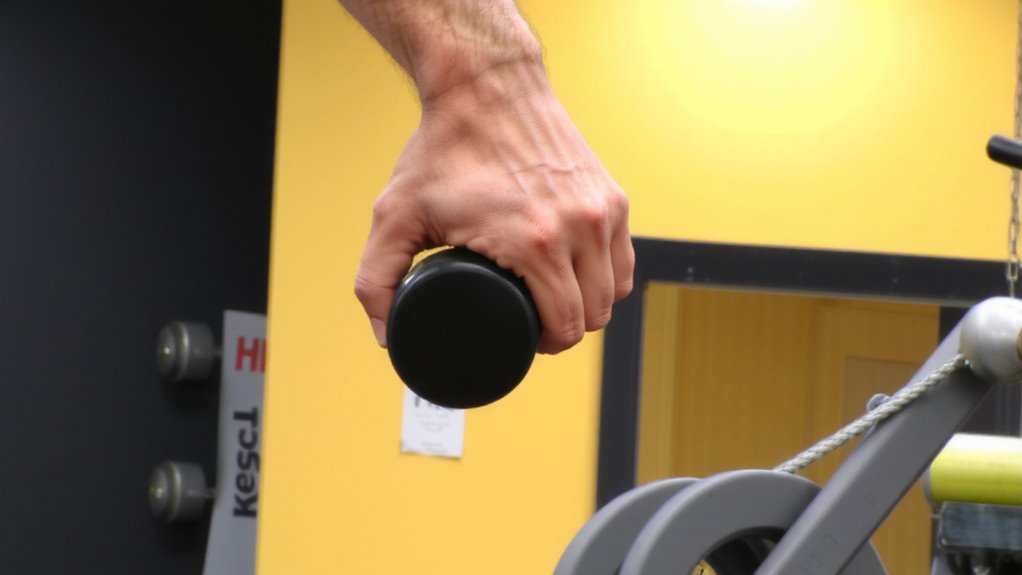
Weak wrist flexors often go unnoticed until pain starts flaring during lifts, and that’s when you realize how essential they are. You might not feel it at first, but a *flexor imbalance*-where your extensors overpower weak flexors-creates uneven strain across the wrist joint. This imbalance pulls tendons out of alignment, especially during pressing or pulling motions, setting the stage for *tendon overload*. Over time, repetitive stress without adequate flexor strength leads to microtears, inflammation, and sharp, lingering pain. Lifters often overlook this until grip suffers or recovery slows. Unlike generic fitness gear that only supports symptoms, targeted training addresses the root cause. Eccentric loading, in particular, builds tendon resilience gradually, correcting imbalances before they escalate. Recovery isn’t just rest-it’s smart adaptation. You need more than wrist wraps; you need strength calibrated to match your workload. Ignoring flexor deficits risks chronic issues no brace can fix.
Why Eccentric Curls Beat Regular Ones for Tendon Health
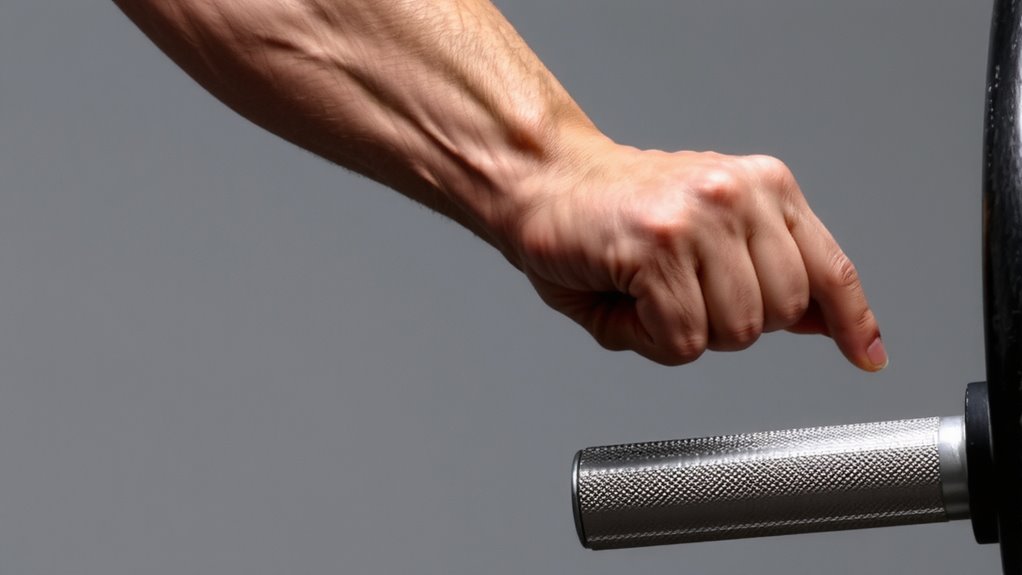
You’re probably familiar with standard wrist curls, but if you’re looking to really fortify your tendons and correct the imbalances discussed earlier, eccentric wrist curls offer a smarter, more effective approach. They place controlled stress on the wrist flexors during the lowering phase, which is key for stimulating tendon remodeling. Unlike regular curls, eccentrics generate higher tension with less compression, reducing strain while boosting structural adaptations. Research shows this type of loading enhances collagen synthesis, the foundational process that repairs and thickens tendons over time. That means stronger, more resilient tissue capable of handling heavy lifts without breaking down. You’re not just building muscle-you’re reinforcing the connective scaffolding that supports every grip and press. For lifters prone to wrist pain, this isn’t just beneficial; it’s essential. Eccentric training, done consistently, addresses weaknesses regular curls miss, making it a superior choice for long-term joint health and performance resilience.
How to Do Eccentric Wrist Curls (With Perfect Form)
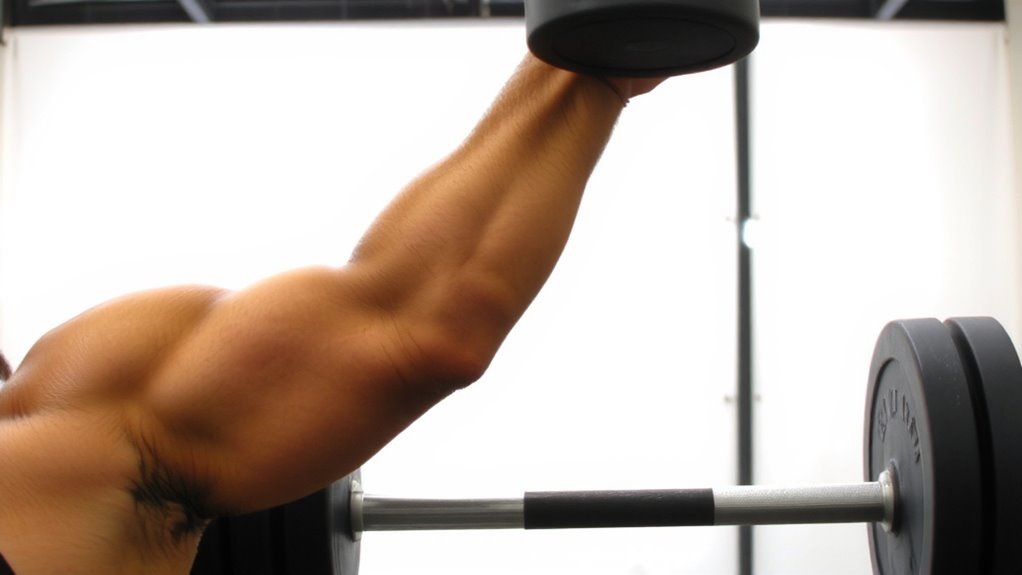
Execution matters-performing eccentric wrist curls with precision guarantees you maximize tendon stimulation while minimizing the risk of strain. Sit with your forearms supported on a bench, palms facing up, and grip a light dumbbell with both hands. Curl the weight using your wrists, then slowly lower it over a 4–5 second count-this is where tempo control proves critical. Focus on a full range of motion, resisting gravity during the descent to build tendon resilience. Maintain strict wrist alignment; don’t let your wrists collapse or tilt sideways, as this shifts stress unevenly. Keep your elbows locked and movements isolated. Using both hands to lift and one to lower achieves ideal load management, letting you handle heavier eccentrics safely. Consistent form here directly translates to stronger, more injury-resistant flexors. This isn’t just exercise-it’s deliberate structural conditioning.
5 Mistakes That Ruin Your Wrist Curl Gains
Why do your wrist curls feel like they’re getting you nowhere? You’re probably making mistakes that undermine grip strength and forearm stability. Using too much weight sacrifices form, turning a targeted move into a sloppy swing that barely engages the flexors. That’s a fast track to stalled gains. You also might be cheating the eccentric phase-the lowering motion-by dropping the weight instead of controlling it. That’s where the real muscle growth happens. Another common error? Training through pain instead of adjusting. Ignoring wrist discomfort can lead to overuse injuries, especially if your gear-like lifting straps or grips-is worn or ill-fitting. Poor equipment compromises technique and increases strain. For lasting forearm stability, precision beats power. Clean reps with proper recovery and reliable fitness gear lay the foundation. Skip the shortcuts, and you’ll build not just strength, but resilience.
How Often to Do Eccentric Wrist Curls for Best Results
Eccentric wrist curls aren’t a one-size-fits-all exercise when it comes to frequency, and how often you perform them directly affects both recovery and progress. For most weightlifters, a training frequency of 2–3 times per week strikes the right recovery balance, allowing microtears in the wrist flexors to heal while steadily building resilience. Doing them daily often leads to overuse, especially if you’re also gripping heavy bars in squats or deadlifts. On the flip side, performing them only once a week may not provide enough stimulus for meaningful adaptation. Your recovery balance depends on overall volume, so pair eccentric curls with proper rest and nutrition. Consider adjustable wrist rollers or resistance bands to fine-tune intensity. These tools support consistent form and measurable progression. Listen to your body-soreness is normal, but sharp pain means you’ve tipped the scale too far toward overload.
On a final note
You’re building resilience, not just strength, with eccentric wrist curls. They boost tendon stiffness and control-key for injury prevention in weightlifters. Unlike regular curls, they target microtears during lengthening, promoting collagen realignment. Do them 2–3 times weekly with slow negatives (4–5 seconds). Pair with proper grip gear to reduce stress. It’s low-effort, high-return recovery work. Consistency here means fewer flare-ups, better lifts long-term.