Wrist Pronation-Supination Drills With Light Dumbbell for Forearm Tendon Healing
You can safely rebuild forearm tendon strength with pronation-supination drills using a light dumbbell. Sit with your forearm supported and wrist free, rotating slowly from palm-up to palm-down. Keep movements controlled, using just 1-2 pounds to avoid strain. This motion promotes collagen realignment, enhances blood flow, and improves neural control without flare-ups-ideal for functional recovery. Proper form guarantees effective, sustainable healing, especially when done consistently. You’ll learn how to perfect your technique and avoid setbacks with a few key adjustments.
Notable Insights
- Perform wrist pronation-supination drills using a 1–2 pound dumbbell to safely load healing forearm tendons.
- Keep the forearm supported and wrist aligned to ensure proper tendon engagement and avoid strain.
- Complete 2–3 sets of 10–15 slow reps daily, prioritizing controlled motion over speed or volume.
- Avoid overpronation and grip fatigue to reduce nerve irritation and prevent re-injury during recovery.
- Use rubber-coated dumbbells with a non-slip grip to minimize joint stress and enhance exercise control.
Why Pronation-Supination Drills Heal Forearm Tendons
Why do your forearm tendons seem to heal faster when you move them through real-life ranges of motion? Because pronation-supination drills mimic natural arm function, applying controlled biomechanical stress that stimulates collagen realignment without overloading injured tissue. You’re not just stretching-you’re guiding healing fibers along functional pathways. This motion also promotes neural adaptation, helping your brain re-establish precise muscle control, which often dulls during injury. Unlike static rehab exercises, these drills engage dynamic stability, encouraging blood flow and tissue remodeling where you need it most. Light dumbbells add just enough resistance to enhance stimulus, but not impair recovery-typically 1–3 lbs is sufficient. Used consistently, this method bridges the gap between passive rest and return to activity. In fitness recovery, tools mean little without intelligent movement. Your gear supports the process, but the motion itself drives tendon repair forward.
How to Do Wrist Pronation-Supination With Perfect Form
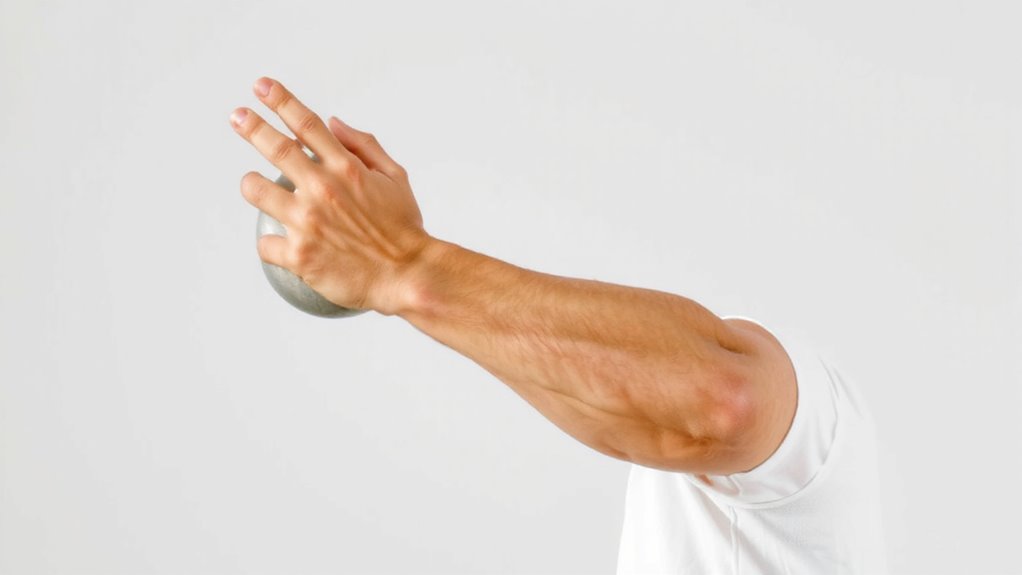
Start this drill by sitting with your forearm resting on a bench or table, your hand extending past the edge and your wrist free to move-this setup guarantees proper alignment and isolates the motion where it matters most. Grip a light dumbbell with your palm facing up, then slowly rotate your wrist until it faces down-this is pronation. Reverse the motion to return to the starting position-supination. Maintain strict wrist alignment throughout; don’t let your hand sag or twist unnaturally. Keep your elbow stable and avoid shifting it forward or back, as this compromises form and reduces tendon-loading effectiveness. The movement should be controlled, using just enough weight to create tension without straining. Ideal for recovery, this drill leverages precise joint mechanics to stimulate blood flow and tissue repair. Consistent performance with proper elbow stability and wrist alignment secures functional gains without overloading healing tendons.
5 Form Mistakes to Avoid With Tendon Recovery
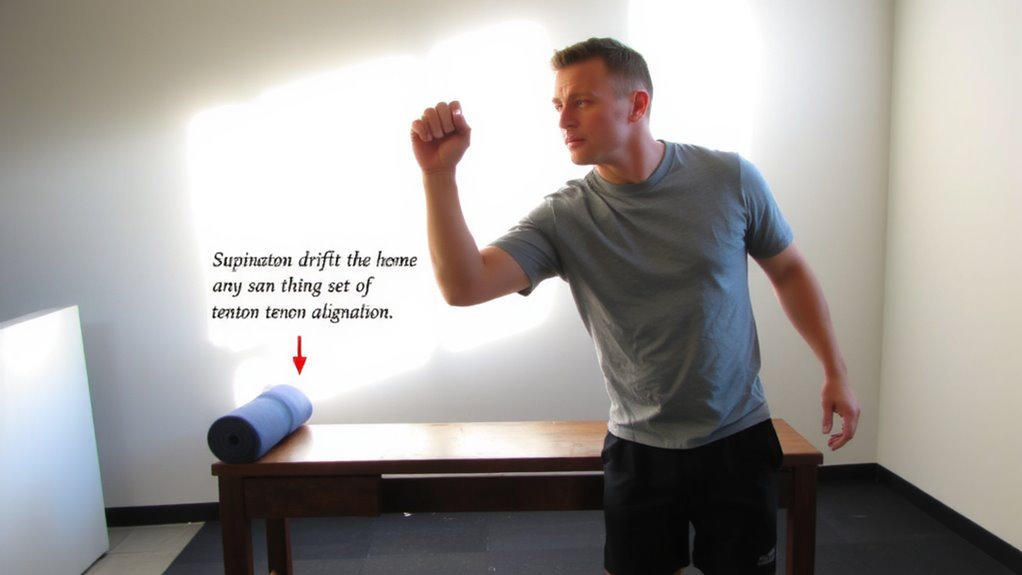
You’re already aligning your forearm and stabilizing your elbow to maximize the benefits of pronation-supination drills, but even with the right setup, small form lapses can undermine tendon recovery. Overpronation risks include excessive strain on the median nerve and irritation of the flexor tendons, especially when motion exceeds natural range. You might not notice it at first, but deviating from a neutral pivot point reduces mechanical efficiency and delays healing. Grip fatigue is another silent issue-clenching the dumbbell too tightly recruits unnecessary forearm muscles, increasing tension instead of promoting controlled movement. This compromises circulation and amplifies microtrauma, counteracting the drill’s regenerative intent. Avoid flaring your wrist or rushing shifts; both reduce joint congruency and elevate re-injury odds. Maintain a relaxed yet precise grip, and focus on smooth, full-range motion. Proper form isn’t just about technique-it’s about honoring the tendon’s healing timeline with intelligent, sustainable movement.
What Dumbbell Weight Is Safe for Tendon Healing?
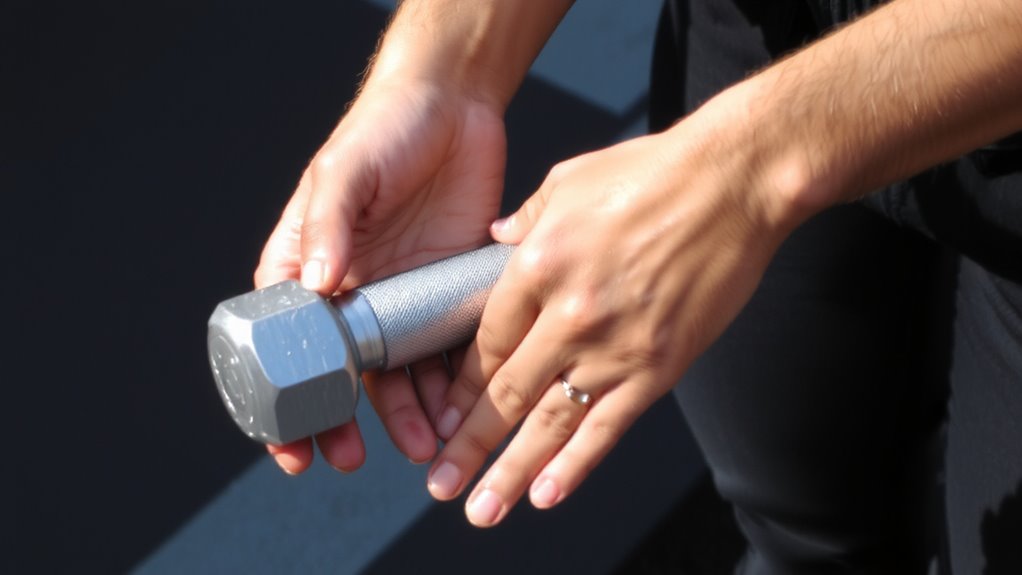
How do you know when the dumbbell in your hand is helping-or hurting-your tendon recovery? Start light-literally. For most people healing forearm tendons, a 1- to 2-pound dumbbell is sufficient. Heavier weights increase strain, which can delay healing or cause flare-ups. The right dumbbell material matters: rubber or vinyl-coated models reduce vibration and stress on joints compared to bare metal. Equally important is grip texture. A surface that’s too smooth forces unnecessary grip tension, while an overly aggressive texture may irritate sensitive skin or pressure points. Look for a moderate, non-slip pattern that supports control without strain. Your goal isn’t strength building yet-it’s controlled movement to stimulate blood flow and tendon gliding. If you feel pulling, sharp pain, or fatigue before 10–15 reps, the weight’s likely too high or the grip mechanics are working against you. For beginners, prioritizing proper form and joint-friendly equipment like those found in top beginner exercise bikes can reinforce the importance of starting with low resistance and gradual progression.
How to Do These Drills Daily Without Flare-Ups
Choosing the right dumbbell is only part of the equation-what you do with it each day plays an even bigger role in steady tendon recovery. To avoid flare-ups, stick to consistent exercise timing, ideally doing your pronation-supination drills once or twice daily, but never back-to-back without rest intervals. Perform 2–3 sets of 10–15 slow, controlled reps, focusing on full range of motion. Short rest intervals-about 30 seconds between sets-help maintain blood flow without overloading healing tissue. Don’t increase frequency if you feel morning stiffness or lingering ache; more isn’t better here. These drills work best as part of a structured rehab routine, not random add-ons. Using smooth, deliberate movements with proper forearm alignment reduces shear stress on tendons. Recovery hinges on patience, precision, and respecting your body’s feedback. Overzealous timing or skipping rest intervals can delay progress. Let pain be your guide, not your goal.
On a final note
You’re building tendon resilience with controlled motion, and these drills deliver when done right. A light dumbbell-typically 1–3 lbs-reduces strain while maintaining tendon engagement. Proper form prevents setbacks, making daily practice safe and effective. This isn’t just mobility work; it’s targeted rehabilitation. Consistency matters, but so does load management. Done correctly, pronation-supination becomes a cornerstone of forearm recovery, blending precision, science, and practical rehab into one low-risk, high-yield movement.