Multiplanar Lunges With Resistance Bands to Build Controlled Leg Strength After Meniscus Repair
You can safely build controlled leg strength after meniscus repair using multiplanar lunges with resistance bands. These movements-forward, side, and rotating-enhance dynamic stability while minimizing joint stress. Bands offer adjustable, smooth resistance that boosts glute and quad activation without overloading the knee. Maintain proper alignment and control to avoid common mistakes like knee collapse or excessive forward lean. Master basics before progressing-your next steps reveal smarter strength-building strategies.
Notable Insights
- Perform forward, side, and rotating lunges with resistance bands to safely build multiplanar leg strength after meniscus repair.
- Maintain proper knee alignment and core engagement to protect the healing joint during banded lunge exercises.
- Use light to moderate band resistance initially, ensuring no pain or swelling post-exercise.
- Progress to rotating lunges only after mastering basic lunge forms with controlled motion and stability.
- Gradually increase resistance or range of motion when 3 sets of 12 reps are completed flawlessly.
How to Do Forward, Side, and Rotating Lunges After Meniscus Repair
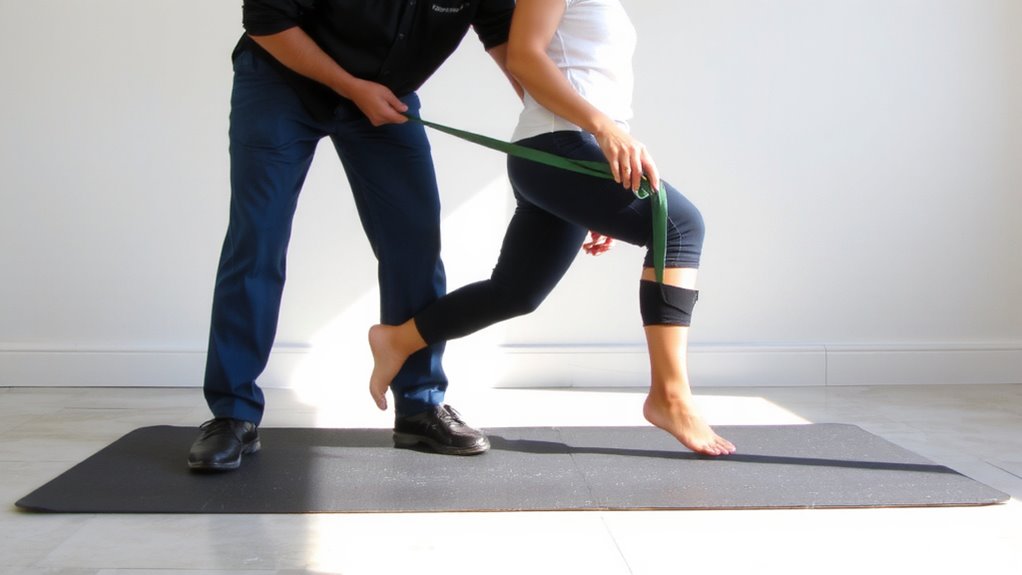
A properly executed lunge variation can markedly support strength restoration and joint stability after meniscus repair, especially when guided by functional movement principles and appropriate resistance. You begin with forward lunges by stepping ahead, keeping proper alignment-your knee tracks over the ankle without caving in. Engage your core and lower slowly, ensuring a controlled movement that emphasizes joint protection. For side lunges, step laterally, pushing hips back while maintaining an upright torso; this challenges abductors and supports mediolateral stability. Rotating lunges add a diagonal reach, enhancing coordination and functional strength-but only progress here when basic forms feel stable. Resistance bands increase activation without compromising safety, provided tension stays moderate. Each rep should reflect precision, not momentum. You’ll notice improvements in balance and muscle engagement, signaling readiness for more complex work-assuming proper alignment and controlled movement remain priorities throughout.
Avoid These Banded Lunge Mistakes After Surgery
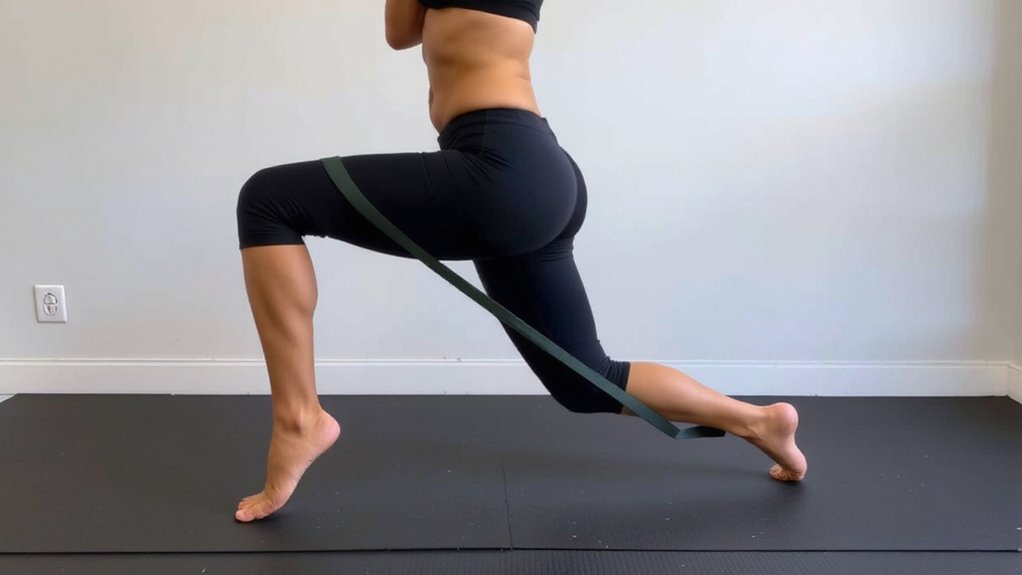
You’ve built a solid foundation with forward, side, and rotating lunges, and adding resistance bands can amplify muscle engagement without overloading healing tissues. But watch out-improper alignment is a common misstep that undermines form and stresses the recovering knee. Keep your front knee stacked over your ankle, not collapsing inward, to maintain joint safety. Excessive tension from overly tight bands can also backfire, provoking swelling or compensatory movements. Choose lighter resistance at first, prioritizing control over intensity. Avoid leaning too far forward or letting your torso hunch, as this shifts load improperly. Check your band placement, too-slipping or twisted bands create uneven forces. Consistency matters, but only if executed correctly. These mistakes limit gains and increase re-injury risk. Stay precise, respect your repair timeline, and let measured progress-not aggressive resistance-guide your recovery.
How Multiplanar Lunges Improve Knee Stability Post-Repair
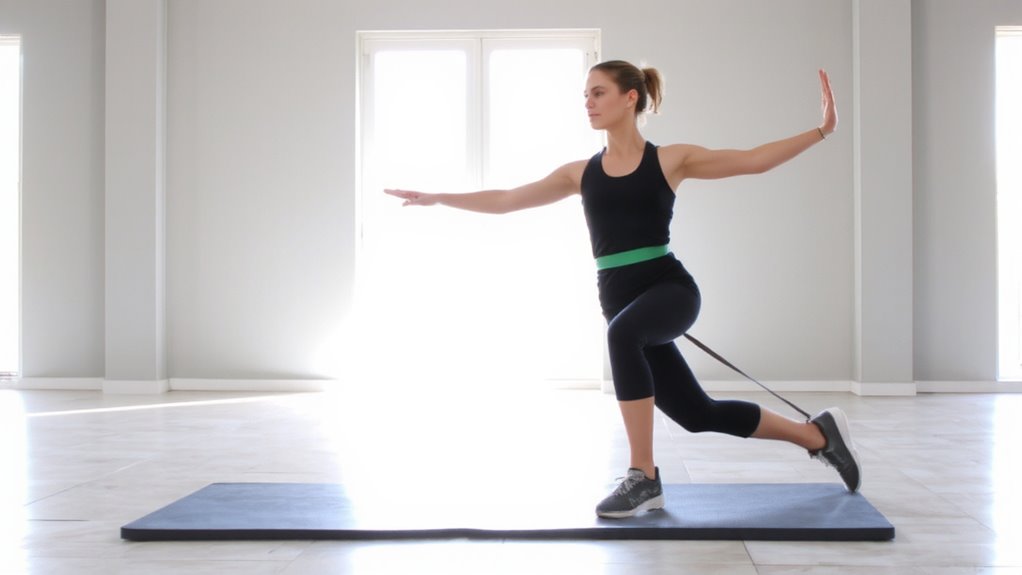
While your knee is healing, building stability isn’t just about strength-it’s about training movement in multiple directions, and that’s where multiplanar lunges with resistance bands really shine. You’re not just moving forward and back-you’re stepping laterally, diagonally, and rotationally, which challenges your knee to maintain joint alignment under varied loads. This trains your body to stabilize dynamically, mimicking real-life motions far better than single-plane exercises. The resistance band adds gentle tension, boosting muscle activation in the glutes, quads, and hamstrings without overloading the joint. You’ll notice improved control and smoother shifts between movements, indicating your knee is regaining functional stability. Unlike basic lunges, multiplanar versions engage stabilizing muscles more consistently, promoting balanced strength and reducing compensatory patterns. Over time, this leads to more resilient, coordinated lower-limb mechanics-critical after meniscus repair.
Use Resistance Bands to Build Strength Without Knee Risk
Many rehab professionals recommend resistance bands as a low-risk, high-reward tool for rebuilding strength after knee surgery, and for good reason-they provide scalable resistance without compressive joint stress. You can adjust band tension to match your recovery phase, ensuring progress without compromising safety. Proper joint alignment remains easier to maintain since bands offer smooth, directional pull rather than jarring loads. Unlike free weights, they engage stabilizing muscles evenly, which supports balanced lower-body development.
| Feature | Benefit |
|---|---|
| Lightweight design | Easy to use at home or in clinic |
| Variable band tension | Lets you progress gradually |
| Low-impact resistance | Reduces strain on healing tissue |
| Supports joint alignment | Enhances neuromuscular control |
These qualities make resistance bands a practical, effective choice during early strengthening phases.
How to Safely Increase Resistance and Range of Motion
Resistance bands have already proven their worth in early recovery by delivering joint-friendly strength training, but now it’s time to build on that foundation. You can safely increase resistance by switching to a thicker band or shortening the loop-both allow progressive overload without sacrificing control. Aim to add resistance only when you can complete 3 sets of 12 reps with perfect form and no pain. This gradual approach supports joint proprioception, helping your knee recognize position and movement more accurately. As stability improves, slowly increase your lunge range of motion, ensuring each descent feels smooth and intentional. Avoid rushing; quality trumps depth every time. Monitor for swelling or discomfort post-exercise, as these signal you may have advanced too quickly. Using bands with consistent tension-like latex loop styles-ensures even resistance throughout the movement, enhancing muscular coordination and long-term knee resilience.
On a final note
You’re building strength safely with multiplan Socialist lunges and resistance bands post-meniscus repair. These movements boost control and stability across planes, critical for functional recovery. When done correctly, they enhance proprioception without overloading the joint. Consistent, progressive resistance yields measurable gains in mobility and muscle coordination-key markers of effective rehab. As long as form stays precise and intensity increases gradually, this method stands out as both practical and biomechanically sound for long-term knee health.