Lumbar Mobility Drills With Supine Knee-To-Chest Rocking
You can improve lumbar mobility quickly with the supine knee-to-chest rock, a simple drill that uses gentle rocking to restore spinal motion. Lie on your back, hug both knees in, and rock slowly while keeping your pelvis neutral. Avoid arching or holding your breath-focus on rhythm and relaxation. It’s ideal for mornings or post-workout recovery, especially if you sit often. You’ll find out how to progress and maximize its benefits with smart variations.
Notable Insights
- Perform the supine knee-to-chest rock on a mat, using rhythmic rocking to mobilize the lumbar spine gently.
- Avoid overarching the spine by maintaining a neutral pelvis and tucking the chin slightly during the movement.
- Coordinate slow, controlled motions with steady breathing to enhance neuromuscular awareness and reduce muscle guarding.
- Use this drill daily, especially in the morning or post-workout, to restore lumbar motion after inactivity or strain.
- Progress by adding resistance bands, single-leg variations, or ankle weights to increase mobility and stability demands.
How to Do the Knee-To-Chest Rock
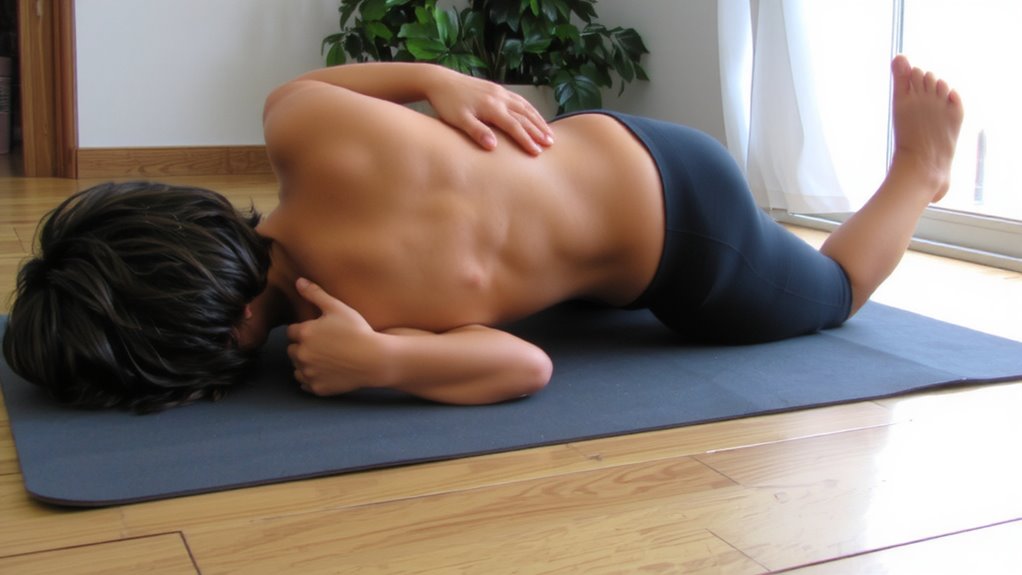
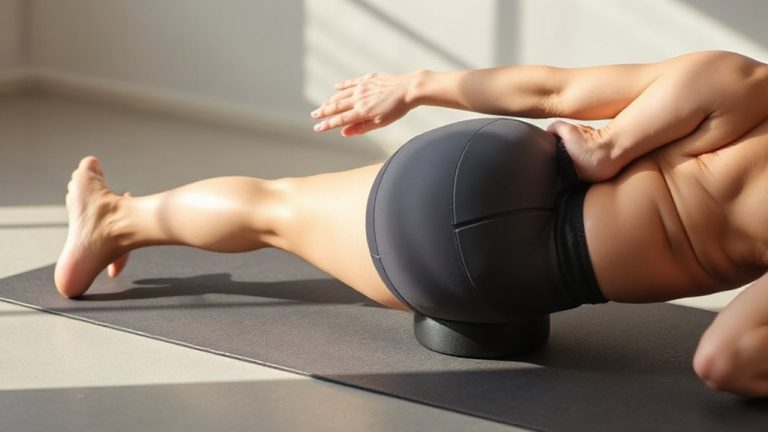
A simple mat and your own body weight are all you need to get started with the knee-to-chest rock, a foundational lumbar mobility drill that’s both effective and accessible. You lie on your back, draw both knees toward your chest, and gently rock backward and forward. This motion encourages proper alignment by maintaining a neutral pelvis and relaxed shoulders throughout. You’ll notice how a gentle rhythm enhances spinal awareness, making each repetition a chance to refine control and coordination. Recovery isn’t just about rest-this movement supports it by easing tension in the lower back without requiring advanced gear. It’s practical, low-risk, and integrates well into warm-ups or cooldowns. While fitness gear like foam rollers or massage balls can complement mobility work, they’re not necessary here. The knee-to-chest rock proves that sometimes the most effective tools are already part of your anatomy. For those looking to deepen recovery afterward, incorporating a best foam rollers choice can further release tight musculature.
Common Mistakes to Avoid
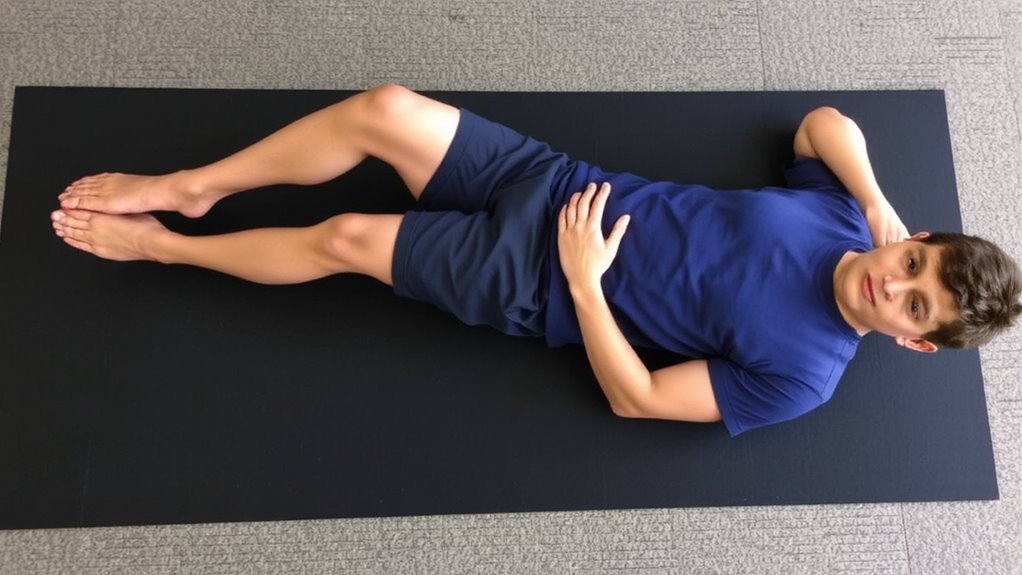
You’re already using the knee-to-chest rock to gently mobilize your lower back, but even simple movements can lose their effectiveness if done with poor form. One common error is overarching spine, which shifts focus from the lumbar area to the lower thoracic region, reducing targeted mobility. Another mistake is rushing repetitions-each rock should be controlled, allowing muscles time to respond and joints to articulate safely. You might think faster reps save time, but they actually hinder neuromuscular feedback and diminish results.
| Mistake | Effect | Fix |
|---|---|---|
| Overarching spine | Reduced lumbar focus | Tuck chin slightly, relax shoulders |
| Rushing repetitions | Poor muscle engagement | Count 2 seconds per phase |
| Holding breath | Increased tension | Breathe steadily throughout |
| Pulling too hard | Strain risk | Use gentle, hands-on-guidance |
How This Move Eases Tight Lower Backs
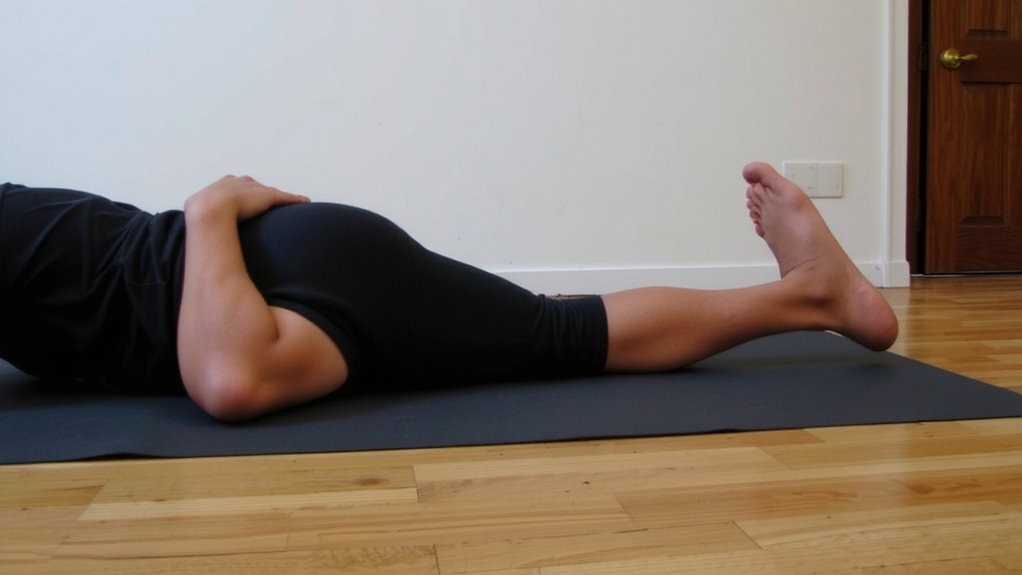
This move works by combining gentle articulation with rhythmic breathing to restore motion in stiff lumbar segments. As you rock your knee toward your chest, you create subtle spinal traction, easing pressure on compressed discs and helping decompress tight lower back tissues. This rhythmic motion encourages better pelvic alignment by retraining posterior tilt patterns, especially helpful if you sit for long periods. You’ll notice improved mobility after just a few reps, as the movement targets deep stabilizing muscles without straining them. Unlike aggressive stretches, this drill prioritizes control and neuromuscular feedback, making it safer for daily recovery. When paired with quality recovery gear-like supportive mats that cushion the spine-the benefits increase, thanks to enhanced comfort and positioning. It’s not flashy, but its effectiveness lies in consistency and precision. Over time, you’ll feel reduced stiffness and greater ease in everyday movements, especially lifting or bending. For optimal spine support during this drill, consider using one of the best workout mats for home gyms.
Best Times to Use This Stretch
When should you perform this stretch for maximum benefit-morning, evening, or in between? For most, weaving it into your morning routine helps reset spinal alignment after hours of inactivity, easing stiffness before daily movement. The gentle rocking boosts circulation to tight lumbar tissues, making it ideal for jumpstarting mobility. You’ll likely notice reduced lower back guarding during early activities. Alternatively, using this stretch during post workout recovery calms the nervous system and aids muscle relaxation, especially after heavy lifting or prolonged sitting. It doesn’t require fitness gear, though a thin mat enhances comfort. While timing depends on your schedule, consistency matters more than moment. Performing it daily-either upon waking or after activity-delivers cumulative benefits. Avoid forcing intensity; instead, focus on rhythmic breathing and controlled motion. This stretch works best as a recovery-focused tool, not a performance enhancer, so integrate it when your body needs reset, not resistance.
Make It Harder: Progressions for Greater Mobility
While maintaining proper form, you can gradually increase the challenge of lumbar mobility drills by introducing resistance or altering leverage to enhance tissue adaptation and spinal articulation. Adding dynamic resistance through resistance bands or cables increases muscular engagement and proprioceptive feedback, making each repetition more effective. To further increase difficulty, incorporate advanced instability using tools like foam rollers or balance wedges under your feet. These progressions aren’t just harder-they’re smarter, demanding better neuromuscular coordination. A high-quality massage mat can enhance recovery between sessions, supporting tissue regeneration and flexibility gains. Below are practical progressions:
| Progression | Equipment Used |
|---|---|
| Band-Resisted Rocking | Resistance band |
| Single-Leg Rocking | Bodyweight |
| Feet on Foam Roller | Foam roller |
| Cable Pull + Rock | Cable machine |
| Weighted Ankle Rock | Ankle weights |
Choose based on your recovery capacity and available fitness gear.
Relieves Lower Back Tension: Why It Works
Tight lower back muscles often stem from prolonged sitting, poor movement patterns, or imbalanced loading during workouts-and lumbar mobility drills directly counteract these issues by promoting controlled spinal motion. When you perform supine knee-to-chest rocking, you encourage gentle joint articulation, which helps restore natural segmental movement in the lumbar spine. This motion reduces stiffness and improves synovial fluid circulation, supporting joint health. The rhythmic rocking also facilitates nerve gliding, allowing spinal nerves to move freely through surrounding tissues, which decreases irritation and muscular guarding. You’ll likely notice reduced tension and improved comfort after just a few reps. Unlike passive recovery tools or fitness gear that only offer temporary relief, this drill actively re-educates your movement patterns. It’s low-risk, equipment-free, and easily modifiable-making it a practical choice for consistent recovery and long-term back resilience.
On a final note
You’ll find this drill effective for enhancing lumbar mobility and releasing lower back tension, especially after long sits or intense workouts. It’s simple, requires no gear, and fits well into recovery routines. When performed correctly, it promotes spinal articulation and muscle relaxation. While not a cure-all, it’s a reliable tool-especially when paired with proper form and consistency. Great for daily maintenance, it supports long-term spinal health without strain.