Enhancing Muscle Tissue Repair Through Strategic Nutrition and Lifestyle Choices
You need protein to repair muscle tissue, especially within 30 to 60 minutes after training-dairy, eggs, and lean meats work best. Pair that with vitamin C and zinc for stronger healing and less inflammation. Stay hydrated to clear waste and deliver nutrients efficiently. Sleep 7–9 hours so your body rebuilds fully overnight. Manage stress to keep cortisol low and recovery high. Do all this consistently, and you’ll access faster, more effective muscle gains than supplements alone could ever provide. There’s more to optimizing recovery where it counts most.
Notable Insights
- Consume high-quality protein within 30–60 minutes post-exercise to maximize muscle repair and protein synthesis.
- Prioritize vitamin C and zinc from whole foods to support collagen formation, tissue healing, and immune function.
- Maintain optimal hydration to flush metabolic waste and enhance nutrient delivery to recovering muscles.
- Aim for 7–9 hours of quality sleep nightly to promote growth hormone release and effective muscle regeneration.
- Reduce chronic stress through mindfulness practices to lower cortisol and minimize inflammation for faster recovery.
Get Protein to Repair Torn Muscles
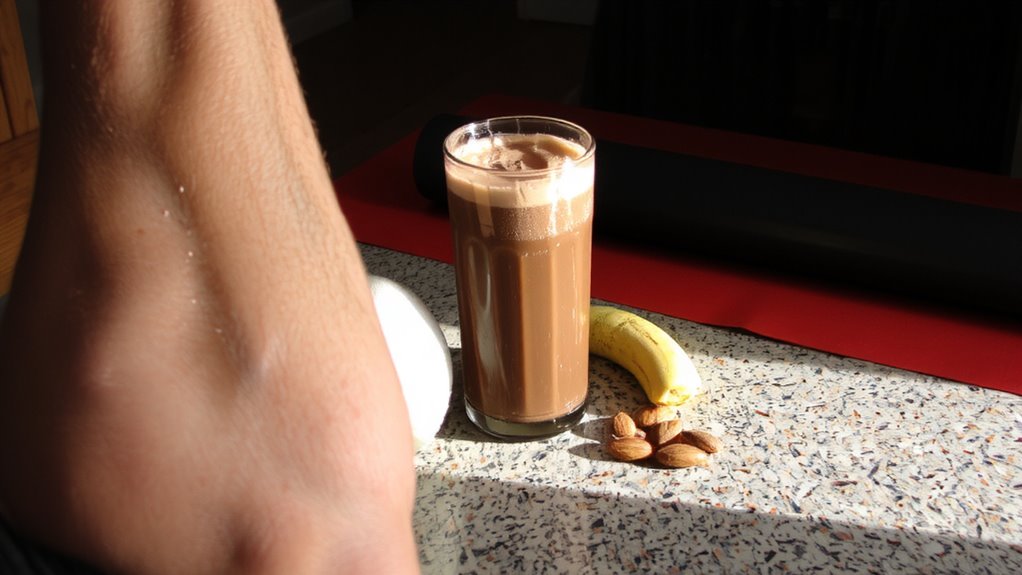
Recovery starts with what you eat, and protein is the undisputed building block when it comes to repairing torn muscles. You need adequate protein timing-ideally within 30 to 60 minutes post-exercise-to kickstart muscle repair when your tissues are most receptive. This window enhances uptake, reducing soreness and improving recovery speed. Not all proteins are equal; the amino acid types matter. Leucine, an essential branched-chain amino acid, triggers muscle protein synthesis, making dairy, eggs, and lean meats effective choices. Plant-based options like soy offer a complete profile too. Without sufficient essential amino acids, your gains stall, no matter how advanced your fitness gear. While compression wear may support circulation, real healing happens at the cellular level. Prioritize high-quality protein sources and strategic intake-your muscles don’t just need fuel, they need the right kind, at the right time.
Add Vitamin C and Zinc for Faster Healing
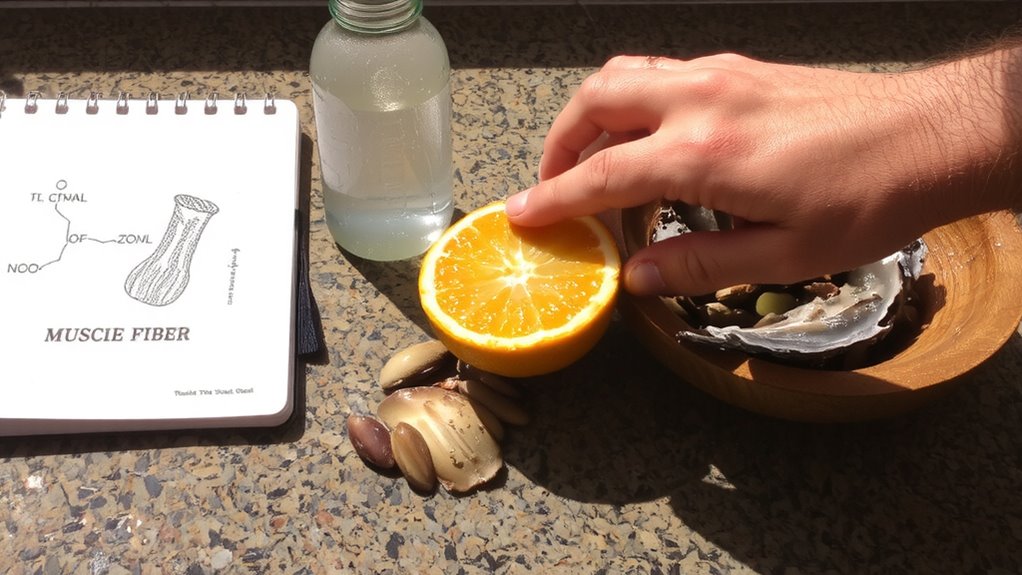
Think of vitamin C and zinc as your body’s repair crew chiefs-small in size but essential in function when it comes to muscle healing. You need vitamin C to build collagen, a key player in tissue regeneration and wound recovery. Without enough, your muscles struggle to rebuild efficiently. Zinc supports immune function and protein synthesis, both vital for repairing damaged fibers. Studies show that adequate zinc intake speeds up recovery time, especially after intense workouts. These nutrients aren’t flashy like fitness gear, but they perform better than any supplement claiming quick fixes. You won’t see them in your gym bag, yet they’re working behind the scenes. Skimp on them, and even the best recovery protocols underperform. A balanced diet rich in citrus, bell peppers, nuts, and seeds usually covers your needs. When it doesn’t, a targeted supplement helps-but isn’t a substitute for real food.
Drink Enough Water to Flush Toxins and Deliver Nutrients

How often do you consider what’s flowing through your system after a tough workout? Water isn’t just a refresher-it’s essential for muscle repair. Proper hydration supports crucial *hydration benefits*, from flushing metabolic waste to boosting *nutrient absorption*. Without enough fluid, even the best supplements can’t reach damaged tissues efficiently.
| Function | Impact | Result |
|---|---|---|
| Toxin removal | Reduces soreness | Faster recovery |
| Blood volume | Improves delivery | Efficient repair |
| Cellular hydration | Enhances balance | Best cell function |
You’re not just drinking to quench thirst-you’re engineering recovery. Every glass helps maintain viscosity, pressure, and transport within your bloodstream. Hydration isn’t passive maintenance; it’s active reinforcement of your body’s repair systems. Skip the shortcuts-water is a non-negotiable gear in your recovery toolkit.
Let Sleep Rebuild Your Muscle Overnight
Nighttime isn’t just downtime-it’s your body’s prime repair window, where growth hormone surges and muscle regeneration peaks. While you’re in deep rest, your body shifts into recovery mode, repairing microtears in muscle fibers caused by intense training. This night recovery process is essential-without sufficient sleep, protein synthesis slows, and adaptation weakens. Aim for 7–9 hours to maximize benefits, as even a single night of poor sleep can impair muscle repair. Quality matters just as much as quantity: consistent sleep cycles support hormonal balance and nervous system restoration. Think of sleep as free, highly effective recovery “gear”-no supplement or compression sleeve can replace its role. Prioritize a dark, cool room and a regular bedtime to boost deep rest. You don’t need expensive tools to enhance recovery; often, your best fitness gear is your mattress.
Lower Stress to Reduce Muscle Inflammation
While you’re sleeping, your body handles more than just physical repair-it’s also managing your stress response, which plays a direct role in muscle recovery. Chronic stress spikes cortisol, a hormone that, when elevated, delays healing and increases inflammation. Poor cortisol control undermines even the best recovery gear and nutrition plans. That’s where mindfulness practices come in-you’re not just calming your mind, you’re creating conditions for faster muscle repair. Studies show daily meditation or focused breathing lowers cortisol levels markedly. When combined with quality sleep and proper hydration, these techniques amplify recovery. Fitness recovery isn’t just about wearables or foam rollers; internal balance matters just as much. Mindfulness doesn’t replace physical tools, but it enhances their effectiveness. Reduced inflammation means less soreness and quicker return to training. Invest in mental practices like you would in fitness gear-because both are essential for peak performance and lasting muscle health.
On a final note
You’ll heal faster when you pair smart nutrition with intentional recovery. Getting enough protein supports muscle repair, while vitamin C and zinc boost tissue regeneration. Hydration keeps nutrients moving and waste cleared. Sleep is when your body truly rebuilds, and lowering stress reduces inflammation that slows progress. Together, these choices enhance recovery more effectively than fitness gear alone-no gadget replaces foundational habits backed by science and consistency.