How Wearable Muscle Reoxygenation Sensors Guide Post-Exercise Cool-Down Duration
Your wearable muscle reoxygenation sensor tracks SmO₂ levels in real time, showing exactly how quickly your muscles recover after exercise. As oxygen levels rise post-workout, the data reveals whether your cool-down is effective or too short. Since recovery varies by genetics, environment, and fitness level, these sensors personalize timing instead of guessing. A sustained SmO₂回升 to 85%+ and stable heart rate confirm readiness to stop. You’ll learn how to optimize recovery based on your body’s unique response.
Notable Insights
- Wearable muscle reoxygenation sensors measure SmO₂ to objectively determine when muscles have recovered post-exercise.
- Rising SmO₂ to 85%+ and stabilization for over 3 minutes indicate sufficient cool-down and readiness for activity.
- Real-time feedback helps athletes adjust cool-down duration based on actual muscle recovery, not guesswork.
- Sensors account for individual physiology and environmental factors that affect reoxygenation rates.
- Consistent sensor use improves recovery precision by identifying session-to-session patterns in muscle oxygen rebalancing.
What Muscle Reoxygenation Reveals About Recovery
How often do you really know when your muscles have recovered enough to train hard again? Muscle reoxygenation gives you a clear answer. After intense exercise, your muscles are left with accumulated oxygen debt and lingering muscle fatigue, impairing performance and increasing injury risk. As your body works to restore oxygen levels, reoxygenation signals recovery progress. Monitoring this process reveals when your muscles have truly replenished energy stores and cleared metabolic waste. Without hard data, you’re guessing-often training too soon. Wearable sensors that track reoxygenation provide objective insight, helping you avoid overtraining. These devices aren’t just flashy gadgets; they offer measurable physiological feedback. Understanding oxygen debt resolution and reduced muscle fatigue means smarter recovery decisions. Ultimately, this tech bridges the gap between effort and evidence, making recovery as data-driven as training itself.
How Wearables Track Muscle Reoxygenation in Real Time
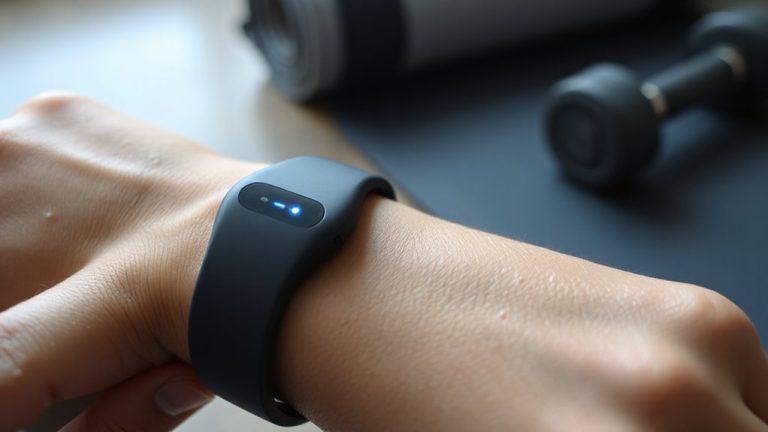
While you’re pushing through a tough workout, your muscles are already signaling how well they’ll recover-thanks to changes in oxygen levels that wearable sensors can detect in real time. These devices use near-infrared spectroscopy (NIRS) to monitor oxygen saturation in your muscle tissue, giving you instant feedback on your body’s recovery status. Sensor accuracy is essential-high-quality wearables minimize false readings by filtering out motion artifacts and skin tone variations. Data latency also matters; top models process and display results within seconds, ensuring you’re not acting on outdated info. Though not perfect, current tech offers reliable trends when used consistently. You’ll get the most value by placing the sensor snugly over active muscles and syncing it with your training app. While environmental factors can interfere, modern wearables balance precision and responsiveness well enough for serious fitness use.
Why Your Cool-Down Should Be Personal
After a hard set or sprint, your muscles aren’t just winding down-they’re sending signals about fatigue, blood flow, and oxygen rebalancing that differ greatly from person to person. Your cool-down shouldn’t be one-size-fits-all because your recovery needs aren’t generic. Genetic predisposition affects how fast your muscles clear lactate and restore oxygen, meaning two people doing the same workout can need vastly different recovery times. Environmental impact-like heat, altitude, or even air quality-also alters muscle reoxygenation rates, further personalizing your recovery needs. Wearable muscle sensors account for these variables, turning raw physiology into actionable insight. Skipping personalization risks under-recovery or wasted cooldown time. Smart recovery isn’t just about effort-it’s about responding to your body’s unique signals. Relying on generic cooldown routines ignores what your muscles are actually experiencing. A personalized approach backed by real-time data simply makes recovery more effective.
How to Read Muscle Reoxygenation Data
What exactly does that rising or falling line on your wearable muscle sensor mean after your last rep? That trend reflects your muscle reoxygenation rate-the speed at which oxygen returns to working muscles during recovery. A steady rise typically signals effective cool-down, while a flat or erratic line might suggest incomplete recovery. Proper data interpretation helps you adjust intensity and duration wisely. But remember, sensor accuracy varies across models; tightness of fit, skin tone, and movement can affect readings. Medical-grade devices offer stronger reliability, but consumer wearables provide useful trends over absolute values. Don’t fixate on single data points-look at patterns across sessions. Consistent placement and calibration improve accuracy. Though not perfect, these sensors deliver practical insights when used thoughtfully. With time, you’ll learn what your body’s signals mean, turning raw metrics into actionable recovery strategies grounded in real-world performance.
When Your Muscles Are Ready to Stop Cooling Down
How do you know when your muscles have cooled down enough to shift from recovery back into work? Your wearable reoxygenation sensor gives you the answer by tracking recovery milestones. As blood flow stabilizes and oxygen levels rebound, muscle fatigue decreases measurably. You’re ready when the data shows consistent saturation over several minutes.
| Metric | Ready to Resume |
|---|---|
| SmO₂回升 to 85%+ | Yes |
| Stable for 3+ mins | Yes |
| Heart rate near rest | Yes |
| Perceived fatigue low | Supports data |
Waiting until these conditions align prevents premature exertion. Relying on feel alone risks error-objective measures from your device offer precision. Blood flow recovery is key: without it, lingering fatigue undermines performance. Smart use of sensor data guarantees you cool down just enough, no longer.
Build a Cool-Down That Matches Your Recovery
Your wearable reoxygenation sensor doesn’t just tell you when to stop cooling down-it shapes how you should cool down in the first place. Based on real-time muscle oxygen data, it guides your active recovery intensity so you’re not guessing. If your muscles are still deoxygenated, the sensor prompts light jogging or cycling to enhance blood flow without fatigue. As reoxygenation improves, you’ll know you’re moving effectively. This method supports personalized pacing, adjusting to your physiology rather than a one-size-fits-all cooldown. Unlike generic cooldown advice, this tech delivers precision, making recovery sessions more functional. Users report quicker readiness for next workouts and less soreness. While the gear requires consistent wear and proper sensor placement, its feedback loop between effort and recovery is unmatched. For serious athletes and active individuals alike, integrating these insights into daily routines optimizes long-term performance. It’s not just about resting-it’s about recovering right.
On a final note
You’re not just cooling down-you’re restoring muscle balance. Wearable reoxygenation sensors give real-time feedback on how quickly your muscles regain oxygen post-exercise, helping you tailor recovery duration with precision. These devices detect physiological shifts that heart rate alone misses, making them more reliable for recovery monitoring. Skipping data-driven cool-downs risks incomplete recovery and reduced performance gains. For serious fitness, smart gear isn’t optional-it’s essential.