Isometric Glute Squeezes in Side-Lying Position to Activate Hip Abductors
You’re targeting the gluteus medius effectively with side-lying isometric glute squeezes, a low-impact move ideal during recovery or warm-ups. By lying on your side and contracting the bottom glute without movement, you maximize neuromuscular activation while minimizing joint stress. Proper form-aligned spine, stacked hips, engaged core-ensures clean isolation. Hold each squeeze 5–10 seconds for 3 sets per side, 3–4 times weekly. Adding resistance bands or breath-focused progressions can enhance results over time. There’s more to optimizing this move for your routine.
Notable Insights
- Perform isometric glute squeezes in a side-lying position to target the gluteus medius and hip abductors effectively.
- Maintain stacked hips and a neutral spine to ensure proper alignment and isolate the intended muscles.
- Engage the bottom glute forcefully without moving the leg, holding the contraction for 5–10 seconds per repetition.
- Avoid common errors like hip rolling or using hip flexors by activating the core and focusing on glute control.
- Do 3 sets of 10–15 reps on each side, 3–4 times weekly, progressing with bands or breath coordination.
What Are Isometric Glute Squeezes?
Think of isometric glute squeezes as strength training in stillness-no movement, just sustained tension. You’re actively contracting your glutes without shifting joints, which delivers focused glute isolation. This stillness isn’t passive; it demands continuous muscle engagement, activating motor units deep within the muscle fibers. Unlike dynamic reps, isometrics build endurance and neuromuscular control, making them ideal during recovery phases when joint stress must be minimized. You can perform these anywhere-no fitness gear required-which enhances consistency. Still, pairing them with recovery tools like foam rollers or resistance bands boosts effectiveness over time. The lack of motion doesn’t mean less intensity; in fact, holding a full squeeze for 20–30 seconds challenges recruitment patterns considerably. For best results, prioritize form and mental connection to the muscle. Isometric glute squeezes are simple in design but powerful in practice, offering a low-risk, high-return method to maintain strength and support hip abductor function when recovery limits more aggressive training.
Why Side-Lying Activates the Gluteus Medius
Why does side-lying make the gluteus medius fire so effectively? Because this position optimizes anatomical alignment, placing your hip in a neutral plane that isolates the abductors. When you lie on your side, gravity isn’t pulling the working leg down, so you can focus entirely on contraction. That’s where neuromuscular recruitment shines-your brain connects more efficiently with the targeted muscles, especially the gluteus medius, without interference from stabilizers or compensatory patterns. You’re not moving through space, so the demand shifts from strength to control, enhancing muscle activation with less joint strain. This makes side-lying ideal for rehabilitation and pre-activation before workouts. The simplicity doesn’t undermine its effectiveness; actually, it’s why fitness pros often recommend this position. It strips away variables, letting you build precise, functional strength where it matters most.
How to Do a Side-Lying Glute Squeeze (Step by Step)
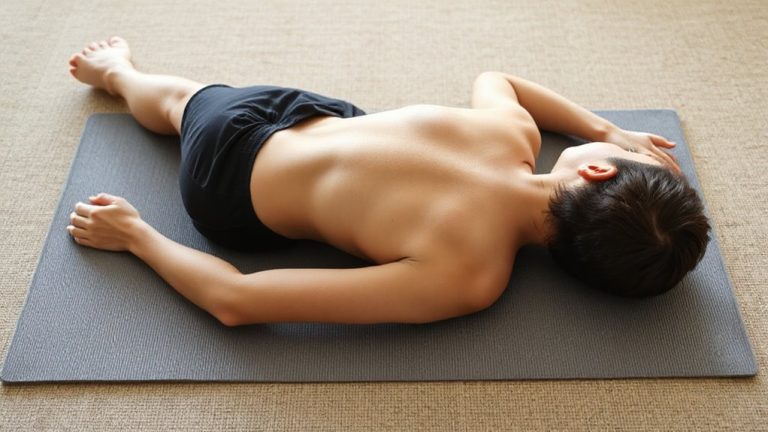
Start by lying on your side with your head propped comfortably on a pillow, ensuring your neck stays aligned with your spine. Stack your hips and legs, keeping your top foot slightly forward for balance. Engage your core lightly to maintain proper alignment throughout the movement. Focus on squeezing the glute of your bottom leg-imagine lifting your hip slightly off the floor without actually moving. Hold this contraction for 5 to 10 seconds, then release slowly. This isometric action promotes targeted muscle engagement in the gluteus medius, critical for hip stability. Repeat for 10–15 reps per side. Wearing snug, breathable recovery wear may enhance proprioception, aiding form awareness. Consistent practice with proper alignment maximizes activation while minimizing compensatory patterns. The exercise requires no equipment, making it practical for frequent use, especially during fitness recovery periods.
Fix These Common Glute Squeeze Mistakes
You’ve already built a solid foundation with the side-lying gl deficient, and now it’s time to fine-tune your form to prevent common errors that can limit results. Proper alignment and muscle isolation are key-if you’re not engaging the right fibers, you’ll waste time and effort. Avoid arching your back or letting your hips sag, as both disrupt alignment and reduce activation.
| Mistake | Visual Cue | Correction |
|---|---|---|
| Hips roll forward | Top hip juts ahead | Stack hips, align shoulders |
| Using hip flexors | Thigh lifts too fast | Slow lift, focus on glute |
| Poor head position | Neck craned | Keep spine neutral |
Maintaining form guarantees targeted muscle isolation. Use a mirror or video to assess your posture. Proper alignment isn’t just about posture-it boosts effectiveness and prevents strain. Focus on controlled, mindful reps instead of speed. Small tweaks make a big difference in glute activation and overall hip abductor strength.
How Long to Hold and How Often to Do It
While consistency and precision matter in any strength routine, getting the timing right during isometric glute squeezes can make or break your hip abductor development. For ideal activation, aim for a hold duration of 5 to 10 seconds per squeeze-long enough to engage slow-twitch fibers without sacrificing form. Shorter holds might not build sufficient tension, while longer ones risk muscle fatigue and compromised technique. As for repetition frequency, perform 3 sets of 10 to 15 squeezes per side, 3 to 4 times weekly. This frequency balances stimulus and recovery, promoting neuromuscular adaptation without overuse. You don’t need fancy fitness gear; a simple mat suffices. Stick to consistent sessions, and you’ll notice improved muscle engagement. Adjust hold duration or repetition frequency slightly based on feedback from your body, but always prioritize control. Over time, this rhythm supports stronger, more resilient hips.
When to Use Isometric Squeezes: Rehab to Performance
How can a single exercise bridge the gap between recovering from injury and reaching peak athletic performance? Isometric glute squeezes do exactly that. You can start using them early in rehab when movement is limited, helping restore control without stressing healing tissues. They support neuromuscular conditioning by retraining your brain to fire glute muscles efficiently-key after hip or knee injuries. As you progress, these squeezes become part of prehab strategies, preventing future issues during high-load training. They’re subtle but effective, requiring no gear beyond a stable surface, making them practical for home recovery or performance routines. You’ll notice improved hip stability while walking, running, or cutting-critical for athletes. Because they’re low-risk and high-reward, integrating them into daily warm-ups or cooldowns strengthens the link between rehab and performance. No flashy equipment needed-just consistency and focus.
Advanced Side-Lying Glute Squeeze Variations
Side-lying glute squeezes build on the foundation of basic isometric holds by adding positional challenge and neuromuscular demand, making them a smart progression from early rehab to performance-focused training. You can boost activation by incorporating Resistance band options-light loops above the knees increase hip abductor recruitment, improving joint stability and muscle engagement. Try holding the squeeze at different hip angles, like slight extension or abduction, to target varied fibers. For deeper control, add Pilates integration: pair each contraction with diaphragmatic breathing and pelvic floor engagement, promoting core synergy. These variations aren’t just more complex-they’re more effective for athletes rebuilding strength or refining movement quality. Gear like latex-free bands or textured mat padding enhances comfort and performance, though quality matters-flimsy bands lose tension. Done right, these advanced versions bridge rehab gains to real-world strength.
On a final note
You’ve learned how isometric glute squeezes in side-lying position target the gluteus medius, a key hip stabilizer often underactive in sedentary lifestyles. When done correctly, these squeezes enhance neuromuscular control, aid injury recovery, and support performance. Common mistakes-like pelvic rotation or short holds-undermine effectiveness. Holding 30–60 seconds for 3 sets, you’ll see gains in stability. Advanced variations increase demand, but consistency and form trump intensity. This simple, equipment-free exercise fits seamlessly into rehab and training routines, making it a practical tool for long-term hip health.