Eccentric Overhead Press With Slow Descent to Improve Rotator Cuff Endurance
You’re building rotator cuff endurance with the eccentric overhead press by focusing on the slow, controlled lowering phase, which boosts muscular stamina and joint stability. This method increases time under tension, enhancing neuromuscular control and scapular coordination far better than strength alone. Using a manageable weight, maintain core bracing and proper alignment to avoid compensation. Resistance bands or weighted bars help, but technique matters most. There’s more to optimizing form and progression just ahead.
Notable Insights
- The eccentric overhead press strengthens rotator cuff endurance by emphasizing slow, controlled lowering under load.
- A slow descent increases time under tension, enhancing muscular control and shoulder joint stability.
- Maintaining proper alignment and core bracing prevents compensatory movements during the exercise.
- Perform 3–4 sets of 10–15 reps, 2–3 times weekly, for optimal rotator cuff endurance development.
- Use manageable weights and focus on active eccentric engagement to build functional shoulder resilience.
Why Rotator Cuff Endurance Prevents Shoulder Pain
While you might think shoulder strength alone keeps injuries at bay, it’s actually rotator cuff endurance that plays a bigger role in preventing pain over time. When your rotator cuff muscles resist fatigue during repeated movements, they maintain proper shoulder stability, reducing strain on tendons and joints. Muscular fatigue weakens control, especially during overhead motions, making your shoulders more vulnerable to impingement or inflammation. Endurance training supports sustained muscle activation, which is essential for those using fitness gear like resistance bands or weighted bars-equipment that demands control throughout each phase. Without this resilience, even well-designed recovery tools can’t compensate for compromised mechanics. You’re better off building lasting muscular stamina than chasing heavy lifts. Rotator cuff endurance isn’t flashy, but it’s foundational. It guarantees your shoulders stay aligned, responsive, and pain-free during daily tasks and intense workouts alike, making it a smart priority in any fitness recovery plan.
How the Eccentric Overhead Press Strengthens Your Shoulders

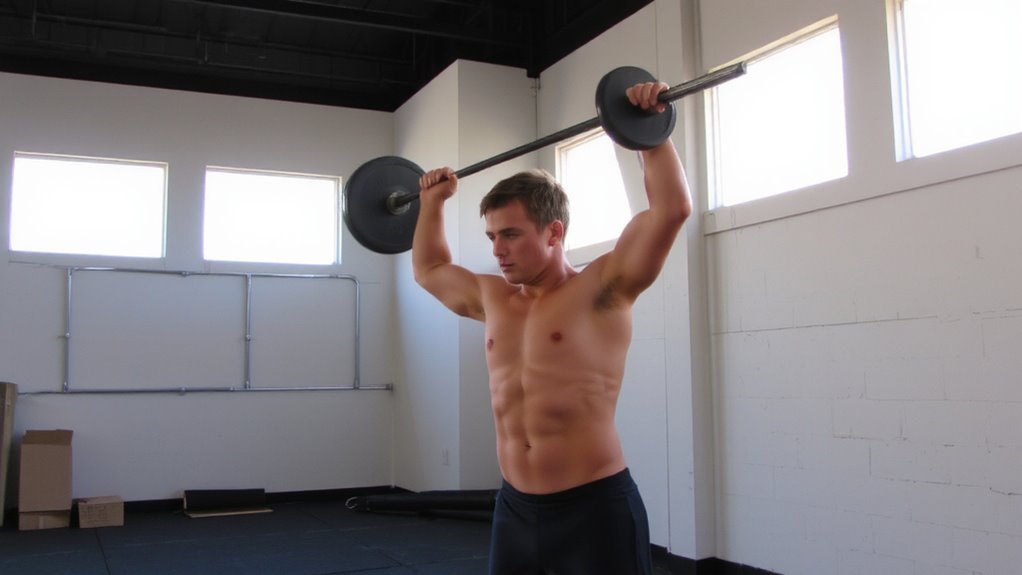
Because it emphasizes muscle control under load, the eccentric overhead press builds shoulder resilience far more effectively than standard pressing movements. You’re actively engaging the rotator cuff during the slow descent, which strengthens the muscles responsible for joint integrity. This controlled lowering phase increases time under tension, promoting endurance and coordination. As you press and lower, scapular stability becomes critical-your shoulder blades must move properly to support the joint through the full range. Without solid scapular control, strain shifts to vulnerable areas. At the same time, consistent practice improves shoulder mobility, allowing safer, fuller overhead motion. The movement challenges stability and flexibility simultaneously, making it ideal for long-term joint health. Unlike gear-dependent machines, this exercise relies on your neuromuscular control-no supplement can replace that. It’s a foundational drill that builds durable strength where you need it most.
How to Do the Eccentric Overhead Press Safely
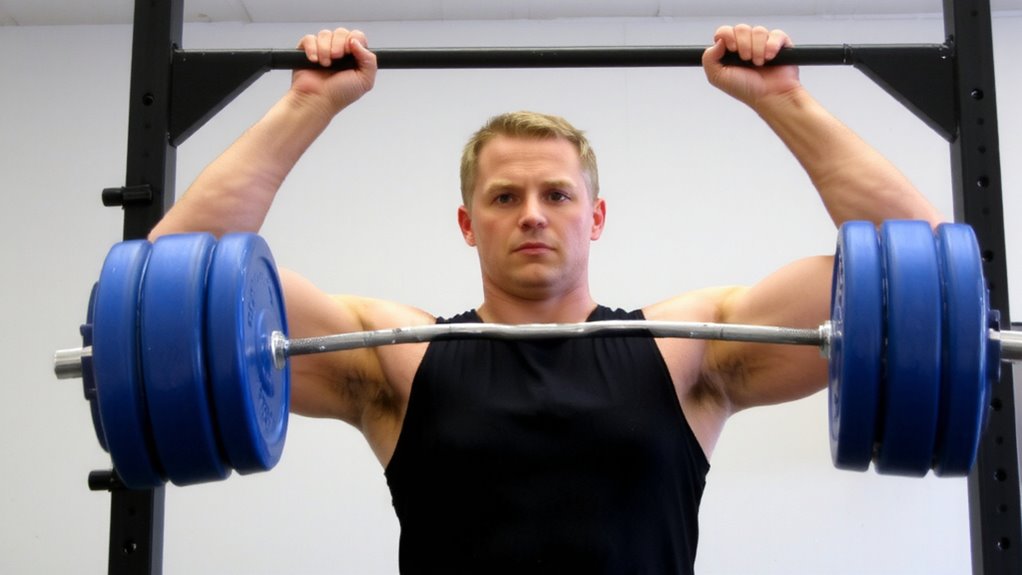
You’ve already seen how the eccentric overhead press builds shoulder strength and joint resilience through controlled loading, but executing it with proper form is what keeps those benefits coming without setbacks. Maintain proper alignment: stack your shoulders over hips, brace your core, and avoid arching your lower back. Keep your gaze forward and initiate the movement with controlled breathing-inhale during the lift, exhale slowly during the descent. Use a weight that challenges you without compromising technique. Below is a quick reference to reinforce safe execution:
| Emotion | Risk of Injury | Confidence Level |
|---|---|---|
| Fear | High | Low |
| Calm | Low | High |
| Frustration | Moderate | Medium |
| Focus | Minimal | Maximum |
Respect your range of motion, prioritize controlled breathing, and reinforce proper alignment throughout. Choose gear that supports stability-like a firm bench and supportive shoes-to enhance safety and performance.
Why the Slow Lowering Phase Builds Shoulder Control
When you lower the weight slowly during the eccentric overhead press, you’re not just fighting gravity-you’re training precision under tension, which sharpens neuromuscular control in the rotator cuff. Eccentric loading places controlled stress on the shoulder stabilizers, forcing them to fire in coordinated sequences that build functional strength. This phase demands focus: each inch of descent requires active muscle engagement, not passive dropping. You’re teaching your nervous system to modulate force output efficiently, improving joint awareness and injury resilience. Unlike concentric-only moves, slow lowering enhances proprioception, helping you maintain ideal shoulder positioning under load. The rotator cuff thrives on this kind of precise, moderate-intensity challenge. Over time, consistent eccentric loading leads to smoother movement patterns and greater joint stability. It’s not about lifting heavy-it’s about lowering with intent. That’s where real shoulder control develops, and where long-term joint health begins.
Best Sets, Reps, and Frequency for Shoulder Gains
How do you actually build shoulder endurance without courting injury? You start with 3–4 sets of 10–15 reps, emphasizing a slow, controlled eccentric phase to boost rotator cuff resilience. Train this movement 2–3 times weekly, allowing at least one rest day in between for tissue recovery. This frequency supports adaptation without overtaxing connective tissues. Progressive overload is key-gradually increase resistance or time under tension weekly to sustain gains. Don’t rely solely on the eccentric press, though; exercise variation prevents stagnation and reduces strain. Incorporate complementary movements like scapular retractions or band pull-aparts to balance development. This structured approach enhances joint stability while minimizing wear. Monitoring fatigue and adjusting volume keeps you progressing safely. Ultimately, consistency with controlled intensity delivers better long-term shoulder gains than sporadic, heavy loading. Recovery and smart programming together maximize results.
5 Form Mistakes That Undermine Progress
Why do some athletes hit a plateau in shoulder endurance despite consistent training? You’re likely making form mistakes that undermine progress. One common issue is improper tempo-rushing through the eccentric phase reduces time under tension, weakening rotator cuff stimulation. You lose the benefit of muscle control during the slow descent, which is critical for endurance. Another problem is limited range: not lowering the weight far enough restricts joint mobility and muscle engagement. This compromises fiber recruitment and adaptation. Flaring your elbows or arching your back creates compensatory movement, shifting stress from shoulders to larger, less-targeted muscles. You need full scapular retraction and controlled motion throughout. Fixing these errors guarantees better neuromuscular coordination and joint stability. Train with intention-prioritize precision over load. The right form, not just frequency or reps, drives real shoulder resilience and long-term gains.
On a final note
You’ve likely found that rotator cuff endurance plays a key role in shoulder health, and the eccentric overhead press delivers targeted gains. With controlled lowering, you build strength and joint stability efficiently. Used consistently, this movement-paired with proper recovery and quality fitness gear-supports long-term shoulder function. It’s not just effective; it’s practical for injury prevention and performance.