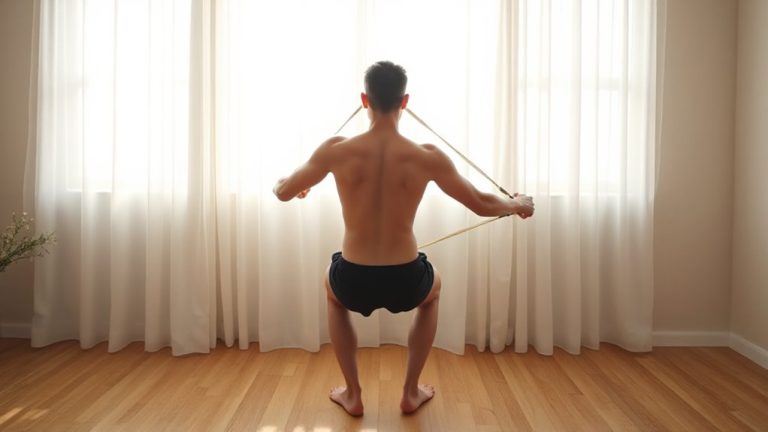
Applying Heat Before Stretching to Improve Tissue Elasticity in Scarred Areas
Apply heat before stretching to boost elasticity in scarred areas-warmth increases blood flow and softens collagen, making tissue more pliable. Use a moist heating pad wrapped in cloth for 15–20 minutes to safely warm the area without damaging sensitive skin. Stretch within one to three minutes after heating, holding each stretch 30–60 seconds. Focus on gentle, dynamic movements like arm circles or leg swings to improve mobility. Avoid aggressive pulls or prolonged heat exposure, which can irritate tissue. Timing and technique matter most for lasting gains-there’s more to optimizing this routine for long-term recovery.
Notable Insights
- Apply moist heat for 15–20 minutes to increase blood flow and soften scar tissue before stretching.
- Use warm, not hot, heat sources wrapped in cloth to protect reduced-sensitivity scarred skin.
- Begin stretching within 1–3 minutes after heat application to maximize collagen extensibility and tissue pliability.
- Perform dynamic stretches for 30–60 seconds each, repeating 2–4 times to improve mobility safely.
- Avoid aggressive stretching or prolonged heat to prevent tissue irritation or microtrauma in scarred areas.
Use Heat to Loosen Scar Tissue Before Stretching
While your body naturally forms scar tissue after injury, using heat beforehand can make a noticeable difference when it’s time to stretch. Heat penetration helps increase blood flow and gently softens the dense, fibrous tissue, making it more pliable. You’ll likely notice improved flexibility and reduced resistance during stretching, thanks to enhanced tissue relaxation. Unlike cold therapy, which numbs and constricts, heat loosens tight collagen fibers common in scars. This prep work doesn’t just feel better-it supports more effective, longer-term remodeling. Top-performing heating pads with moist heat delivery often outperform dry options in clinical settings, offering deeper reach into the dermal layers. When used correctly before stretching, quality thermal tools become key recovery gear. They’re not a cure, but they’re a smart, accessible addition to a rehab routine focused on restoring movement and function. For optimal results, consider using one of the best heating pads for consistent and penetrating heat application.
How to Apply Heat Safely on Scarred Areas
A moderate amount of care goes a long way when applying heat to scarred tissue, since these areas often have reduced sensitivity and blood flow compared to healthy skin. Maintaining skin integrity is essential, so always monitor temperature control to avoid burns or irritation. Use a warm (not hot) heating pad, moist towel, or gel pack wrapped in cloth-this helps evenly distribute heat. Avoid direct contact with heating sources and never fall asleep with heat applied. Best heat packs provide consistent, safe warmth that supports tissue relaxation without risking injury.
| Method | Safety Tip |
|---|---|
| Heating Pad | Set to low heat, limit to 15–20 mins |
| Moist Heat | Enhances penetration, reduces dryness |
| Gel Pack | Check surface temp before use |
| Warm Towel | Reapply every few minutes for consistency |
You’re more likely to support healing when you balance effectiveness with caution.
When to Stretch After Heating: Timing Tips
Now that you’ve safely warmed the scarred area using controlled heat methods, it’s time to put that increased tissue pliability to work through timely stretching. The ideal timing for stretching begins immediately after heat application-within one to three minutes-while blood flow is elevated and collagen fibers remain more extensible. Waiting too long lets tissues cool and lose elasticity, reducing effectiveness. For best results, follow clear duration guidelines: stretch each targeted area for 30 to 60 seconds, repeating two to four times per session. You’ll want consistent, gentle traction rather than forceful pulls to avoid microtrauma. Studies suggest this immediate post-heat window enhances fiber realignment during remodeling. Using reliable thermophores or moist heating pads guarantees deeper penetration, supporting performance goals in recovery routines. Adhering to these evidence-based protocols maximizes flexibility gains and supports long-term functional improvement in scarred regions, especially when integrated into daily mobility practice.
Effective Stretches for Heated Scar Tissue
Flexibility isn’t just about how far you can stretch-it’s about how intelligently you work with your body’s current state, especially when dealing with scar tissue. After applying heat, your scarred area becomes more pliable, making it the ideal window for dynamic stretching. These movements-like leg swings or arm circles-gently take joints and muscles through their range, promoting targeted mobility without overloading sensitive tissue. Unlike static holds, dynamic stretching primes the area for functional movement, improving coordination and blood flow. You’ll notice better tissue response when you pair heat with controlled, repetitive motions tailored to the affected zone. Quality matters: aim for smooth execution, not speed. This approach supports long-term recovery and helps maintain gains in flexibility. With consistent use, you’ll see improved suppleness and reduced stiffness-key markers of effective fitness recovery. Proper technique enhances outcomes far more than aggressive effort ever could.
Don’t Make These Heat-And-Stretch Mistakes
Why do some people feel worse after heating and stretching their scar tissue? You might be making common mistakes that counteract recovery. Applying heat too long or too hot increases overheating risks, potentially irritating sensitive tissue instead of relaxing it. You should limit heat application to 15–20 minutes; anything beyond that offers no added benefit and introduces improper duration issues. Using low-quality heating pads with uneven temperature distribution can also lead to inconsistent results. When you stretch immediately after excessive heat, the tissue may lack structural integrity, raising injury potential. Allow the warmth to penetrate deeply, then perform controlled, gentle stretches. Avoid aggressive movements-even mild force can strain compromised areas. High-performance recovery gear helps regulate heat output and timing, supporting safer sessions. Consistency beats intensity: proper duration and moderate heat yield better elasticity gains over time.
On a final note
You’ll find that applying heat before stretching greatly boosts tissue elasticity in scarred areas, making movement easier and discomfort lower. Heated tissue responds better to stretching, reducing stiffness safely. Just mind the timing-wait five to ten minutes after heating before you start. Avoid excessive heat or force, as damaged skin is sensitive. Used correctly, quality heating pads and flexible recovery tools enhance mobility and support long-term healing.