Balancing Macronutrients to Fuel High-Intensity Rehab Sessions Without Fatigue
You need balanced macronutrients to power through high-intensity rehab without crashing. Focus on complex carbs like oats and sweet potatoes to fuel your sessions, then pair 20–30 grams of fast-absorbing protein with a little carbs post-workout to repair muscle. Healthy fats from avocados and fish fight inflammation and support joint health. Stick to a 40-30-30 split of carbs, protein, and fat, and time meals 1.5–2 hours before and within 45 minutes after rehab for best results-there’s more to optimizing recovery in the details ahead.
Notable Insights
- Consume a balanced meal with 40% carbs, 30% protein, and 30% fat 1.5–2 hours before rehab to sustain energy and prevent fatigue.
- Prioritize complex carbohydrates like oats and sweet potatoes to maintain steady energy levels during high-intensity sessions.
- Ingest 20–30 grams of fast-absorbing protein within 45 minutes post-session to optimize muscle repair and reduce soreness.
- Pair post-rehab protein with carbs in a 3:1 ratio to enhance glycogen replenishment and support recovery.
- Include healthy fats from avocados, nuts, and fatty fish to reduce inflammation and support joint and cellular health during rehab.
What Your Body Needs During Intense Rehab
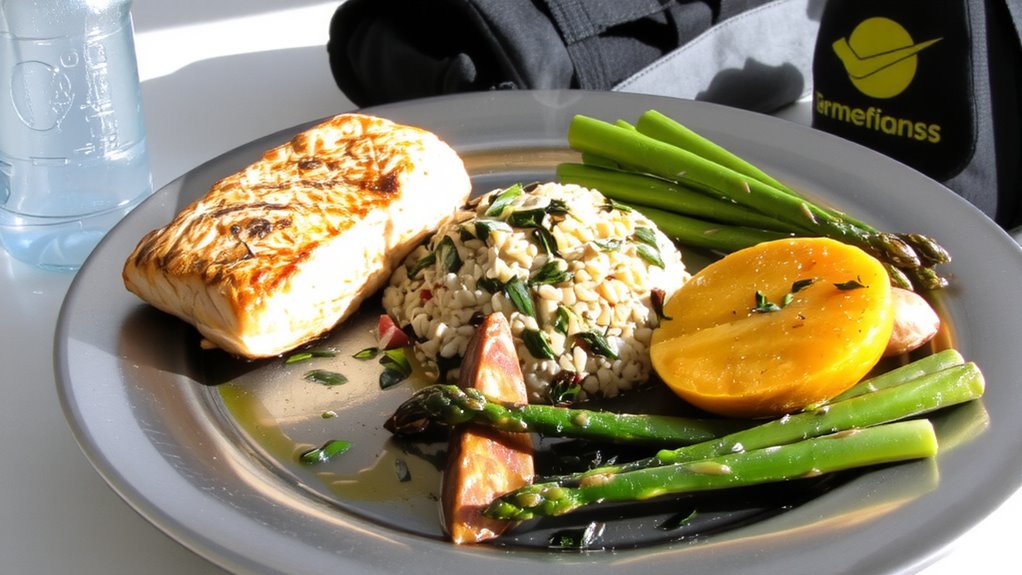
Recovery isn’t just downtime-it’s when your body rebuilds, adapts, and grows stronger after intense rehab sessions. You need effective hydration strategies to restore fluid balance and support cellular repair, especially since even mild dehydration slows recovery. Electrolyte-enhanced drinks can help, particularly post-session. Inflammation management is equally critical; acute inflammation is natural, but chronic levels impede progress. Incorporating targeted nutrition and recovery-focused gear-like compression wraps or cold therapy units-can reduce swelling and improve circulation. These tools, when used consistently, enhance tissue healing and joint mobility. Your rehab plan should balance passive rest with active recovery, using science-based methods. Smart hydration strategies and disciplined inflammation management aren’t optional extras-they’re central to your rehab’s success. The right approach means fewer setbacks and faster gains. Quality recovery gear, paired with daily discipline, gives you an edge when pushing physical limits. Your body responds best when supported systematically.
Get More Energy With the Right Carbs
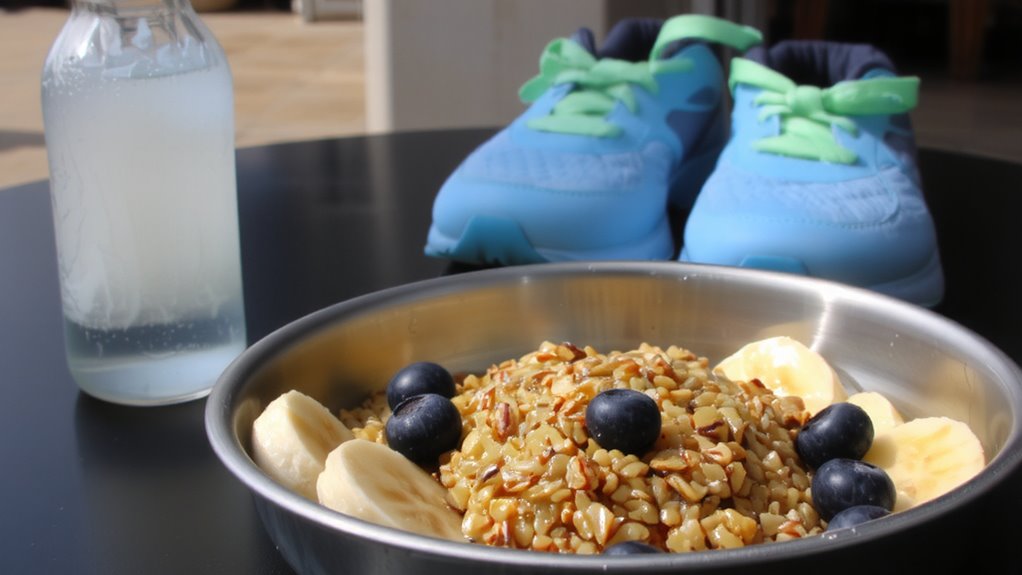
While your body works hard to repair and adapt during rehab, fueling it with the right carbohydrates makes a critical difference in energy availability and performance. You rely on glycogen stores for high-intensity efforts, and without proper glycogen replenishment, fatigue sets in faster. Choosing complex carbs like oats, sweet potatoes, and whole grains provides sustained energy compared to simple sugars that spike and crash your levels. Carb timing matters just as much-consuming carbs 1–2 hours before rehab primes your muscles, while post-session intake boosts recovery. You’ll notice sharper focus and stronger output when you align carb intake with your activity demands. It’s not just about eating carbs; it’s about strategy. Proper carb timing supports endurance, reduces early exhaustion, and keeps your rehab sessions effective.
Repair Muscles Faster With Targeted Protein
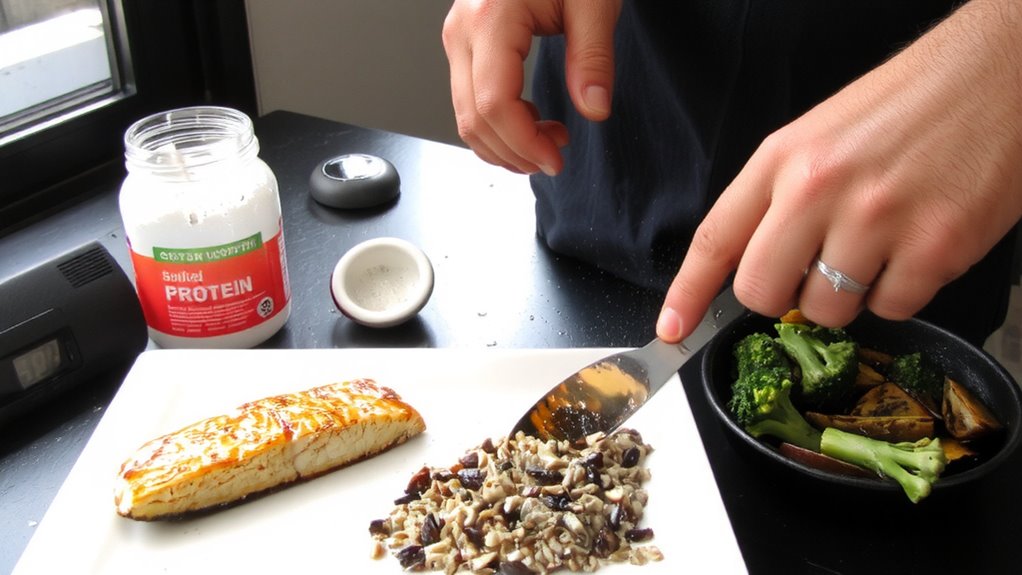
You’ve laid the groundwork with smart carb choices that keep your energy steady through rehab sessions, and now it’s time to build on that foundation with protein that targets muscle repair. Protein isn’t just about quantity-it’s about timing and quality. Consuming 20–30 grams of high-bioavailable protein within 45 minutes post-session optimizes muscle synthesis, the process that rebuilds damaged fibers stronger. Whey, eggs, and lean meats deliver fast-absorbing amino acids that fuel this recovery window. Recovery timing is critical: delay intake too long, and muscle synthesis drops by over 50%. Pairing protein with a small carb source enhances absorption, supporting faster adaptation. Unlike generic supplements, targeted protein formulas used in clinical rehab settings improve measurable recovery markers-like reduced soreness and improved range of motion. Your rehab effort deserves precision nutrition. Focus on quality sources and smart timing to maximize repair and keep progressing.
Sustain Effort and Heal With Healthy Fats
Fat’s the unsung hero in rehab-quietly powering endurance, reducing inflammation, and supporting cellular repair when your body’s under stress. You need fats to maintain hormone balance and joint lubrication, both critical during intense recovery. Healthy fats from sources like avocados, nuts, and fatty fish support fatigue prevention by providing sustained energy when carbs aren’t enough. They also optimize cell membranes, speeding up cellular repair after muscle trauma. Omega-3 fatty acids, in particular, lower inflammatory markers, helping you train consistently without setbacks. Don’t fear dietary fat-it’s essential for recovery efficiency. Skimping on it harms resilience and delays healing. For rehab patients pushing physical limits, fats aren’t optional; they’re functional fuel. Aim for quality over quantity: focus on whole-food sources to maintain metabolic flexibility and support long-term recovery.
Optimal Macro Ratios for Rehab Patients
Getting your fat intake right sets the stage for healing, but it’s just one piece of the recovery puzzle. For rehab patients, a balanced macro ratio-roughly 40% carbs, 30% protein, 30% fat-supports energy needs and tissue repair. You’re likely pushing your body during high-intensity sessions, so macro tracking helps guarantee you’re not underfueling or skewing ratios too heavily in one direction. Carbs fuel your workouts, protein rebuilds muscle, and fats reduce inflammation-each plays a role. Nutrient timing matters too: spreading protein evenly across meals maximizes synthesis, while carbs post-session replenish glycogen. These ratios aren’t one-size-fits-all; adjustments may be needed based on injury type, metabolism, and activity load. Still, consistent macro tracking gives you data to refine intake. When paired with smart nutrient timing, this approach sustains performance and accelerates recovery-critical when every rep counts.
When to Eat for Peak Rehab Performance
Though timing isn’t everything, eating at strategic points throughout the day can meaningfully influence your recovery trajectory during rehab. Proper meal timing guarantees your body has consistent energy and building blocks when it needs them most. Aim to eat a balanced meal 1.5 to 2 hours before therapy-this gives digestion time while sustaining focus and strength. Include nutrient pairing in that meal: combine carbs with protein and a little healthy fat to stabilize blood sugar and support muscle repair. After your session, eat within 45 minutes; this window maximizes recovery. A snack or meal with a 3:1 ratio of carbs to protein enhances glycogen replenishment and reduces muscle breakdown. Thoughtful meal timing isn’t rigid-it’s about syncing nutrition with your rehab demands. When paired with effective fitness recovery gear, smart nutrient timing helps you train harder, heal faster, and maintain momentum.
Fast, Balanced Foods to Fuel Recovery
You’ve already seen how timing your meals around therapy sessions can sharpen your recovery-now let’s talk about what actually goes on your plate. Foods with smooth textures and quick digestion support nutrient absorption when your body is rebuilding. Think of blends, shakes, and soft-cooked meals that ease the digestive load. These aren’t just convenient-they help maintain energy without discomfort post-exercise.
| Food Option | Texture Benefit | Digestion Speed |
|---|---|---|
| Greek yogurt | Smooth, creamy | Fast |
| Banana | Naturally soft | Moderate-Fast |
| Oatmeal (blended) | Customizable smoothness | Moderate |
| Protein shake | Liquid, no resistance | Very fast |
| Mashed sweet potato | Easy to swallow | Moderate |
Each offers balanced macros and complements rehab demands, especially when recovery time is short. Prioritize options that are simple to prepare and gentle on your system.
On a final note
You need balanced macronutrients to sustain high-intensity rehab without crashing. Carbs fuel workouts, protein repairs tissue, and fats support joint health and endurance. A ratio of 45% carbs, 30% protein, and 25% fat often optimizes recovery. Timing matters-eat complex carbs and protein 1–2 hours pre-session and refuel within 30 minutes post. Whole grains, lean proteins, and unsaturated fats deliver steady energy, reducing fatigue and improving rehab outcomes.