Using Guided Imagery to Maintain Neuromuscular Connection During Limb Immobilization
You can use guided imagery to maintain your neuromuscular connection while immobilized by mentally rehearsing movements. This technique activates motor pathways in your brain, preserving muscle memory and slowing atrophy without physical effort. Studies show it reduces strength loss and supports faster recovery. Combined with proper rehab timing and focus, it’s a practical tool during healing-especially when movement isn’t possible. There’s more to discover about how this method sharpens brain-muscle communication over time.
Notable Insights
- Guided imagery activates motor brain regions, preserving neural pathways without physical movement.
- Mental rehearsal of movements maintains neuromuscular signaling during limb immobilization.
- Regular visualization slows muscle atrophy and strength loss in immobilized limbs.
- Practicing guided imagery daily enhances neuroplasticity and motor pattern retention.
- It complements rehabilitation by preparing the nervous system for physical retraining post-immobilization.
Why Imagining Movement Helps Prevent Muscle Loss
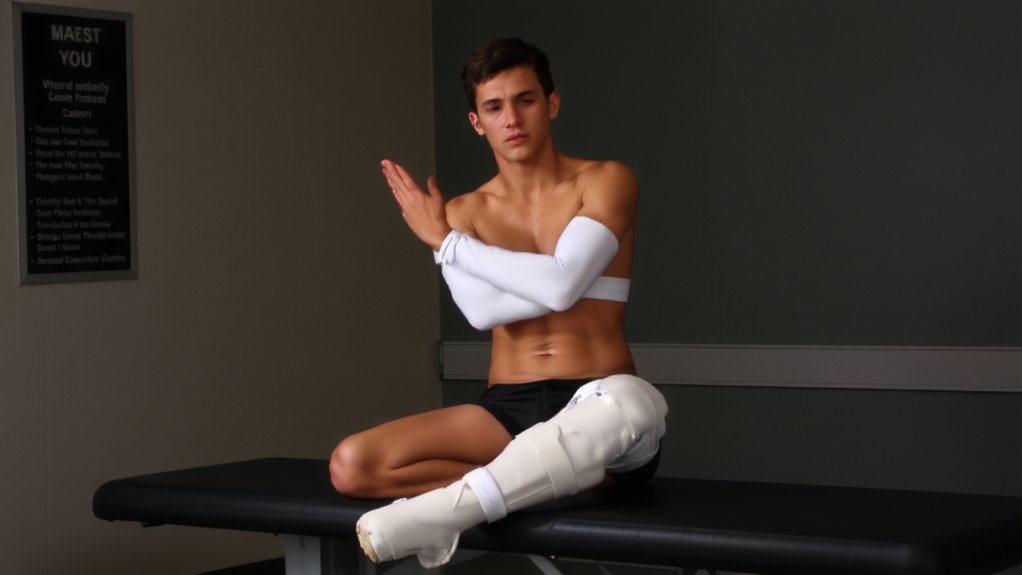
While you might not expect mental practice to impact physical strength, research shows that simply imagining movement can help slow muscle atrophy during periods of inactivity. When you visualize contracting muscles, your brain activates similar pathways used in actual movement, supporting neural adaptation. This mental rehearsal maintains signal efficiency between your brain and muscles, which is essential when physical training isn’t possible. Studies show individuals who use guided imagery daily preserve more strength than those who don’t, thanks in part to sustained neural drive. Beyond the physiological benefit, this practice builds mental resilience, helping you stay focused and motivated during forced recovery. It’s not a replacement for resistance training, but as a supplementary tool-especially when paired with proper recovery gear like compression or EMG biofeedback devices-it offers a practical edge. Consistent, focused imagery turns downtime into active recovery, preserving both function and confidence. Devices like best EMS machines can further support neuromuscular engagement during immobilization.
How Mental Practice Keeps Your Brain-Muscle Connection Strong
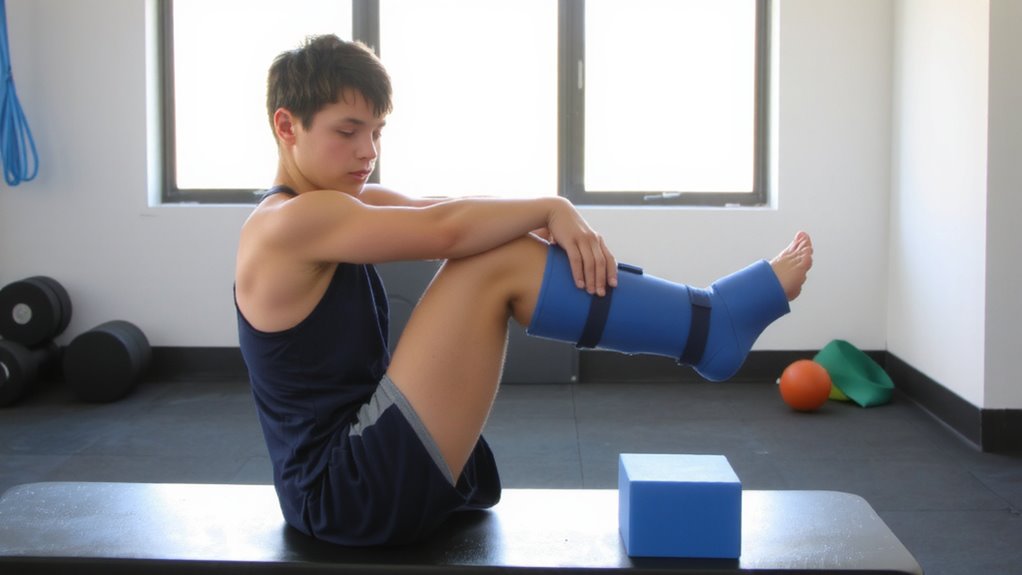
You’re already seeing how imagining movement helps maintain strength during inactivity, and now it’s worth exploring exactly how mental practice strengthens the communication between your brain and muscles. When you vividly picture performing a movement, your brain activates similar neural pathways used during actual physical execution. This boosts neural plasticity-the brain’s ability to reorganize and form new connections-keeping motor signals sharp. Consistent mental rehearsal builds mental resilience, helping you stay focused and motivated during recovery phases when physical training isn’t possible. These cognitive workouts preserve the integrity of the neuromuscular junction, ensuring your muscles respond more efficiently once activity resumes. While no substitute for actual resistance training, this technique complements rehabilitation by maintaining brain-muscle signaling. When paired with proper recovery gear and structured rest, guided imagery becomes a practical, science-backed tool that supports long-term musculoskeletal health.
Can Guided Imagery Really Fight Atrophy? The Evidence

Could something as simple as visualization actually slow muscle loss when you’re sidelined? Research suggests it can. Studies show guided imagery activates neural pathways similar to actual movement, leveraging neural plasticity to maintain the brain-muscle link. When you mentally rehearse contractions, your brain sends faint signals to the immobilized muscle, helping preserve some strength. Trials found participants using visualization lost markedly less muscle mass than controls, even without physical rehab. While the placebo effect may contribute-believing in recovery can boost motivation and perceived outcomes-results persist beyond expectation alone. This isn’t magic; it’s neurology. The mental practice doesn’t replace resistance training but acts as a maintenance tool, especially useful when movement’s restricted. Evidence supports its role in slowing atrophy, making guided imagery a practical, accessible strategy to support fitness recovery during enforced rest.
When to Start Visualization After Injury or Surgery
Starting visualization early after injury or surgery can make a real difference in how quickly you regain strength once healing allows movement. Timing considerations are critical-beginning too soon might interfere with medical protocols, but waiting too long risks losing neuromuscular efficiency. Research suggests you can start guided imagery within days of immobilization, provided pain and swelling don’t overwhelm focus. Your recovery readiness isn’t just physical; mental and emotional stability also matter. If you’re alert, reasonably comfortable, and cleared for cognitive engagement, visualization is likely safe and beneficial. Athletes using mental rehearsal during early recovery often report better muscle recall later. It’s not a substitute for rehab, but it complements it. Think of it as maintaining neural circuitry while the body heals. With minimal risk and solid potential payoff, initiating visualization at the right moment supports a smoother, faster return to full function.
How to Do Guided Movement Visualization (Step by Step)
Picture yourself mentally rehearsing a movement, not just imagining it, but feeling it-the subtle shifts in muscle tension, the rhythm of coordination, even the breath that matches the effort. This is the core of guided movement visualization, a powerful mind body technique that leverages sensory immersion to sustain neuromuscular pathways during immobilization. To practice effectively, follow these steps:
| Step | Action | Purpose |
|---|---|---|
| 1 | Find a quiet space, close your eyes | Minimize distractions |
| 2 | Recall the target movement precisely | Activate motor memory |
| 3 | Engage all senses-feel, hear, see the motion | Deepen sensory immersion |
| 4 | Slowly “perform” the movement in your mind | Strengthen neural firing |
| 5 | Repeat daily, 5–10 minutes | Maintain consistency |
These mind body techniques enhance recovery fidelity when physical practice isn’t possible. Success depends on realistic mental rehearsal, not passive daydreaming. With disciplined application, visualization supports structural retention better than rest alone.
Boost Results With Breathwork and Focus
How deeply are you syncing your breath with movement during visualization? Integrating breath awareness into your practice sharpens mental clarity and deepens neuromuscular engagement. When you inhale as you picture lifting or contracting a muscle, and exhale during release, you’re reinforcing actual motor patterns-this isn’t just symbolic, it’s physiological. Controlled breathing stabilizes your nervous system, helping you stay focused and present, which increases the fidelity of your mental rehearsal. Without this synergy, your visualization can become passive, less effective. Think of breath as the rhythm section in a band-it keeps everything in time. When you combine deliberate breathwork with precise mental focus, you’re not just picturing movement, you’re priming your nervous system for real activation. This method demands attention, but the payoff-maintained muscle memory during immobilization-is well worth the effort. Consistent focus elevates guided imagery from abstract exercise to functional recovery tool.
Signs Your Guided Imagery Practice Is Working
While results can vary depending on consistency and technique, you’ll likely notice sharper mental focus during movement prep if your guided imagery is taking hold-your ability to isolate specific muscle groups in your mind’s eye becomes more precise, much like tuning a blurred image into clear detail. You might also experience improved confidence when resuming physical activity, as your brain rehearsed correct movement patterns despite immobilization. Reduced anxiety around reinjury is another strong indicator, suggesting your nervous system recognizes familiar neuromuscular signals. Physically, you may detect less muscle atrophy and faster reactivation during rehab exercises, which aligns with studies showing mental rehearsal helps preserve motor pathways. These subtle but measurable shifts reflect functional gains, not just perception. When combined with breathwork, the effects deepen, enhancing both psychological readiness and physiological response-key markers that your practice isn’t just mental, but neurologically active and rehabilitatively meaningful.
On a final note
You’re not just resting-you’re actively preserving strength by keeping neuromuscular pathways engaged. Guided imagery, when combined with breath control and focus, slows atrophy during immobilization. Research supports its role in maintaining muscle function, making it a practical addition to recovery. It won’t replace physical training, but it bridges the gap, especially when movement isn’t possible. This mental rehearsal is low-cost, safe, and effective, proving that even without gear, your mind remains a powerful recovery tool.