Maximizing Recovery Through Strategic Application of Self-myofascial Release Techniques (SMRT)
You can maximize recovery by using SMRT to retrain muscle firing patterns and reduce tension through low-load contractions and targeted rolling. It enhances fascial hydration and calms the nervous system, especially when applied post-workout or before bed. Focus on tight areas like quads, hamstrings, and glutes with a firm roller or handheld tool, pairing slow breathing and movement for deeper release. The right technique and timing boost mobility and repair-there’s more to discover about fine-tuning your routine for lasting results.
Notable Insights
- Apply SMRT post-workout to reduce muscle tension and accelerate recovery through neuromuscular re-education.
- Target underactive glutes and overused quads, hamstrings, calves, and upper traps for balanced muscle function.
- Use diaphragmatic breathing during SMRT to decrease muscle guarding and enhance fascial release effectiveness.
- Time SMRT sessions before bed or on active recovery days to support parasympathetic activation and tissue repair.
- Choose appropriate tools like firm EPP rollers or vibrating devices to modulate intensity and improve myofascial engagement.
What Is SMRT and How Does It Help Recovery?
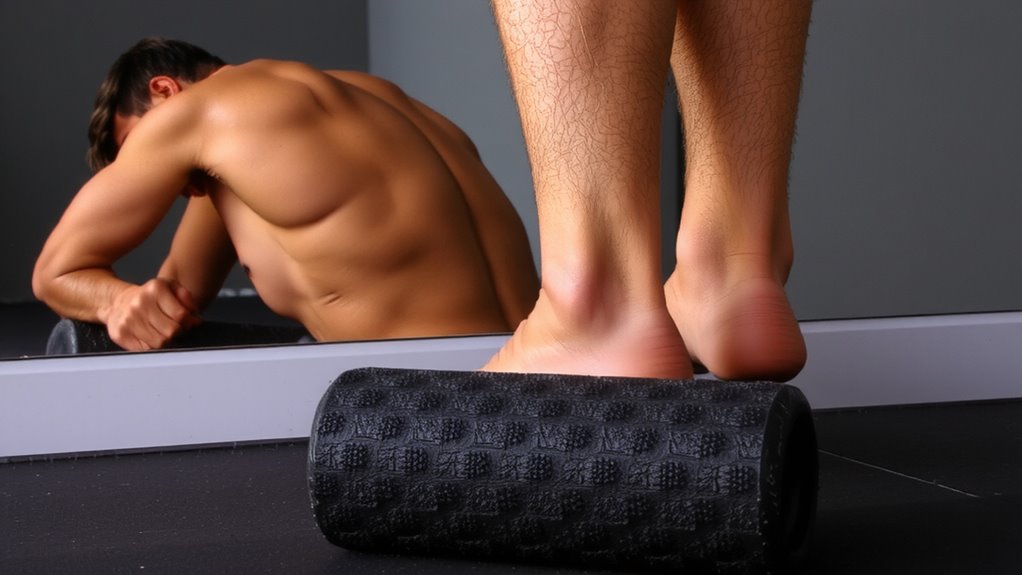
While you might already be familiar with various recovery methods, SMRT-Short Muscle Resistance Training-stands out by combining neuromuscular re-education with precise, low-load contractions to accelerate recovery after intense workouts. You’re not just relaxing muscles-you’re retraining them to fire efficiently again. This method supports fascial hydration by stimulating fluid exchange within connective tissues, promoting pliability and reducing stiffness. It also facilitates a nervous system reset, calming overactive reflexes that can inhibit movement quality. Unlike passive tools like foam rollers, SMRT actively engages your body’s signaling pathways. You maintain control over intensity and timing, making it adaptable whether you’re using minimal equipment or advanced recovery gear. Studies suggest regular practice improves both recovery speed and movement precision. It’s not a shortcut, but a strategic upgrade-one that’s efficient, science-aligned, and effective when applied consistently as part of a smart recovery routine.
Top 5 Muscles to Target With SMRT
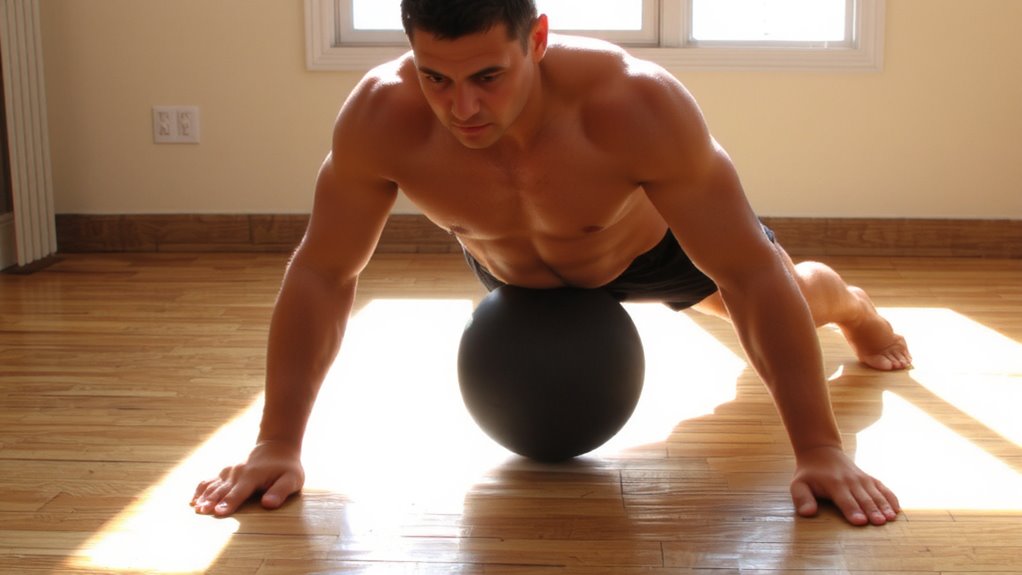
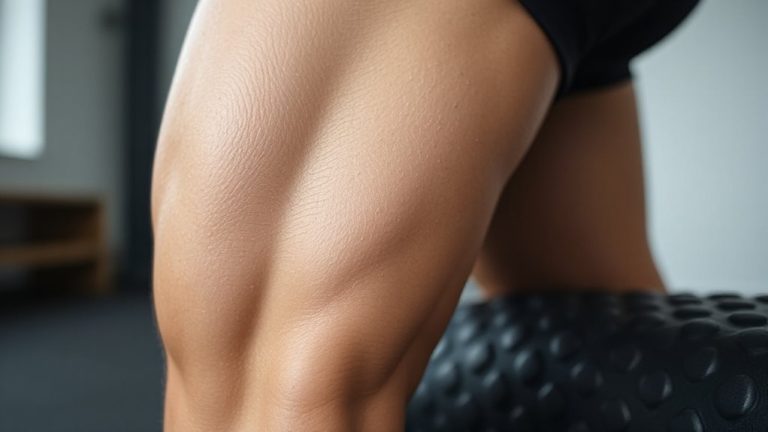
You’ll get the most out of SMRT by focusing on muscle groups that commonly become tight, overactive, or neurologically fatigued after intense training-areas where neuromuscular efficiency tends to break down and restrict movement quality. The quadriceps, hamstrings, glutes, upper trapezius, and calves are top targets. Foam rolling these areas helps reduce hypertonicity and adhesion buildup, especially post-workout. You’ll notice improved muscle activation once tension is released, allowing for better contraction efficiency and joint tracking. The quads and calves often become overused in runners, while the upper traps respond well to SMRT after prolonged sitting. Glutes, despite being powerful, frequently underfire due to inhibition, which foam rolling can help reset. Consistent technique enhances recovery and prepares the nervous system for peak performance, making these five muscles prime candidates for regular SMRT application. Choosing the right tool, such as a high-density foam roller, can significantly impact the effectiveness of your self-myofascial release routine.
How to Use Breathing and Movement for Better Release?
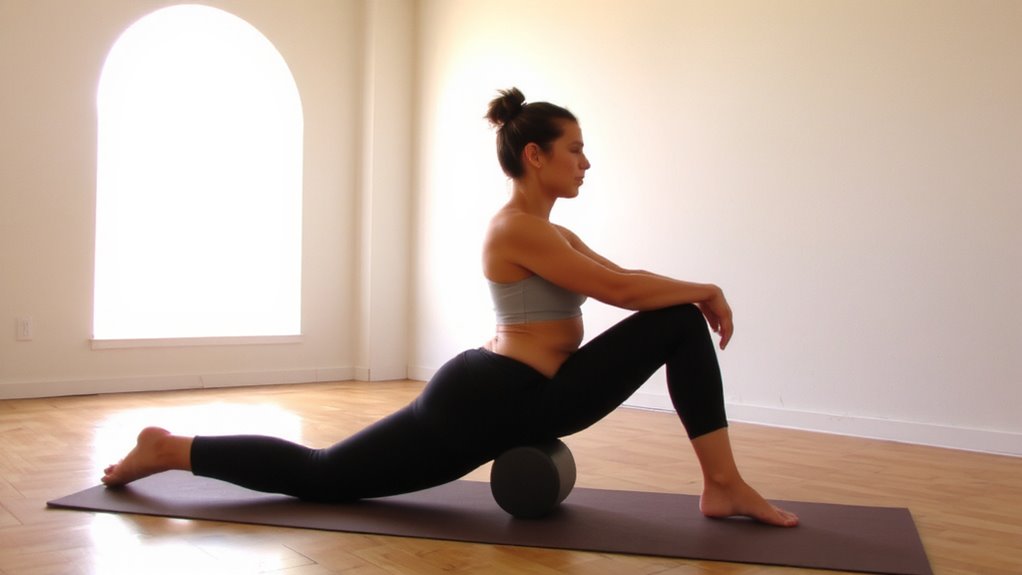
How often do you roll out your muscles only to feel the same tension creep back hours later? You’re not alone-and the missing link might be how you’re breathing and moving. Using diaphragmatic breathing during SMRT signals your nervous system to relax, helping muscles release more effectively. Pair this with controlled movement, and you’ll see better results. Instead of static holds, integrate dynamic stretching after releasing a tight area-this primes your body for improved mobility and lasting change. Think of it as resetting both tension and range. A high-quality vibrating foam rollers can enhance these effects by increasing blood flow and promoting deeper myofascial release.
| Technique | Benefit |
|---|---|
| Diaphragmatic breathing | Reduces muscle guarding |
| Slow exhalation | Enhances fascial release |
| Dynamic stretching | Improves post-release mobility |
| Coordinated movement | Increases neuromuscular control |
These methods maximize tissue response and support long-term recovery.
When Should You Use SMRT: Timing Tips for Recovery?
When should you apply SMRT for the best recovery outcomes? The ideal timing depends on your recovery phases and daily routine. Using SMRT post-workout helps reduce muscle tension and accelerates recovery by improving blood flow and tissue relaxation. It’s also effective before bed, supporting parasympathetic activation and deeper muscle repair during sleep. If you’re sedentary during the day, a midday session can reset tight fascia and improve mobility. However, avoid intense SMRT right before strength training-it may reduce neural drive. Instead, save it for active recovery days or cooldowns. Listening to your body guarantees you align SMRT with your needs. The technique works best when timed deliberately, not randomly. Strategic application across recovery phases enhances adaptation, making SMRT a smart, flexible tool in your fitness recovery toolkit. For optimal results, consider using a high-quality percussion massager to enhance the effectiveness of your self-myofascial release sessions.
Best Tools for Effective SMRT Rolling?
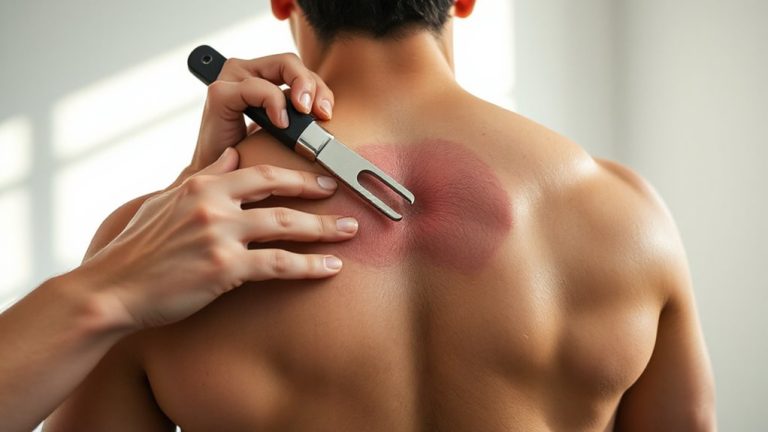
Now that you’ve got a handle on when to use SMRT for best recovery, it’s time to focus on the gear that makes the technique effective. Your foam selection plays a vital role-denser rollers like EPP or PVC offer firm support for deep tissue work, while softer EVA foam suits beginners or sensitive areas. Textured surfaces, such as grids or ripples, enhance myofascial engagement but require careful pressure control to avoid bruising. For targeted work, handheld tools like massage balls or vibrating rollers increase precision, especially in tight zones like hips or shoulders. Adjustable hardness models let you modulate intensity, improving session customization. Durability and portability also factor in-lightweight, non-porous materials resist wear and simplify cleaning. Ultimately, the best tool balances performance with user control, letting you adjust pressure smoothly and maintain consistent technique. Match your choice to your recovery needs, and you’ll get more out of every roll.
On a final note
You’ve likely found that SMRT speeds recovery by easing muscle tension and improving circulation. When paired with proper breathing and timing, it enhances mobility and reduces soreness. Foam rollers and massage balls work well, though density and size matter for precision. Used correctly, these tools deliver consistent, practical results-especially on key areas like quads and glutes. While not a cure-all, SMRT is a valuable, evidence-supported addition to recovery routines.