Utilizing Isometric Wall Sits With Abdominal Bracing for Patellofemoral Pain Prevention
You can prevent patellofemoral pain by doing isometric wall sits with proper abdominal bracing. This exercise stabilizes your knee through improved quad, glute, and core control while minimizing joint stress. Keep your back flat, spine neutral, and knees aligned over ankles as you engage your core by drawing in your belly. Avoid letting knees cave or shift forward past toes. Holding the position builds endurance and neuromuscular coordination-key for long-term knee resilience. There’s more to optimizing this preventive strategy effectively.
Notable Insights
- Isometric wall sits reduce patellofemoral joint stress by promoting optimal knee alignment and minimizing compression.
- Abdominal bracing stabilizes the core, enhancing neuromuscular control and lower-extremity alignment during the exercise.
- Proper form includes neutral spine, knees over ankles, and engaged core to prevent compensatory movements.
- Wall sits strengthen quadriceps, glutes, and hip abductors, addressing muscle imbalances that contribute to knee pain.
- Gradual progression in hold time and sets builds endurance while minimizing risk of overloading the joint.
What Causes Patellofemoral Knee Pain
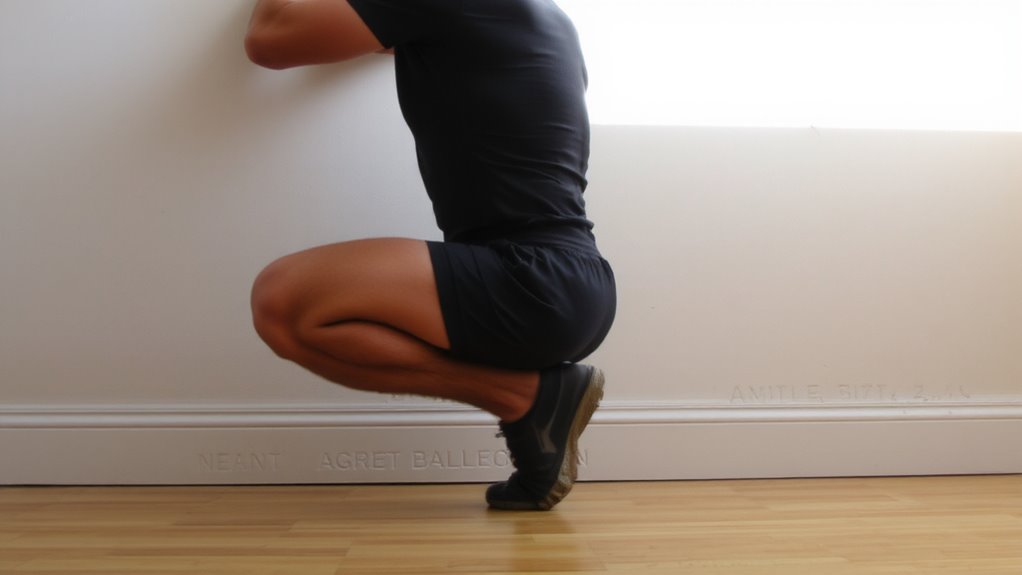
Why does your knee ache when you climb stairs or sit too long? Patellofemoral pain often stems from biomechanical imbalances that misalign your kneecap during movement. When your hips, ankles, or knees don’t track properly, pressure builds under the patella, irritating soft tissues. Muscle weakness-especially in the quadriceps, glutes, and hip abductors-compromises joint stability, forcing your knee to bear uneven loads. These deficits aren’t always obvious during rest, but become apparent with repetitive stress. Without correcting these imbalances, even low-impact activities can trigger discomfort. Evaluative research shows that poor lower-extremity control is a stronger predictor of pain than structural abnormalities. That’s why prevention strategies now emphasize functional strength and alignment over passive treatments. Effective fitness recovery isn’t just about rest-it requires targeted training that addresses root causes. Properly designed routines correct weaknesses before they escalate, keeping your knees resilient.
Why Wall Sits Reduce Kneecap Stress
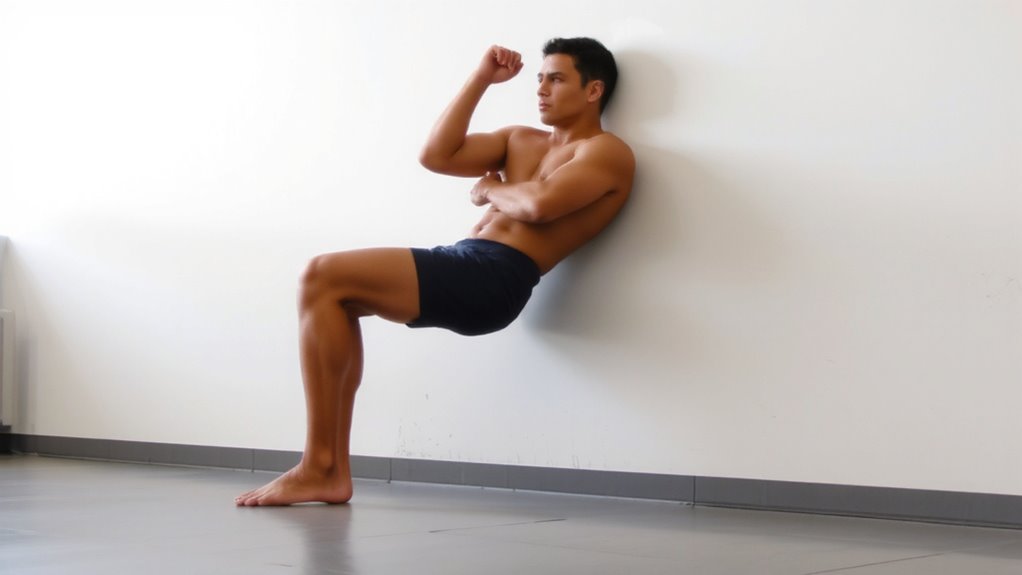
A well-executed wall sit shifts stress away from the patellofemoral joint by promoting ideal knee alignment and enhancing muscular endurance in the quadriceps, glutes, and hip stabilizers. You maintain a static squat against the wall, which encourages proper biomechanical alignment, reducing excessive force on the kneecap. This position minimizes joint compression compared to dynamic squats or lunges, making it safer for sensitive knees. Over time, wall sits improve neuromuscular control, helping your body better coordinate muscle firing patterns during movement. That means your knee tracks more smoothly over time, decreasing uneven wear. The exercise demands minimal equipment, making it accessible and efficient. While it doesn’t replace full functional training, it’s a valuable preventive tool. Wall sits bridge the gap between stability and strength, especially when recovery or joint irritation limits high-impact work. For those seeking additional low-impact options, best exercise equipment can complement wall sit training effectively.
How to Do a Wall Sit With Core Bracing
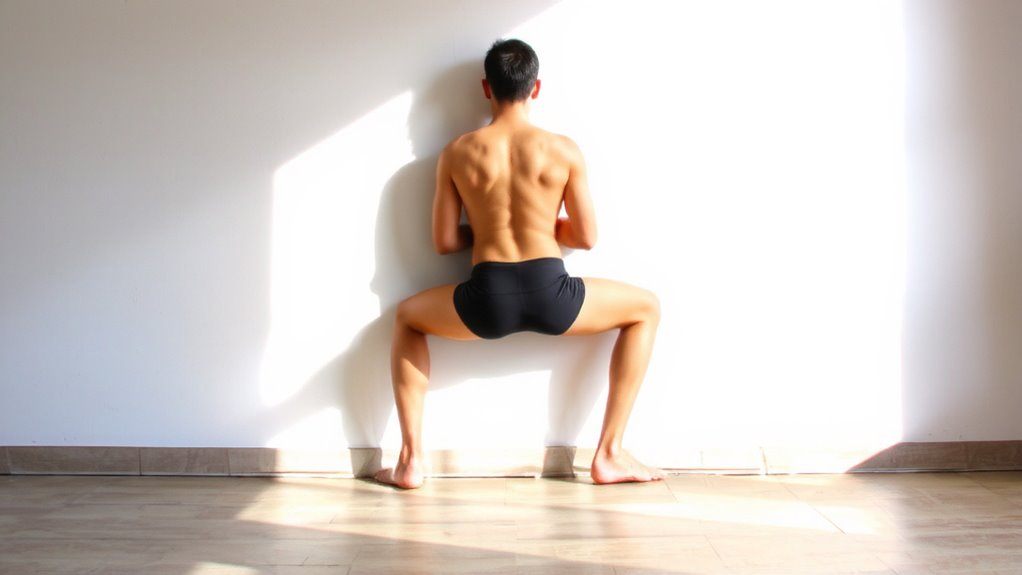
With your back flat against the wall and feet positioned about 18 inches forward, start by sliding down into a seated position until your knees reach roughly 90 degrees. Maintain proper alignment by keeping your spine neutral, shoulders relaxed, and knees aligned over your ankles-don’t let them cave inward. Engage your core by drawing your belly button gently toward your spine; this enhances muscle activation in both your abdominals and glutes, offering better stability. Hold the position steadily, breathing deeply without letting your hips shift. Proper alignment reduces joint strain, while consistent muscle activation strengthens supporting musculature essential for patellar tracking. This isn’t just about leg endurance-it’s about training neuromuscular control. You’ll notice improved joint confidence over time, especially when paired with recovery tools like foam rollers or compression gear post-exercise. Wall sits with bracing demand focus, but they deliver functional strength that supports knee health efficiently. For optimal recovery, consider using a high-density foam roller to release muscle tension and improve tissue quality.
Avoid These Wall Sit Form Mistakes
How often do you hold the wall sit a little too long, only to realize your form has completely broken down? It’s easy to let fatigue compromise your technique, especially when building endurance. One common mistake is allowing your knees to cave inward, creating knee valgus-this unevenly loads the patellofemoral joint and increases injury risk. You should actively push your knees outward to maintain alignment over your toes. Another issue is excessive posterior pelvic tilt, where your lower back rounds and your hips tuck under. This reduces glute engagement and shifts stress to your spine. Maintaining a neutral spine with slight natural curvature guarantees proper muscle activation. Also, avoid letting your knees go past your toes, as this increases compressive forces. Stay mindful of your body’s positioning throughout each hold. Good form beats duration-quality matters more than time when preventing knee pain.
How to Build a Wall Sit Routine for Knee Pain
Why do some people see real improvements in knee comfort while others barely notice a difference-could it be how they structure their wall sit routine? Your exercise frequency and injury history play key roles. Starting too aggressively may worsen symptoms, especially with prior knee issues. Instead, a gradual, consistent approach supports tissue tolerance and neuromuscular control.
| Week | Hold Time (sec) | Sets |
|---|---|---|
| 1 | 20 | 2 |
| 2 | 30 | 2 |
| 3 | 30 | 3 |
| 4 | 45 | 3 |
Perform sessions every other day, allowing recovery between. This rhythm balances stimulus and adaptation. If your injury history includes patellofemoral pain, progress more slowly. Pair wall sits with abdominal bracing to enhance joint stability. The simplicity of the exercise masks its precision-proper dosing through frequency and duration makes all the difference in knee pain management.
When to Progress Your Wall Sit Workout
You’ve built a foundation with consistent wall sits, following a structured plan that respects your knee’s need for gradual loading. Now, progression timing depends on pain-free performance and improved endurance. If you can complete your current hold duration with ease-no shaking or compensations-for three consecutive sessions, it’s time to advance. Start by increasing hold duration in 10- to 15-second increments, aiming for a max of 60 seconds per set. Once you hit that threshold, consider adjusting depth or adding abdominal bracing challenges, not just time. Rushing progression risks irritation, so listen to your body. Wall sits aren’t about maxing out-they’re about controlled, consistent gains. Quality matters more than duration. Track your holds, note discomfort, and adjust accordingly. Proper footwear and a stable surface also support effective execution, ensuring your form remains intact as you progress safely.
On a final note
You’re likely to see real benefits from wall sits with abdominal bracing if you’re tackling patellofemoral pain. They reduce kneecap stress while boosting quad and core strength. When performed correctly, they’re a low-impact, efficient exercise. Just avoid common form mistakes like flared ribs or arched lower backs. A consistent, progressive routine enhances knee stability. Paired with proper recovery tools-foam rollers, quality knee sleeves-you’re setting up long-term joint health and movement efficiency.