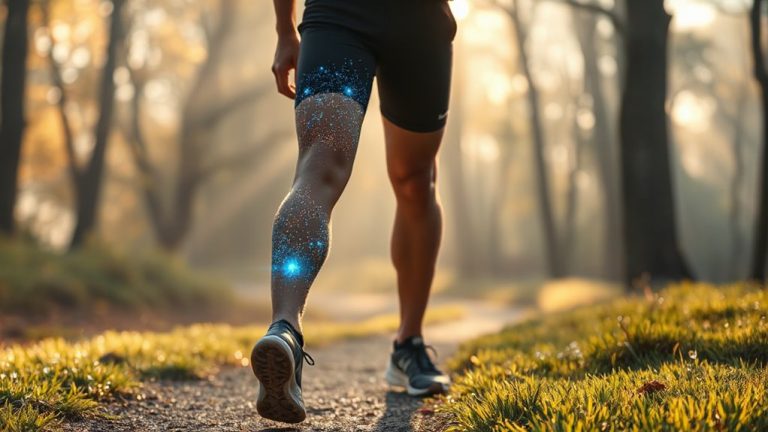
Visualization of Warmth Flowing Into Cramp-Prone Calves During Static Meditation
You’re more likely to get calf cramps during meditation because stillness reduces blood flow, especially in fatigued muscles. Directing a mental image of gentle warmth into your calves helps relax tight tissue and boosts circulation without movement. This visualization activates the parasympathetic response, easing muscle tension more effectively than passive rest. Avoid intense imagery like fire-opt for a soft, glowing warmth instead. Pairing this with daily practice and supportive gear like compression sleeves strengthens neuromuscular resilience over time-there’s a more effective way to sustain focus and comfort.
Notable Insights
- Visualizing warmth in calves during meditation helps relax fatigued muscles and prevent cramps.
- Focus on a gentle, glowing warmth flowing into the calves to enhance muscle relaxation.
- Avoid intense images like fire; use subtle, soothing warmth to prevent nervous system arousal.
- Combine mindfulness breathing with warmth visualization to improve circulation and reduce cramp risk.
- Daily practice strengthens brain-muscle connection, aiding faster recovery and sustained meditation focus.
Why Cramps Ruin Meditation (And How Warmth Helps)
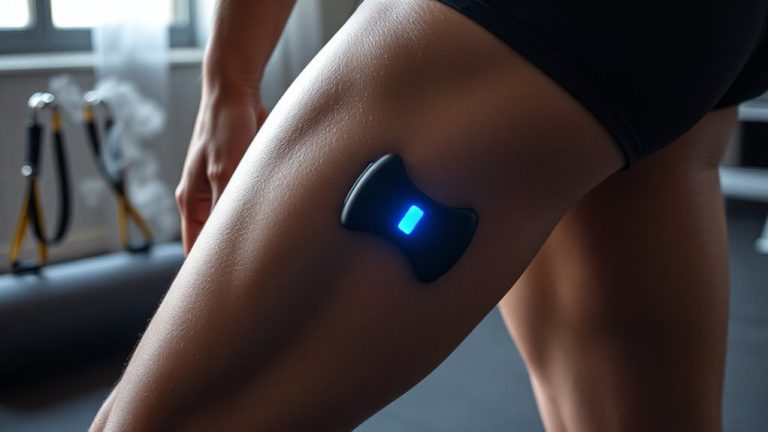
Ever wonder why muscle cramps strike just as you settle into meditation? It’s often due to muscle fatigue and poor circulation, especially in the calves. When you sit still, blood flow slows, and if your legs are already taxed from daily activity, cramps can flare up unexpectedly. This disrupts focus and undermines the mental calm you’re trying to achieve. Static postures during meditation mean your muscles aren’t contracting rhythmically to support circulation, increasing the risk. You’re fundamentally asking fatigued muscles to stay idle under low oxygen conditions. Warmth helps by dilating blood vessels, enhancing circulation and reducing residual fatigue. Using warmth-inducing gear-like infrared wraps or heated mats-can sustain perfusion and prevent spasms. These tools don’t replace movement, but they complement recovery by maintaining vascular efficiency. With consistent use, you’ll likely notice fewer cramps and deeper meditation. Warmth isn’t a fix-it’s a functional upgrade.
Send Warmth to Cramping Calves
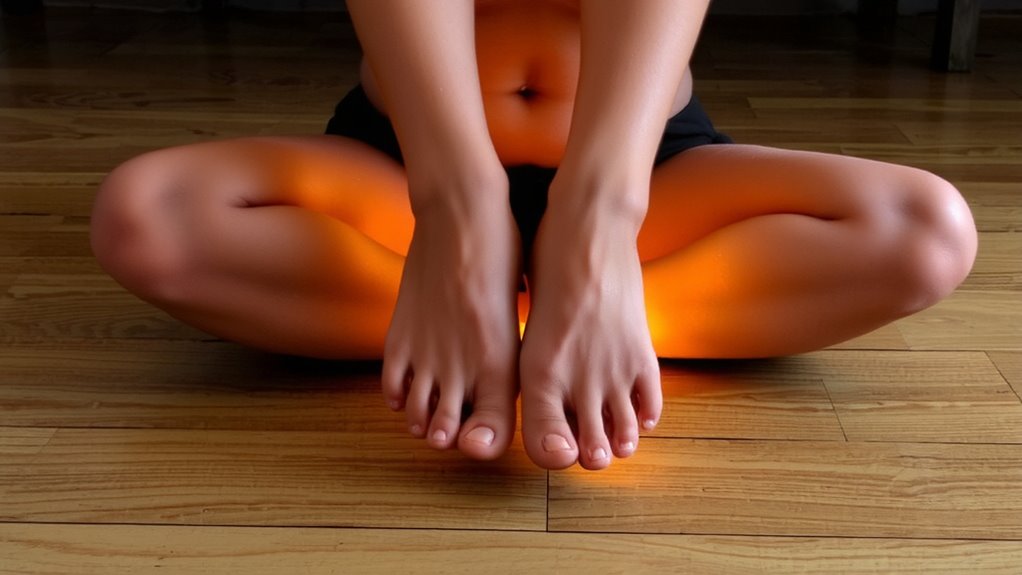
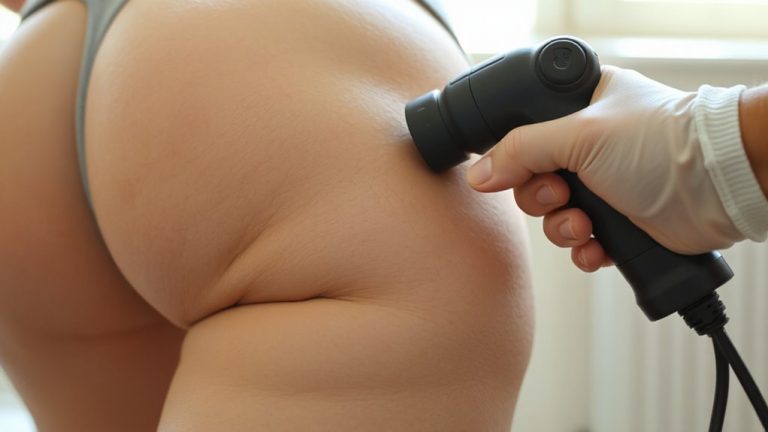
Why do cramps so often sabotage your meditation just as you’re finding your rhythm? Tight calves disrupt both comfort and focus, especially during extended static postures. The solution lies in combining mindful breathing with deliberate energy focus. As you inhale, draw warmth from your core; as you exhale, direct it toward your lower legs. This isn’t just placebo-it’s functional neuromuscular feedback, enhanced by visualization. Devices like FIR (far-infrared) recovery wraps support this process, emitting therapeutic heat that mirrors your body’s natural thermal response. Used during or after meditation, they reinforce the effects of your internal energy focus. While not a substitute for technique, quality gear can amplify results, especially for those prone to cramping. Consistent practice with mindful breathing and targeted warmth improves circulation and muscular resilience over time. It’s a synergy of physiology and intention-low-tech in approach, high-yield in recovery. For those seeking external support, best vibration therapy devices can further enhance muscle relaxation and circulation when used in tandem with visualization techniques.
How Visualization Eases Muscle Tension
How does the mind quiet a clenched muscle when no touch is involved? Through mental focus, you direct awareness to the tightness in your calves, imagining warmth flowing into the area like a soothing current. This mental rehearsal triggers muscle relaxation by activating the parasympathetic nervous system, reducing neural firing in overactive fibers. Studies suggest that visualization alone can decrease electromyographic activity, easing tension without physical intervention. You’re not just picturing comfort-you’re guiding a physiological shift. Consistent practice strengthens the brain-muscle connection, enhancing recovery efficiency. While fitness recovery tools like compression boots or massage guns offer mechanical aid, they can’t replicate the internal recalibration visualization provides. Your mind becomes a precision instrument, targeting cramp-prone zones with quiet accuracy. When combined with breath control, this technique optimizes restorative outcomes, proving mental focus isn’t supplemental-it’s foundational to sustainable muscle recovery and long-term resilience.
Avoid These Visualization Mistakes
Isn’t it frustrating when your visualization practice feels like mental noise instead of relief? That’s often due to misguided imagery-picturing warmth as a blazing fire, for instance, can overstimulate rather than soothe cramp-prone calves. Your brain interprets such exaggerated scenes as stressors, counteracting the goal of recovery. Avoid forced relaxation, too; tension won’t dissolve just because you command it. Pushing calmness creates internal resistance, making the session feel laborious. Instead, guide your focus gently, using subtle, accurate cues like a soft glow or gradual warmth. This aligns with how neuromuscular systems respond during static meditation-gradually and subconsciously. Visualization works best when it feels natural, not manufactured. Precision in mental imagery matters as much as form in physical training. When you skip these pitfalls, the flow of warmth becomes not just envisioned, but physiologically plausible, supporting genuine calf recovery.
Build a Daily Visualization Habit
Where do most people go wrong when trying to sustain a visualization practice for calf recovery? They treat it like a quick fix, not a daily discipline. You’ve got to commit, even when results aren’t immediate. Start with five minutes: sit still, close your eyes, and focus on mindful breathing to calm the nervous system. Then, visualize warmth gently flowing into your calves, easing tension and restoring energy balance. Consistency beats duration-doing this every day conditions both body and mind. Think of it like charging a battery; skipping days drains progress. Pair your practice with recovery-friendly gear, like graduated compression sleeves, to reinforce the physical feedback loop. Over time, you’ll notice fewer cramps and faster recovery. This isn’t magic-it’s neuro-muscular retraining backed by breath control and sustained attention. Make it a non-negotiable part of your routine, and your legs will respond. For optimal support, consider trying best calf compression sleeves designed to enhance circulation and recovery during rest and activity.
On a final note
You’re not just imagining it-sending warmth to your calves through visualization really can ease cramp-related disruptions during meditation. Focused mental imagery boosts blood flow and relaxes tense muscle fibers, acting like internal recovery gear. Unlike compression sleeves or heating pads, this technique requires no equipment, just practice. Over time, consistent visualization builds neuromuscular resilience, making it a smart, low-cost addition to any fitness recovery routine-especially when mobility and mental focus matter.