Restorative Yin Yoga Class Plan Targeting Connective Tissue Remodeling
You’ll hold each supported pose 3–5 minutes to effectively remodel connective tissue, not just stretch it. Using props like cork blocks and memory foam bolsters, you sink into gentle, sustained tension that stimulates collagen realignment in fascia and ligaments. This slow loading activates fibroblasts, enhancing tissue resilience and hydration over time. A weekly restorative yin session also calms your nervous system, improving recovery. Consistent use of quality, non-slip gear guarantees stability and long-term joint health-discover how to optimize every element for lasting results.
Notable Insights
- Focus on holding poses 3–5 minutes to stimulate collagen synthesis and hydrate deep fascial layers.
- Use props like bolsters and blocks to support passive loading without muscular strain or joint compression.
- Prioritize stillness and mindful breathing to enhance parasympathetic activation and tissue remodeling.
- Include key poses such as Supported Child’s Pose and Reclining Twist for targeted connective tissue tension.
- Practice once weekly to improve joint range, flexibility, and long-term connective tissue resilience.
How Yin Yoga Strengthens Connective Tissue
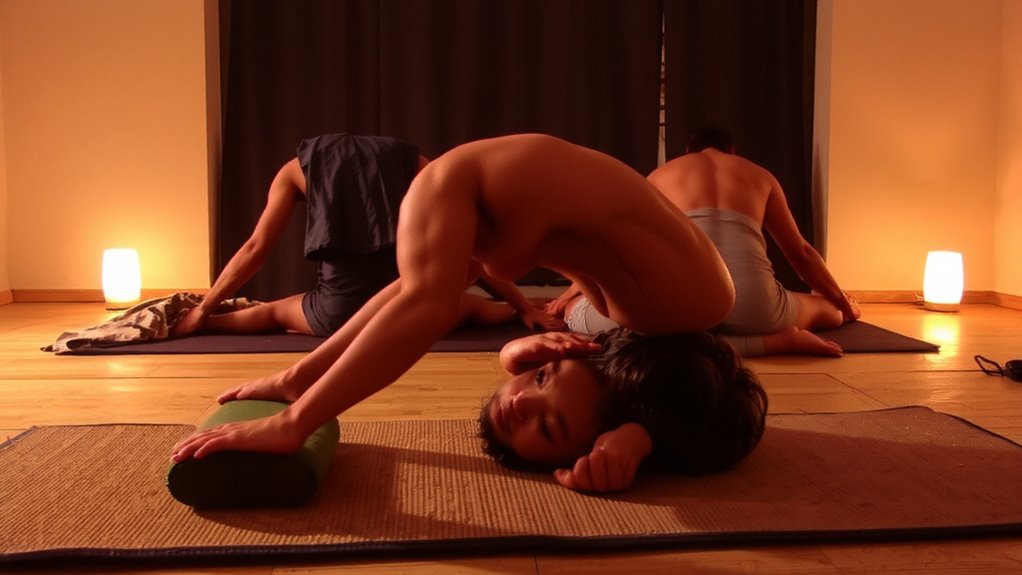
Think of your connective tissue like the body’s internal scaffolding-strong, flexible, and essential for joint stability. Yin yoga strengthens it by applying gentle, sustained tension, stimulating collagen synthesis where it’s needed most. That slow loading signals fibroblasts to produce fresh collagen, rebuilding ligaments and fascia over time. You’re not just stretching-you’re remodeling. Cellular hydration improves too, as prolonged holds encourage fluid exchange within the extracellular matrix, plumping tissues and enhancing resilience. Unlike dynamic styles, yin targets the deeper layers without taxing the nervous system. It’s subtle, but consistent practice yields measurable gains in joint integrity. Recovery isn’t just rest; it’s active renewal. The gear? A supportive mat with enough cushioning matters-cheap surfaces compromise posture and focus. Good props maintain alignment, letting you hold poses safely. Done right, yin yoga doesn’t just aid fitness recovery-it fortifies the body’s foundational architecture with precision and care.
Hold Poses This Long for Fascia and Joint Healing
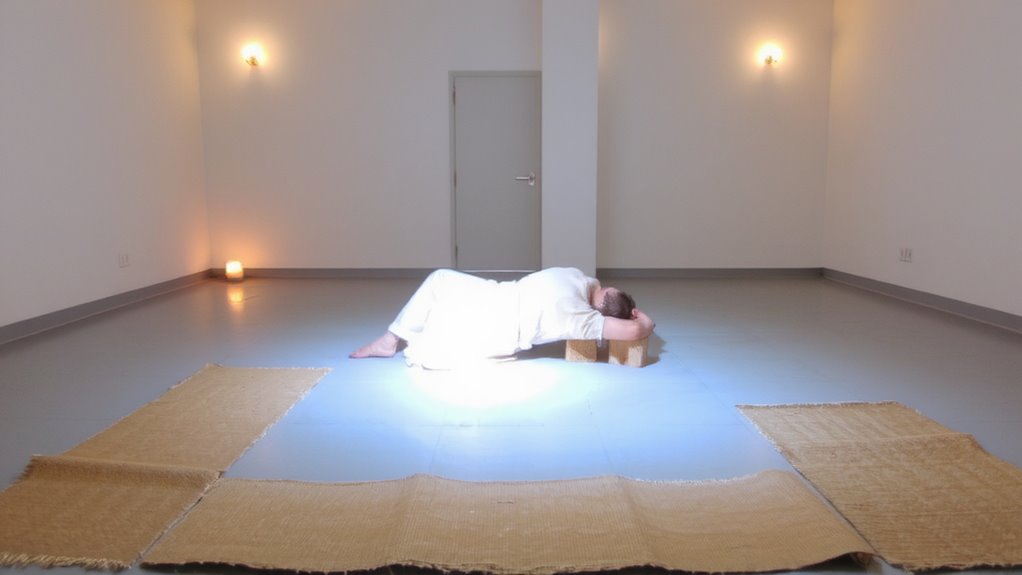
You’re already seeing how yin yoga strengthens connective tissue through sustained loading and collagen stimulation, but the real shift in results comes down to timing. For meaningful fascia and joint healing, you’ll need to hold poses between 3 to 5 minutes-long enough to engage the deeper layers of connective tissue. This duration allows gentle stretching to encourage hydration and realignment of collagen fibers, supporting structural integrity. Shorter holds won’t penetrate the fascia the way prolonged, steady pressure will. Pair each pose with mindful breathing to deepen relaxation and signal the nervous system to release tension, enhancing the restorative effect. You’re not just stretching-you’re remodeling tissue. Consistent timing trains your body to adapt, improving joint mobility and resilience over time. It’s not aggressive force but sustained, moderate tension that yields lasting repair. Stick with this rhythm, and you’ll notice improved joint comfort and greater suppleness in your daily movement.
Use Props to Avoid Strain and Sink Deeper
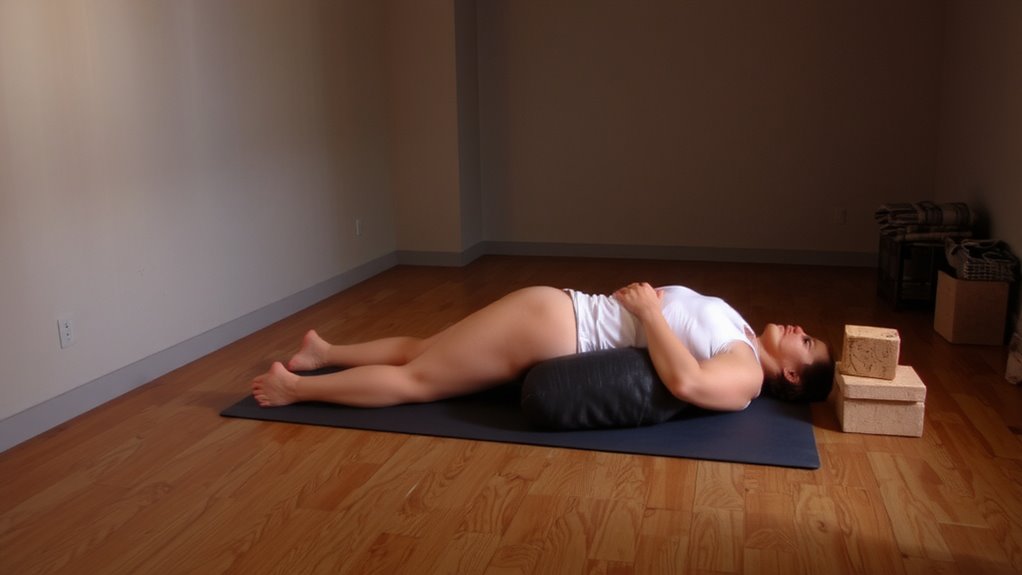
A well-placed prop can make all the difference in a restorative yin practice, turning strain into support and discomfort into deep release. You’re not just relaxing-you’re facilitating connective tissue remodeling through sustained, gentle traction. With proper prop support, like bolsters under the spine or blocks beneath the hips, you maintain alignment without muscular effort, preventing strain. This lets you focus on passive sinking, allowing gravity to do the work over time. Passive sinking is essential; it signals that your fascia and joints are receiving ideal tension for remodeling. Without props, you might overstretch or compensate, reducing the therapeutic benefit. Foam bolsters, cork blocks, and folded blankets offer firm yet yielding support, maintaining integrity in long holds. These tools aren’t luxuries-they’re functional gear that enhances recovery by ensuring your body stays in a safe, receptive state. Use them consistently for lasting results.
Best Supported Poses for Releasing Deep Tension
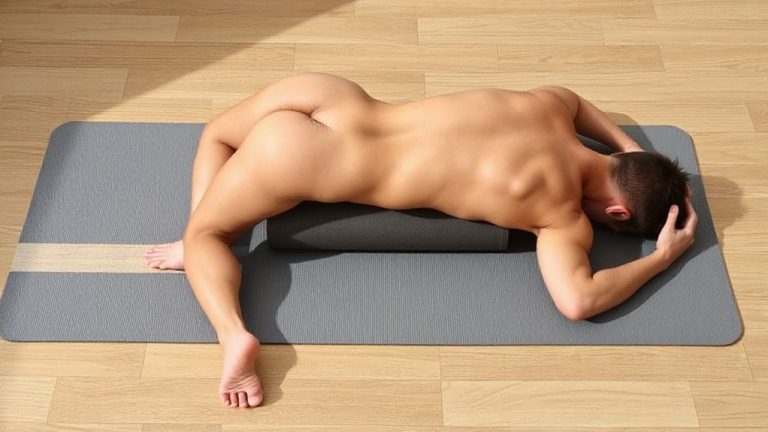
Long holds in supported postures grant access to the deep connective tissues that standard stretching often misses, and a few key yin poses stand out for their ability to release chronic tension when properly supported. You’ll find Child’s Pose with a bolster especially effective-it gently targets the hips and lower back without triggering muscle activation, allowing deeper relaxation. Supported Butterfly Pose opens the inner thighs and pelvis, while placing a cushion under the knees in Reclining Twist reduces strain on the spine. These poses, held for 3–5 minutes, work best when you minimize dynamic movement and remain still, letting connective tissues slowly remodel. Props like cork blocks and memory foam bolsters offer stability and comfort, enhancing your ability to sustain each shape. You’re not just stretching-you’re signaling the body to release long-held tension where it’s most resistant. Choose supportive gear that maintains its shape over time, so your practice stays consistent and effective.
How Yin Yoga Calms Your Nervous System
Holding supported poses for several minutes doesn’t just stretch connective tissue-it sends a clear signal to your nervous system to shift from alertness to restoration. This slow, sustained practice fosters parasympathetic activation, encouraging nervous system regulation over time. As you sink into each pose, your body learns to release chronic tension, improving recovery and resilience.
| Benefit | How Yin Yoga Supports It |
|---|---|
| Stress reduction | Triggers parasympathetic activation through prolonged stillness |
| Improved sleep | Enhances nervous system regulation, lowering cortisol |
| Emotional balance | Encourages mindful awareness and nervous system coherence |
| Recovery speed | Supports fascial hydration and circulation |
| Mind-body connection | Builds interoceptive awareness through sustained holds |
With consistent practice, you’re not just increasing flexibility-you’re rewiring your nervous system’s response to stress. Proper gear like supportive bolsters and non-slip mats guarantees comfort and stability, enhancing the overall effectiveness of each session.
A Weekly Yin Practice for Lasting Flexibility
Why settle for temporary mobility when you can build lasting flexibility? A weekly yin practice targets deep connective tissues, promoting gradual remodeling that enhances joint range over time. Holding postures for several minutes applies gentle stress, stimulating collagen realignment-key for durable change. You’re not just stretching; you’re retraining your body’s structural support. Breath awareness deepens each release, guiding oxygen to stiff areas and calming the mind-body loop. Focus on long, even inhales and exhales to maximize relaxation and tissue response. This attention also clears blockages in energetic channels, supporting vigor and movement efficiency. Unlike high-intensity recovery tools or fitness gear that offer short-term relief, yin yoga delivers cumulative benefits. It’s low-equipment, highly effective, and sustainable. Consistency matters more than intensity-just one mindful session weekly can yield measurable gains in flexibility and joint health.
On a final note
You’ll find yin yoga’s long, supported holds effectively stimulate connective tissue remodeling by applying gentle, sustained stress to fascia and joints. When you use props like bolsters and blocks, you reduce strain while enhancing depth and comfort. This practice doesn’t just boost flexibility-it also calms your nervous system, aiding recovery. Combined with quality recovery gear, like supportive mats and adjustable props, yin yoga becomes a sustainable, science-backed tool for long-term joint health and resilience.