Creating Sport-Specific Isometric Holds for Quarterbacks to Prevent Shoulder Impingement
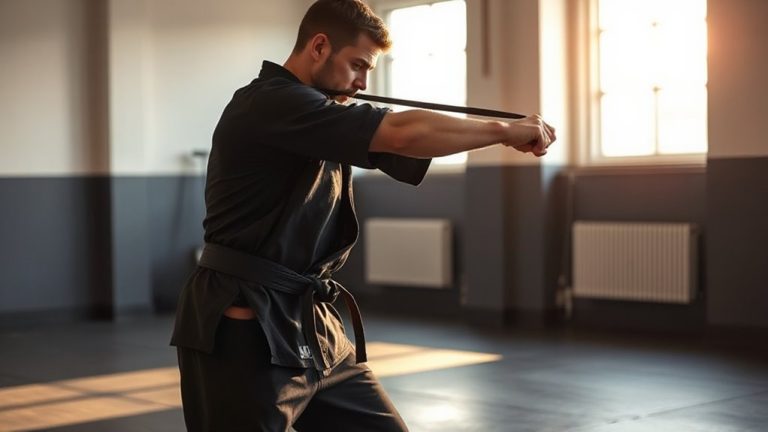
You’re throwing at extreme speeds, stressing your shoulder’s stability with every rep. Isometric holds build rotator cuff and scapular control exactly where you need it-during the cocked, drawn, and follow-through phases. These sport-specific contractions reduce impingement risk by maintaining joint centration under load. Using bands or a wall, you’ll reinforce proper mechanics without irritating tissues. Just hold each position for 5–7 seconds with steady breathing. You’ll gain resilience, avoid fatigue-related breakdown, and discover how targeted stability translates to late-game precision.
Notable Insights
- Design isometric holds that mimic the cocked, acceleration, and follow-through phases of throwing to enhance sport-specific stability.
- Focus on scapular control and rotator cuff activation during 5–7 second contractions to reduce impingement risk.
- Use resistance bands or wall contact to provide real-time feedback and ensure proper joint alignment.
- Train both anterior and posterior shoulder muscles to prevent imbalances and support joint centration.
- Avoid fatigue by performing holds with full recovery and steady breathing to maintain form and tissue integrity.
Why QBs Are Prone to Shoulder Impingement

You’ve probably noticed how often quarterbacks end up nursing shoulder pain-and it’s not just due to overuse. There’s a real anatomical vulnerability in the throwing shoulder, thanks to the joint’s design prioritizing range of motion over stability. This makes the rotator cuff and surrounding structures prime targets for injury when subjected to repetitive stress. Every violent throw places immense strain on the shoulder’s soft tissues, especially during rapid deceleration. Over time, that repetitive stress leads to microtrauma, inflammation, and eventually impingement as structures compress under load. Traditional recovery methods often fall short, but modern fitness recovery gear that supports joint alignment can help manage wear. While not a fix-all, pairing proper recovery tools with awareness of this anatomical vulnerability reduces risk. You’re not just dealing with fatigue-you’re managing a mechanics-driven, physically taxing demand that shapes how effective prevention really works.
How Isometric Holds Shield Your Throwing Shoulder
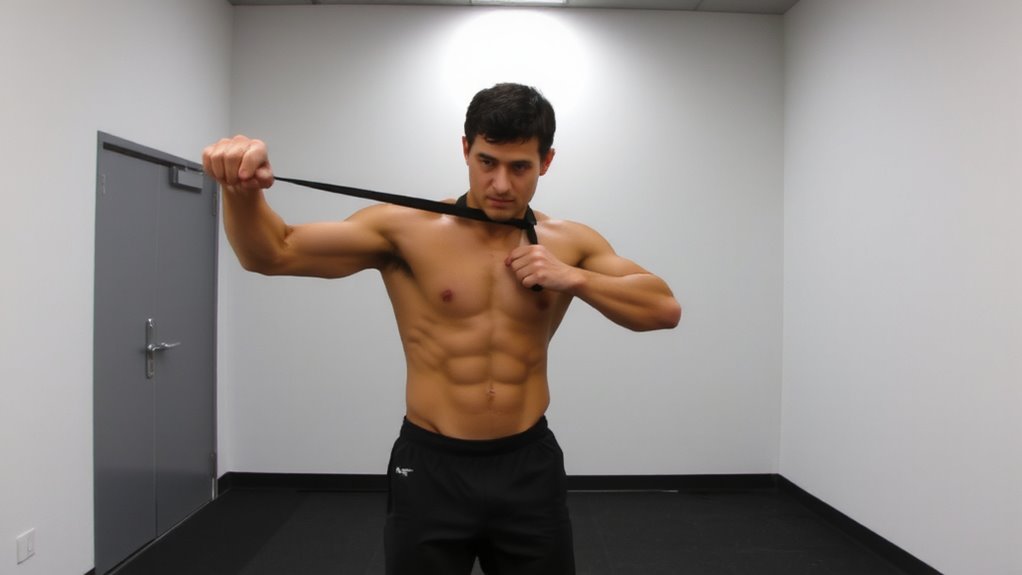
While traditional rehab often focuses on dynamic movement, isometric holds offer a more targeted way to build stability in the throwing shoulder, especially for quarterbacks under constant mechanical stress. By holding specific positions without movement, you enhance joint stability, reducing excessive motion that can lead to impingement. These contractions activate stabilizing muscles around the shoulder girdle-like the rotator cuff and scapular stabilizers-training them to maintain proper alignment under load. Because you’re not moving through a range, there’s less irritation to inflamed tissues, making it ideal during recovery or high-volume training. Over time, isometric holds improve muscle endurance, allowing your shoulder to withstand repetitive throwing without fatigue. That endurance translates directly to consistency and safety late in games. Unlike flashy gear or recovery gadgets, isometric training builds resilience from within-no accessories needed, just discipline and precise execution.
Hold These 3 Critical Throwing Positions

Three key positions form the foundation of an effective isometric routine for quarterbacks, each mirroring a critical phase of the throwing motion. Holding these positions builds neuromuscular control, enhances grip strength, and supports core stability-critical for protection against shoulder impingement. You must maintain strict form during each hold to gain real-world carryover.
| Position | Purpose |
|---|---|
| Cocked (arm back) | Trains scapular control and posterior cuff endurance |
| Mid-draw (90° elbow) | Builds grip strength and shoulder stability |
| Follow-through (arm forward) | Reinforces core stability and deceleration mechanics |
These positions replicate high-stress moments in the throw, letting you build strength without joint strain. Quality over speed matters-focus on alignment, tension, and breath. Isometric holds done right prepare your body to handle repetitive torque while minimizing wear on the throwing shoulder.
3 Sport-Specific Isometric Exercises for QBs
Because every throw a quarterback makes relies on precise timing and joint integrity, integrating sport-specific isometric exercises into training isn’t just beneficial-it’s essential for long-term performance and injury prevention. You’re not just building strength; you’re training your rotator cuff to maintain control under load, which directly enhances dynamic stability in the throwing shoulder. These isometric holds replicate cocking, acceleration, and follow-through positions, forcing muscles to engage without joint movement-ideal for reinforcing neuromuscular patterns. Unlike generic presses or lifts, these exercises target the exact angles and muscle firing sequences you use on the field. When performed consistently, they reduce stress on tendons and improve joint centration. Using resistance bands or a wall for feedback guarantees proper form and measurable progress. There’s no guesswork-clear positioning and timed contractions make improvements tangible. Recovery is quicker, too, since the low-impact nature spares connective tissues while still driving adaptation.
Fit Isometric Holds Into Warm-Ups
You can make your warm-up more effective by integrating isometric holds that prime the exact muscle groups used in throwing. Proper warm up timing guarantees activation without fatigue-perform these 5–10 minutes before dynamic drills. Use smart exercise pairing: combine isometric shoulder stabilization with movement-based activation for synergy. Below is a sample pairing:
| Isometric Hold | Paired Dynamic Exercise |
|---|---|
| Scapular Wall Press (5 sec hold) | Banded Shoulder CARs |
| External Rotation Hold at 90° | Resistance Band Rows |
| Front Rack Hold (10 sec) | Goblet Squat to Stand |
| Overhead Trap Squeeze | PVC Pass-Through |
This approach boosts neuromuscular readiness, aligns joint positioning, and supports shoulder integrity. Done right, it enhances throwing mechanics while reducing impingement risk. The key is precision-short duration, high intent, and pairing that mirrors sport-specific demands.
Avoid These 5 Isometric Training Mistakes
Now that you’ve optimized your warm-up with strategic isometric holds, it’s just as important to recognize the missteps that can undermine their effectiveness. Holding your breath during contractions is a common error-poor breathing technique reduces oxygen flow and limits muscle endurance, making recovery slower. You should exhale steadily to maintain intra-abdominal pressure and joint stability. Another issue is ignoring muscle imbalance; focusing only on the anterior shoulder while neglecting the posterior cuff leads to dysfunctional movement patterns. Overloading too soon compromises form and increases impingement risk. Static holds shouldn’t be performed fatigued, as neuromuscular control declines. Finally, inconsistent timing-either too short or erratic-prevents neural adaptation. Stick to 5–7 second contractions with full recovery. Proper execution guarantees balanced strength, joint integrity, and peak readiness for the demands of the pocket.
On a final note
You’re reducing impingement risk by reinforcing stable shoulder positions through sport-specific isometric holds. These drills enhance neuromuscular control exactly where quarterbacks need it-mid-throw. When performed correctly, they integrate seamlessly into warm-ups, priming the rotator cuff without fatigue. Paired with proper recovery gear-like quality foam rollers or percussion devices-these exercises support long-term joint health. Consistency matters more than intensity, making this a smart, sustainable edge.