Progressive Eccentric Heel Drops for Achilles Tendon Resilience in Jumping Athletes
You build Achilles resilience with progressive eccentric heel drops by gradually increasing load and range of motion. They enhance collagen alignment and tendon strength more effectively than foam rollers or massage tools. Start on flat ground, then advance to weighted step drops with a straight or bent knee. Do them post-jump sessions or on recovery days, allowing 48–72 hours for adaptation. You’ll notice improved control and reduced injury risk-especially under fatigue. There’s a smarter way to train this, and it starts with precision.
Notable Insights
- Eccentric heel drops progressively strengthen the Achilles tendon by improving collagen alignment and load tolerance.
- Perform heel drops on a step, lowering the heel slowly over 3–4 seconds to maximize tendon engagement.
- Start on flat ground and progress to elevated or declined surfaces with added weight for intensity.
- Include eccentric heel drops post-jump training or on recovery days to enhance tendon adaptation and resilience.
- Progress to single-leg, weighted repetitions only after mastering earlier phases to prevent overloading.
Use Eccentric Heel Drops to Prevent Achilles Injuries
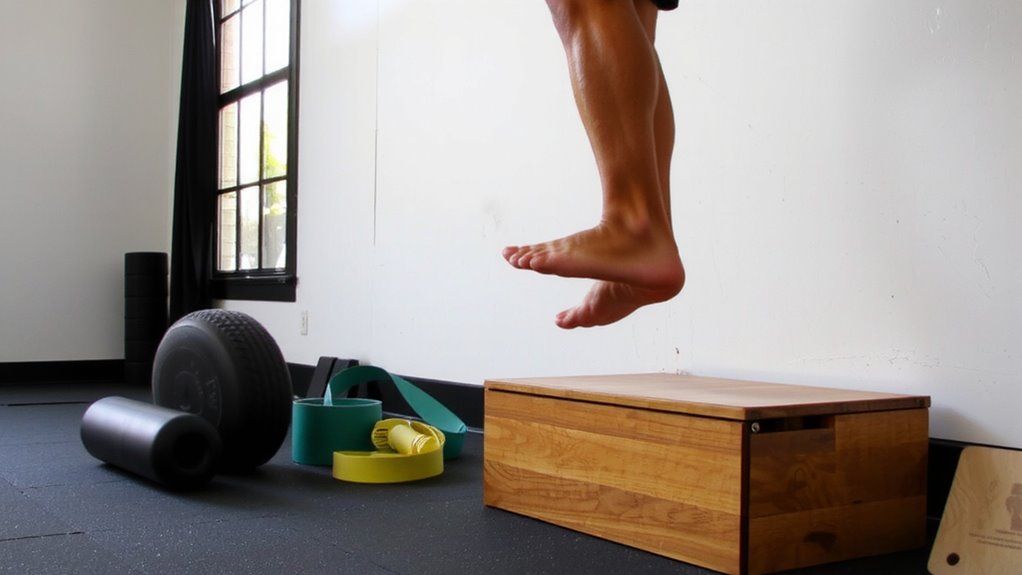
Why wait until pain strikes before protecting one of your most essential lower limb connectors? You rely on your Achilles daily, yet few consider Achilles anatomy until something goes wrong. This tendon handles massive tendon loading during running, jumping, and sudden stops-especially under fatigue. Eccentric heel drops work because they strengthen tissue gradually, aligning with how the tendon adapts to stress. Studies show consistent use improves collagen alignment and boosts load tolerance, making it a smart preventive move. You don’t need fancy fitness recovery gear-just body weight and control. Still, a sturdy step with non-slip surfaces helps maintain form. Unlike passive tools like foam rollers or massagers, this exercise actively conditions the tendon where it matters. For jumping athletes, prevention beats rehab. Incorporating eccentric heel drops into your routine isn’t just practical-it’s a scientifically sound strategy to stay resilient, functional, and ahead of injury.
Do Eccentric Heel Drops the Right Way
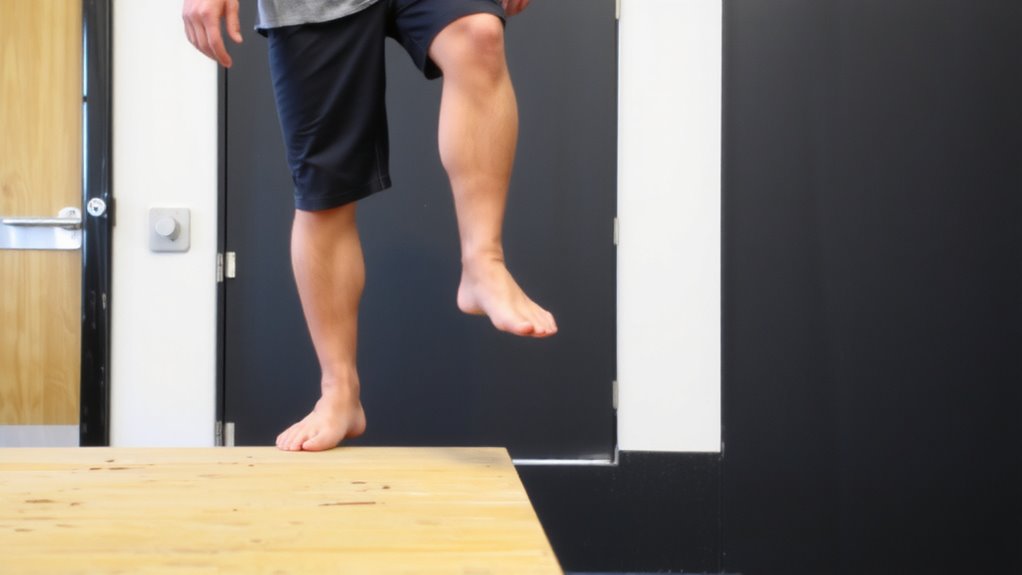
How do you guarantee each repetition of an eccentric heel drop actually contributes to tendon resilience rather than reinforcing poor mechanics? You prioritize proper form and a controlled tempo above all. Stand on a step with your forefoot, lift up onto your toes, then slowly-over three to four seconds-lower your heel below step level. That controlled tempo is essential; rushing defeats the purpose. Keep your knee straight to target the gastrocnemius, or slightly bent for soleus engagement. Avoid bouncing or jerking-each rep should feel smooth, deliberate. Use a wall or railing for balance if needed, but don’t offload tension. Wear supportive footwear or go barefoot on stable surfaces to enhance proprioception. Proper form secures the load transfers effectively to the Achilles, stimulating collagen realignment and tendon remodeling. Consistency with precision beats volume every time-your tendon adapts to what you feed it, so make each drop count.
Progress Your Heel Drop Routine Safely
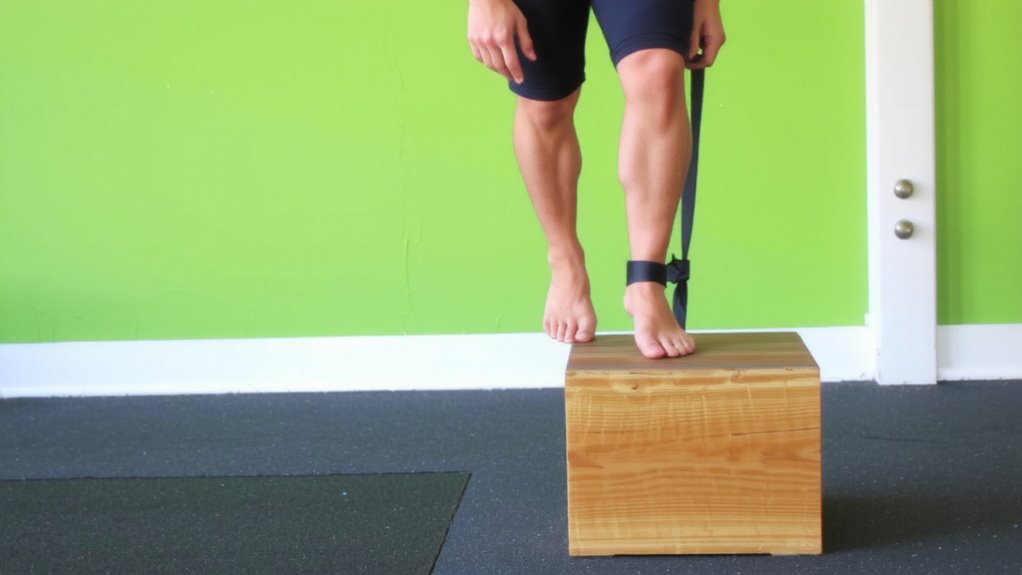
Once you’ve built consistency with proper form, progressing your heel drop routine isn’t just beneficial-it’s necessary to keep driving tendon adaptation. Exercise progression should be gradual, focusing on load and intensity to match your resilience. Safety monitoring is key-track pain levels, swelling, and movement quality before advancing. Below is a simple guide to structure your progression:
| Phase | Surface | Load (Bodyweight / Weighted) |
|---|---|---|
| 1 | Flat ground | Bodyweight |
| 2 | Step edge | Bodyweight + backpack |
| 3 | Incline | Light dumbbell |
| 4 | Decline | Moderate weight |
| 5 | Single-leg | Controlled weighted |
Stick to pain-free ranges and maintain control. This phased approach guarantees your tendon adapts without excessive strain. Adjust tempo, volume, and resistance based on daily feedback-consistency with safety monitoring beats aggressive advancement every time.
See Results Without Overtraining
Isn’t it frustrating when you’re putting in the work but still not seeing the gains you expect? Overtraining can actually slow your progress, especially with tendon adaptations. The key lies in smart recovery timing and consistent load management. Your Achilles needs 48–72 hours between intense sessions to rebuild effectively-skipping this hampers tissue resilience. Progressive eccentric heel drops work best when you gradually increase volume without rushing. Think sets, reps, and resistance over weeks, not days. Monitoring soreness and jump performance helps gauge readiness. Over-reliance on fitness gear like compression sleeves might feel helpful, but they don’t replace proper recovery. Results come from balance: enough stimulus to prompt change, enough rest to allow it. With disciplined load management and respect for recovery timing, you’ll see strength and tendon adaptation-without burnout or setback. Consistency beats intensity every time.
Add Heel Drops to Your Jump Training
Jump training gains often stall without addressing tendon resilience-particularly in the Achilles, a powerhouse for explosive movement. You’re likely pushing off hard but neglecting the eccentric loading needed to build durable strength. Adding progressive eccentric heel drops primes your tendons to handle greater forces, reducing injury risk while boosting performance. When you include heel drops in your routine, you achieve better jump integration, syncing concentric power with controlled lengthening. This creates training synergy-your workouts don’t just build muscle, they condition the connective tissue that transfers force efficiently. Perform heel drops post-jump sessions or on recovery days to enhance blood flow and structural adaptation without adding systemic fatigue. Use a step or weight vest to modulate difficulty, but prioritize form. Over weeks, you’ll notice stiffer, more responsive tendons-key for athletes needing reactive strength. It’s not just accessory work; it’s foundational support tailored for high-output movement.
On a final note
You’ve seen how eccentric heel drops build Achilles resilience, especially when done consistently and progressively. They’re not a quick fix, but a proven method that, when integrated properly, reduce injury risk in jumping athletes. Paired with smart recovery and quality footwear, they support long-term tendon health. Done right, they’re effective-just don’t rush progression. Your tendons adapt slowly, so patience and form matter most.