Posterior Chain Recovery Yoga Flow Featuring Supported Fish Pose Variations
You should start your posterior chain recovery with a warm-up to ease tension in tight hamstrings and glutes. Foam roll first using a high-density or vibrating roller to release myofascial knots and boost blood flow. Follow with dynamic stretches to improve flexibility and alignment. Use yoga blocks, straps, or bolsters for support, especially in poses that challenge your form. Open the front body with chest expansions and hip flexor stretches to counteract hunched posture from heavy lifts. Then ease into Supported Fish Pose variations-propped with a bolster or block-to enhance thoracic mobility and relax the nervous system. Proper elbow and head positioning prevents strain while promoting deeper release. This balanced approach restores symmetry, aids tissue repair, and prepares you for stronger performance. You’ll discover how to optimize each phase with the right recovery gear and mindful progression.
Notable Insights
- Foam rolling the hamstrings and glutes pre-flow reduces myofascial tension and supports posterior chain recovery.
- Dynamic stretches like cat-cow and seated forward fold prepare the spine and hamstrings for deeper release.
- Use yoga blocks or bolsters under the upper back for safe, effective Supported Fish Pose variations.
- Focus on chest expansion in Supported Fish Pose to counteract hunched posture from deadlifts and squats.
- End with Savasana using knee support and gratitude practice to enhance parasympathetic recovery and integration.
Why Your Lower Body Needs Post-Workout TLC
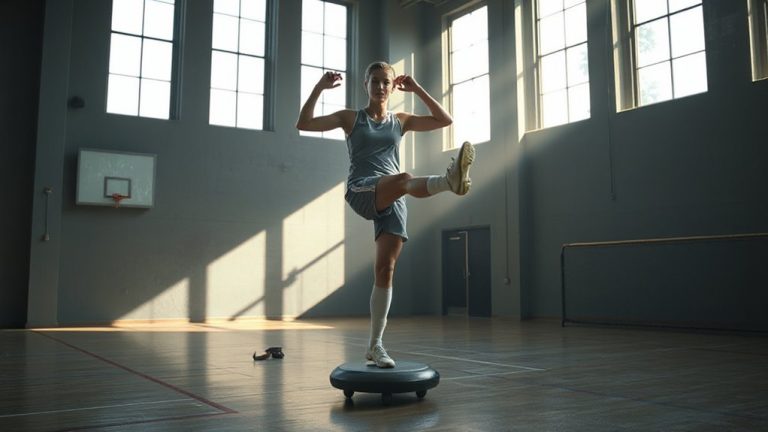
Ever wonder why your hamstrings still feel tight days after leg day? That lingering tightness means your posterior chain needs proper recovery, not just rest. Muscles like your glutes, hamstrings, and calves endure heavy strain during workouts, especially strength and sprint sessions. Without targeted care, adhesions build up, reducing mobility and increasing injury risk. Foam rolling helps break down those knots, boosting blood flow and speeding up tissue repair. Pair it with dynamic stretching post-rolling to re-engage muscle fibers through controlled movement-think leg swings or hip circles. This combo outperforms static methods alone, enhancing flexibility and neuromuscular control. Recovery gear like high-density foam rollers offers consistent pressure, but effectiveness hinges on proper use. For optimal results, choose a roller with the right density and texture to match your body’s needs-high-density foam rollers provide superior support for deep tissue work. Ignoring post-workout TLC undermines gains; consistency with foam rolling and dynamic stretching supports long-term performance, keeping your lower body resilient and responsive.
Start With a Gentle Warm-Up for Tight Muscles
A smart recovery session for tight posterior muscles starts with a gentle warm-up to prepare your body for deeper work. You need to ease into the routine, especially if you’re stiff or sore from recent training. Begin with deep breathing to signal your nervous system to relax-this isn’t just calming, it’s functional, improving oxygen flow to tense areas. Follow with gentle stretches like seated forward folds or slow cat-cow movements to increase circulation without strain. These moves prime your hamstrings, glutes, and lower back for safer, more effective recovery. Think of warm-up as maintenance, not performance-it’s where fitness gear like supportive mats and breathable clothing proves its worth, offering comfort and stability. Skipping this phase risks microtears or compensatory patterns. You’re not limbering up to perform; you’re activating recovery. Consistency here enhances long-term mobility and reduces soreness, making it a cornerstone of smart fitness recovery. Proper knee support during intense training can reduce strain, so consider using knee straps for squats if you’re returning to heavy lifts post-recovery.
Release Tight Hamstrings and Glutes
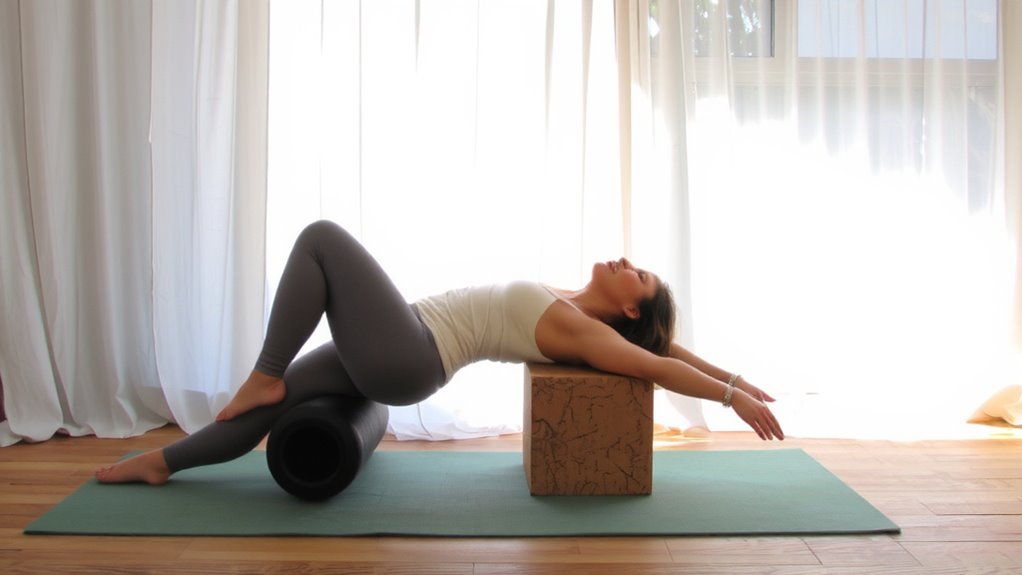
Many people carry tension in their hamstrings and glutes without realizing how much it affects movement efficiency and recovery quality. You can’t expect peak performance if tightness restricts your range. That’s where foam rolling and dynamic stretching come in-they’re not just trends, they’re essential. Foam rolling breaks up adhesions and increases blood flow, preparing muscles for deeper work. Follow it with dynamic stretching to safely lengthen fibers and improve neuromuscular control. Ignoring this step risks compensatory patterns and delayed recovery. A recent innovation in self-myofascial release is the use of vibrating foam rollers, which enhance muscle relaxation through oscillatory pressure.
| Technique | Purpose |
|---|---|
| Foam Rolling | Releases myofascial tension |
| Dynamic Stretching | Enhances mobility and activation |
Combining both methods systematically guarantees your posterior chain functions cohesively. You’ll notice better alignment, reduced soreness, and quicker bounce-back after training. This isn’t optional maintenance-it’s recovery engineering.
Use Props for Comfortable Support
You’ll get the most out of your recovery sessions by using props like yoga blocks, straps, and bolstered cushions-tools designed to support alignment and reduce strain without compromising the integrity of each pose. These props aren’t just accessories; they’re performance enhancers that promote breath awareness and mindful alignment. Blocks under your hips or spine in supported postures adjust intensity while maintaining structural integrity. A rolled blanket under the knees in reclined poses minimizes lower back tension, letting you stay longer with less fatigue. Straps help maintain proper limb positioning without overreaching, especially when hamstrings are still recovering. High-density foam bolsters offer firm yet yielding support, essential for passive holds. When used correctly, props improve proprioception and encourage nervous system relaxation. They transform challenging poses into sustainable recovery practices, letting you focus on subtle shifts in sensation rather than discomfort. Their durability and functionality make them essential in any serious recovery toolkit.
Open the Front Body to Balance Posterior Chain Work
Tight hips and hunched shoulders after heavy posterior chain work? You’re not alone-intense workouts often create muscular imbalances that pull the body forward, compromising spinal alignment. That’s where opening the front body becomes essential. Targeted stretches and supported postures encourage chest expansion, counteracting the forward slump from deadlifts or squats. When you stretch the pectorals, hip flexors, and quadriceps, you’re not just relieving tension-you’re restoring symmetry. Proper spinal alignment supports efficient movement and reduces injury risk during recovery. Without addressing tight anterior structures, even the best fitness gear won’t correct postural drift. Foam rollers and straps can assist, but mindful opening matters most. Prioritizing front-body openness balances your physique and enhances long-term performance. Recovery isn’t passive-it’s strategic. By integrating chest expansion into your routine, you actively maintain the structural integrity compromised during heavy lifting.
Try Supported Fish Pose Variations for All Levels
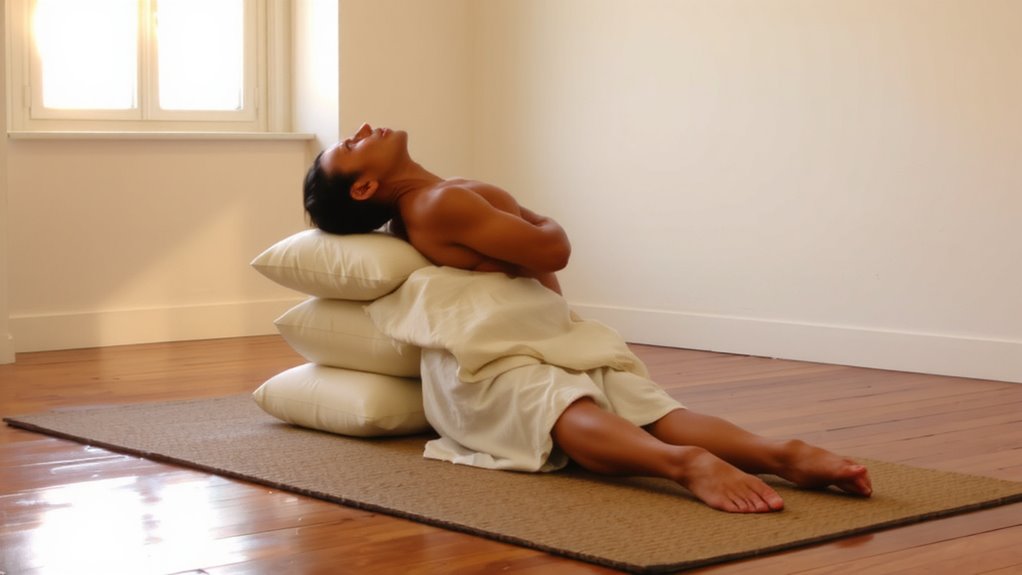
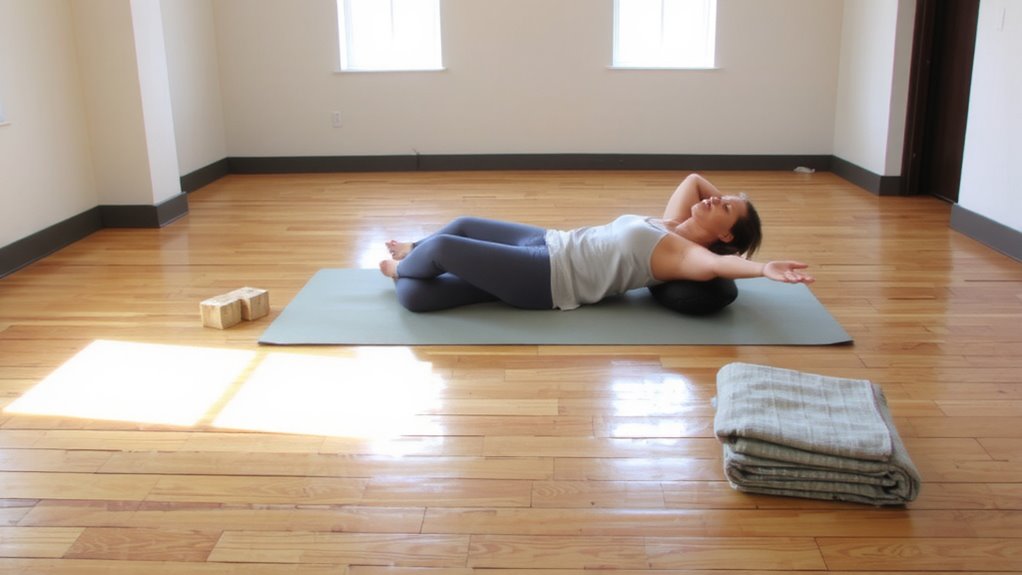
Supported Fish Pose offers a smart way to counteract the hunched posture that often follows intense posterior chain training. You can adapt this restorative backbend for all levels using common props like bolsters, blocks, or even rolled blankets. For beginners, a single block under the upper back provides gentle support, while more experienced practitioners might stack cushions for deeper opening. What matters most is breath awareness-let each inhale expand your chest, and each exhale soften your shoulders. Subtle alignment, like keeping elbows wide and head level, prevents strain and enhances release. These variations aren’t just comfortable; they’re effective for enhancing recovery by calming the nervous system and improving thoracic mobility. The right gear makes a difference: firm yet yielding props maintain positioning without discomfort, supporting sustained practice with minimal adjustment.
Final Relaxation: Seal the Recovery
While the physical work of posterior chain recovery may seem complete after targeted stretches and restorative poses, true restoration isn’t fully realized without deliberate final relaxation. You’re now entering the stage where mindful breathing becomes essential-deep, slow inhales and exhales signal your nervous system to shift into parasympathetic dominance, aiding muscle repair and reducing inflammation. Settle into Savasana with support under your knees if needed, using a quality bolster or recovery foam roller for ideal alignment. This is where fitness recovery gear proves its worth-not just in performance, but in rest. As you relax, incorporate a brief gratitude practice: acknowledge your body’s effort, the tools that supported you, and the time you prioritized for recovery. These mental habits enhance long-term adherence and emotional resilience. Final relaxation isn’t passive-it’s an active seal, locking in the physical and mental benefits of your practice.
On a final note
You’ve eased into recovery with purpose, letting each pose reset overworked muscles. Supported fish variations, especially with a foam roller or blocks, maintain spinal alignment while gently opening the chest-ideal after heavy deadlifts or sprints. These props aren’t luxuries; they’re functional tools that enhance accessibility and effectiveness. Consistent use improves posture and reduces lower back strain. This flow isn’t just rest-it’s active, intelligent recovery backed by movement science.