How to Determine When an Athlete Is Ready to Resume Sport-Specific Drills After ACL Reconstruction
You’re not ready just because six months have passed-true readiness depends on hitting strength symmetry of at least 90% in quads and hamstrings, nailing hop tests with 90% limb symmetry, and showing clean movement mechanics during cutting and pivoting. Passing these benchmarks shows your body, not just time, is prepared. Mental confidence and sport-specific drills matter too. Your rehab team’s final sign-off guarantees every factor aligns for safe return-keep going to see how each test shapes your comeback.
Notable Insights
- Time elapsed (6–9 months) alone does not determine readiness; functional performance and psychological factors must be assessed.
- Quadriceps and hamstrings strength symmetry should reach at least 90% compared to the uninjured leg.
- Hop testing must show ≥90% symmetry across multiple tests, indicating adequate neuromuscular control and muscle memory.
- Dynamic stability during sport-specific movements like cutting and pivoting should be smooth, without compensation or stiffness.
- Clearance requires consensus among clinician, surgeon, and coach based on objective testing, symmetry, and psychological readiness.
Why Time Alone Doesn’t Clear You for ACL Return to Sport?
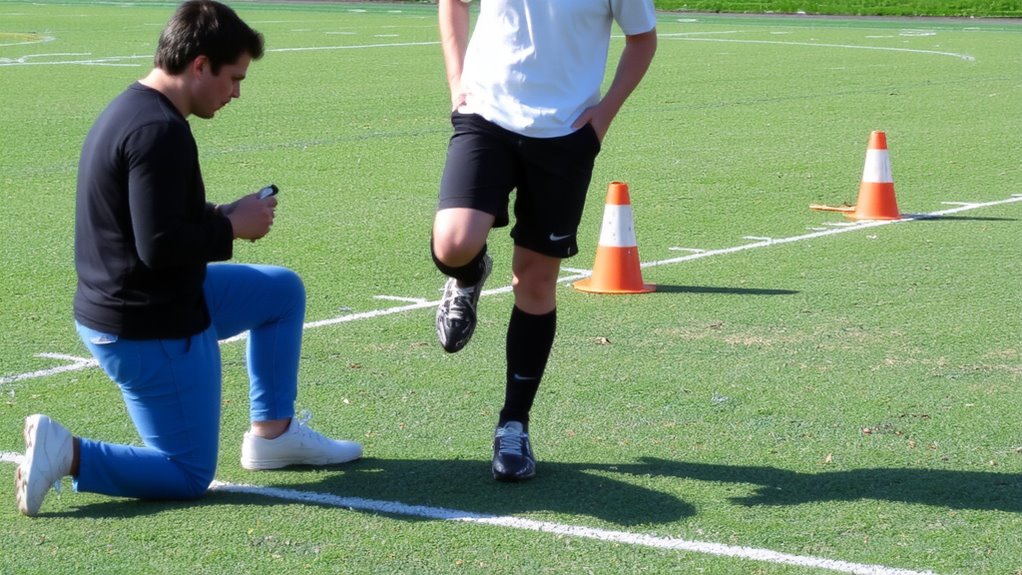
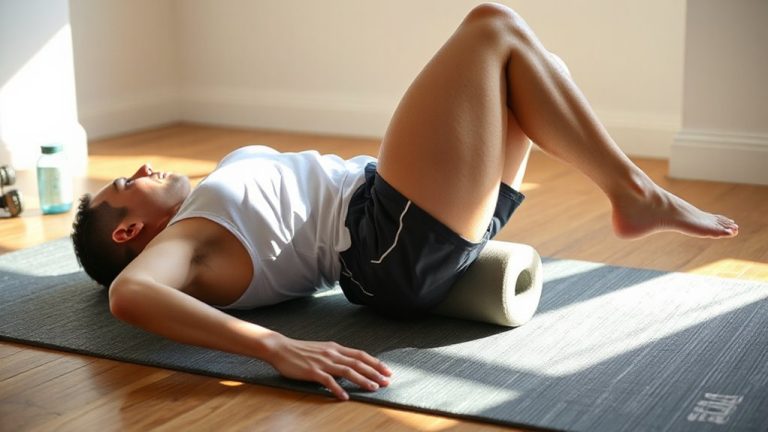
While many assume that hitting the typical six- to nine-month mark automatically means you’re cleared to jump back into sport-specific drills after ACL reconstruction, that timeline alone doesn’t guarantee your body is ready. You might have completed rehab milestones, but lingering issues like chronic fatigue can impair neuromuscular control, increasing re-injury risk. Your muscles, especially in the involved leg, may not yet sustain high-demand movements over time. Beyond physical factors, mental readiness plays a vital role-doubt or hesitation during cutting or pivoting can alter mechanics and compromise performance. Clinicians now emphasize functional testing, symptom response, and psychological screening rather than relying solely on time elapsed. Returning too soon, even after nine months, without addressing these factors undermines long-term success. Fitness recovery isn’t just about calendar days; it’s about ensuring your entire system-physical and mental-meets the dynamic demands of your sport safely and effectively.
Is Your Leg Strength Symmetrical After ACL Surgery?
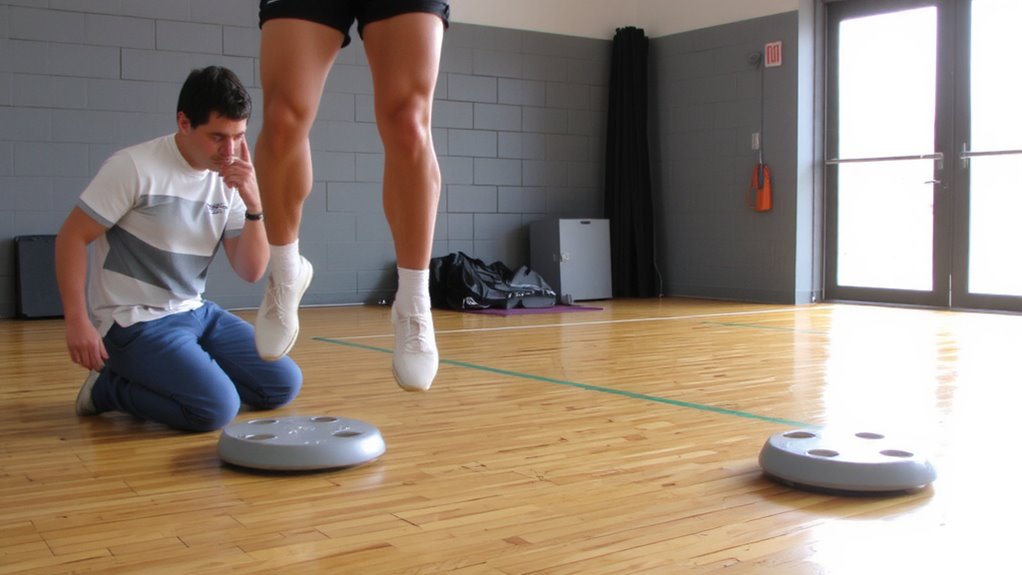
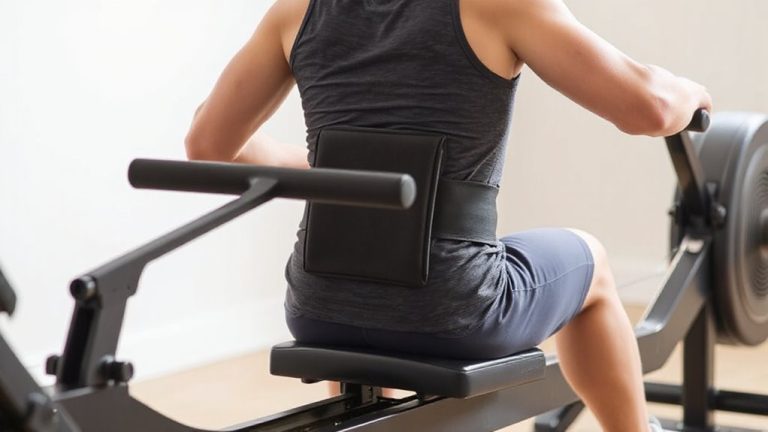
You’ve put in the months of rehab, tracked your progress, and maybe even hit that nine-month mark-yet returning to sport isn’t just about waiting it out. True readiness hinges on strength symmetry, especially in your quads and hamstrings. Poor quadriceps symmetry increases re-injury risk, while balanced hamstring strength supports knee stability during dynamic moves. You need both limbs generating near-equal force. Aim for at least 90% symmetry in strength tests before progressing.
| Muscle Group | Target Symmetry |
|---|---|
| Quadriceps | ≥90% |
| Hamstrings | ≥90% |
| Single-Leg Press | ≥85% |
| Isometric Leg Extension | ≥90% |
| Nordic Curl Progression | Symmetrical control |
Don’t rely on feel-use dynamometry or resistance testing. Your rebuilt knee can handle load, but only if both sides pull their weight.
What’s a Good Hop Test Score After ACL Reconstruction?
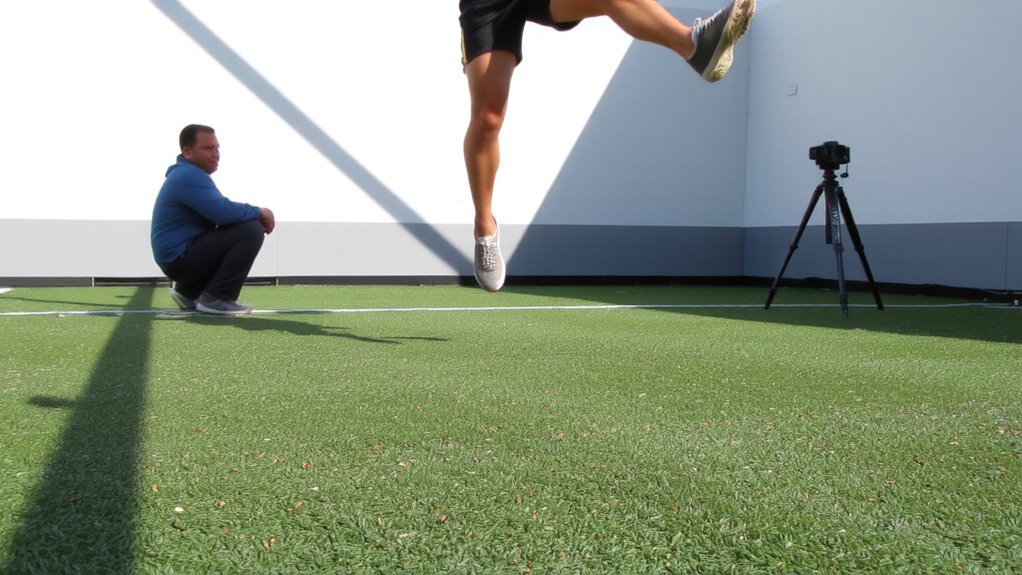
How do you know your knee can handle the demands of cutting, jumping, and sprinting after ACL reconstruction? Hop tests help gauge that. A good score means you’ve reached at least 90% symmetry between your injured and non-injured leg. Anything less may suggest lingering weakness or compromised joint stability. These tests don’t just measure strength-they assess neuromuscular control and muscle memory critical for dynamic movements. Single-leg hops, triple hops, and crossover tests each challenge balance and coordination, revealing how well your brain and knee communicate. While gear like agility ladders or resistance bands support training, the hop test itself is a functional benchmark. You’ll need consistent performance across multiple test types, not just one good jump. Reliable results mean your rehab has rebuilt dynamic control, setting the stage for more complex drills. It’s not just about distance-it’s about quality, control, and consistency.
Can You Cut and Pivot Safely Yet?
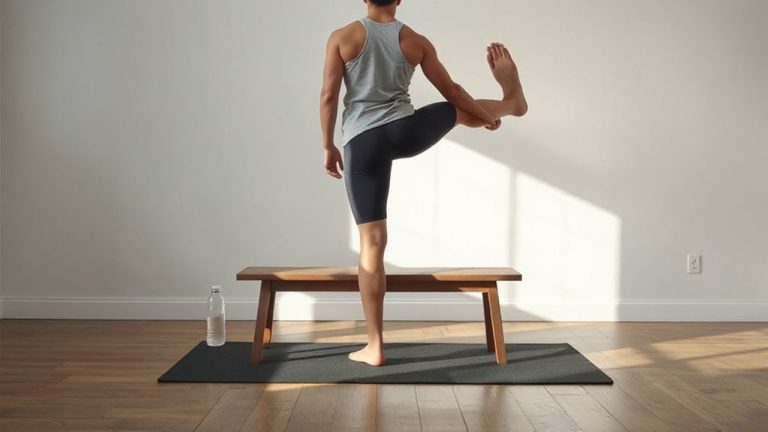
Passing the hop tests with at least 90% symmetry is a solid sign your leg strength and neuromuscular control are on track, but it doesn’t automatically mean you’re ready to cut and pivot on the court or field. Those actions demand more than strength-they require dynamic stability and movement efficiency under unpredictable conditions. You need to decelerate, shift direction, and reaccelerate without losing form or putting excess strain on your reconstructed ACL. Sport-specific drills like zig-zag cuts or 45-degree pivots should feel smooth, not labored. If your movements are stiff or you’re compensating with the other leg, you’re not there yet. Video analysis and clinical assessments can spot inefficiencies invisible to the naked eye. Watching your form, timing, and coordination during change-of-direction tasks gives a clearer picture of readiness. Only when these elements align-dynamic stability, movement efficiency, and confidence-should you progress.
Can You Trust Your Balance During Quick Movements?
Why do some athletes wobble when shifting laterally, even after months of rehab? It often comes down to shaky proprioception confidence and poor neuromuscular control. Your knee might be healed, but your brain still isn’t communicating efficiently with your muscles during sudden changes in direction. Without sharp feedback from joint receptors, quick movements feel unstable-like stepping on ice unexpectedly. You need reliable balance under load, not just in controlled drills. Think single-leg landings, cutbacks, or reactive pivots: these demand split-second coordination between your nervous system and muscles. If you’re hesitating or wobbling, your body’s signaling isn’t synced yet. Building neuromuscular control means retraining movement patterns with progressive challenges-perturbation drills, uneven surfaces, eyes-closed stances. Only when your balance feels automatic-when you trust your knee without thinking-can you safely trust it in sport. That’s the mark of true proprioception confidence.
Does Your Sport Require Extra Clearance Steps?
Isn’t it telling that a soccer player faces different demands than a swimmer when returning to action after ACL surgery? Your sport’s physical intensity and movement patterns directly influence recovery timelines and clearance steps. High-impact, multidirectional sports like basketball or soccer impose greater sport specific demands-quick cuts, pivots, decelerations-that require not just physical strength but neuromuscular control. You can’t ignore psychological readiness either; even if your leg is strong, fear of re-injury can alter movement patterns and increase risk. Sports with high dynamic loads often require functional performance tests, movement symmetry assessments, and sometimes sport-specific field tests before clearing drills. Meanwhile, lower-impact activities like swimming place less stress on the knee, often shortening the reintegration process. Your return timeline should reflect your sport’s unique challenges, balancing objective data with mental confidence.
Does Your Rehab Team Agree You’re Ready to Return?
How confident are you that your rehab team would catch subtle deficits before clearing you for sport-specific drills? True sport readiness isn’t just about time or strength-it’s tied to consistent clinician consensus. Your physical therapist, surgeon, and strength coach must all agree you’ve met objective benchmarks like symmetrical limb loading, dynamic balance, and normalized movement patterns. Without alignment among your rehab team, you risk returning too soon, which could compromise graft integrity. Think of sport readiness as a shared decision, not a solo call. Most research supports a multidisciplinary approach because individual clinicians may overlook deficits others spot. When there’s clinician consensus, your clearance reflects a thorough evaluation, not just passing a single test. That agreement markedly lowers re-injury risk. Are all your providers on the same page? If not, keep rehabbing-your long-term performance depends on it.
On a final note
You’re not ready just because time passed-strength symmetry, hop test scores within 90% of your uninjured leg, and solid balance during pivots matter more. Trust your rehab team’s evaluation, especially if your sport demands cutting and jumping. Clearance isn’t automatic; it hinges on performance, not patience. Proper recovery beats rushing back, so use objective tests and professional input before resuming drills.