Utilizing Biofeedback Techniques to Optimize Central Nervous System Recovery Processes
You’re already tracking recovery, but biofeedback sharpens CNS optimization by giving you real-time control over heart rate, brainwaves, and muscle tension. Devices like HRV monitors and EEG headbands leverage neuroplasticity, helping retrain your nervous system with precision. When paired with consistent routines, these tools reduce stress dominance and support neural recalibration. Wearables like Oura or Whoop integrate seamlessly, offering actionable data. There’s more to uncover about tailoring these systems to your recovery rhythm.
Notable Insights
- Biofeedback enhances CNS recovery by enabling conscious regulation of involuntary physiological functions through real-time data.
- Real-time monitoring of HRV, brainwaves, and muscle tension supports neural plasticity and autonomic nervous system recalibration.
- HRV training optimizes autonomic balance, reducing sympathetic overactivity and promoting nervous system resilience.
- EEG neurofeedback promotes CNS healing by training healthy brainwave patterns linked to focus and emotional regulation.
- Wearable biofeedback devices provide continuous physiological tracking, enabling personalized, data-driven CNS recovery strategies.
What Is Biofeedback and How Does It Aid CNS Recovery?
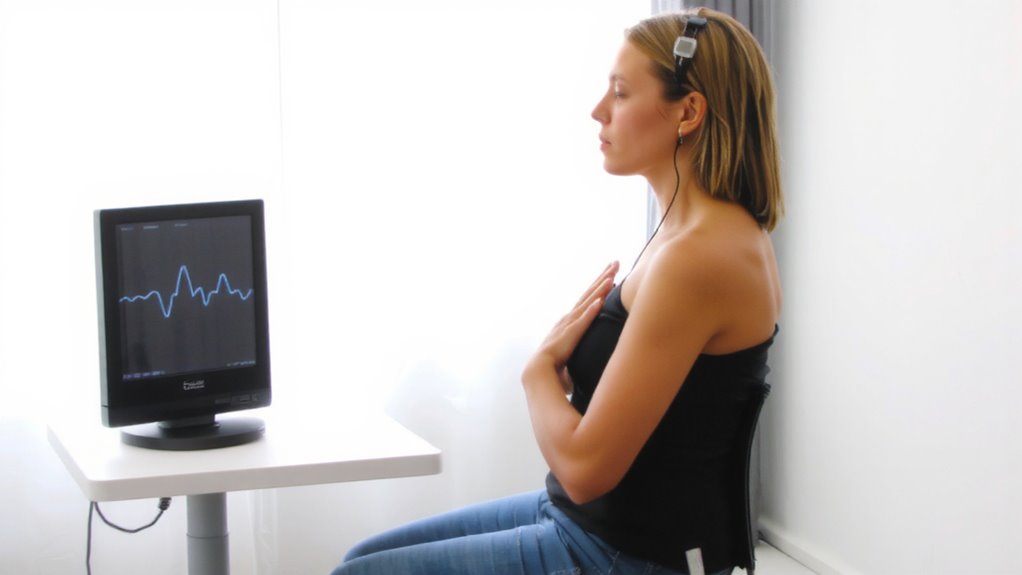
At its core, biofeedback is a training technique that allows you to gain conscious control over involuntary bodily functions-like heart rate, muscle tension, and brainwave activity-by providing real-time data through electronic monitoring. You learn to influence your central nervous system (CNS) by recognizing patterns and adjusting your response, which supports recovery after physical or mental strain. This process leverages brain plasticity, enabling your neural circuits to reorganize based on new inputs. Over time, repeated sessions encourage neural adaptation, meaning your brain becomes better at self-regulating. These changes aren’t instant, but with consistent use, biofeedback devices-like EEG headsets or heart rate monitors-help recalibrate CNS function. They’re not gimmicks; they’re tools grounded in physiology. When paired with proper recovery routines, biofeedback enhances resilience, making it a valuable component of modern fitness recovery strategies.
How Real-Time Data Improves Nervous System Regulation
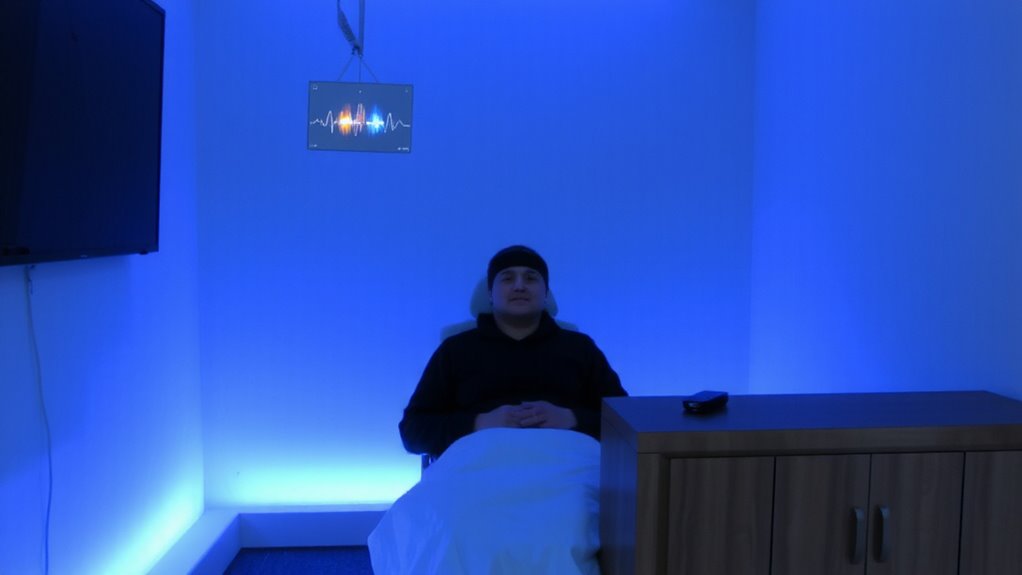
You’re already learning how biofeedback helps retrain your central nervous system by making the unconscious conscious, but what really sets it apart in fitness recovery is the role of real-time data. When you see your heart rate variability, muscle tension, or brainwave patterns shift instantly, you gain immediate insight into your body’s responses. This continuous feedback loop drives neural plasticity by reinforcing healthier patterns the moment they occur. Over time, your brain learns to self-regulate more effectively-a process supported by cognitive adaptation. Devices like EEG headbands or HRV monitors don’t just track; they teach your CNS to respond with precision. Unlike passive recovery gear, real-time biofeedback tools engage your nervous system dynamically. They’re not flashy-they’re functional, requiring consistency and attention. Still, their ability to fine-tune regulation during rest and recovery makes them uniquely effective for long-term CNS healing.
Best Biofeedback Types for CNS Healing
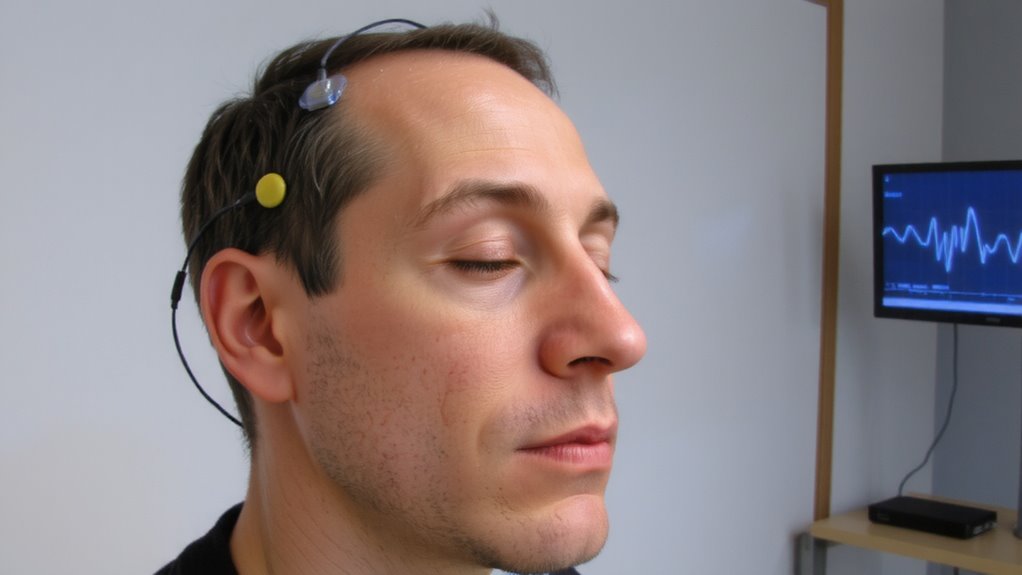
Which biofeedback methods actually deliver measurable results for central nervous system healing? Heart rate variability (HRV) training stands out for supporting autonomic recalibration, helping you shift from chronic sympathetic dominance to parasympathetic coherence. It’s clinically tied to reduced inflammation and improved nervous system adaptability. Another strong option is respiratory biofeedback, which synchronizes breathing with heart rhythms, promoting calm and steady neural signaling. Both methods foster neuroplasticity enhancement by reinforcing new, healthier patterns of nervous system activity. Thermal biofeedback also shows promise, using skin temperature shifts to indicate improved blood flow and relaxed states-ideal during early CNS recovery. Unlike broad fitness gear focused only on physical output, these tools prioritize internal regulation, making them more effective for neurological healing. Used consistently, they offer real-time insights that reshape your body’s stress responses, laying the foundation for lasting CNS resilience and function.
Retrain Your Brain for CNS Recovery With EEG
EEG biofeedback, or neurofeedback, takes the principles of nervous system regulation a step further by targeting brainwave activity directly, building on the autonomic gains seen with HRV and respiratory training. You learn to modulate specific brainwave patterns-like calming excess beta or boosting alpha waves-through real-time feedback from scalp sensors. This process supports neuroplasticity enhancement, allowing your brain to reorganize neural pathways in response to new, healthier activity patterns. Over time, consistent sessions promote cognitive retraining, improving focus, emotional regulation, and mental resilience. Devices like EEG headsets offer precise monitoring, though quality varies-medical-grade systems deliver more reliable data than consumer models. While not a standalone fix, when integrated into a broader recovery plan, EEG training provides measurable, objective improvements in CNS function, making it a strong adjunct tool for long-term neurological wellness and performance optimization.
Balance Your Nervous System With HRV Training
How well is your nervous system adapting to stress? Heart rate variability (HRV) training offers a data-driven way to assess and improve your autonomic balance. By monitoring the time intervals between heartbeats, you gain real-time insight into your nervous system alignment-reflecting how harmoniously your sympathetic and parasympathetic branches operate. Low HRV often signals excessive stress or fatigue, while higher values suggest stronger recovery capacity and adaptability. Through consistent HRV training, you actively engage in stress resilience building, teaching your body to shift efficiently between activation and rest. This isn’t just about relaxation-it’s about optimizing biological responsiveness. Devices that track HRV help you tailor breathing, mindfulness, or recovery practices based on objective feedback. With practice, you’ll notice improved focus, energy regulation, and emotional control. It’s a precise, measurable method to support long-term fitness recovery without relying solely on subjective feelings.
Use Wearables in Daily CNS Recovery
Why leave your nervous system’s recovery to guesswork when today’s wearables can track it daily? You can now monitor key physiological signals-like heart rate variability and skin conductance-right from your wrist. These devices offer real-time feedback, helping you adjust activities based on your body’s actual recovery state. For consistent use, wearable comfort is essential; models with soft, lightweight materials and breathable straps reduce irritation during extended wear. This comfort directly supports long term adherence, ensuring you stay engaged with recovery tracking over weeks or months. Devices like Whoop, Oura Ring, and Garmin’s latest wearables integrate seamlessly into daily life, syncing data effortlessly to apps. While battery life and accuracy vary, the best balance performance with minimal user burden. When chosen wisely, wearables stop being gadgets and become essential tools in your recovery routine.
How Biofeedback Tracks CNS Recovery
You’re already tracking your recovery with wearables that measure heart rate variability and skin conductance, but biofeedback takes it a step further by giving you live access to how your central nervous system (CNS) responds to stress and rest. Through real-time EEG and EMG readings, biofeedback devices detect shifts in brainwave patterns and muscular tension, offering insight into neural plasticity and recovery speed. This enables precise stress modulation by training your CNS to adapt more efficiently. Over time, consistent use supports resilience and improves recovery outcomes.
| Signal Type | Tracks |
|---|---|
| EEG | Brainwave activity linked to neural plasticity |
| EMG | Muscle tension indicating CNS fatigue |
| HRV | Autonomic balance for stress modulation |
| GSR | Emotional arousal affecting CNS recovery |
On a final note
You’re using biofeedback to actively reshape your central nervous system’s recovery, and that’s powerful. Real-time EEG and HRV data don’t just inform-they transform how you train resilience. Wearables make this accessible, offering consistent, precise feedback. While not a shortcut, combined with proper recovery habits, these tools enhance regulation, speed adaptation, and improve performance. Done right, biofeedback becomes essential gear-measurable, responsive, and deeply effective for long-term nervous system health.