The Role of Omega-6 Fatty Acids Supplementation in Promoting Inflammation Resolution
You’re not wrong to be cautious about omega-6s, but supplementing with gamma-linolenic acid (GLA) can actually help resolve inflammation, not fuel it. Unlike common linoleic acid, GLA converts to DGLA, a precursor to anti-inflammatory mediators that reduce IL-6 and TNF-alpha. When balanced with omega-3s in a 2:1 to 4:1 ratio, GLA supports immune regulation and tissue recovery. Sources like borage or evening primrose oil offer targeted support-ideal if you’re aiming for optimized recovery. There’s more to uncover about leveraging these fats effectively.
Notable Insights
- Omega-6 fatty acids are not inherently inflammatory; their role in inflammation depends on balance with omega-3s.
- Gamma-linolenic acid (GLA) reduces inflammation by producing anti-inflammatory mediators like DGLA.
- GLA supplementation modulates cytokines, lowering IL-6 and TNF-alpha levels linked to chronic inflammation.
- Omega-6 and omega-3 fatty acids work synergistically to resolve inflammation and restore tissue homeostasis.
- Optimal omega-6 to omega-3 ratios (2:1 to 4:1) support controlled inflammation and efficient healing.
Omega-6s Aren’t Inflammatory: Imbalance Is
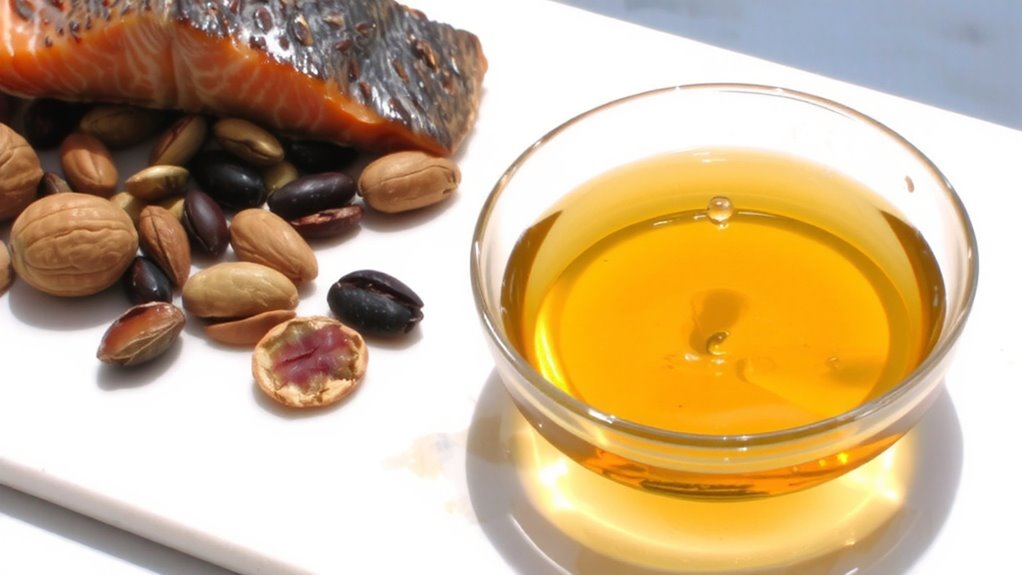
While omega-6 fatty acids often get labeled as inflammatory villains, the reality is more about balance than blame-these fats aren’t inherently harmful, but problems arise when they dominate your diet at the expense of omega-3s. You rely on omega 6 metabolism to produce key compounds that support cellular signaling, which is essential for immune responses and tissue repair. Think of it like tuning a high-performance engine: without the right fuel mix, even well-designed systems run inefficiently. When omega-6s outnumber omega-3s, signaling pathways can skew toward prolonged inflammation, affecting recovery after workouts. It’s not that omega-6s cause harm directly-it’s the disproportionate intake that disrupts equilibrium. Your body needs both fats in proper ratio to regulate processes effectively, much like precision fitness gear requires balanced tension to function perfectly. Balance isn’t just ideal-it’s biologically necessary.
How GLA Helps Your Body Shut Down Inflammation

Because not all omega-6s act the same, you’ll want to pay close attention to gamma-linolenic acid (GLA), a lesser-known fatty acid that actually helps your body resolve inflammation instead of fueling it. Through GLA metabolism, your body converts this compound into dihomo-gamma-linolenic acid (DGLA), a precursor to anti-inflammatory mediators. Unlike other omega-6 derivatives, DGLA doesn’t easily convert into pro-inflammatory substances and instead supports cytokine modulation by reducing signals like IL-6 and TNF-alpha. This shift allows your immune system to calm down after flare-ups, promoting faster recovery. You might find GLA in evening primrose or borage oil supplements, which clinical studies suggest can ease joint discomfort and improve skin barrier function. While results vary, consistent intake appears to support long-term balance. It’s not a quick fix, but when used thoughtfully, GLA acts as a strategic aid in managing chronic inflammation-especially useful when recovery is your goal.
How Omega-6 and Omega-3 Work Together to Resolve Inflammation

Though they’re often pitted against each other, omega-6 and omega-3 fatty acids aren’t rivals-they’re partners in your body’s effort to resolve inflammation effectively. You need both for balanced cell signaling, which directs immune cells to respond-or stand down-when inflammation has done its job. Omega-3s are known for their anti-inflammatory effects, but certain omega-6s, like those from GLA, help produce specialized pro-resolving mediators when working alongside omega-3s. Together, they support immune modulation, ensuring your response isn’t too weak or too aggressive. This synergy helps your body shift from inflammation to healing without lingering damage. Getting the right ratio matters-too much standard omega-6 without sufficient omega-3 can skew the balance, but with proper intake, both fats contribute to a more efficient recovery process. Think of them as a coordinated team: one signals the problem, the other helps close it down cleanly.
Best Food and Supplement Sources of Pro-Resolving Omega-6s
If you’re aiming to support your body’s natural ability to resolve inflammation, focusing on the right kinds of omega-6s can make a meaningful difference-particularly when you choose sources that provide gamma-linolenic acid (GLA), a less common but pro-resolving form. Unlike linoleic acid, which your body often converts into arachidonic acid linked to pro-inflammatory pathways, GLA bypasses that step and instead supports beneficial eicosanoids. You’ll find rich amounts of GLA in evening primrose oil, borage oil, and black currant seed oil-supplements shown to enhance recovery and modulate immune response. Though most diets overflow with linoleic acid from processed oils, they lack these specialized omega-6s. Incorporating GLA-rich sources offers a more targeted approach, helping tip the balance toward resolution rather than promoting excess inflammation. When chosen wisely, these supplements complement fitness recovery by addressing inflammation at the metabolic level, not just masking symptoms.
Ideal Ratios and Doses for Omega-6 and Omega-3
How do you strike the right balance between omega-6 and omega-3 fatty acids to support ideal fitness recovery? You’ll want a ratio between 2:1 and 4:1 (omega-6 to omega-3), as higher ratios may promote excessive inflammation. Ideal doses sit around 2–4 grams of combined omega-6 and omega-3 daily, depending on activity level. This balance supports controlled arachidonic acid metabolism, key for initiating and resolving inflammation. Excess linoleic acid oxidation, however, can lead to oxidative stress, undermining recovery. You’re better off getting these fats from whole foods-like nuts, seeds, and fatty fish-rather than relying solely on supplements. When used wisely, proper ratios enhance recovery without compromising resolution. Though fitness gear tracks your performance, internal balance drives real adaptation. Monitor intake closely, because even beneficial fats can hinder progress if unregulated.
On a final note
You now know omega-6s aren’t inherently inflammatory-imbalance is the real issue. When you supplement wisely, especially with GLA, your body gains tools to actively resolve inflammation. Paired with omega-3s, these fats work in tandem, supporting recovery at a cellular level. For fitness recovery, this balance enhances tissue repair and reduces chronic inflammation. Quality supplements and whole-food sources deliver the most benefit. Proper ratios-closer to 2:1 or 1:1 with omega-3s-optimize outcomes, making your recovery routine more effective and science-backed.