Restorative Yoga Practice Using Bolsters to Decompress Spinal Discs After Deadlifts
After deadlifts, your spine needs decompression to reverse disc compression and restore hydration lost under load. Using a firm bolster in restorative poses like Supported Child’s Pose or Legs-Up-the-Wall provides passive traction, aligns your spine, and reduces nerve pressure. These poses, held for 3–5 minutes, enhance fluid reabsorption while diaphragmatic breathing calms muscle tension. The right bolster-dense, durable, and properly positioned-makes recovery more effective, preparing you to discover how targeted recovery enhances long-term strength and spinal health.
Notable Insights
- Use bolsters in restorative poses to counteract spinal compression from deadlifts and promote disc rehydration.
- Support the torso in Child’s Pose with a bolster to gently decompress the spine and release lower back tension.
- Elevate the sacrum on a bolster in Legs-Up-the-Wall to reduce disc pressure and improve spinal fluid exchange.
- Maintain neutral spinal alignment in backbends by placing a bolster horizontally under the upper back.
- Hold bolster-supported poses 3–5 minutes with diaphragmatic breathing to enhance nervous system relaxation and tissue recovery.
Why Spinal Decompression Is Essential After Deadlifts
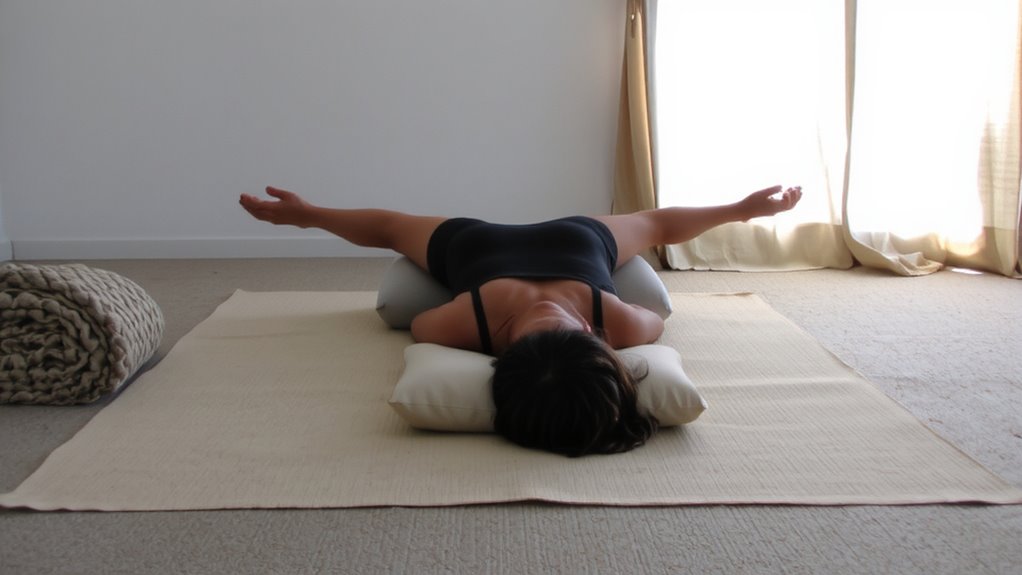
While you’re focused on building strength with heavy deadlifts, your spine pays a price-it compresses under load, and over time, that compression can lead to stiffness, disc pressure, and even long-term structural issues. Prioritizing spinal health isn’t just smart-it’s essential. Without proper decompression, you’re stacking risk on top of fatigue, which undermines injury prevention. The repeated axial loading from deadlifts squeezes fluid from spinal discs, reducing their resilience and shock absorption. You might not feel it immediately, but that cumulative stress can manifest as discomfort or worse. Think of your spine like a coiled spring: constant compression without release leads to wear. Restorative practices help reverse that. They’re not passive; they’re strategic recovery tools. Allowing your vertebrae to gently separate restores disc hydration and alignment. For anyone serious about fitness recovery, integrating decompression isn’t optional-it’s a pivotal step in maintaining performance, longevity, and overall spinal health. Using targeted spinal decompression devices can enhance recovery by providing controlled, non-invasive relief.
How Bolsters Aid Spinal Release After Lifting
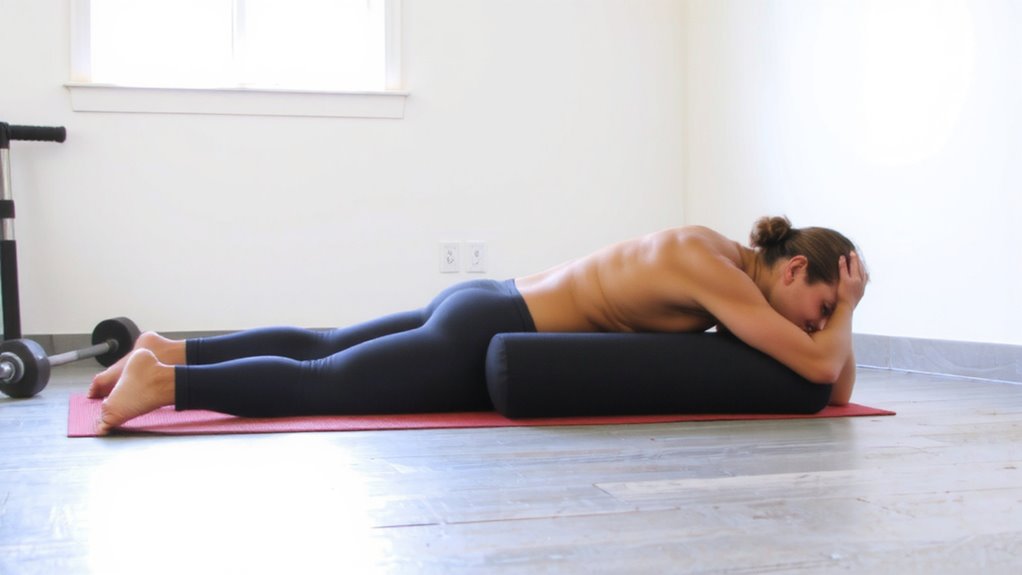
You’ve just finished a heavy lifting session, and your spine is compressed, fatigued from bearing load-now it’s time to help it recover. Bolsters provide targeted support that encourages passive spinal release, allowing discs to rehydrate and muscles to relax. By supporting the natural curve of your back, they promote joint alignment, reducing strain on vertebrae and surrounding tissues. Their firm yet yielding texture maintains posture without overeffort, enhancing muscle symmetry by preventing one-sided tension. Unlike foam rollers or mats, bolsters sustain consistent elevation, essential for prolonged, restful positioning. You’ll notice reduced stiffness and improved mobility after just one session. Their design isn’t flashy, but it’s functional-durable fabric, dense fill, built for repeated use. Used correctly, bolsters aren’t just comfort tools; they’re recovery gear that bridges strength training and structural balance, supporting long-term spinal health with quiet efficiency.
Best Restorative Poses to Decompress Your Spine
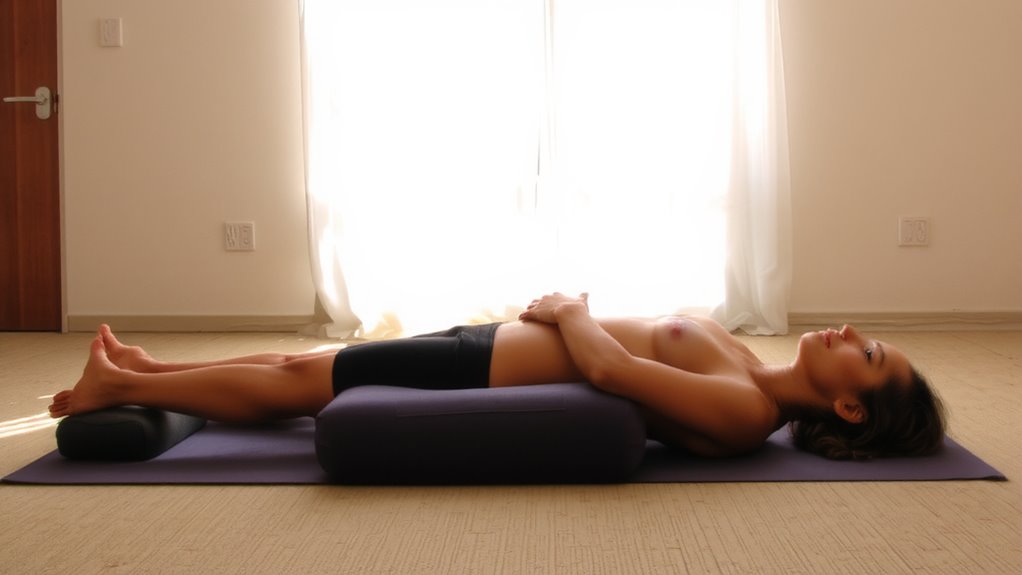
Spinal decompression begins with intentional alignment, and restorative yoga poses using bolsters offer a reliable method to reverse the compression caused by lifting and daily gravity exposure. You’ll benefit most from poses like Supported Child’s Pose, where the bolster under your torso encourages gentle stretching across the spine and hips. Legs-Up-the-Wall with a bolster under your sacrum reduces disc pressure while promoting circulation. The key is mindful awareness-monitoring tension release without pushing further. Reclined Bound Angle Pose, supported properly, opens the anterior chain and improves postural balance. These poses, consistently applied, enhance recovery by combining proper spinal elevation with passive traction. Bolsters outperform standard cushions due to their firm, dense structure, which maintains support throughout long holds. You’re not just relaxing-you’re actively restoring spinal health through targeted, low-effort positioning that accelerates recovery post-deadlift.
How to Set Up Supported Backbends
With proper support, backbends in restorative yoga can shift from intense effort to deeply therapeutic recovery, especially after demanding workouts like heavy deadlifts or prolonged sitting. You’ll need a bolster, a folded blanket, and possibly a strap. Position the bolster horizontally under your upper back, just below the shoulder blades, ensuring precise prop alignment to maintain spinal neutrality. Place a folded blanket under your head if neck strain occurs. The fabric texture of your props matters-smooth cotton lets you settle gently, while grippy linen prevents sliding. Lie back slowly, letting your spine drape over the bolster. Arms can rest wide for openness, palms up. Check that your hips stay grounded and your breath remains steady. This setup encourages gentle spinal extension without strain, making it ideal for recovery.
How Long to Hold Recovery Poses
Holding recovery poses for an appropriate duration amplifies their restorative benefits, especially after activating the spine in supported backbends. For ideal spinal decompression post-deadlifts, aim for a pose duration of 3 to 5 minutes per pose. This allows connective tissues to release and discs to rehydrate gradually. Shorter intervals may not provide deep nervous system calming, while excessively long holds can lead to stiffness if unsupported properly. Timing consistency matters-sticking to similar lengths across sessions trains your body to relax faster and enhances recovery predictability. Bolsters support passive positioning, making extended holds comfortable and effective. Unlike aggressive stretching gear, they promote stillness, a key factor in restorative work. When used with mindful timing, bolsters outperform conventional recovery tools by encouraging sustained, low-effort release. Their design supports both pose duration and timing consistency, making them essential for structured, repeatable recovery routines that prioritize spinal health and nervous system regulation.
Using Breathwork to Release Spinal Tension
What if the key to easing deep spinal tension wasn’t found in another stretch or gadget, but in something you already do hundreds of times a day? You’re breathing anyway-so why not make it count? Diaphragmatic breathing isn’t just calming; it’s a functional tool for nervous system regulation. When you inhale deeply into your belly, you signal the vagus nerve, switching off fight-or-flight mode and reducing muscle guarding around the spine. You’ll notice tension in your lower back soften, not from force, but from internal release. Unlike passive gear like foam rollers, breathwork actively modulates your physiology. Done with intention during restorative poses, it enhances spinal decompression and supports recovery. It doesn’t replace bolsters, but it amplifies their effect. This isn’t fluff-it’s biomechanics. Consistent diaphragmatic breathing reshapes how your body handles post-lift stress, making it essential, not optional.
How to Build a Post-Deadlift Yoga Routine
You’ve just finished pulling heavy, and your spine needs intelligent recovery-not more strain. Start your post-deadlift yoga routine with gentle forward folds and supported backbends using a bolster to encourage spinal decompression. Focus on slow shifts and sustained holds-3 to 5 minutes per pose-to maximize the mindfulness benefits and promote nervous system regulation. Include poses like Supported Child’s Pose, Legs-Up-the-Wall with a bolster under the hips, and Reclining Bound Angle Pose. These positions reduce compressive load while improving circulation to intervertebral discs. Consistent practice enhances injury prevention by correcting postural imbalances and decreasing muscle hypertonicity. Use non-slip mats and firm, dense bolsters that maintain shape over time-key for effective, long-term recovery. This mindful approach blends practical fitness gear use with physiological awareness, supporting resilience. Over weeks, you’ll notice improved mobility, reduced soreness, and greater body awareness-making this routine an essential part of sustainable strength training.
On a final note
You’ll find that using bolsters for spinal decompression after deadlifts isn’t just soothing-it’s strategic. These props effectively reduce disc compression by supporting natural spinal alignment, enhancing recovery. Combined with mindful breathwork and sustained holds, they boost circulation and ease muscular tension. While not a substitute for proper lifting form, bolster-assisted restorative poses offer measurable recovery benefits. Investing in durable, firm-support bolsters pays off in longevity and performance, making them a practical addition to any serious lifter’s recovery toolkit.