Pet-Assisted Therapy Benefits Documented in Professional Athlete Rehab Cases
You’re seeing faster recovery when therapy dogs join rehab, as their presence lowers cortisol and reduces perceived pain through natural endorphin release. They boost mood, motivation, and movement compliance, especially in elite athletes managing physical and mental strain. NFL players and Olympians use these animals to improve sleep, focus, and emotional resilience. Teams integrate certified dogs into structured protocols to enhance engagement and consistency-there’s more to uncover about how this synergy reshapes recovery.
Notable Insights
- Professional athletes report reduced stress and lower cortisol levels with therapy dog integration during rehab.
- Therapy dogs improve adherence to rehabilitation schedules and reduce resistance to challenging recovery sessions.
- Animal interaction triggers endorphin release, leading to measurable reductions in perceived pain among elite athletes.
- Pet-assisted therapy enhances motivation, emotional resilience, and engagement in physical rehab tasks.
- Structured canine involvement in sports medicine supports quicker movement recovery and psychological well-being in athletes.
How Therapy Dogs Speed Athlete Recovery
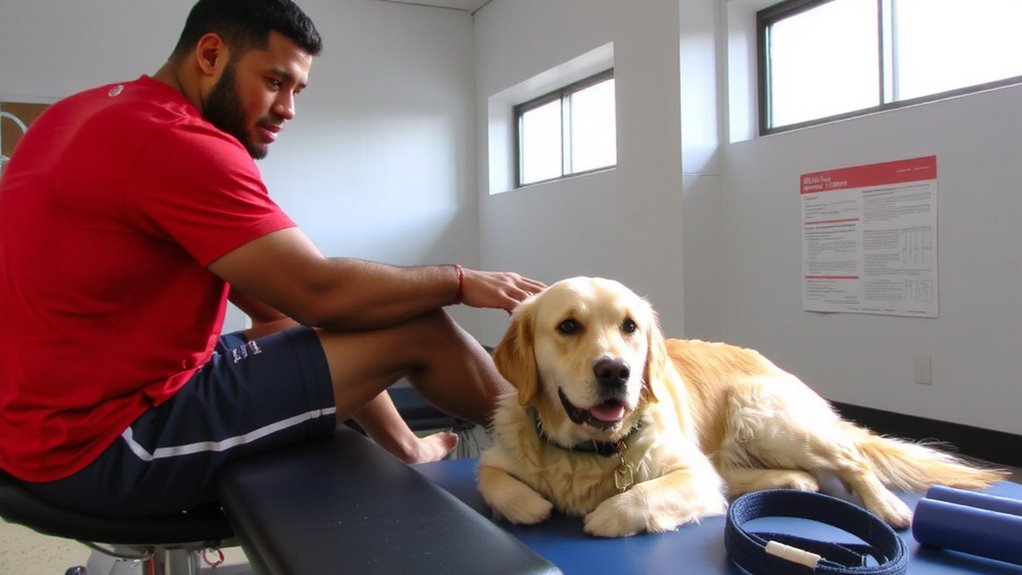
You’ve probably seen athletes wrapped in recovery boots or foam rolling between sets, but there’s another tool gaining traction in sports rehab-one that doesn’t run on batteries or sync to an app. Canine companionship, especially through therapy dogs, is emerging as a practical adjunct in recovery protocols. Studies show structured interaction supports stress reduction, lowering cortisol and improving mood. Unlike mechanical devices, these animals offer responsive, living feedback-calming presence during painful mobility work or post-injury sessions. Coaches report better adherence to rehab schedules when therapy dogs are present, likely due to emotional regulation and routine comfort. While fitness gear tracks data and enhances circulation, it often overlooks psychological strain. Canine companionship fills that gap. It doesn’t replace modalities like cryotherapy or electrical stimulation but complements them. Facilities integrating therapy dogs cite quicker shifts into rehab exercises and lower resistance to difficult sessions. For high-pressure athletes, this blend of physical and emotional support proves uniquely effective.
Why Animal Interaction Reduces Pain in Rehab
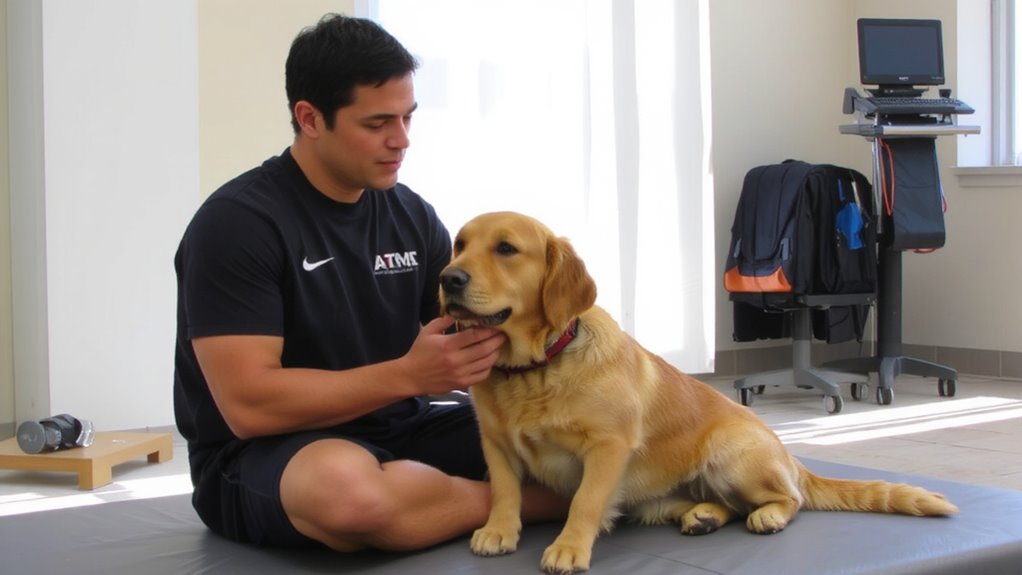
Therapy dogs don’t just keep athletes company-they actively reshape the rehabilitation experience by influencing how pain is perceived. When you interact with a therapy dog, your body responds with a natural endorphin release, helping ease discomfort without medication. This biological reaction isn’t just anecdotal; studies show measurable drops in pain reports after sessions. The distraction theory also plays a key role-you’re so focused on petting or playing that your brain shifts attention away from sore muscles or stiff joints. It’s not magic, but neurology: reduced focus on pain signals means you feel relief. These interactions don’t replace medical treatment, but they complement it by altering pain perception. For athletes pushing through tough recovery phases, that mental shift matters. Consistent animal interaction integrates seamlessly into rehab routines, offering a drug-free way to manage discomfort while staying engaged in recovery.
Mood, Motivation, and Movement: What Changes During Animal Therapy?
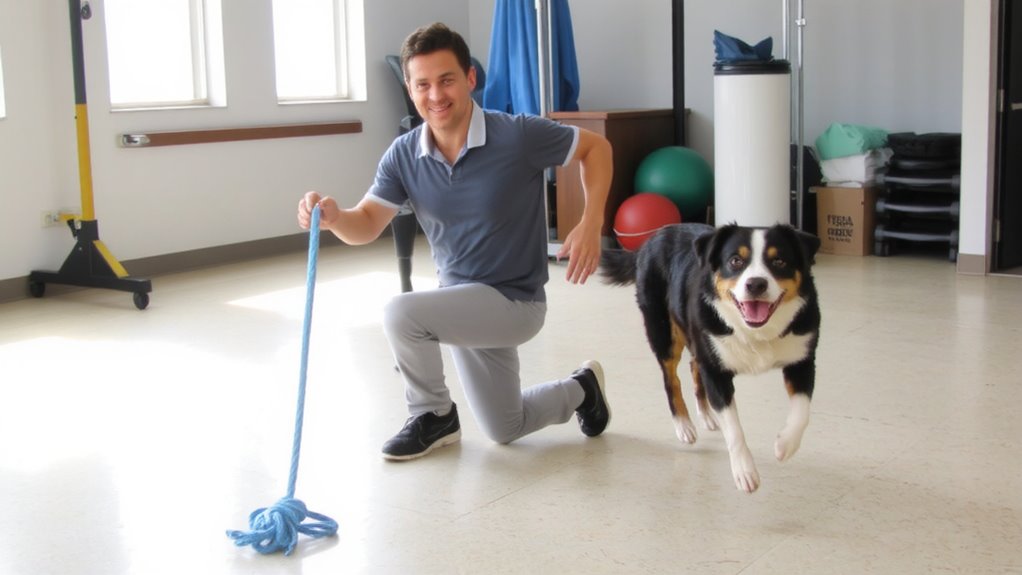
What happens when a dog walks into a recovery session? You relax-your shoulders drop, your breathing slows, and a smile sneaks in. That shift isn’t just emotional; it’s physiological. Animal therapy boosts mood, sharpens cognitive focus, and reignites motivation during rehab. Petting a dog lowers cortisol while increasing oxytocin, building emotional resilience over time. Movement becomes less of a chore when you’re reaching to throw a ball or walking a leash.
| Factor | Change Observed |
|---|---|
| Mood | Increased positivity |
| Motivation | Higher engagement in tasks |
| Movement | Improved range & frequency |
| Cognitive focus | Enhanced attention span |
| Emotional resilience | Greater stress adaptability |
These shifts aren’t fleeting-they support structured recovery. You stay present, participate more fully, and endure discomfort with a calmer mindset. The animal’s presence acts as both anchor and incentive, making therapy feel less clinical and more human.
NFL Players and Olympians Using Therapy Animals
Top athletes across the NFL and Olympic circuits now rely on therapy animals as part of their recovery routines, building on the proven psychological and physical benefits seen in clinical rehab settings. You’ve likely heard of quarterbacks spending quiet hours with therapy dogs post-surgery or Olympians walking service dogs to manage pain-related stress. These interactions offer emotional support that’s hard to replicate through medication alone. The presence of an animal helps regulate cortisol levels, easing anxiety and improving sleep-critical for muscle repair and mental focus. Trust building occurs naturally, as consistent animal contact fosters patience and emotional openness, often leading to better compliance with rehab protocols. While not replacing fitness gear or physical training tools, therapy animals complement recovery by addressing mental fatigue and emotional strain athletes rarely discuss. Their role isn’t symbolic-it’s measurable, showing up in reduced recovery times and improved psychological resilience. You’ll find more teams embracing this, though implementation varies.
How Teams Turn Pets Into Rehab Tools
While you’re focused on strength gains and injury rehab, some teams are flipping the script by integrating pets directly into recovery protocols-not as distractions, but as functional tools. They carefully manage pet selection, choosing animals with calm temperaments and proven resilience to noisy, high-energy environments. These pets go through rigorous training protocols designed to align their behaviors with therapeutic goals, like encouraging gentle movement or reducing muscle tension through touch. Certified therapy dogs, for instance, might guide you through controlled walks that subtly improve balance and stride consistency. Teams treat these animals like specialized fitness gear-maintained, evaluated, and adapted to your rehab phase. The right pet, properly trained, becomes more than a comfort: it’s a responsive element in your recovery system, offering measurable feedback and encouraging adherence. It’s not gimmicky-it’s strategic, evidence-based support woven into modern sports medicine frameworks.
Why Sports Med Teams Use Therapy Animals
You’re already seeing how trained animals fit into rehab as functional tools, not just emotional support-but now consider why sports medicine teams actively choose them over traditional recovery aids. Therapy animals offer unique advantages through bonding techniques that enhance patient compliance and motivation. Unlike passive recovery gear, animals engage athletes emotionally and physically, encouraging movement and consistency. Their presence supports sensory integration, helping retrain neural pathways disrupted by injury. The rhythmic feel of a dog’s gait during assisted walking, for example, provides real-time feedback similar to high-end rehabilitation tech-but with adaptive responsiveness machines can’t replicate. Teams report faster progress in balance, coordination, and psychological resilience. These outcomes aren’t just anecdotal; studies confirm measurable improvements when therapy animals are integrated into structured protocols. That’s why more clinics are adopting them alongside conventional tools-they’re not replacements, but force multipliers in recovery, combining biological intuitiveness with therapeutic precision.
On a final note
You see clear benefits when therapy animals join rehab: reduced pain perception, improved mood, and faster physical progress. Studies show athletes recover quicker with consistent animal interaction, thanks to lowered cortisol and increased motivation. Sports med teams integrate these sessions strategically, tracking gains in range of motion and compliance. While not a standalone fix, pet-assisted therapy complements fitness recovery tools effectively, offering measurable psychological and physiological advantages worth incorporating into elite rehab protocols.