Mindful Walking as a Low-Impact Recovery Method for Runners With Sore Knees
You can reduce knee strain by up to 75% with mindful walking, making it a smart recovery choice when running aggravates sore joints. This low-impact practice improves alignment, circulation, and muscle relaxation without overloading the patellofemoral joint. Pair it with supportive footwear and soft terrain to maximize joint protection. By syncing breath and body awareness, you enhance recovery-discover how to optimize each step for long-term knee health.
Notable Insights
- Mindful walking reduces knee strain by emphasizing low-impact movement and proper alignment during recovery.
- It promotes blood flow to joints without overloading the patellofemoral joint, aiding healing in sore knees.
- Focusing on breath and body awareness helps runners detect imbalances and prevent further knee issues.
- Soft terrain and supportive footwear enhance shock absorption, minimizing stress on recovering knee joints.
- Unlike running, mindful walking uses controlled, intentional steps to support joint health and active recovery.
Why Mindful Walking Eases Knee Pain After Running

While running often aggravates knee pain due to repetitive impact, mindful walking can actually help reduce discomfort and support recovery when done consistently. You maintain better knee alignment during walking, especially when focusing on posture and gait, which reduces strain on joints and ligaments. Unlike high-impact runs, this low-intensity movement promotes blood flow without overloading the patellofemoral joint. You’ll notice improved muscle relaxation, particularly in the quadriceps and hamstrings, helping ease tension that can worsen knee pain. Supportive footwear with adequate arch support further enhances alignment and comfort. Mindful walking encourages body awareness, allowing you to detect and correct imbalances early. It’s not a replacement for strength training or proper recovery gear, but combined with compression sleeves or foam rolling, it becomes a practical recovery tool. Done right, it sustains mobility while letting inflamed tissues heal.
Start a 5-Minute Mindful Walking Practice Today
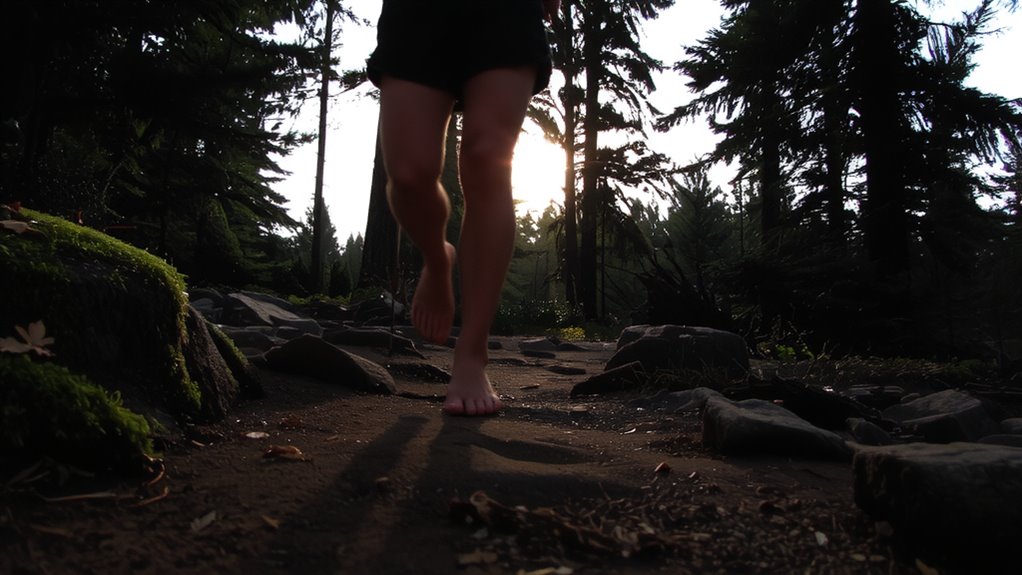
Because recovery matters just as much as effort in any training routine, starting a 5-minute mindful walking practice today can be a simple yet effective way to support knee health after running. Find a quiet path or even a hallway where you can move without distraction. Begin with mindful breathing-inhale deeply through your nose, feel your abdomen rise, then exhale slowly. Sync each breath with your steps, aiming for gentle pacing that keeps your joints comfortable. Keep your posture upright but relaxed, arms loose, shoulders down. This isn’t about distance or speed; it’s about tuning into your body’s signals. You’ll notice reduced muscle tightness and improved circulation, both of which aid recovery. Unlike intense cooldown tools or expensive gear, this practice costs nothing and fits into any schedule. Done consistently, it becomes a reliable, low-effort recovery habit that complements your running without adding strain.
How It Protects Knees Differently Than Running
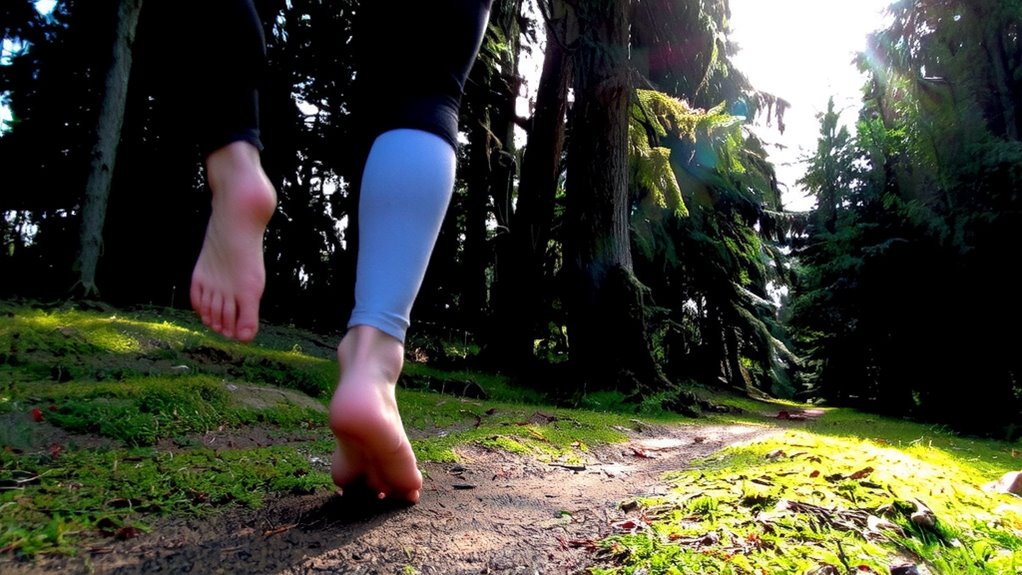
When you walk mindfully, you engage your joints in a way that supports recovery without the repetitive stress running often brings. Unlike running, which generates forces up to three times your body weight, mindful walking emphasizes controlled movement and proper knee alignment, reducing strain on ligaments and cartilage. You naturally improve impact absorption by landing more softly and distributing weight evenly through the foot and leg. This technique decreases jarring forces that can aggravate sore knees, making it a smarter recovery choice. Runners often overlook how form affects joint health, but mindful walking trains you to move with intention, correcting imbalances over time. While running gear prioritizes cushioning and propulsion, mindful walking requires minimal support-just enough to promote natural motion. It’s not about intensity; it’s about consistency and joint preservation. For long-term knee health, this shift in movement pattern offers a sustainable, low-impact alternative that supports, rather than stresses, recovery. Low-impact exercise options such as best exercise equipment can further complement mindful walking for those seeking additional joint-friendly fitness solutions.
Choose Joint-Friendly Surfaces and Shoes
Mindful walking gives your knees a chance to recover, but your progress still depends on what’s underfoot and on your feet. Choose soft terrain like grass, dirt trails, or a rubberized track to reduce joint impact-these surfaces absorb shock better than concrete or asphalt, which can worsen knee strain. Pair that with proper footwear offering cushioning, arch support, and a stable heel; running shoes worn beyond 300–500 miles lose their shock absorption, so replace them regularly. Minimalist shoes might lack support when recovering, while overly bulky ones can alter gait. Opt for lightweight designs with responsive midsoles that mimic natural foot movement without compromising protection. The right combo of soft terrain and proper footwear doesn’t just ease discomfort-it supports biomechanical efficiency, helping you maintain mobility while reducing re-injury risk during recovery. Upgrading your footwear with supportive best insoles for hiking boots can further enhance shock absorption and stability, even in well-worn shoes.
Use Breath and Body Awareness to Speed Recovery
How often do you sync your breath with each step, or notice the first hint of tension in your quads before it flares into knee discomfort? Practicing breath synchronization helps regulate your pace and reduces strain, allowing your joints to move more efficiently. Inhale for three steps, exhale for three-this rhythm supports steady oxygen flow and minimizes knee overload. Pair this with body scanning, a technique where you mentally check in from feet to hips, identifying tightness or imbalance early. Runners who use body scanning during walks catch subtle discomfort before it becomes injury. Together, breath synchronization and body scanning turn simple movement into active recovery, improving circulation and joint awareness. While recovery gear like braces or foam rollers has its place, mindful physiological techniques often offer quicker, more sustainable results. These internal tools require no maintenance, fit any budget, and work anywhere-making them essential for intelligent, long-term knee healing.
Build a Daily Mindful Walking Routine for Knee Healing
You don’t need expensive recovery gear or a crowded gym membership to start healing sore knees-just 20 minutes a day of intentional movement can deliver measurable results. Begin your mindful walking routine on flat, even terrain to reduce joint stress and help maintain proper knee alignment. Keep your walking pace slow to moderate, around 3 to 4 mph, so you can focus on form rather than speed. Land with a midfoot strike, engage your core, and let your arms swing naturally to support balance. Pay close attention to how your knees track over your toes-avoid inward collapse, which can worsen strain. Over time, this low-impact practice enhances circulation, reduces stiffness, and reinforces healthy movement patterns. Unlike aggressive recovery tools or unproven fitness gear, mindful walking is accessible, free, and backed by consistent physiological benefits when performed with awareness and regularity.
On a final note
You’re giving your knees a smart recovery edge with mindful walking. Unlike running, it reduces joint stress while maintaining mobility, especially on soft surfaces with proper footwear. Your breath and body awareness help gauge effort and prevent overloading. This routine supports circulation and tissue repair without high impact. Over time, it builds resilience. Mindful walking isn’t just rest-it’s active recovery done right, balancing fitness goals with joint longevity.