Shoulder Mobility Drills With Wall Slides With Resistance Band
You can boost shoulder mobility by performing wall slides with a resistance band, which enhance scapular control and rotator cuff activation. Keep your head, upper back, and hips against the wall to maintain proper form and avoid lower back arching. Use lighter bands if you’re building awareness, progressing only when alignment stays consistent. This drill counters rounded shoulders and supports joint health, especially before workouts or long sitting periods-there’s more to how timing and progression maximize results.
Notable Insights
- Perform wall slides with a resistance band to enhance shoulder mobility and scapular control.
- Maintain contact between head, upper back, and hips to ensure proper form and alignment.
- Use lighter resistance bands initially to avoid compensatory movements like arching or flaring.
- Progress gradually by increasing band tension or range of motion as mobility improves.
- Incorporate 3–4 sets of 10–12 reps, 3–4 times weekly, for optimal shoulder and postural health.
How to Do Wall Slides With Resistance Band
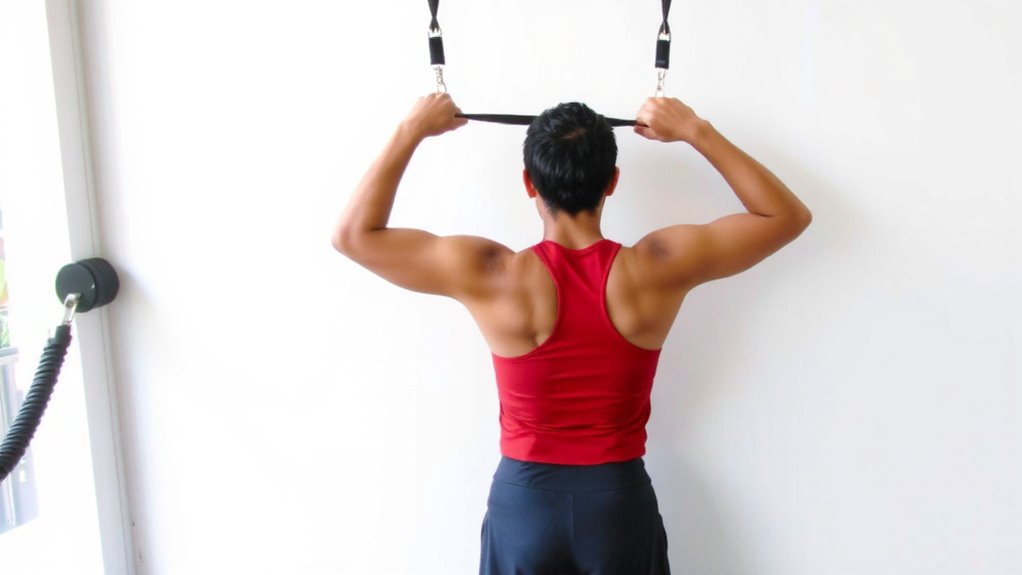
While standing with your back against the wall might seem simple, adding a resistance band to wall slides elevates the exercise markedly, turning it into a dynamic shoulder mobility drill that targets scapular control and thoracic awareness. You’ll want proper band placement-usually just above your elbows-to maintain tension without restricting motion. This encourages activation of the rotator cuff and lower traps. Control your slide tempo: a slower descent (3–4 seconds) increases time under tension, enhancing neuromuscular feedback. Faster tempo reduces difficulty, making it ideal for warm-ups. The band’s elasticity offers progressive resistance, letting you adjust intensity as mobility improves. Durable latex bands perform best, maintaining grip and alignment throughout the movement. Used correctly, this drill not only supports joint health but also reinforces postural discipline-a smart addition to any recovery or mobility routine involving fitness gear. Consistency matters more than intensity here.
Common Wall Slide Mistakes to Avoid

How many times have you performed wall slides only to wonder why your shoulders still feel tight or uncoordinated? Chances are, subtle form errors like elbow flaring or arching back are undermining your progress. These mistakes reduce scapular engagement and shift stress to the neck and lower back, limiting mobility gains.
| Mistake | Why It Matters |
|---|---|
| Elbow flaring | Reduces activation of rear delts and traps, decreasing shoulder stability |
| Arching back | Shifts movement from thoracic to lumbar spine, increasing injury risk |
Maintaining contact between your head, upper back, and hips guarantees proper mechanics. Keep elbows slightly below shoulder height and move slowly. Using a resistance band adds feedback-too much tension encourages arching back, while improper placement promotes elbow flaring. Consistency with correct form beats high reps with errors.
Wall Slide Variations for Every Mobility Level
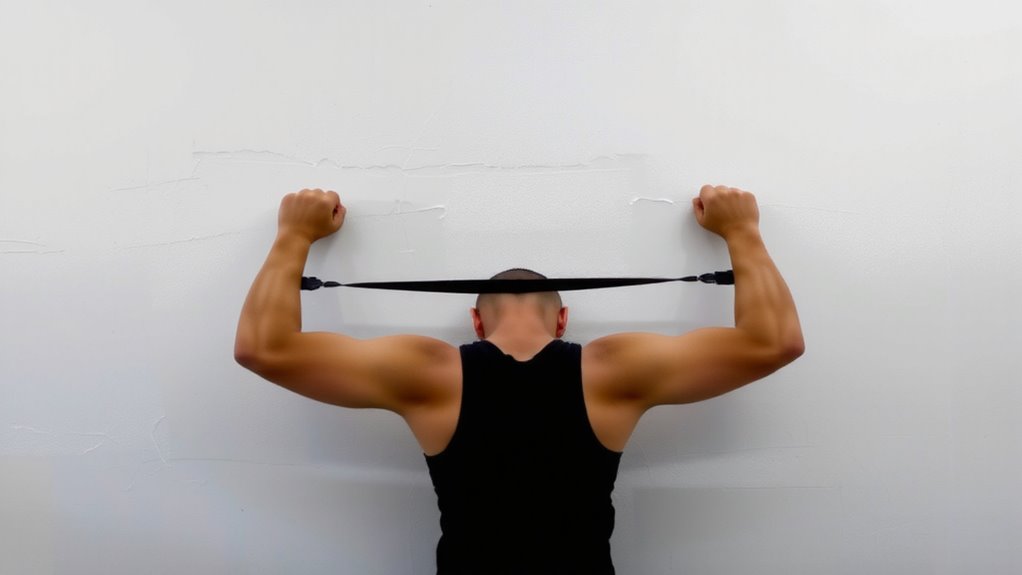
A well-designed wall slide variation can make all the difference in building shoulder mobility safely and effectively, especially when matched to your current range of motion and control. If you’re just starting out, beginner modifications like reducing arm range or using a foam pad between your back and the wall help maintain form without strain. These adjustments let you build awareness and stability gradually. For those with better control and flexibility, advanced progressions-such as adding a resistance band above the wrists or lifting heels off the ground-increase demand on coordination and strength. These variations challenge mobility under load, translating directly to functional shoulder health. Choosing the right variation isn’t just about difficulty; it’s about alignment, control, and consistency. Proper execution matters more than reps. Over time, progressing through tailored versions guarantees sustainable gains without compromising joint safety or technique.
Choosing the Right Resistance Band Tension
You’ve probably used a resistance band during wall slides or seen them added to advanced variations for extra challenge. Choosing the right tension is key to both effectiveness and safety. Resistance bands come in varying strengths, usually indicated by band color selection-lighter colors for beginners, darker for advanced users. Start with a lighter tension to maintain proper form and avoid compensatory movements. As your control improves, implement tension progression by moving to stronger bands. This gradual increase builds strength without overloading the joints. Not all bands are created equal; latex quality and thickness affect durability and resistance consistency. A well-structured tension progression guarantees long-term mobility gains and reduces injury risk. For wall slides, medium tension often works best-enough challenge without disrupting scapular mechanics. Test different levels, but always prioritize technique over resistance.
How Wall Slides Fix Rounded Shoulders and Strengthen Your Rotator Cuff
Why do so many desk workers and gym-goers alike struggle with slouched postures despite regular exercise? Because most routines overlook scapular retraction and proper activation of the upper back. Wall slides with a resistance band directly combat rounded shoulders by reinforcing neutral shoulder alignment and encouraging sustained posture correction. As you glide your arms up and down the wall, the band adds tension that challenges the muscles responsible for scapular control, especially the lower trapezius and serratus anterior. This movement also engages the rotator cuff, improving stability and reducing injury risk over time. Unlike heavy lifts or passive stretching, wall slides promote neuromuscular re-education-teaching your body to maintain better alignment during daily activities. Consistent use sharpens joint awareness, enhances mobility, and strengthens underused stabilizers. While simple, the drill’s effectiveness lies in its precision: it’s a low-load, high-feedback exercise essential for anyone serious about shoulder health and long-term fitness recovery.
When to Do Wall Slides With Resistance Band
Wall slides with a resistance band aren’t just effective-they’re strategic, and timing their use within your routine can amplify their impact on shoulder alignment and joint integrity. You’ll get the most benefit when you integrate them into prehab routines, especially before upper-body workouts or prolonged sitting. The ideal timing frequency is 3–4 times weekly, either as a warm-up or recovery session, allowing consistent neuromuscular reinforcement without overloading the joint. Perform 2–3 sets of 10–12 controlled reps, focusing on scapular control and ribcage engagement. Using a moderate-resistance loop band with secure anchoring preserves form and reduces compensatory movement. Unlike passive stretches, this active drill primes connective tissues and enhances proprioception. For long-term joint health, make wall slides a non-negotiable part of your mobility circuit-especially if you spend hours at a desk or overhead training. Proper timing frequency turns a simple drill into a durable fix.
Why Wall Slides Boost Shoulder Mobility and Posture
How does a simple movement against a flat surface lead to measurable gains in shoulder function and upright posture? Wall slides train your body to move efficiently by reinforcing proper scapular control and alignment. As you glide your arms up and down the wall, your shoulder blades slide smoothly along your ribcage, activating stabilizing muscles often weakened by prolonged sitting. The drill also encourages thoracic extension, counteracting the slumped posture many develop from desk work. By maintaining contact with the wall, you get real-time feedback, correcting faulty movement patterns. Over time, this builds neuromuscular awareness, improving both mobility and postural endurance. Using a resistance band adds gentle tension, increasing muscle engagement without compromising form. Consistent practice supports healthier shoulder mechanics and a more upright stance-key for injury prevention and functional strength. It’s a low-equipment, high-return drill ideal for recovery and long-term joint health.
On a final note
You’ll find wall slides with a resistance band effective for refining shoulder mobility and posture. This drill targets the rotator cuff and scapular stabilizers, correcting imbalances like rounded shoulders. Used correctly, it enhances joint integrity and movement efficiency. Pairing the right band tension with proper form guarantees progress without strain. It’s a practical addition to warm-ups or recovery routines, especially when consistency and technique are prioritized. Reliable, low-risk, and space-efficient, it’s a smart choice for long-term shoulder health.