Torque Distribution Analysis on Stationary Bikes to Prevent Ankle Sprains
You’re risking ankle strain if your stationary bike shows uneven torque distribution. Misaligned cleats or poor pedal setup can cause joint stress and reduce pedaling efficiency. Testing torque balance at different resistance levels reveals asymmetries-over 10% difference is a red flag. Proper cleat alignment, float settings, and stroke technique help distribute force evenly. Strengthening your ankles and choosing bikes with power meters also supports balance. There’s more to optimizing your ride safely than just pedaling.
Notable Insights
- Analyze left/right pedal torque symmetry using dual-sided power meters to identify imbalances that increase ankle injury risk.
- Maintain torque balance within 10% between legs to reduce uneven stress on ankle joints during cycling.
- Adjust cleat alignment and pedal float to match natural foot angle, promoting even torque distribution and joint alignment.
- Test torque balance at multiple resistance levels to detect asymmetry changes and tailor bike setup accordingly.
- Optimize pedal stroke mechanics to ensure smooth, circular power application and minimize ankle overload.
Why Stationary Biking Can Strain Your Ankles
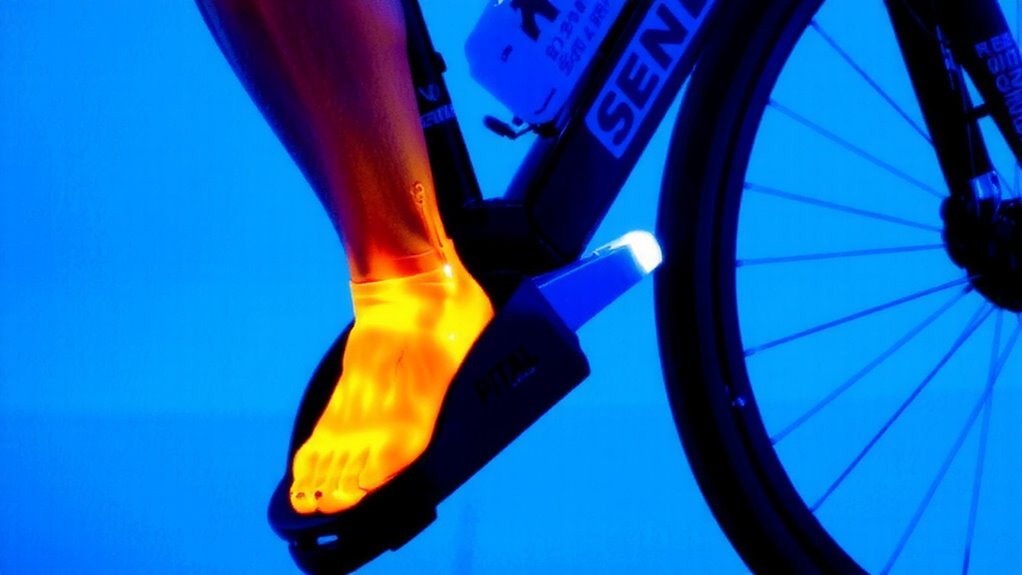
Ever wonder why your ankles ache after a solid session on the stationary bike? You’re likely dealing with ankle misalignment, especially if the pedals don’t match your natural foot angle. Many bikes lack adjustable cleats or ergonomic footbeds, forcing your joints into unnatural positions. Combine that with high pedal resistance, and you’re amplifying stress on tendons and ligaments with every rotation. Even a slight misalignment increases shear forces, reducing pedaling efficiency and raising injury risk over time. While some shoes and pedals claim to improve alignment, few deliver without costly add-ons. Consistent high resistance without proper form worsens strain, particularly if you’re pushing through fatigue. Recovery isn’t just rest-adjusting resistance levels, checking pedal positioning, and using supportive footwear help. These small fixes improve torque distribution and protect your ankles, making recovery faster and workouts safer. Don’t ignore early discomfort-it’s your body flagging a mechanical mismatch.
How Torque Imbalance Leads to Ankle Sprains
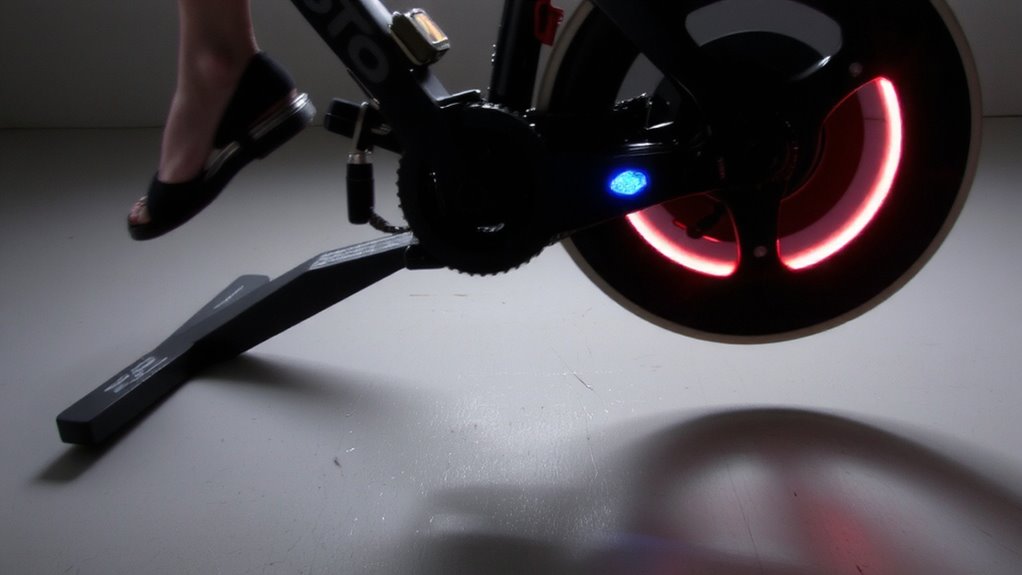
A surprisingly common yet overlooked issue on stationary bikes is the uneven torque distribution between limbs, and it’s this imbalance that can set the stage for ankle sprains over time. You might not realize it, but torque asymmetry-where one leg generates markedly more force than the other-creates repetitive stress on your ankle joints. This force misalignment alters your natural pedaling biomechanics, making your weaker side compensate in ways that strain ligaments. Over sessions, that strain accumulates, especially if your pedals or cleats aren’t properly aligned. Most riders develop this asymmetry gradually, often due to prior injuries or muscular imbalances. Without correction, the constant uneven load increases your risk of rolling your ankle inward or straining its stabilizing tissues. Even high-end bikes won’t fix this if your form’s off. Recognizing torque asymmetry early helps preserve joint health and improves pedal efficiency, making it a critical yet underrated aspect of injury prevention in fitness recovery and gear performance.
Test Your Pedal Torque Balance: A Step-by-Step Guide?
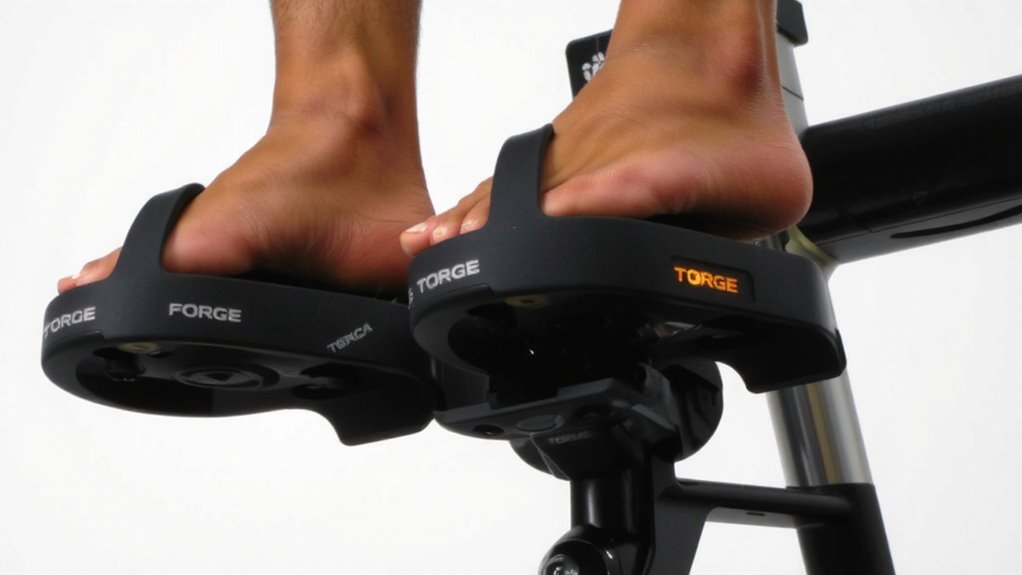
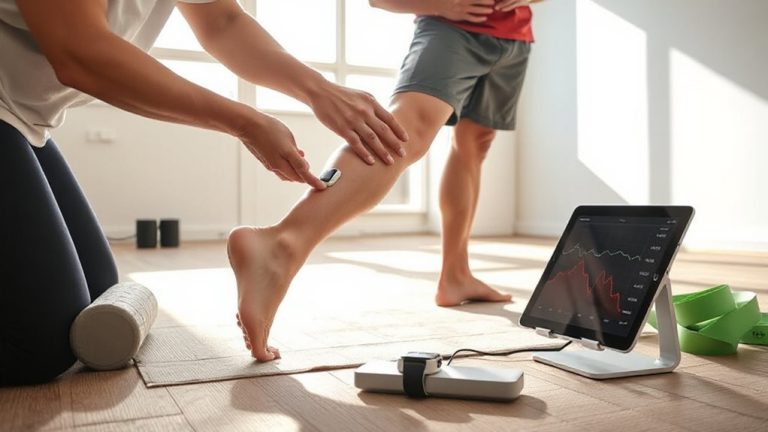
You can’t fix what you don’t measure, and that holds especially true when it comes to detecting torque imbalances on your stationary bike. Start by setting a moderate resistance level and maintain a steady pedal cadence of 80–90 RPM for three minutes. Use a bike with built-in power meters or dual-sided sensors to track left/right torque output. Note any consistent discrepancy over 10%. Higher resistance levels tend to amplify imbalances, making them easier to spot. Repeat the test at varying intensities-low, medium, high-to see how changes affect symmetry. A stable cadence guarantees consistent data. Most riders unknowingly favor one leg, especially during climbs or sprints. Identifying this early helps prevent overuse strain, particularly around the ankle joint. Reliable sensors and regular checks make this assessment practical, even at home. Consistent monitoring improves pedaling efficiency and joint safety over time.
Set Your Cleats for Even Power and Joint Safety
Proper cle coef alignment on your cycling shoes isn’t just about comfort-it directly influences how evenly power transfers from your legs to the pedals, especially on a stationary bike where repetitive motion magnifies minor misalignments. You need precise cleat alignment to avoid uneven torque distribution, which can strain joints over time. Most performance pedals offer adjustable pedal float, letting your foot pivot slightly at the interface to reduce rotational stress on the knee and ankle. You should set this float according to your natural leg rotation-too little increases joint strain, too much reduces power transfer efficiency. A neutral starting point, around 4–6 degrees of float, works well for most riders. Regularly check cleat position, as bolts can loosen. Proper setup enhances joint safety and guarantees both feet contribute equally, supporting long-term joint health and balanced torque application.
Fix Your Pedal Stroke to Reduce Ankle Stress
Why do so many riders experience nagging ankle discomfort during long indoor sessions? Poor pedal stroke mechanics are often to blame. You’re likely overloading your ankle if your pedal alignment is off or your stroke lacks symmetry. When your foot isn’t properly aligned, torque distribution becomes uneven, forcing your ankle to compensate with every revolution. This places repetitive stress on ligaments and tendons, increasing sprain risk. Achieving stroke symmetry-balancing power across the entire 360-degree cycle-reduces that strain. Focus on smooth, circular motion rather than just pushing down. Cleat position affects this, but your technique matters just as much. Use real-time feedback from smart trainers to monitor imbalances and adjust. Over time, refining stroke symmetry and ensuring accurate pedal alignment won’t just protect your ankles-it’ll boost efficiency and comfort. You’ll ride harder, longer, and with fewer overuse issues.
Build Ankle Strength for Smoother, Safer Riding
Ankle discomfort during indoor cycling often stems from more than just flawed pedal technique-it can reveal underlying weaknesses that limit performance and resilience. You can improve ankle stability and muscle symmetry with targeted strengthening exercises, which support smoother power transfer and reduce injury risk over time. Consistent training builds durable connective tissues and guarantees balanced force distribution throughout your pedal stroke.
| Exercise | Benefit |
|---|---|
| Heel raises | Boosts calf endurance and ankle stability |
| Toe walks | Enhances anterior muscle activation |
| Resistance band circles | Promotes joint mobility and muscle symmetry |
| Single-leg balance | Improves neuromuscular coordination |
These movements, when integrated into your routine three times weekly, condition your lower limbs to handle variable torque demands. They’re especially effective when paired with proper form and gradual load increases. Over time, your ankles become more resilient, contributing to safer, more efficient indoor cycling sessions without unnecessary strain.
Choose a Bike That Supports Balanced Power Output
Most high-end stationary bikes on the market today claim to deliver smooth power output, but only a few actually help you maintain balanced pedaling forces throughout your ride. You need a bike whose design actively promotes symmetry in torque distribution, reducing strain on your ankles. Pay close attention to bike geometry-proper alignment of the seat, pedals, and handlebars guarantees even power transfer from both legs. If the frame forces an awkward hip or foot angle, you’ll unknowingly favor one side. Also, check resistance calibration; inconsistent or uncalibrated resistance can exaggerate imbalances, making one leg work harder. Models with digital resistance control and real-time feedback tend to offer more precise, balanced loads. Over time, riding on a well-calibrated machine with smart geometry supports joint health and improves pedaling efficiency. It’s not just about comfort-it’s about injury prevention and long-term performance.
On a final note
You’ll reduce ankle strain by addressing torque imbalances on your stationary bike. Proper cleat alignment, balanced pedal strokes, and strengthened ankles enhance joint safety and power efficiency. Choosing bikes with responsive resistance and real-time feedback helps maintain control. These adjustments aren’t just preventive-they boost performance. Over time, attention to form and equipment pays off in smoother, safer workouts, supporting long-term fitness recovery and joint health without unnecessary injury risk.