Thoracic Mobility Drills With Standing Windmills for Full Spine Rotation
You can improve thoracic mobility with standing windmills by actively rotating your upper back while keeping your spine long and arms extended. Avoid common mistakes like hip swaying or lateral bending, which reduce effectiveness. Engage your core and pack your shoulders to maximize control. This drill boosts spinal rotation and shoulder stability, especially when done with proper technique. Try variations like kettlebell or single-arm windmills to increase demand-there’s more to discover about optimizing each rep.
Notable Insights
- Standing windmills target thoracic spine rotation while promoting shoulder mobility and upper back flexibility.
- Initiate movement from the thoracic spine, not the hips, to ensure true spinal rotation.
- Keep arms fully extended and spine long to maximize rotational range and alignment.
- Maintain packed shoulders with engaged serratus and lower traps for joint stability and control.
- Perform 2–3 sets of 8–10 reps per side, focusing on form before adding load or instability.
How to Do Standing Windmills Correctly
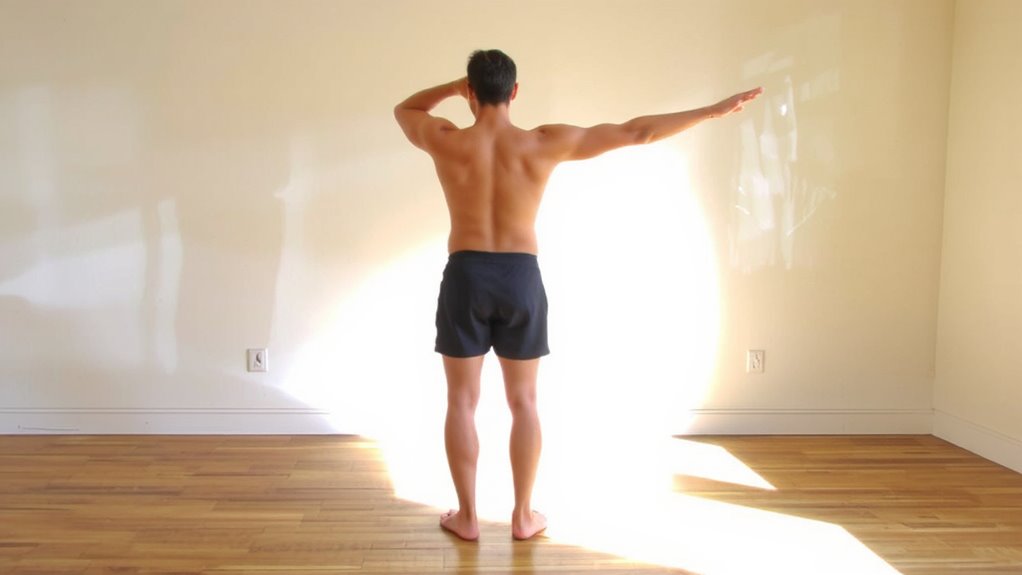
Why do so many people struggle with shoulder mobility and upper back stiffness? You probably don’t activate the right muscles or maintain proper alignment during movement patterns. That’s where standing windmills come in-they’re not just a mobility drill but a test of thoracic control. To do them correctly, start with feet shoulder-width apart, engage your core, and initiate the movement from your upper back, not your hips. Keep your spine long and arms fully extended to maximize rotation. Proper alignment guarantees safe, effective motion while reducing strain on the shoulders. Muscle activation in the serratus anterior and lower traps is essential-you should feel those fire as you rotate. Done right, standing windmills improve spinal rotation and prepare your body for complex lifts. They’re simple in design but demanding in execution, making consistency and form more important than reps.
Fix These Common Windmill Form Mistakes
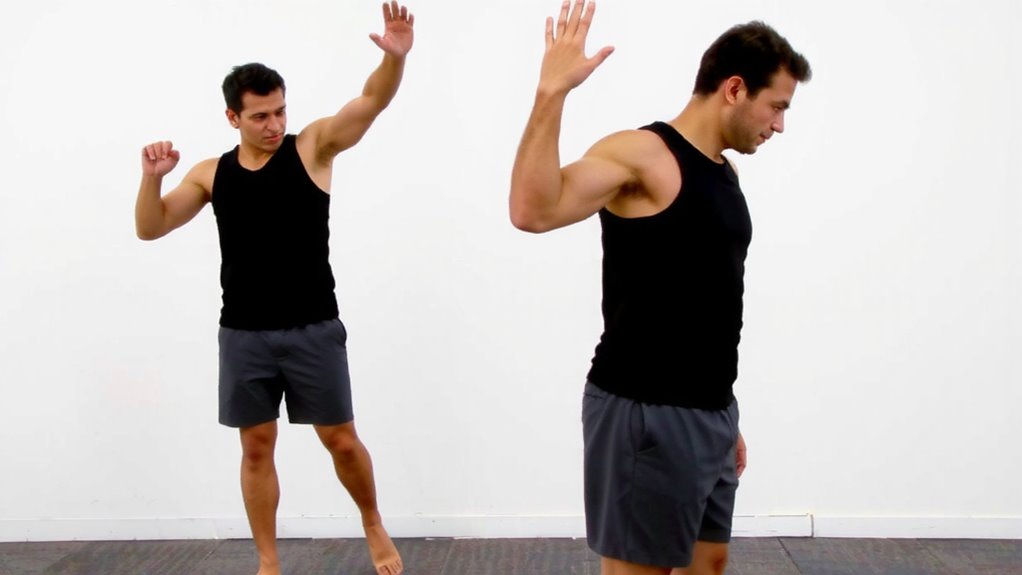
How often do you finish a set of standing windmills only to realize your hips swayed more than your thoracic spine? That’s a sign you’re compensating instead of rotating where it counts. To fix it, focus on controlled thoracic movement, not lateral bending. A common flaw is poor elbow alignment-your moving elbow should trail slightly behind the torso, not swing forward, which reduces rotational stretch. If it juts ahead, you’ll lose spinal engagement. Also, neglecting shoulder packing kills stability. Keep your shoulder blades retracted and depressed throughout; a loose shoulder risks strain and diminishes effectiveness. These corrections enhance joint safety and drill precision. Proper form guarantees you’re training mobility, not just completing reps. Fix these, and each windmill will contribute meaningfully to spinal control, preparing your body for advanced variations without reinforcing bad habits.
3 Standing Windmill Variations to Try
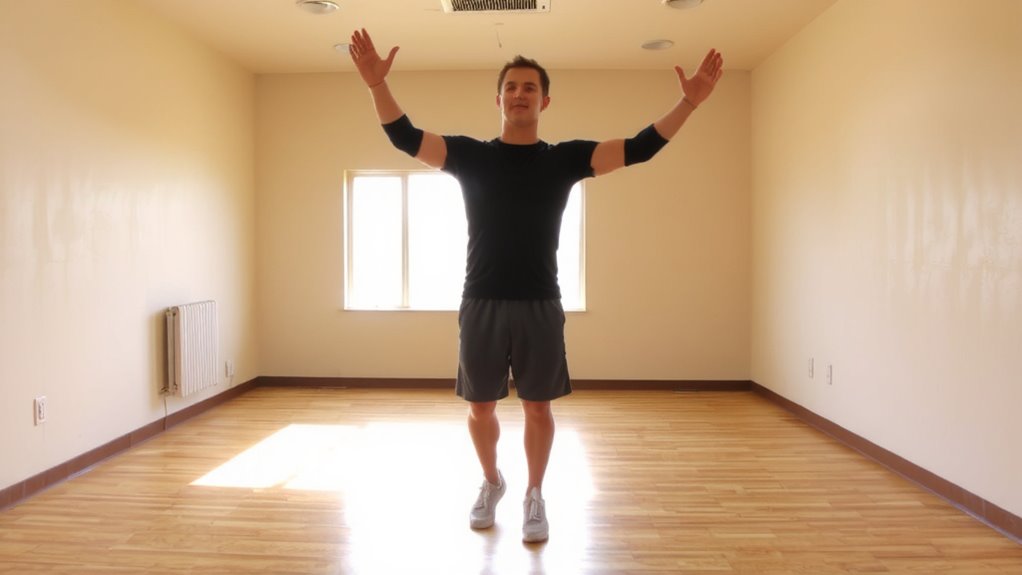
Now that you’ve cleaned up your windmill technique and prioritized true thoracic rotation over hip sway or elbow drift, you’re ready to explore variations that build on that foundation. Try the loaded windmill with light dumbbells to increase bilateral tension, enhancing neuromuscular control through opposing muscle groups. This not only strengthens stability but sharpens dynamic balance, essential for athletic movement patterns. The kettlebell windmill adds a counterbalance element, demanding greater core engagement and precision. For a functional challenge, perform single-arm variations while standing on an unstable surface like a balance pad-this amplifies proprioceptive demand without compromising form. Use fitness gear that supports joint alignment, such as supportive footwear or minimal grip mats, to maintain integrity during rotation. These variations aren’t just harder-they’re smarter, driving adaptation while reinforcing mobility under load. Choose equipment that enhances, not distracts, from movement quality.
Why Windmills Improve Thoracic Rotation
Where does true rotational power come from if not from the thoracic spine? The standing windmill taps into this region with precision, enhancing both joint articulation and muscle activation in a way few drills can. As you rotate and reach, each vertebra glides through a controlled range of motion, improving segmental mobility. You’re not just stretching-you’re training your spine to move as a coordinated unit. The windmill forces the obliques, lats, and deep rotators to fire in sequence, reinforcing functional stability. Unlike passive stretches, this dynamic movement promotes neuromuscular control, which translates to better performance in sports and daily tasks. You’ll notice improved posture and reduced restriction over time, especially if thoracic stiffness has been holding you back. It’s not just about flexibility-proper execution guarantees joint articulation isn’t compromised while maintaining consistent muscle activation throughout the arc. That’s where real progress happens.
How to Add Windmills to Your Routine
Why should you integrate windmills into your routine instead of just relying on static stretches or isolation exercises? Because they promote dynamic thoracic rotation while engaging your core, shoulders, and hips in coordinated movement. Start with bodyweight windmills, using controlled breathing techniques-inhale to prepare, exhale as you rotate-to enhance motor control and stability. Gradually add equipment options like light kettlebells or resistance bands to amplify proprioception and load. Perform 2–3 sets of 8–10 reps per side, 3 times weekly, post-warm-up or during mobility circuits. This frequency balances neuromuscular adaptation without overtaxing connective tissues. Windmills outperform static drills by embedding functional motion patterns, especially when combined with mindful pacing and joint alignment. Though minimal gear is needed, proper footwear and space guarantee safety. Over time, you’ll notice improved rotational endurance, posture, and carryover to athletic lifts. Consistency matters more than intensity-prioritize form, and let breathing techniques and thoughtful use of equipment options guide sustainable progress.
On a final note
You’ll find standing windmills highly effective for building thoracic mobility and functional rotation when performed with controlled form. This drill challenges stability while enhancing spinal awareness, making it a smart addition to dynamic warm-ups or movement prep. Paired with quality recovery gear-like targeted foam rollers or mobility balls-you can maintain joint health and muscle elasticity. Though simple, windmills demand precision; done right, they deliver real carryover to athletic performance and daily mechanics without unnecessary strain.