Incline Treadmill Walking to Rebuild Endurance Without Aggravating Low Back Pain
You can rebuild endurance safely with incline treadmill walking, as a 5% to 8% grade reduces lumbar compression while engaging your glutes and core. Set the speed between 2.5 and 3.5 mph to maintain form without strain. Keep your spine neutral and avoid leaning forward. Using cushioned, calibrated treadmills enhances comfort and consistency. When done right, this workout boosts stamina while protecting your back-there’s more to gain by fine-tuning your approach.
Notable Insights
- Use a treadmill incline of 5% to 8% to reduce lumbar spine stress while building endurance safely.
- Walk at 2.5 to 3.5 mph to maintain low back safety and controlled, effective movement.
- Maintain neutral spine alignment and engage your core to protect the lower back during walking.
- Start with 10-minute sessions, increasing duration by 5 minutes weekly toward a 30-minute goal.
- Progress only if pain-free and form is consistent, adjusting based on recovery feedback.
How Incline Walking Helps Back Pain and Boosts Stamina
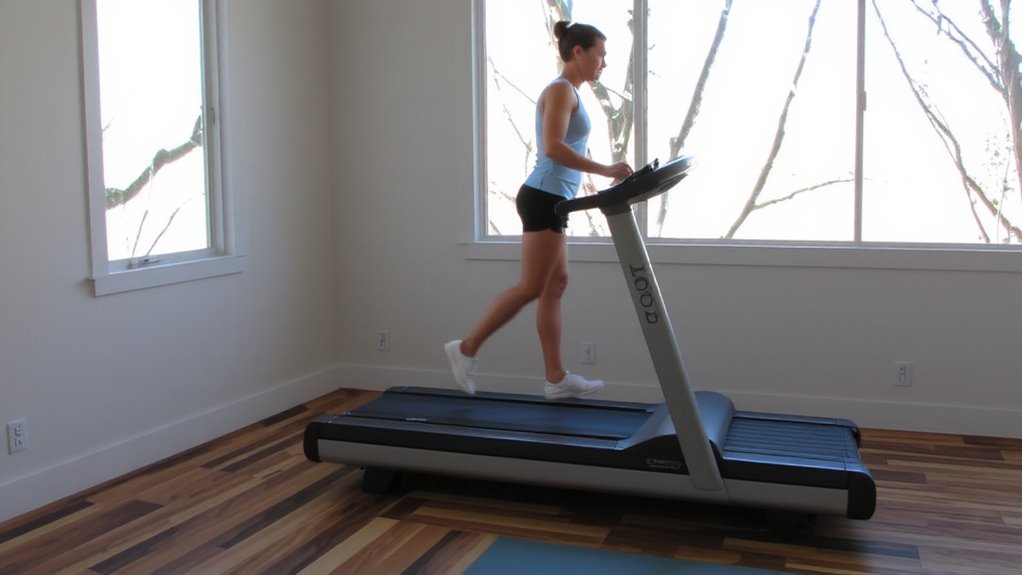
While walking on flat ground may seem gentle on your back, elevating the incline on a treadmill can actually reduce stress on your lumbar spine by engaging core and gluteal muscles more effectively. You maintain better spinal alignment as the incline encourages upright posture, minimizing strain on lower back structures. The slight elevation shifts workload from the lumbar region to the glutes and hamstrings, promoting balanced muscle activation. Over time, this supports functional recovery and reduces discomfort during daily movement. Plus, incline walking enhances aerobic conditioning without requiring high impact or speed, making it ideal for building stamina safely. Cardiovascular benefits occur at lower perceived exertion, allowing longer sessions with less joint loading. Fitness gear like motorized treadmills with adjustable gradients offer reliable, consistent performance for rehabilitation use. With regular use, you gain endurance, postural control, and resilience-key markers of effective fitness recovery. For those seeking optimal support, choosing one of the best treadmills for walkers can enhance comfort and functionality during recovery-focused workouts.
Set the Right Treadmill Incline and Speed for Back Safety
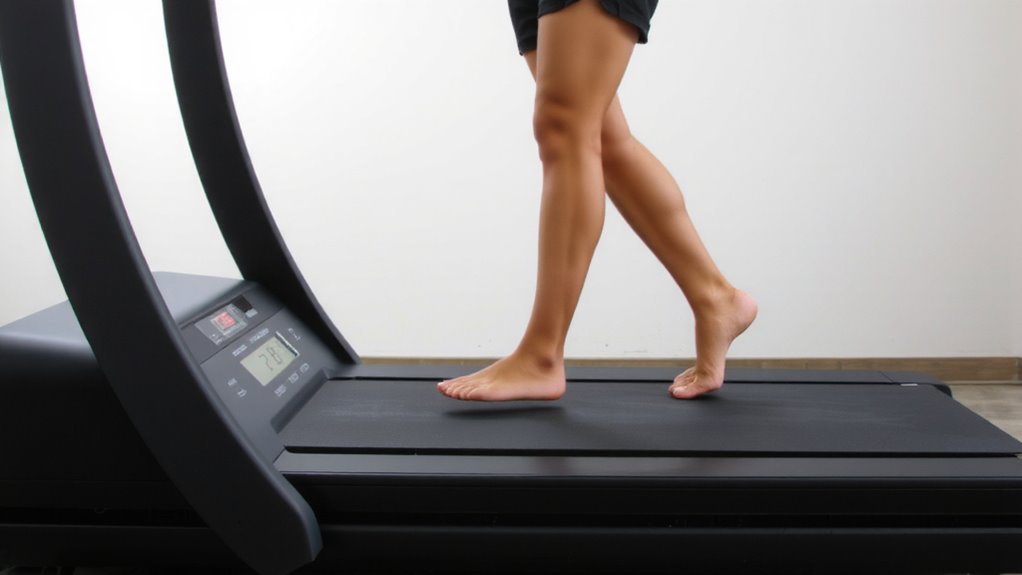
Since proper setup directly influences both safety and effectiveness, you’ll want to start with an incline between 5% and 8%-a range shown to reduce lumbar compression while activating the glutes and hamstrings more than level walking. Keep your speed moderate: 2.5 to 3.5 mph allows controlled movement without straining your lower back. Maintaining proper grip stability is essential-hold the rails lightly or not at all to preserve natural posture. Also, consistent treadmill maintenance guarantees accurate incline calibration and belt traction, both necessary for predictable performance.
| Incline | Speed (mph) | Back Safety Rating |
|---|---|---|
| 5% | 2.5 | High |
| 7% | 3.0 | Very High |
| 8% | 3.5 | Moderate |
These settings offer ideal balance for low back protection during endurance-building sessions.
Perfect Your Form to Protect Your Lower Back
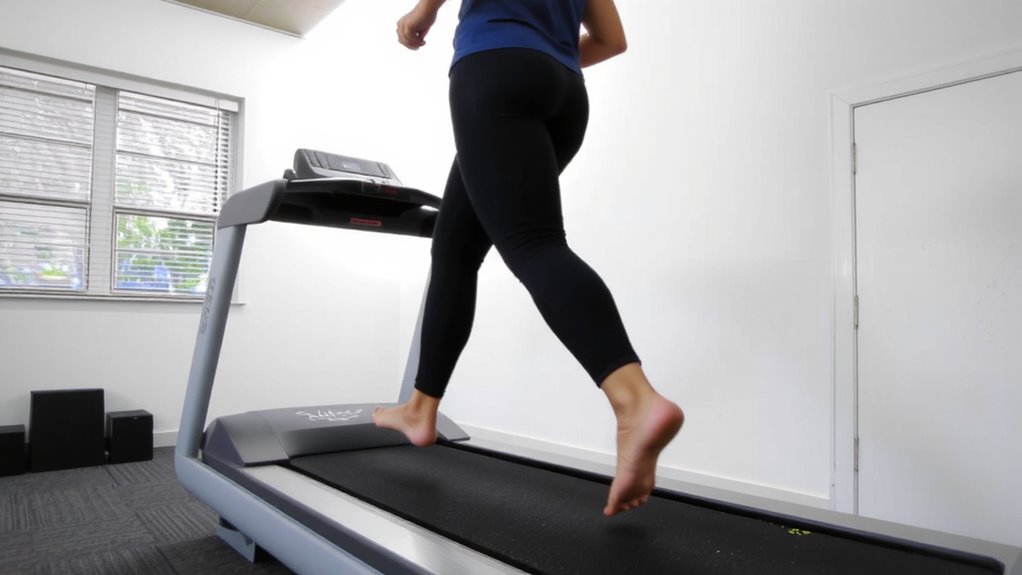
How often do you check your posture when stepping onto the treadmill? If you’re like most, it’s an afterthought-but it shouldn’t be. Proper form is essential for protecting your lower back during incline walking. Focus on maintaining neutral spinal alignment: keep your head up, shoulders relaxed, and avoid leaning forward. This reduces strain on lumbar discs and joints. Equally important is core engagement; gently tighten your abdominal muscles as if bracing for a light punch. This stabilizes your pelvis and supports your spine with each step. Poor form, even at low speeds, can undermine recovery, no matter how advanced your fitness gear. Consistent attention to technique guarantees you benefit from the workout without inviting pain. Over time, correct posture becomes habitual, enhancing endurance safely. Your body responds better when mechanics and intention align-form isn’t just detail work, it’s foundational to effective, sustainable fitness recovery. Choosing a model with adequate cushioning and user-friendly controls can make a significant difference, so consider the best treadmills for seniors when setting up your recovery-friendly exercise space.
Build a Step-by-Step Walking Plan for Endurance Recovery
A smart walking plan starts with intention, not speed. Begin with a 10-minute walking duration at a low incline and pace that allows easy breathing-this supports recovery pacing without straining your back. Gradually increase time by 5 minutes weekly, aiming for 30 minutes over several weeks. Consistency matters more than intensity; your body adapts best when stress is managed and predictable. Use a treadmill with reliable incline settings and cushioning to reduce joint impact-key features in fitness gear that support long-term recovery. Monitor how you feel during and after each session; subtle fatigue is normal, but pain isn’t. Recovery pacing means balancing effort with healing, adjusting based on daily feedback. This phased approach builds endurance safely, aligning physical demand with your body’s readiness. Properly structured walking duration prevents setbacks and fosters sustainable progress, making it a cornerstone of effective fitness recovery for low back pain. For durable performance and consistent incline control, consider a heavy-duty treadmill designed for home rehabilitation use.
When to Level Up or Step Back
You’ve built a routine with manageable walks on the treadmill, sticking to low stress and steady progress to support your back’s recovery. Now, progress tracking becomes key to knowing when to level up-or step back. If your walks feel easier and you’re maintaining good form, a slight boost in incline or duration may help. But don’t rush it. Watch for pain signals like sharp twinges or lingering discomfort after exercise-those are red flags. Unlike fatigue, which fades, pain that persists suggests you’ve pushed too soon. Reliable fitness gear with consistent incline calibration helps guarantee changes are controlled and measurable. A journal or app can log effort, symptoms, and time, making patterns clearer. You’re aiming for sustainable gains, not speed. If pain signals return, dial it down-the setback isn’t failure, it’s feedback. Smart recovery means adjusting with purpose.
On a final note
You’ve learned how incline walking reduces spinal load while building stamina, and how proper form prevents strain. A treadmill with adjustable incline (up to 12%) and cushioned deck supports safe, progressive recovery. Start slow, monitor pain response, and increase duration before intensity. This method balances joint-friendly movement with cardiovascular demand, making it effective for rebuilding endurance without flare-ups. It’s practical, controllable, and sustainable-ideal for long-term fitness recovery.