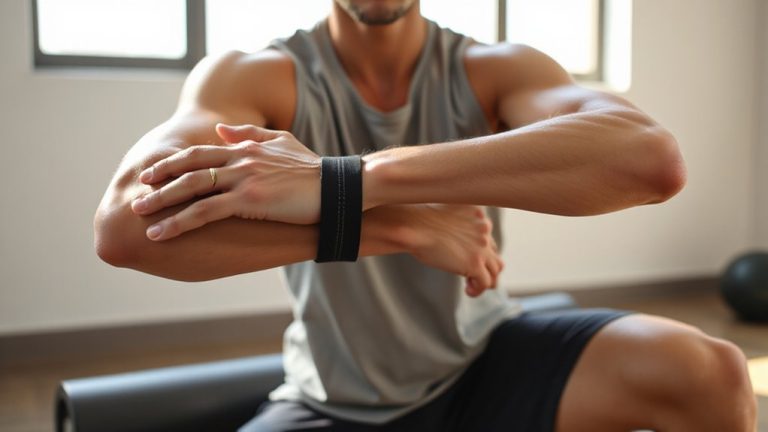
Seated Forward Bend Integration Between Cycling Intervals for Hip Flexor Relief
You can relieve tight hip flexors by integrating the seated forward bend during recovery intervals. Stay on your bike, hinge at the hips with a neutral spine, and let your chest drop toward your thighs. This stretch uses warm muscles effectively, enhances flexibility, and maintains rhythm without cooling down. Pair it with deep, controlled breathing to maximize relaxation and circulation. It’s a practical, time-efficient recovery tool that fits seamlessly into most interval workouts-there’s more to how timing and technique boost its impact.
Notable Insights
- Integrate seated forward bends during recovery intervals to actively release tight hip flexors.
- Perform the stretch on the bike with a neutral spine and hips hinged forward.
- Hold for 30–60 seconds using deep diaphragmatic breathing to enhance muscle relaxation.
- Time stretches during warm muscle windows, 3–5 minutes post-interval, for maximum effectiveness.
- Use existing cooldown or low-intensity phases to maintain rhythm and avoid added strain.
Why Cyclists Develop Tight Hip Flexors
While you’re focused on building endurance and power on the bike, your hip flexors are quietly shortening with every pedal stroke, especially during long rides or aggressive aerodynamic positions. This repeated flexion, combined with extended sitting off the bike, reinforces an anatomical predisposition toward tightness. Cyclists often develop muscle imbalance, where powerful quads dominate and weaker glutes or deep hip stabilizers lag, further pulling joints out of alignment. Over time, this imbalance limits range of motion and increases injury risk, particularly in the lower back and hips. Recovery isn’t just about rest-passive sitting worsens the issue. Without targeted stretching or mindful movement, even high-end fitness gear like compression shorts or smart trainers won’t correct underlying biomechanical flaws. True recovery demands awareness and intervention. Addressing tight hip flexors isn’t optional; it’s essential for sustainable performance.
Do This Seated Forward Bend Between Intervals
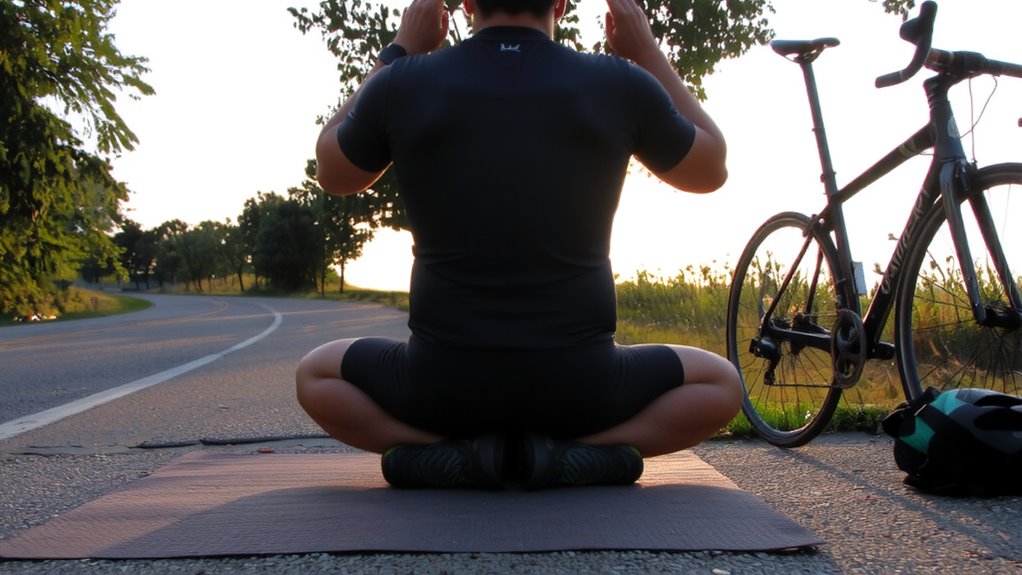
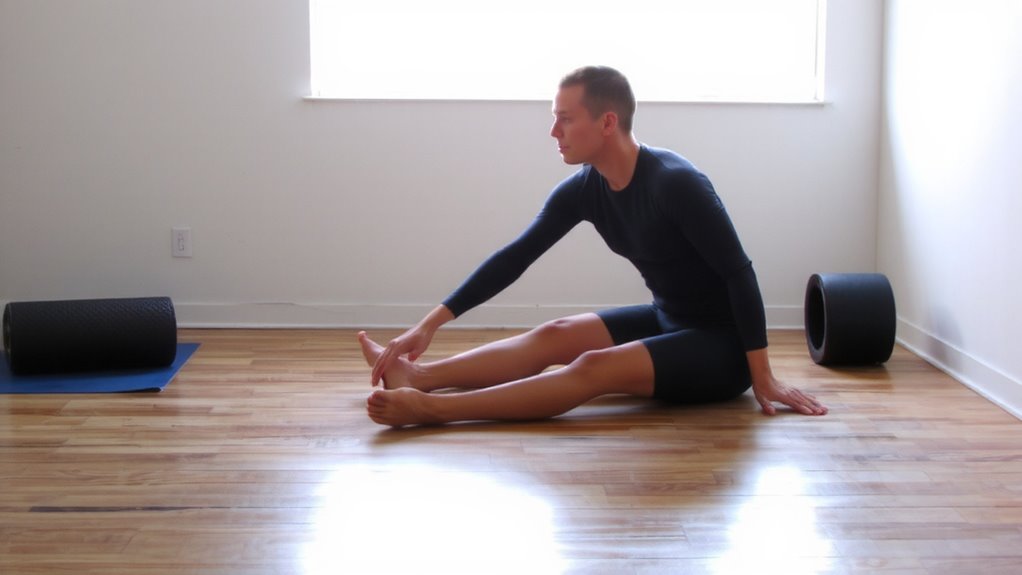
Why not take advantage of the rest period between intervals to combat one of cycling’s most persistent issues-tight hip flexors? Sit upright on your bike or a recovery mat, feet flat, and gently hinge at the hips. Focus on maintaining neutral spine alignment to avoid strain and maximize stretch effectiveness. A slight posterior pelvic tilt helps lengthen the hip flexors without compressing the lower back. Hold for 30–60 seconds, breathing deeply to enhance muscle relaxation. This brief pause isn’t just recovery-it’s active restoration. Incorporating this stretch between intervals improves flexibility over time, especially when paired with consistent spine alignment cues. Recovery gear like supportive seat pads or foam rollers can amplify benefits, but aren’t essential. The move’s simplicity and efficiency make it practical for most cyclists, fitting seamlessly into structured cooldowns. Done right, it supports long-term hip health and riding comfort.
Nail the Forward Bend on Your Bike
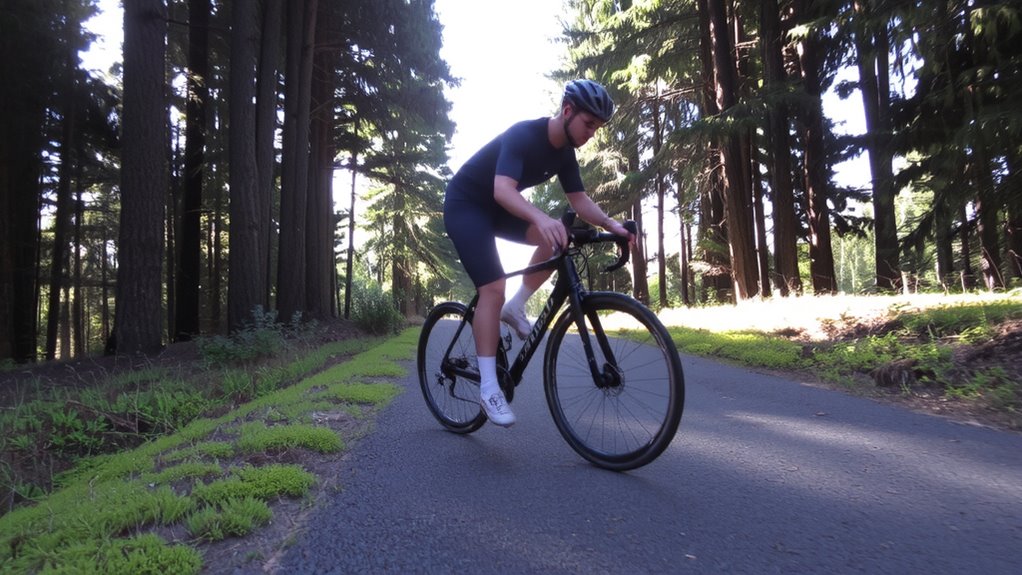
You’ve already used the seated forward bend during rest intervals to loosen tight hip flexors, and now it’s time to refine that movement directly on your bike. Proper bike posture is key-maintain a neutral spine as you hinge at the hips, letting your chest drop toward your thighs. Keep your hands on the handlebars to support balance without overreaching. This version of the forward bend integrates seamlessly into recovery spins, promoting consistent muscle activation in the glutes and hamstrings while reducing quadriceps dominance. Unlike off-bike stretches, performing it on the saddle preserves rhythm and heat in the muscles, enhancing effectiveness. The motion shouldn’t compromise stability; a well-fitted bike setup guarantees you can move fluidly without strain. Use this technique during cooldowns or between intervals to sustain flexibility gains. It’s a functional, low-effort adjustment with measurable benefits for recovery and mobility, especially when paired with mindful control.
Breathe Into the Seated Forward Bend
How deep can your breath go when your body is hinged forward on the bike? With proper alignment, deep breathing becomes more accessible, enhancing recovery between intervals. Use this pause to focus on mindful relaxation, letting each exhale release tension from your hip flexors and lower back. Inhale fully through the nose, expanding the diaphragm; exhale slowly, drawing the core in. This isn’t just rest-it’s active recovery that boosts circulation and mental focus. Consider gear like moisture-wicking kits or a padded saddle to make the pose more comfortable, though form matters more than equipment.
| Breath Phase | Duration (sec) | Physical Effect |
|---|---|---|
| Inhale | 4 | Expands ribcage, oxygenates |
| Hold | 2 | Stabilizes core engagement |
| Exhale | 6 | Triggers mindful relaxation |
Skip These Mid-Ride Stretching Mistakes
While maintaining momentum on long rides, it’s easy to overlook how improper stretching can undermine recovery and even increase injury risk. You might think a quick stretch during a ride helps, but improper timing-like stretching cold muscles or right after intense effort-can do more harm than good. Forced stretching, especially in vulnerable positions, often leads to microtears or joint strain, counteracting your training benefits. Cycling-specific gear like padded shorts or supportive saddles helps comfort, but they can’t compensate for poor recovery habits. Avoid aggressive reaches or holding static poses mid-effort; your muscles aren’t primed for lengthening. Instead, focus on controlled cooldowns off the bike. Save deeper stretches, like seated forward bends, for post-ride when your body has cooled gradually. Smart timing and patience improve flexibility sustainably, letting recovery gear and routine work together effectively.
When to Do the Seated Forward Bend
Why do so many cyclists overlook the ideal window for effective stretching, only to force a forward bend when their muscles are still fired up from the ride? You’re better off waiting until your core and hips have cooled slightly but remain pliable-this is the ideal timing. Right after an interval, when your body’s still warm, you’ll get the most flexibility benefits without risking strain. Waiting too long, though, lets muscles tighten again, reducing the stretch’s effectiveness. The sweet spot? Insert the seated forward bend during low-intensity recovery segments-rough游戏副本 to five minutes post-effort. That’s when tissue responsiveness peaks, allowing deeper, safer releases in the hip flex comrades. You don’t need special gear, but a firm mat helps maintain alignment. Consistent timing enhances recovery, improves range of motion, and addresses cycling’s repetitive posture. Get the timing right, and you’ll turn a simple stretch into a strategic recovery tool.
How to Add It to Any Interval Workout
Since most interval workouts already include built-in recovery phases, slipping in a seated forward bend doesn’t demand extra time-just intentional placement. You can use your interval timing to insert this stretch during low-intensity cycles or cooldown blocks, typically lasting 1–2 minutes. As you sit on your bike or mat, hinge at the hips and reach forward, maintaining spine neutrality to support proper posture alignment. This not only counters the hunched position of cycling but also actively lengthens tight hip flexors. Unlike passive recovery, this stretch enhances blood flow and neuromuscular reset, making it more effective than idle rest. Fitness recovery tools like foam rollers can follow, but the seated forward bend requires no gear-just body awareness. Its integration improves workout efficiency, turning downtime into flexibility gains. When timed right, it complements performance without disrupting rhythm, proving that smart recovery isn’t added-it’s woven in.
On a final note
You’ll notice tighter hips after long rides, so integrating the seated forward bend between intervals makes smart recovery sense. It targets hip flexors efficiently, boosts blood flow, and maintains flexibility without disrupting workout rhythm. Paired with steady breathing, it enhances recovery when done correctly. Avoid common stretching mistakes like overreaching or bouncing. Use this move during cooldowns or rest intervals-it’s practical, effective, and fits seamlessly into any cycling routine.