Ankle Mobility Drills With Banded Dorsiflexion With Knee Flexion
You’re using banded dorsiflexion with knee flexion to improve ankle mobility because it combines resistance and joint mobilization for lasting gains. By applying gentle compression, it stabilizes the joint capsule while encouraging proper alignment and synovial fluid movement. This loaded stretch boosts tibialis anterior engagement, enhancing neuromuscular control and functional range. Done right, you’ll see better squat depth and movement efficiency. Perform it 3–4 times weekly with strict form, and you’ll uncover even more benefits when you continue exploring the drill’s full potential.
Notable Insights
- Banded dorsiflexion with knee flexion improves ankle mobility through resisted, controlled joint movement.
- Perform the drill with the knee bent at 90 degrees to isolate dorsiflexion under load.
- Keep the heel flat and knee aligned over the second toe to ensure proper mechanics.
- Use a resistance band to apply gentle joint compression and enhance synovial fluid circulation.
- Train 3–4 times per week with 48 hours rest to build functional mobility safely.
Why Banded Dorsiflexion Fixes Stiff Ankles
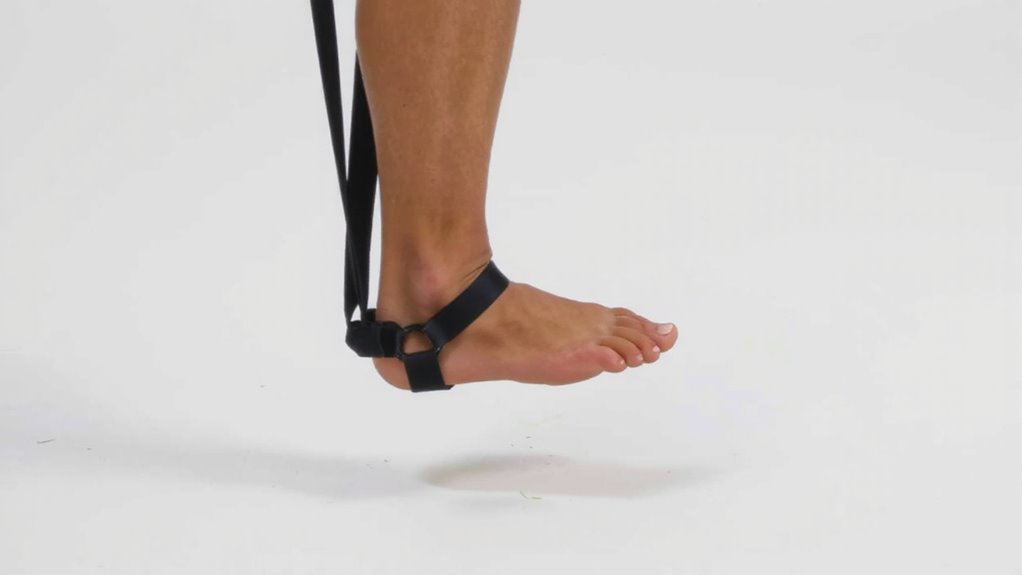
While you might assume stretching alone resolves ankle stiffness, banded dorsiflexion does more by combining targeted resistance with joint mobilization. You’re not just passively lengthening tissues-you’re actively improving range while reinforcing joint control. The resistance band applies gentle joint compression, encouraging proper alignment and synovial fluid movement during motion. This compression isn’t harmful; it stabilizes the joint capsule, reducing risks tied to ankle instability often seen in pivoting or weight-bearing activities. Unlike static stretches, this method engages muscles and connective tissues under load, promoting neuromuscular adaptation. Over time, you’ll notice improved proprioception and reduced stiffness, especially after intense workouts. Athletic recovery benefits from this precision work, particularly when using durable, medical-grade bands designed to maintain consistent tension. The method’s effectiveness lies in its biomechanical specificity-addressing both mobility and joint integrity. This makes banded dorsiflexion a reliable tool in fitness recovery routines.
How This Stretch Boosts Ankle Mobility
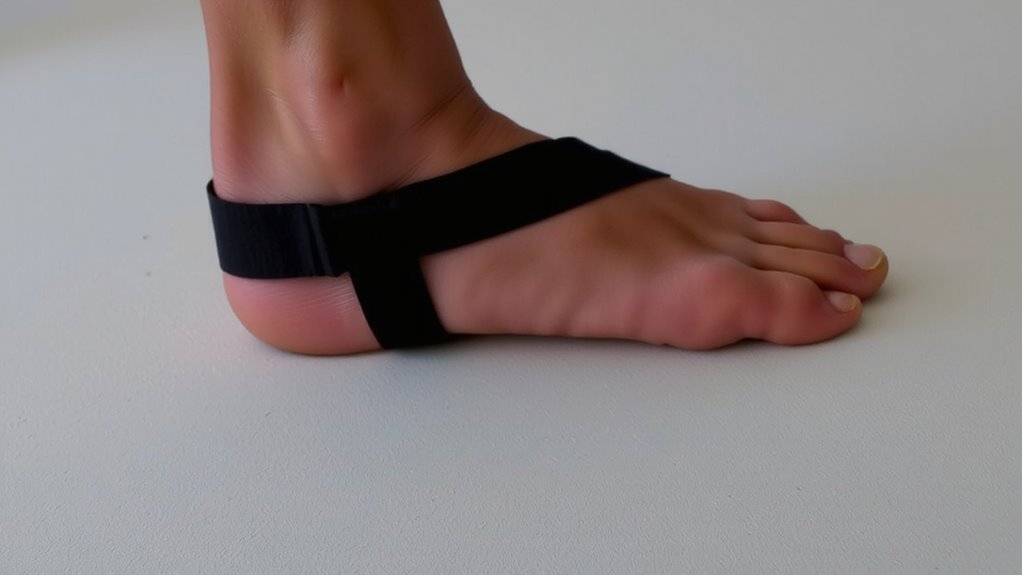
Think of your ankle joint as a hinge that thrives on smooth, controlled motion-banded dorsiflexion fine-tunes that movement by increasing dorsiflexion range through active loading. The resistance from the band promotes better joint alignment by encouraging your tibia to move efficiently over a stable foot, reducing compensatory motion. You’re not just stretching; you’re actively engaging muscles like the tibialis anterior, which means greater neuromuscular feedback and improved muscle activation. This isn’t passive flexibility-it’s functional mobility with purpose. The band’s feedback helps maintain proper positioning, so you train the joint through usable ranges instead of forcing end-range positions. Over time, this leads to measurable gains in squat depth, lunge mechanics, and step-up control. It’s a drill that blends precision with adaptability, making it effective across fitness levels. Tools like high-quality, durable resistance bands enhance consistency, but proper execution matters more than gear. You’ll see real carryover to dynamic movements when alignment and activation work together.
Do the Banded Dorsiflexion Drill Right
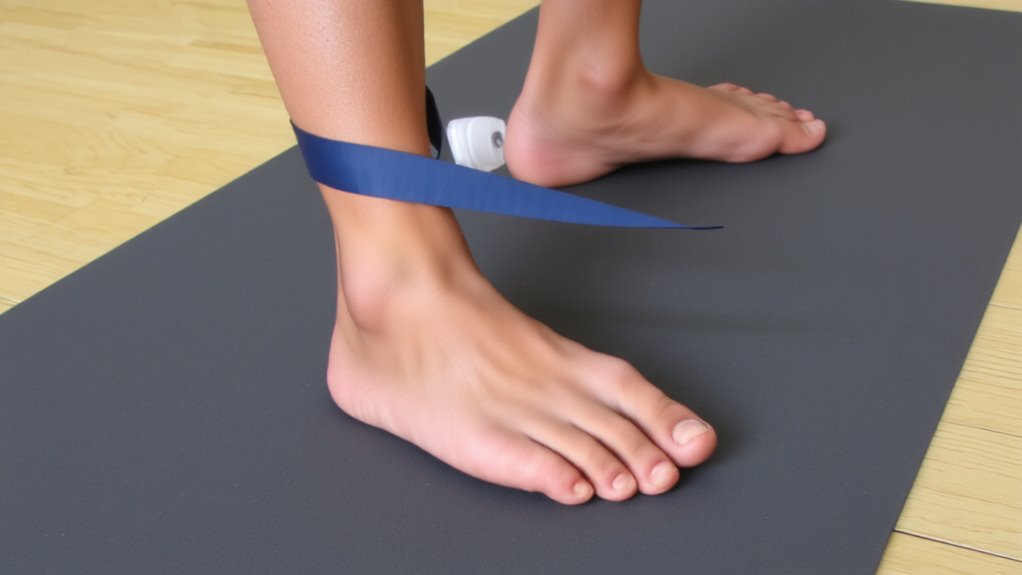
How do you make sure you’re getting the most out of your banded dorsiflexion drill? Focus on proper alignment and controlled movement throughout. Position your foot under the band with your knee bent at 90 degrees and your heel flat on the ground. This sets up ideal tension across the ankle joint. As you lean forward, keep your spine neutral and your hips stable-this guarantees you’re targeting dorsiflexion, not compensating with your lower back. Move deliberately: a slow, controlled movement allows you to feel the stretch without overloading the joint. The band should provide resistance, not jerk your foot into position. Quality reps matter more than quantity, so prioritize form over depth. Done right, this drill improves joint mobility efficiently and safely, making it a solid addition to your recovery toolkit when using reliable, durable fitness gear.
Fix These Common Mistakes in the Drill
You’ve got the setup down: foot positioned under the band, knee at 90 degrees, heel planted. Now let’s fix what often goes wrong. One common mistake? Poor ankle alignment-your foot shouldn’t wobble side to side. Keep the ankle stable and centered to guarantee targeted mobility gains. If your foot collapses inward or rolls outward, you’re compensating, not improving joint range. Also, watch your knee tracking. It should move straight forward over the second toe, not cave inward. A misaligned knee shifts stress to the joint instead of stretching the ankle capsule. This not only reduces effectiveness but increases injury risk. Use a mirror or record yourself to check form. Proper alignment guarantees the band’s resistance works where it should. Focus on control, not depth-quality reps beat forced motion every time.
How Often to Do Banded Dorsiflexion for Results
Typically, performing banded dorsiflexion 3 to 4 times per week delivers noticeable improvements in ankle mobility without overstressing the joint. This training frequency strikes a balance between consistent stimulus and adequate recovery time, allowing connective tissues to adapt progressively. Overdoing it daily may compromise recovery time, especially if you’re combining this drill with intense lower-body workouts. For best results, pair your routine with proper warm-ups and cooldowns.
| Training Frequency | Recovery Time Recommendation |
|---|---|
| 2x per week | 72 hours between sessions |
| 3–4x per week | 48 hours between sessions |
| 5x per week | Not advised without rest days |
| Daily | High risk of overuse |
Most users see gains within 3–6 weeks when sticking to 3–4 weekly sessions. Consistency matters more than volume-moderate training frequency with full recovery yields sustainable mobility improvements.
On a final note
You’ll see real gains in ankle mobility by consistently doing banded dorsiflexion with knee flexion, especially when form stays precise. This drill targets joint stiffness effectively, outperforming generic stretches. Pair it with quality recovery gear-like durable resistance bands and supportive surfaces-for best results. Used right, it fits seamlessly into both rehab and performance routines, delivering measurable improvements in movement quality and lower-limb function over time.