Cycling Pedaling Cadence Drills to Smooth Out Neural Firing Patterns After Knee Surgery
You rebuild smooth neural firing patterns after knee surgery by using cadence drills on a stationary bike with a magnetic flywheel for consistent resistance. Spinning at 80–90 RPM with low resistance retrains your brain to communicate efficiently with your knee muscles. Avoid high resistance or poor posture, which can disrupt recovery. Try spin-ups, single-leg pedaling, or ladder intervals to sharpen timing. Consistency beats power here. Optimize form and track effort with RPE-you’ll see how smart training builds lasting, automatic movement.
Notable Insights
- Cadence drills improve brain-to-muscle communication, aiding neural re-education after knee surgery.
- Maintaining 80–90 RPM reduces joint strain while reinforcing smooth neuromuscular firing patterns.
- Low-resistance spinning enables repetitive motion to enhance neural feedback and muscle memory.
- High-RPM spin-ups (100+ RPM) sharpen neuromuscular response and pedal timing accuracy.
- Single-leg drills identify and correct asymmetries in pedal stroke timing and neural activation.
How Cadence Drills Retrain Your Knee After Surgery
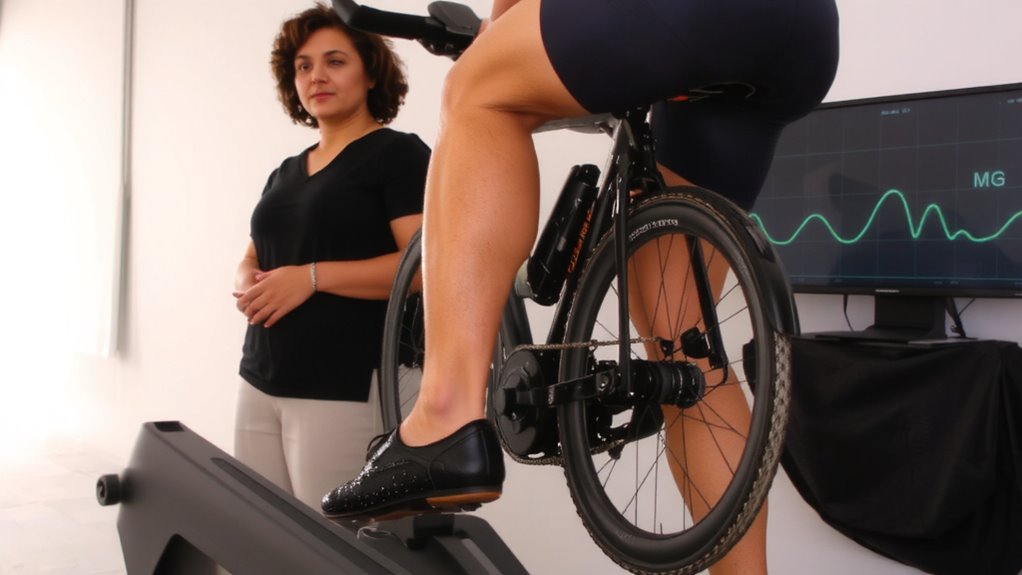
While your knee heals after surgery, rebuilding strength and coordination is essential, and cadence drills can play a key role in that recovery. You’re not just spinning-you’re retraining your nervous system. These drills promote neural adaptation by sharpening the communication between your brain and leg muscles, helping signals fire more efficiently with each pedal stroke. Over time, consistent, controlled cadence work reinforces muscle memory, allowing your knee to regain smooth, automatic function without overthinking movement. This isn’t just about speed; it’s about precision. Using a cadence sensor on your bike lets you monitor RPMs in real time, ensuring you stay within the therapeutic range-usually 80–90 RPM-with minimal joint strain. Unlike strength training alone, these drills focus on neuromuscular refinement, making them a crucial part of rehab.
Start With Low-Resistance Spinning to Reset Your Nerves
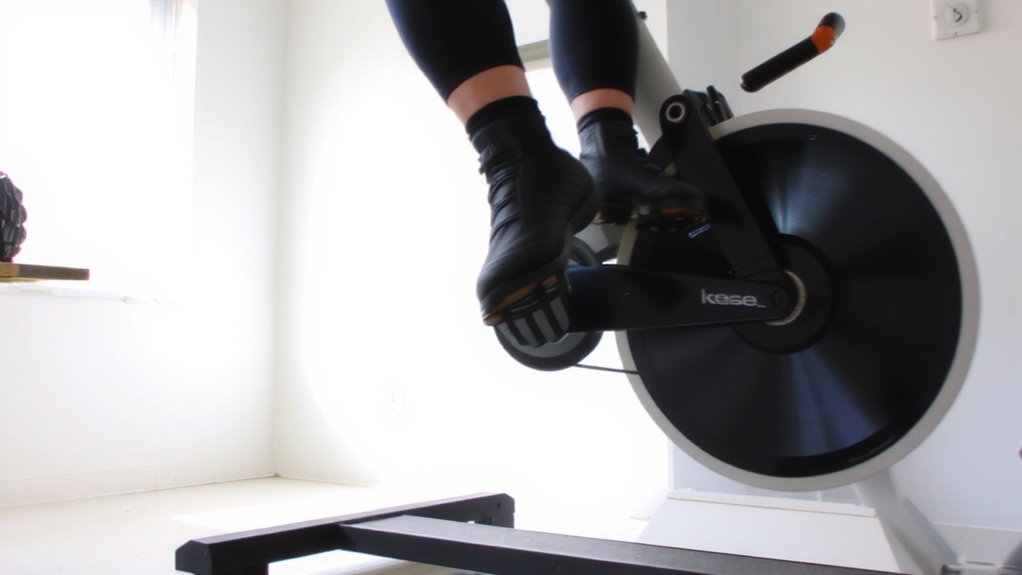
When you’re coming off knee surgery, jumping straight into intense cycling can do more harm than good, so starting with low-resistance spinning makes smart physiological sense. You’re not just moving your leg-you’re retraining your nervous system. Low resistance reduces joint strain while allowing smooth, repetitive motion that boosts neural feedback. This steady input helps your brain reconnect with the muscles around your knee, gradually restoring accurate signaling. Over time, this repetition reinforces correct muscle memory, making each pedal stroke more efficient and controlled. Think of it as a reset button for pathways disrupted by injury and inactivity. You don’t need high-end gear-just a stationary bike with consistent, adjustable resistance. Aim for high cadence (80–90 RPM) with minimal tension. This approach prioritizes coordination over strength, laying the foundation for safer progression. It’s not flashy, but it’s effective.
Avoid These Mistakes When Spinning Post-Surgery
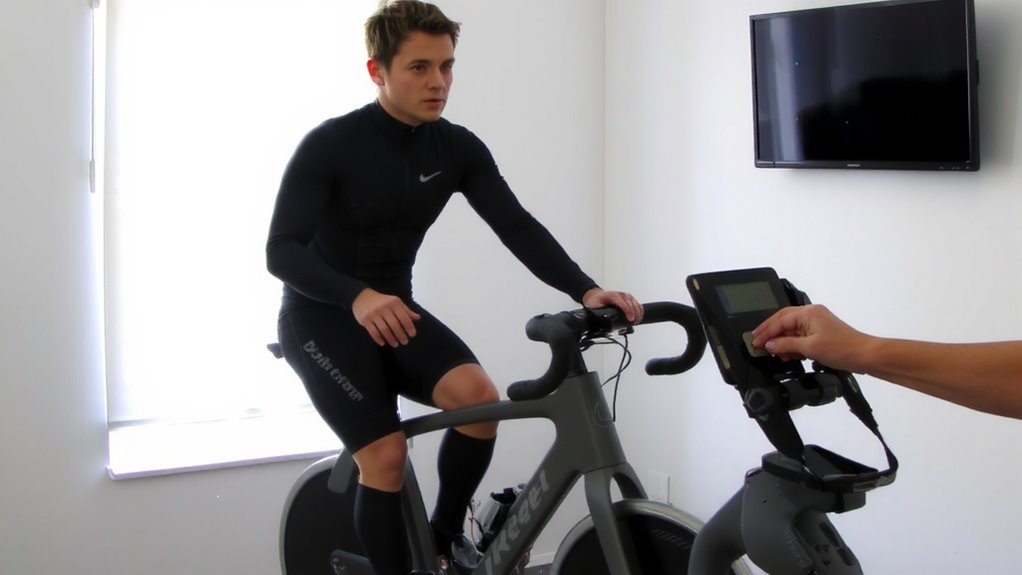
Why do some post-surgery cyclists stall in their recovery, even when they’re following a structured plan? You might be making preventable mistakes on the bike. One common issue is improper posture-hunching over the handlebars or locking your hips strains the knee and disrupts neural re-education. Your spine and pelvis need alignment to support smooth pedal strokes and reduce joint stress. Another pitfall is ignoring overexertion risks. Pushing too hard too soon overwhelms healing tissues and fatigues the nervous system, undermining cadence work. You may feel keen to regain fitness, but high resistance or long sessions compromise form and delay progress. Even with the right gear, like ergonomic seats or clipless pedals, poor technique cancels out benefits. Monitor your breathing, joint feedback, and movement quality. Success isn’t about intensity-it’s consistency with control.
Try 3 Cadence Drills for Better Pedal Timing
A smart cadence drill routine can make a real difference in retraining your pedal stroke after knee surgery, especially when paired with proper fitness gear and mindful execution. Focus on pedal timing to rebuild smooth, efficient movement. Try high-RPM spin-ups: pedal at 100+ RPM for 1–2 minutes to sharpen neuromuscular response. Next, single-leg drills improve symmetry-do 30 seconds per leg to expose timing flaws. Finally, ladder intervals (e.g., 2/4/6 minutes at increasing cadence) solidify muscle memory under varying loads. These drills retrain your nervous system by emphasizing consistency over power. Quality resistance bikes with magnetic flywheels offer smoother feedback, enhancing precision. Over time, deliberate repetition conditions your body to fire muscles in the correct sequence, improving overall pedal stroke efficiency. Don’t rush-each session builds subtle, lasting gains in control and coordination. For beginners, choosing the right equipment is crucial, and a reliable beginner exercise bike can provide the consistent resistance and smooth operation needed for effective rehabilitation.
Progress From Rehab to Strong, Smooth Cycling
Once you’ve rebuilt neuromuscular control through cad, shifting focus to longer rides with controlled resistance helps bridge the gap between rehabilitation and functional cycling strength. Optimizing knee biomechanics during this phase reduces joint stress while reinforcing proper movement patterns. Consistent, low-impact mileage builds muscle memory, embedding efficient pedal strokes into your riding本能. As stability improves, gradually increasing resistance-on a stationary bike or quiet road-trains coordination and endurance safely.
| Phase | Resistance | Duration |
|---|---|---|
| Early | Light | 20 min |
| Mid | Moderate | 30 min |
| Late | Medium | 45 min |
| Build | Moderate+ | 60 min |
| Maintain | Variable | 60+ min |
Smart progression respects healing tissue while advancing capability. Equipment with adjustable tension and smooth drivetrains supports this shift, promoting consistent effort without jarring motions. Track effort via RPE (Rate of Perceived Exertion) rather than speed.
On a final note
You’ll find cadence drills rebuild neural timing efficiently after knee surgery, retraining your pedal stroke with smooth, controlled repetition. Low-resistance spinning resets firing patterns without strain, while consistent tempo improves joint coordination. These drills bridge rehab to real riding, boosting confidence and performance. When paired with proper gear-like adjustable pedals and supportive cleats-the results are even clearer. Done right, this progression isn’t just recovery; it’s refinement.