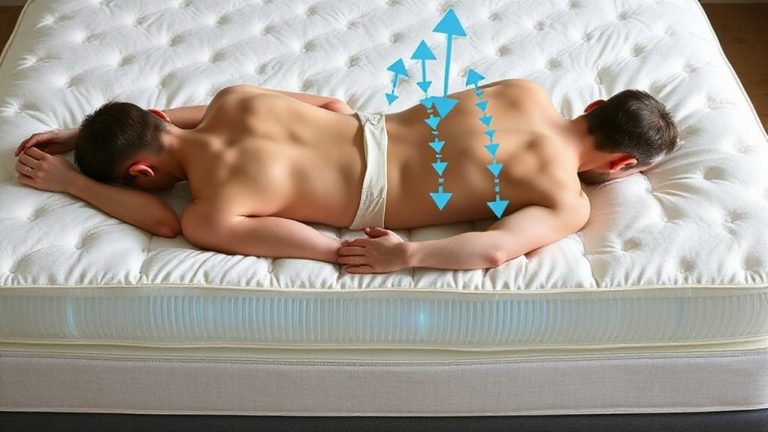
Tracking Sleep Efficiency With Wearables to Identify Early Signs of Overtraining-Induced Insomnia in Runners
Your sleep efficiency, tracked by wearables, reveals early signs of overtraining-induced insomnia by detecting shifts like shortened REM cycles and increased nighttime awakenings. Devices use HRV, resting heart rate, and movement patterns to flag nervous system strain before you feel it. A consistent drop in sleep efficiency or deep sleep below 20% signals recovery imbalance. When data trends worsen, adjusting training becomes essential. There’s more to learn about optimizing recovery using these insights.
Notable Insights
- Wearables track sleep efficiency and detect early declines linked to overtraining in runners.
- Reduced REM sleep and fragmented patterns often precede noticeable insomnia symptoms.
- Consistently low sleep efficiency signals nervous system imbalance from excessive training.
- Decreased HRV combined with poor sleep efficiency indicates heightened overtraining risk.
- Monitoring trends allows timely training adjustments to prevent overtraining-induced insomnia.
How Overtraining Causes Insomnia in Runners
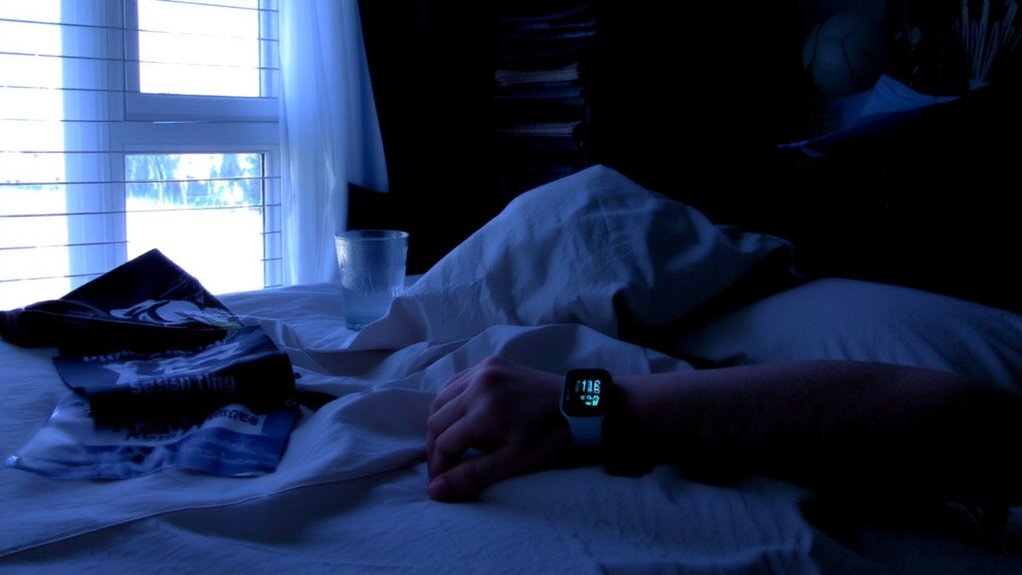
While you might think pushing harder during training will lead to faster gains, overtraining often backfires-especially when it comes to sleep. When you consistently exceed your recovery capacity, your body responds with neuroendocrine imbalance, spiking cortisol and suppressing melatonin. This hormonal chaos doesn’t just leave you wired at night-it fundamentally undermines sleep quality. Over time, chronic stress from excessive training can lead to circadian disruption, misaligning your internal clock and making it harder to fall or stay asleep. You’re not just tired; you’re physiologically primed for insomnia. Runners in this state often report restless nights, frequent awakenings, and unrefreshing sleep despite adequate time in bed. These symptoms aren’t just inconvenient-they signal impaired recovery, reduced performance, and increased injury risk. Recognizing this link between overtraining and sleep dysfunction is critical. Without addressing the root causes, even the most advanced fitness gear can’t compensate for a body running on empty.
How Wearables Track Sleep and Recovery
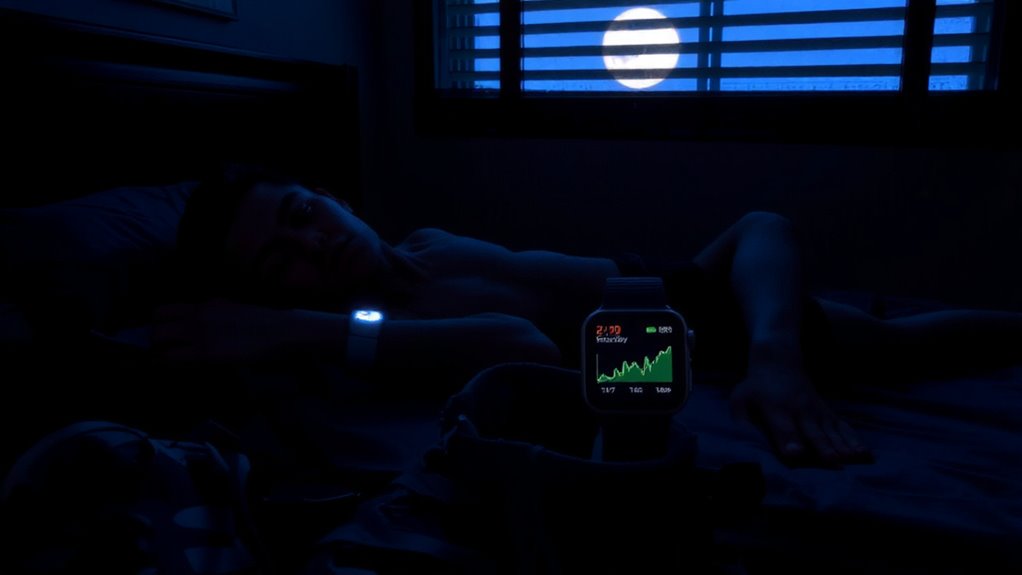
Because your body reveals its recovery status through subtle physiological signals, modern wearables are designed to monitor key biomarkers like heart rate variability (HRV), resting heart rate, and movement patterns throughout the night. These devices use optical sensors and accelerometers to estimate sleep stages-light, deep, and REM-while analyzing recovery metrics such as HRV trends and nocturnal heart rate dips. Though not medical-grade, their algorithms provide actionable insights for runners tracking training load.
| Metric | Purpose |
|---|---|
| HRV | Assesses autonomic balance |
| Resting Heart Rate | Indicates cardiovascular recovery |
| Sleep Stages | Reveals sleep quality depth |
| Movement | Detects restlessness |
| Recovery Score | Combines data into one metric |
Most wearables synthesize these signals into daily recovery metrics, helping you decide whether to push hard or prioritize rest.
Your Sleep Data’s Early Warning Signs of Overtraining
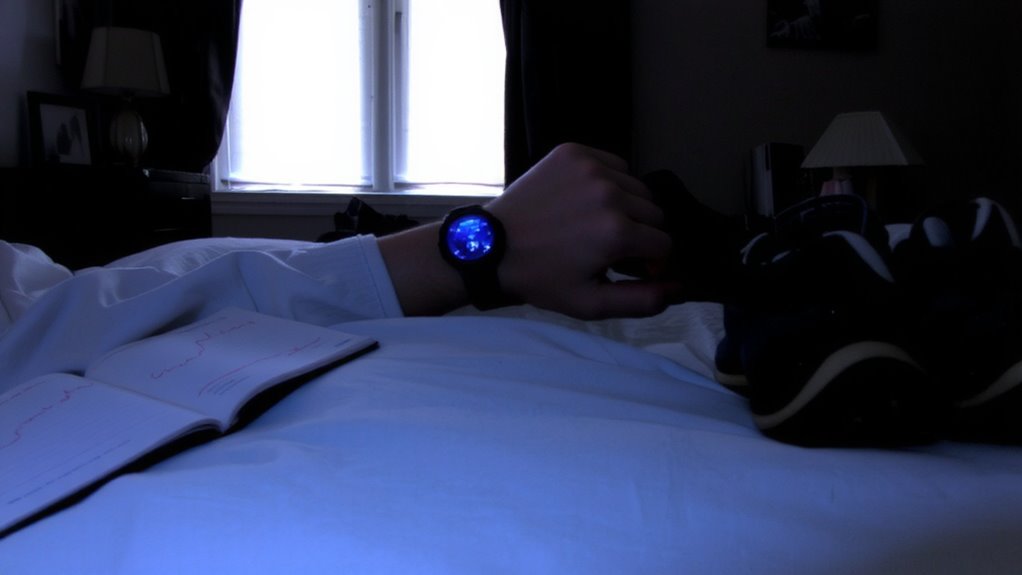
If you’ve been pushing your training hard, your sleep data might already be sounding alarms you haven’t noticed. A noticeable shift in your sleep architecture-especially shortened REM cycles-can be one of the earliest signs your body is struggling to recover. Wearables track these changes by monitoring how long you spend in deep sleep versus REM, and disruptions often appear before fatigue becomes overwhelming. You may still fall asleep, but if your REM cycles are consistently cut short or delayed, it suggests nervous system strain from overtraining. While no device is perfect, consistent trends in reduced REM and fragmented sleep architecture across multiple nights should prompt concern. These aren’t just random fluctuations-they’re measurable signals that your recovery balance is tipping. Trusting this data, especially when combined with how you feel, helps you intervene early. Ignoring it risks sliding into more serious performance and health setbacks.
When Sleep Patterns Turn From Normal to Alarming
You might not notice the shift at first, but when your sleep patterns start veering from normal to concerning, your wearable’s data becomes a critical tool for spotting subtle red flags. A consistent drop in sleep quality-like reduced REM cycles or frequent nighttime awakenings-often signals rising stress levels tied to overtraining. You may feel fine during the day, but your body’s recovery capacity is weakening. Wearables track heart rate variability and sleep efficiency, revealing trends that subjective feelings might miss. When deep sleep dips below 20% or restlessness spikes over several nights, it’s not just fatigue-it’s physiology pushing back. These metrics don’t lie: persistent disruptions suggest your nervous system is strained. Ignoring them risks insomnia and performance decline. Monitoring these changes helps you catch issues before they escalate, making your device more than a tracker-it’s a recovery coach tuned to your body’s silent warnings.
How to Adjust Training When Sleep Dips
Why ignore what your body is clearly signaling when your wearable flags poor sleep night after night? You’re pushing hard, but declining sleep efficiency suggests your recovery can’t keep up with your training load. When sleep dips consistently, it’s time to act. First, ease your training intensity by 15–20% for at least three to five days-this helps reduce physiological stress without derailing progress. Focus on low-impact cross-training or active recovery to maintain fitness while supporting restoration. Simultaneously, audit your sleep hygiene: keep a consistent bedtime, minimize screen exposure before bed, and guarantee your room is dark, cool, and quiet. These adjustments aren’t signs of weakness-they’re data-driven refinements. Ignoring wearable feedback risks overtraining-induced insomnia. Smart runners don’t override fatigue; they adapt, letting improved sleep hygiene and balanced training load lead to better performance.
Top Wearables for Runner Sleep Tracking
While not all fitness wearables deliver equally reliable sleep data, the best models combine advanced sensors with sophisticated algorithms to give runners meaningful insights into their rest. Devices like the Whoop 4.0 and Garmin Forerunner 265 excel at tracking sleep quality through metrics like heart rate variability and respiratory rate, helping you spot disruptions before they escalate. The Oura Ring stands out for its accuracy in detecting sleep stages and monitoring bedtime consistency, thanks to its snug, low-profile design that stays on all night. Fitbit Sense 2 also offers strong sleep staging and intuitive feedback, though its battery life demands frequent charging. These wearables don’t just record data-they interpret it, giving you actionable trends about recovery. For runners, that means identifying subtle signs of strain through declining sleep quality or irregular sleep patterns, letting you adjust before overtraining takes hold.
Make Sleep the Core of Your Recovery Plan
Sleep isn’t just downtime-it’s the foundation of recovery, especially when endurance and adaptation are on the line. Prioritizing sleep quality isn’t optional if you’re serious about performance. Your body repairs muscle, balances hormones, and consolidates training adaptations mostly during deep sleep. A strong recovery mindset starts with treating sleep like a non-negotiable part of your routine-just like training or nutrition. Wearables help track key metrics, giving insight into patterns that might signal overtraining or poor recovery.
| Stage | Duration (Avg) | Impact on Recovery |
|---|---|---|
| Light Sleep | 50–60% of night | Prepares body for deep repair |
| Deep Sleep | 15–25% of night | Critical for tissue repair |
| REM | 20–25% of night | Supports cognitive recovery |
| Wake | <5% of night | Higher % may indicate poor sleep quality |
Consistent tracking sharpens your recovery mindset and prevents burnout.
On a final note
You’re better off heeding your sleep data early-wearables offer real-time insight into recovery, spotting overtraining signs like shortened REM cycles or elevated resting heart rate. Reliable models track sleep efficiency with HRV and movement accuracy, helping you adjust intensity before insomnia sets in. Ignoring these signals risks performance decline. Smart recovery isn’t passive; it’s strategic. Prioritize sleep, and your training gains will follow.