On-Field Change-of-Direction Drills With Reactive Stimuli for Rugby Athletes Post-Ankle Sprain
You’re safer returning to rugby after an ankle sprain by using on-field change-of-direction drills with reactive cues like visual or auditory signals. These drills build neuromuscular control, mimic real-game demands, and cut return-to-play time by up to 30%. Start with slow, accurate movements on turf in minimalist shoes for better feedback. Progress intensity only if there’s no pain or swelling. They challenge proprioception and coordination more effectively than static rehab. There’s more to how these drills integrate into a full comeback strategy.
Notable Insights
- Use irregular cone patterns with visual or auditory cues to simulate game-like change-of-direction demands for rugby athletes post-ankle sprain.
- Prioritize accurate movement mechanics over speed during early rehabilitation to reinforce joint stability and prevent re-injury.
- Progress drill intensity based on absence of pain, swelling, or stiffness, aligning with tissue healing stages.
- Employ minimalist footwear and compression sleeves to enhance proprioceptive feedback and manage residual swelling during on-field drills.
- Incorporate strobe lights or coach-driven signals to challenge neuromuscular control and replicate unpredictable rugby-specific reactions.
How Reactive Drills Speed Return to Play
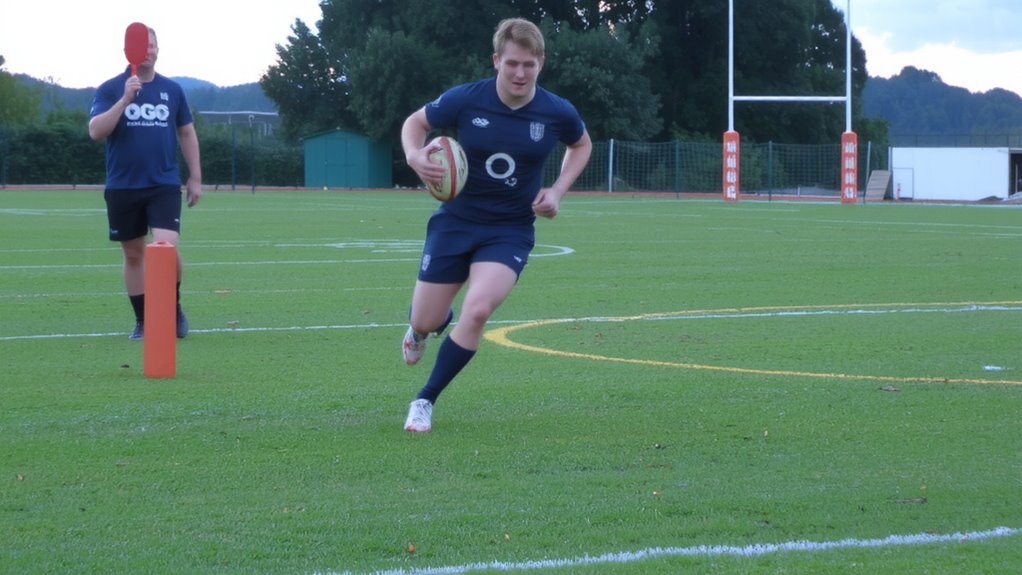
Why do some athletes bounce back faster after an ankle sprain? You’re likely seeing the benefits of reactive drills-structured yet unpredictable exercises that challenge your neuromuscular control. These drills reduce residual ankle stiffness by promoting dynamic joint mobility under real-time conditions. Unlike static rehab, they force split-second adjustments, correcting muscle imbalance by engaging weaker stabilizing muscles. You’re not just rebuilding strength-you’re retraining coordination and proprioception, both critical for rugby-specific movements. Studies show athletes using reactive stimuli return to play 20–30% sooner, with fewer re-injuries. The gear matters too: minimalist turf shoes with good lateral support enhance feedback, while compression sleeves help manage swelling during drills. But drills alone won’t fix imbalances if progression is rushed. A smart program scales difficulty based on your control, not just pain-free motion. That’s how reactive training doesn’t just speed recovery-it builds a more resilient foundation.
Why Rugby Movements Challenge Recovering Ankles
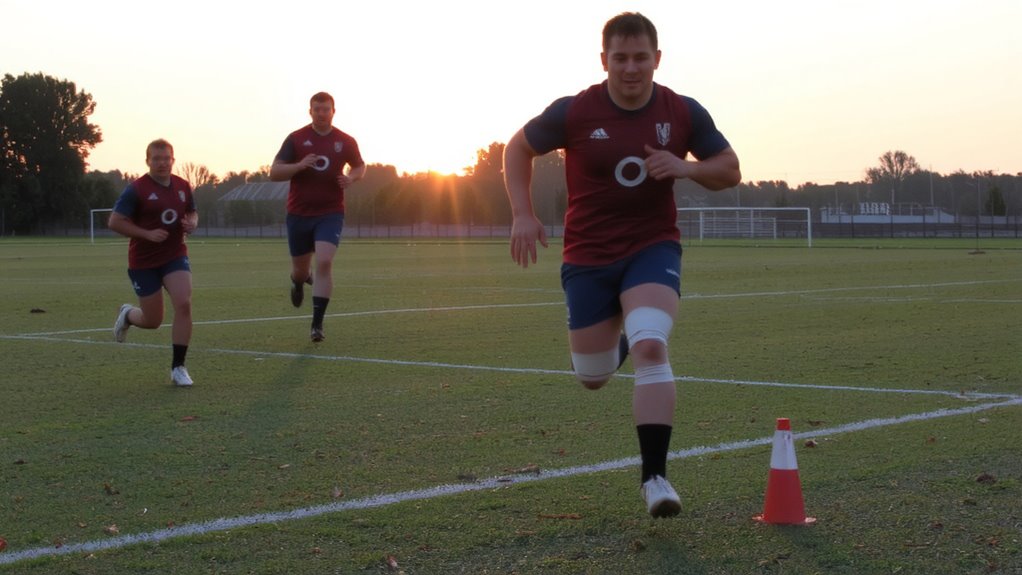
Even though your ankle feels stable during routine rehab exercises, the chaotic nature of rugby movements introduces forces that standard recovery routines rarely replicate. Sudden cuts, pivots, and decelerations place uneven biomechanical stress on the joint, challenging ligaments and proprioception in ways controlled drills don’t. You’re constantly adjusting to opponents, terrain, and ball movement, which demands high movement variability-something rehab mats and treadmills can’t mimic. This unpredictability increases re-injury risk if your ankle hasn’t adapted to dynamic loads. Traditional recovery gear like braces or resistance bands supports stability but often limits the very agility needed on the field. Without exposure to game-like demands, your joint may appear strong in isolation but falter under real-time pressure. That’s why integrating sport-specific stress early-within safe limits-better prepares your ankle for performance. Movement variability isn’t just a challenge; it’s a necessary stimulus for full resilience.
Create On-Field Drills That Mix Agility and Reaction
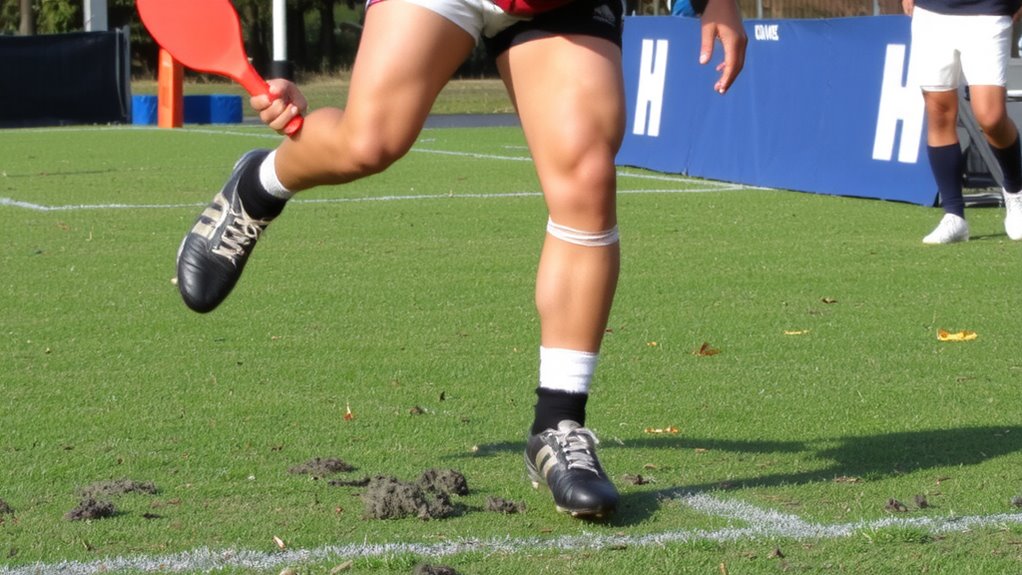
You’ve built stability through rehab exercises, but rugby’s unpredictable demands call for more than just strength-they require sharp reactions and agile adjustments under real-time pressure. To bridge that gap, design on-field drills blending cone weaving with reactive cues. Set cones in irregular patterns, then add visual or auditory signals instructing sudden sprint cutting left or right based on the stimulus. This forces split-second decisions while maintaining control, mirroring breakdown scenarios. Unlike static drills, these tasks simulate match unpredictability, improving neuromuscular responsiveness. Early sessions should prioritize accuracy over speed, reinforcing safe movement mechanics. Cones must be lightweight yet stable enough to mark precise turning points. Incorporating reaction elements guarantees athletes don’t just repeat movements but adapt-developing functional agility critical for return-to-play success. Done right, these drills enhance coordination, sharpen awareness, and condition the ankle under rugby-specific loads without exceeding tissue tolerance.
Safely Increase Drill Intensity Based on Recovery Stage
As your ankle regains strength and proprioception improves, you can begin scaling drill intensity-but only if symptoms like swelling, pain, or stiffness remain absent during and after activity. Use a structured load progression to avoid setbacks. Start with slow, predictable movements, then gradually introduce speed and complexity. This phased approach supports tissue adaptation and builds confidence. Movement variability is key-it prepares your ankle for real-game demands without overloading healing structures. Monitor responses closely; subtle discomfort can signal you’ve increased too fast.
| Recovery Stage | Emotional State | Physical Readiness |
|---|---|---|
| Early | Frustrated, cautious | Low load tolerance |
| Mid | Hopeful, motivated | Moderate variability |
| Late | Confident, enthusiastic | High load progression |
| Return-to-Play | Relieved, focused | Full movement capacity |
Use Reactive Cues to Boost Neuromuscular Control
When reacting to unpredictable stimuli during gameplay, your ankle relies heavily on neuromuscular control to maintain stability and prevent re-injury, so integrating reactive cues into rehabilitation drills isn’t just beneficial-it’s essential. These cues, like visual or auditory signals, force your body to respond in real time, promoting neural adaptation by sharpening how quickly your brain communicates with muscles. Unlike predictable drills, reactive training enhances motor precision, ensuring accurate, controlled movements under pressure. You’ll find this especially useful when mimicking evasion tactics or sudden cuts typical in rugby. Incorporating tools like strobe lights or coach-directed commands challenges your proprioception and refines joint positioning. This type of training doesn’t just rebuild function-it elevates it, aligning with the dynamic demands of match play. The result? A more resilient ankle, better coordination, and reduced risk of re-sprain. It’s not about repetition alone; it’s about intelligent, response-driven movement that mirrors real-game intensity.
Make Reactive Drills Part of Your Rugby Return Plan
How do you bridge the gap between rehab and real match intensity? Reactive drills are your answer. They build neuromuscular control while sharpening mental focus and team coordination under unpredictable conditions. Unlike scripted exercises, reactive drills mimic rugby’s chaos, preparing your body and mind for split-second decisions. Integrating them into your return plan guarantees a smoother, safer shift to full play.
| Drill Type | Key Benefit | Best For |
|---|---|---|
| Mirror Drills | Improves reaction time | Mental focus |
| Call-and-React Sprints | Enhances communication | Team coordination |
| Light-Cue Agility Runs | Sharpens foot speed | Neuromuscular retraining |
These drills aren’t just physical-they demand attention, timing, and teamwork. Done 2–3 times weekly, they condition movement efficiency and situational awareness. Using simple gear like cones and auditory cues keeps setup practical and repeatable. This phase isn’t about load-it’s about precision, consistency, and rebuilding confidence on the field.
On a final note
You’ll speed return-to-play safely by blending reactive cues with rugby-specific movements, challenging neuromuscular control without overloading healing tissue. Reactive drills outperform static training because they mimic real match unpredictability, enhancing joint stability and movement precision. Used progressively, they align recovery with sport demands. Quality gear-like proprioceptive insoles or supportive braces-supports joint feedback but shouldn’t replace smart drill design. Integrate both, monitor response, and you’ll build resilience grounded in function, not just mobility.