Sidestepping Arthritis Flare-Ups With Consistent Pool-Walking Three Times Weekly
Walking in the pool three times a week eases arthritis flare-ups by reducing joint stress up to 90% thanks to water’s buoyancy. You’ll protect your knees, hips, and spine while building strength through natural resistance. A weekly routine balances warm-ups, resistance, and alignment, supported by proper gear like non-slip water shoes and a buoyancy belt for stability. Consistency improves mobility and function, especially when you track progress and train with a partner. There’s more to discover about tailoring each session for long-term joint health.
Notable Insights
- Pool walking three times weekly reduces joint stress with water buoyancy, helping prevent arthritis flare-ups.
- Consistent sessions build strength and mobility while minimizing impact on knees, hips, and spine.
- Water resistance trains muscles safely, protecting inflamed joints during exercise.
- A structured weekly routine supports adherence and maximizes functional benefits over time.
- Using proper gear like water shoes and support belts enhances safety and joint stability in the pool.
Why Pool Walking Calms Arthritis Flare-Ups
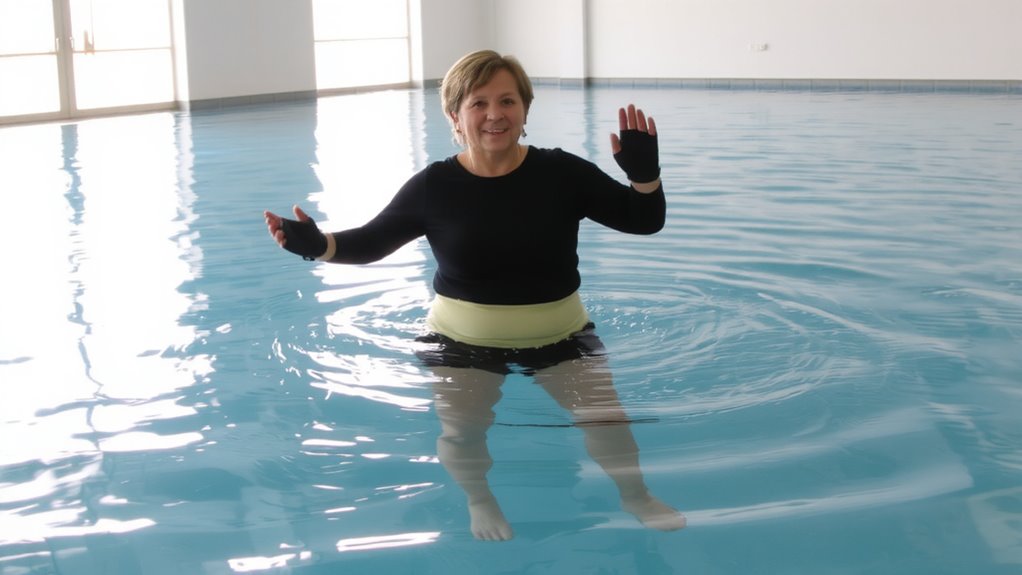
While the water may feel like a simple escape, it’s actually doing heavy lifting when it comes to easing arthritis flare-ups. You experience less joint compression because water buoyancy supports up to 90% of your body weight, depending on depth. That reduction means your knees, hips, and spine aren’t absorbing harsh impacts with every step. Instead of stressing inflamed joints, pool walking lets you move with resistance that builds strength without strain. Research shows buoyancy moderates joint load effectively, making aquatic exercise preferable during active flare-ups. You’re not just moving easier-you’re moving smarter. Unlike land-based workouts, where gravity increases compression, water creates a protective environment ideal for recovery. It’s not a substitute for strength training, but it’s a strategic tool when inflammation flares. For fitness recovery, consistency in water often translates to better joint function on land. Pool walking isn’t just gentle-it’s clinically sound.
Your Weekly Pool Walk Routine for Joint Relief
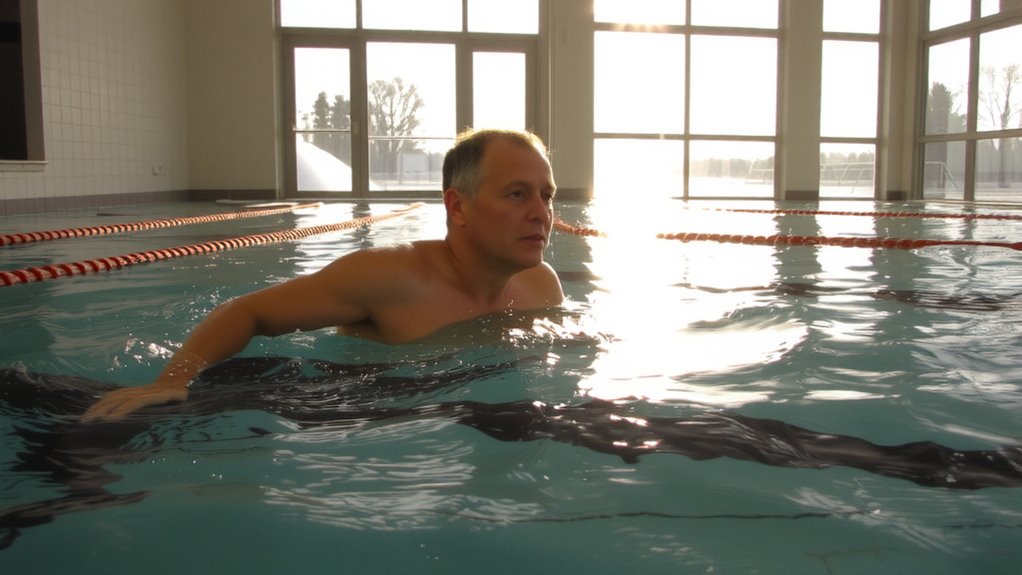
Because consistency matters most when managing arthritis flare-ups, structuring your week around controlled, low-impact movement makes a clear difference in joint function and long-term mobility. Your weekly pool walk routine should include three 30-minute sessions-say, Monday, Wednesday, and Friday-to leverage water resistance without straining tender joints. Focus on steady steps and mindful joint alignment to build strength gradually. Over time, this rhythm supports cartilage nourishment and reduces stiffness better than sporadic effort.
| Day | Duration | Focus Area |
|---|---|---|
| Monday | 30 min | Warm-up & posture |
| Wednesday | 30 min | Water resistance |
| Friday | 30 min | Joint alignment |
| Weekly Avg | 90 min | Functional mobility |
This balanced approach enhances support, improves circulation, and promotes sustainable joint relief through predictable, therapeutic movement.
Best Swim Gear for Arthritis Comfort and Safety
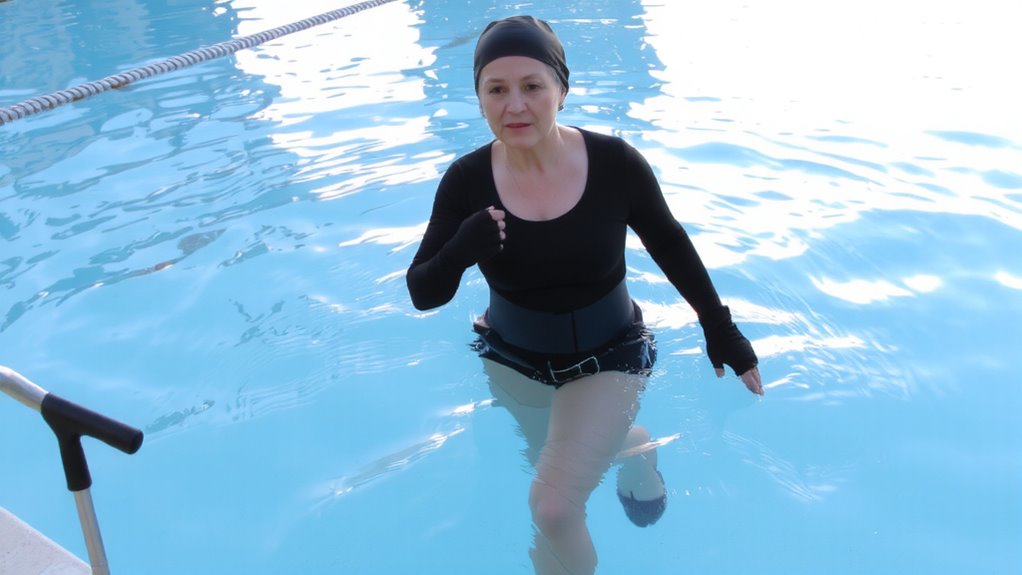
Arthritis-friendly swim gear makes a real difference when you’re walking in the pool for joint relief. Water shoes provide essential traction on slippery pool floors, reducing fall risk and stabilizing tender joints with every step. Look for models with neoprene uppers and non-slip soles-they’re lightweight, quick-drying, and supportive without restricting movement. A well-fitted support belt is equally valuable, offering buoyancy that eases pressure on hips and knees. Choose one with adjustable straps and firm, cushioned padding to prevent chafing during extended sessions. While not all gear performs equally, durable, arthritis-specific designs consistently outperform generic swim accessories. Proper care-rinsing after use, air drying-extends longevity. Together, water shoes and a support belt enhance safety and comfort, letting you focus on steady, low-impact motion without fear of strain or slips. They’re practical investments in a sustainable routine.
Effective Pool Exercises for Strength and Mobility
A well-structured pool workout can make a meaningful difference in maintaining strength and joint mobility when managing arthritis. You benefit greatly from water resistance, which builds muscle without stressing tender joints. Try walking forward, backward, and sideways across the pool-this engages different muscle groups while promoting joint stabilization. Add arm presses and leg lifts to sharpen control and balance. The buoyancy supports your body, letting you move more freely than on land, while the consistent resistance enhances endurance. Deep-water jogging with a flotation belt also boosts cardiovascular health and strengthens core muscles. Because water offers natural, adjustable resistance, these exercises are both safe and scalable. Over time, you’ll notice improved range of motion and greater confidence in daily movement. These exercises aren’t just soothing-they’re effective for sustaining long-term joint function and overall strength.
How to Stay Motivated With Regular Pool Walking
What keeps you coming back to the pool when arthritis makes every step on land a reminder of your limits? It’s the consistent relief and improved mobility you feel after each session. Staying motivated isn’t always easy, but accountability partners make a difference-you’re less likely to skip a session when someone’s counting on you. Walking with a friend or joining a pool group builds routine and social reinforcement. Pair that with progress tracking: jotting down how far you walk, how you feel, or even tracking reduced joint pain over time. Seeing measurable improvements reinforces commitment. Unlike high-impact fitness gear that strains joints, pool walking relies on resistance and buoyancy-low-risk, high-reward. It doesn’t require fancy equipment, just proper swimwear and water-safe shoes for traction. Over weeks, this consistency translates to better joint function. The combination of social support and clear data keeps you engaged, turning pool walking from a chore into a sustainable, effective recovery practice.
On a final note
You’re reducing joint stress while boosting mobility when you stick with pool walking three times weekly. The resistance builds strength without straining arthritic joints, and consistent sessions help prevent flare-ups. Quality gear-like non-slip aquatic shoes and supportive neoprene belts-enhances safety and comfort. Over time, you’ll notice better balance, less stiffness, and improved confidence in daily movement. It’s low-impact recovery that actually works, blending therapeutic benefits with functional fitness you can sustain long-term.