Resisted Mini-Squat Holds to Train Co-Contraction Around Unstable Knees
You’ll train co-contraction around unstable knees by resisting mini-squat holds, which strengthen neuromuscular control better than standard squats. The added band resistance sharpens timing between quads and hamstrings, improving joint stability and reducing ligament strain. Hold at 30–45 degrees with proper form to enhance motor coordination and joint protection. This method integrates seamlessly into rehab, bridging to dynamic movements-there’s more to discover about progression and gear that optimizes recovery.
Notable Insights
- Resisted mini-squat holds enhance co-contraction of quadriceps and hamstrings to stabilize unstable knees.
- Resistance bands above the knees promote proper joint alignment and neuromuscular coordination during the exercise.
- Performing 30- to 45-degree squats with heels down reduces ligament strain and improves load distribution.
- Controlled holds of 20–30 seconds increase joint compression, minimizing excessive motion and enhancing dynamic stability.
- Progressive use of resistance bands builds joint-friendly strength, supporting functional movement and daily mobility.
Why Resisted Mini-Squat Holds Stabilize Unstable Knees
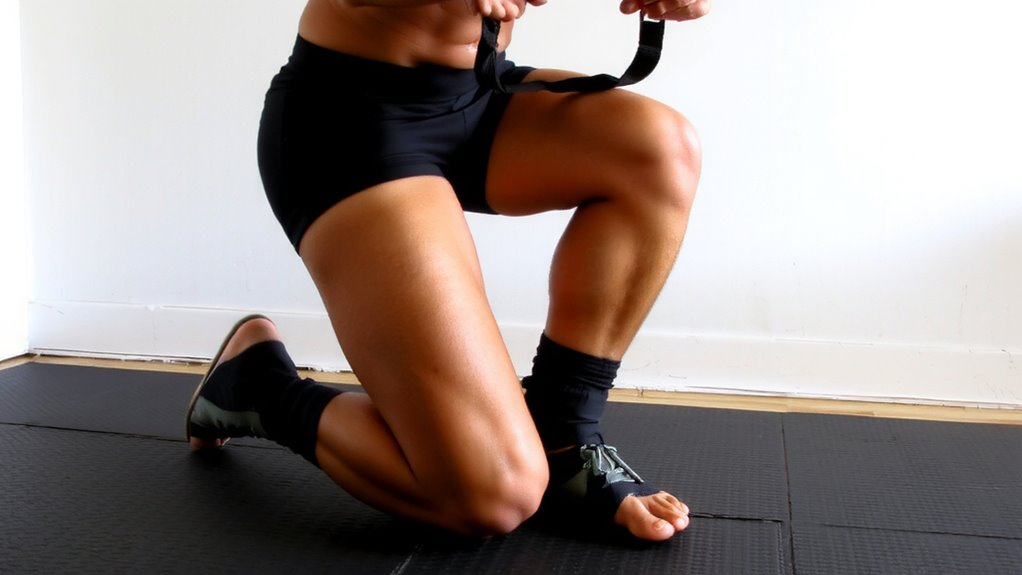
You’re probably wondering how such a simple move can make a real difference when your knees feel loose or shaky. Resisted mini-squat holds train your body to respond more efficiently under load, sparking neural adaptation that sharpens muscle recruitment patterns around the knee. This isn’t just about strength-it’s about timing and coordination. The resistance adds demand, forcing your joint arthrokinematics to stabilize through controlled ranges, improving how bones glide and roll within the joint. Over time, you’ll notice smoother, more confident movements during daily tasks or rehab exercises. Fitness recovery gear like resistance bands or light kettlebells make this practical at home or clinic. Their consistent tension supports proper form without overloading damaged tissue. When done right, this exercise integrates seamlessly into recovery routines, building trust in your knee’s function. It’s not flashy, but the results speak for themselves-better control, reduced instability, and improved joint confidence.
How Co-Contraction Protects the Knee Joint
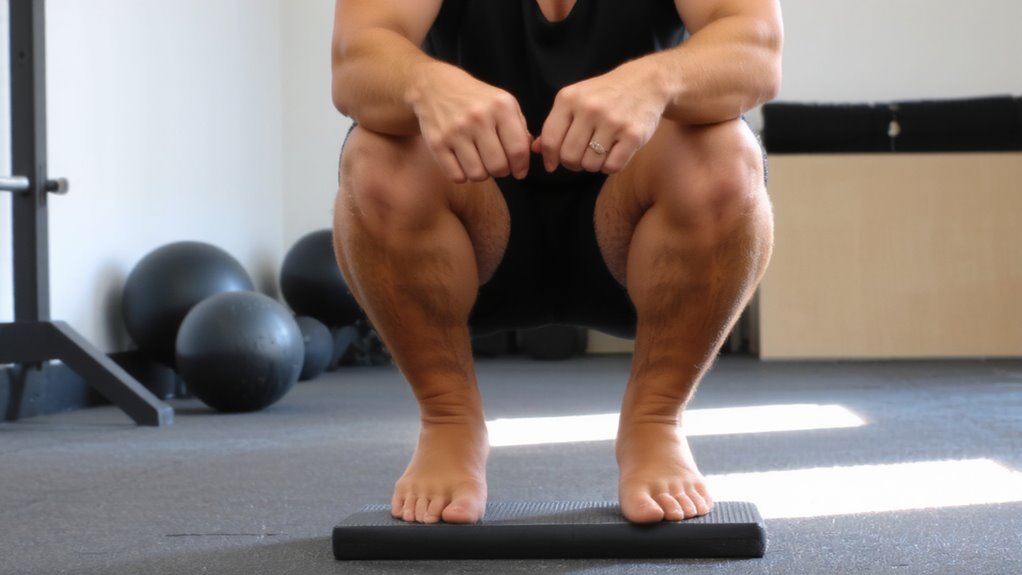
While stability in the knee relies on more than just strong muscles, co-contraction of the quadriceps and hamstrings plays a critical role in reinforcing joint integrity during movement. You’re actively engaging opposing muscle groups simultaneously, which enhances knee stability by compressing the joint and reducing excessive motion. This dynamic balance helps prevent ligament strain, especially in compromised knees, offering essential joint protection. The forces generated during co-contraction stabilize the patella and tibiofemoral joint, improving load distribution across cartilage surfaces. It’s not just about strength-timing and neuromuscular control matter just as much. When properly executed, this muscle synergy mimics the function of a biological brace, minimizing shear forces during weight-bearing tasks. Evidence shows that trained co-contraction can delay joint degeneration and support functional recovery. For those rehabbing knee injuries, it’s a foundational mechanism-turning unstable movements into controlled, safer actions. Ultimately, you’re building resilience from within, using your body’s own mechanics to support long-term joint health.
How to Do Resisted Mini-Squat Holds
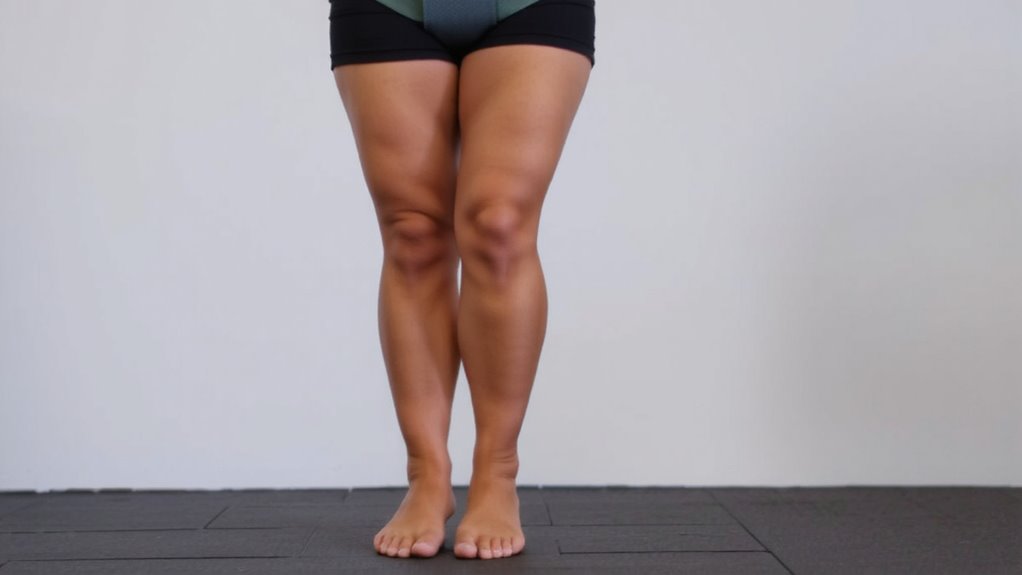
Building on the neuromuscular coordination emphasized in co-contraction, resisted mini-squat holds take that joint stabilization a step further by adding external load to reinforce strength and control at vulnerable knee angles. Start by standing with feet shoulder-width apart, a resistance band looped just above your knees. Lower into a shallow squat-about 30 to 45 degrees-keeping your weight in your heels. Maintain proper alignment: knees tracking over toes, chest up, and spine neutral. Engage your glutes and quads throughout to promote muscular co-activation. Hold the position for 20 to 30 seconds while practicing controlled breathing-inhale steadily through the nose, exhale fully through the mouth to support core stability. This exercise pairs well with recovery-focused gear like compression sleeves, which may enhance proprioception. Performance improves with consistent, mindful repetition, making it a practical tool for rebuilding confidence and strength around unstable knees. For added support during rehabilitation, consider wearing best compression sleeves designed to improve circulation and joint awareness.
Avoid These Mini-Squat Mistakes
How often do knee alignment issues during mini-squats go unnoticed, undermining stability gains and increasing joint stress? You might not realize it, but letting your knees cave inward or extending them too far past your toes strains ligaments and reduces muscle engagement. Poor posture-like rounding your back or shifting your weight-compromises form and limits co-contraction benefits essential for knee control. You’ll also sabotage progress with incorrect timing, such as initiating the movement from the lower back instead of the hips, which disrupts neuromuscular coordination. Holding too shallow or too deep without proper glute and quad activation defeats the purpose of the exercise. Focus on maintaining a neutral spine, controlled descent, and smooth shifts during holds. These adjustments guarantee you’re training the right muscles at the right time, reinforcing joint stability instead of reinforcing dysfunction. Attention to technique turns a simple squat into effective rehab. For those with arthritic knees, incorporating low-impact training tools can support joint-friendly strengthening, such as using best exercise machines.
Choose the Right Resistance Band for Knee Rehab
If you’re rehabbing an unstable knee, picking the right resistance band isn’t just about tension-it’s about ensuring controlled, joint-friendly feedback during movements like resisted mini-squat holds. The ideal band offers progressive band tension that matches your current strength without provoking pain. Light or medium resistance usually works best early on, promoting co-contraction without overloading the joint. Look for latex-free, loop-style bands with consistent elasticity, as they reduce shear risk and maintain integrity over time. Anchor placement matters just as much-secure the band just above the knees or around the thighs so it encourages outward drive, activating the glutes and quads evenly. Poor placement can skew forces, undermining control. Test different tensions and anchors during static holds to see which gives you the most stability and muscle engagement. A well-chosen band enhances neuromuscular re-education and supports safer, more effective rehab progression.
When to Add Mini-Squat Holds to Your Routine
When should you actually start incorporating mini-squat holds into your rehab routine? Once acute pain and swelling have subsided, and you can perform basic movements without significant discomfort, you’re likely ready. The timing benefits of introducing these holds early-once cleared by a professional-include enhanced joint awareness and early neuromuscular activation. For effective routine integration, begin with bodyweight only, gradually adding resistance as tolerated. Consistency matters more than intensity at this stage. Incorporating low-impact exercise equipment such as a stationary bike can further support knee stability during recovery.
| Factor | Recommendation |
|---|---|
| Pain Level | Minimal to none during movement |
| Joint Stability | Controlled motion, no buckling |
| Frequency | 3–4 times weekly |
| Duration | 20–30 second holds, 3 sets |
This phased approach supports co-contraction development while minimizing risk.
From Mini-Squats to Functional Movements
You’ve built joint awareness and co-contraction strength with mini-squat holds, and now it’s time to apply that control to movements that mimic everyday activities. Shifting to functional patterns like step-ups, lunges, or controlled chair sits lets you use what you’ve developed under load and motion. Proper joint alignment remains critical-knee tracking over toes and a neutral pelvis prevent re-injury. You’ll notice improved muscle timing, meaning your quads, hamstrings, and glutes fire together efficiently, stabilizing the knee without conscious effort. This coordination is the cornerstone of dynamic stability. Resistance bands or light dumbbells can enhance the challenge while preserving form. Unlike bulky fitness gear that limits range, minimalist tools support natural movement. The progression from static holds to dynamic exercises sharpens neuromuscular control. Doing so builds confidence in real-world mobility, making daily tasks safer and less taxing on unstable knees.
On a final note
You’ll find resisted mini-squat holds effective for building co-contraction around unstable knees, enhancing joint control without heavy loading. When done correctly, they improve neuromuscular coordination and support long-term knee stability. Paired with the right resistance band-medium tension, durable latex-they integrate smoothly into rehab routines. Progressing to functional movements becomes easier with consistent, proper practice, making this exercise a practical, evidence-based choice for recovery and maintenance.