The Role of Antioxidants in Neutralizing Free Radicals and Accelerating Muscle Repair After Intense Exercise Sessions
You produce more free radicals during intense exercise, which can damage muscle cells and slow recovery. Antioxidants neutralize these compounds, reducing inflammation and supporting repair. While some oxidative stress helps adaptation, too much hinders progress. Eating antioxidant-rich foods like berries, leafy greens, and nuts post-workout boosts recovery. Pair them with protein and carbs within 30–60 minutes for best results. Whole foods outperform supplements, which may interfere with training gains-there’s a smarter way to fuel your comeback.
Notable Insights
- Intense exercise increases free radical production, causing oxidative damage to muscle proteins, lipids, and DNA.
- Antioxidants neutralize reactive oxygen species, reducing oxidative stress and supporting muscle cell recovery.
- Consuming antioxidant-rich foods like berries, leafy greens, and tart cherries helps decrease inflammation and soreness post-exercise.
- The 30- to 60-minute post-workout window is optimal for consuming antioxidants to enhance nutrient uptake and repair.
- While supplements exist, whole foods provide balanced phytonutrients without blunting beneficial training adaptations.
Why Exercise Produces Muscle-Damaging Free Radicals
While your body adapts to the stress of exercise by building stronger muscles, that process also ramps up metabolic activity in ways that can backfire-specifically, through the production of free radicals. As you push through higher exercise intensity, your muscles demand more energy, forcing mitochondria to work overtime. This increased load raises the odds of mitochondrial leakage, where electrons escape the respiratory chain and react with oxygen, forming reactive oxygen species. These free radicals can damage proteins, lipids, and DNA within muscle cells, undermining recovery and performance. Though some oxidative stress is necessary for adaptation, excessive levels-common in prolonged or intense training-can prolong soreness and impair function. Fitness recovery isn’t just about rest; it’s about managing internal stressors. Recovery gear like compression tools or cooling systems may help with circulation, but they don’t address this cellular-level damage directly.
How Antioxidants Shield Muscles After Workouts
Because your muscles face oxidative stress every time you train hard, antioxidants step in to neutralize the free radicals that would otherwise wreak havoc on muscle tissue. They reduce muscle inflammation and support faster regeneration by limiting cellular damage. While your body produces some antioxidants naturally, intense workouts often tip the balance, making dietary or supplemental intake beneficial. Managing oxidative stress isn’t about eliminating it entirely-some level is necessary for adaptation-but about preventing excess that delays recovery.
| Antioxidant | Source Example | Recovery Benefit |
|---|---|---|
| Vitamin C | Citrus fruits | Reduces oxidative stress |
| Vitamin E | Nuts and seeds | Protects cell membranes |
| Glutathione | Produced in liver | Combats muscle inflammation |
Best Antioxidant Foods for Faster Recovery
What if you could speed up muscle recovery just by adjusting your plate? You can-and it starts with choosing antioxidant-rich foods that work together. Berries, spinach, and kale deliver potent compounds like anthocyanins and vitamin C, which target oxidative stress. But don’t stop there; pairing them with nuts and seeds enhances food synergy, boosting absorption and effectiveness. Tart cherries have been shown to reduce soreness, while sweet potatoes provide beta-carotene to support tissue repair. You’re not just refueling-you’re strategically countering inflammation. While antioxidant timing matters, focusing on whole foods guarantees your body gets nutrients in their most balanced form. Unlike supplements that isolate compounds, real food offers a network of phytonutrients that function better together. This isn’t about quick fixes; it’s smart recovery nutrition backed by science. You’re investing in lasting performance, not just a temporary fix.
When to Eat Antioxidants for Optimal Repair
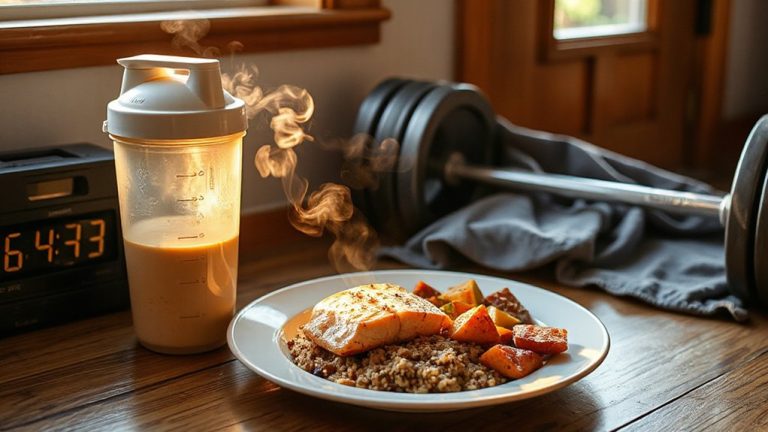
When should you be eating antioxidants to get the most out of your recovery? Timing intake right after exercise gives your body the best shot at neutralizing free radicals and reducing oxidative stress. Studies suggest consuming antioxidants within 30 to 60 minutes post-workout boosts muscle repair. This window is key because your muscles are primed to absorb nutrients. Pairing antioxidants with protein and carbs in a post-workout meal improves absorption-think berries with Greek yogurt or spinach in a chicken stir-fry. This meal pairing doesn’t just aid recovery-it also sustains energy for your next session. While whole foods are ideal, the real benefit lies in consistency. You don’t need high-end fitness gear to recover well; you need smart nutrition. Getting the timing right turns a good routine into an effective one. Your body repairs smarter when fuel is delivered at the right moment.
Are Antioxidant Supplements Worth It for Athletes?
While antioxidant supplements are widely marketed to athletes as a fast track to recovery, their actual benefits are more complicated than ads suggest. You might take them hoping to reduce soreness and speed repair, but research shows mixed results. High doses can interfere with training adaptations by blunting the body’s natural response to oxidative stress. Antioxidant timing matters-taking them too soon before or after exercise may diminish gains. Whole foods often offer a safer, more effective alternative, delivering balanced compounds without the risks tied to supplement safety. Many commercial products lack regulation, increasing chances of contaminants or inaccurate labeling. For most athletes, getting antioxidants through diet-like berries, nuts, and leafy greens-provides sufficient support without interference. Supplements might help in extreme cases, but they’re not a necessary shortcut for everyone seeking better recovery.
On a final note
You’ll recover faster by understanding how antioxidants neutralize free radicals produced during intense workouts. While whole foods like berries and spinach offer effective protection, supplements may interfere with training adaptations if overused. Timing matters-eating antioxidant-rich meals within a few hours post-exercise supports muscle repair without blunting gains. For fitness recovery, practical gear like compression wear helps, but smart nutrition remains essential. You’re better off prioritizing real food over pills for long-term performance and resilience.