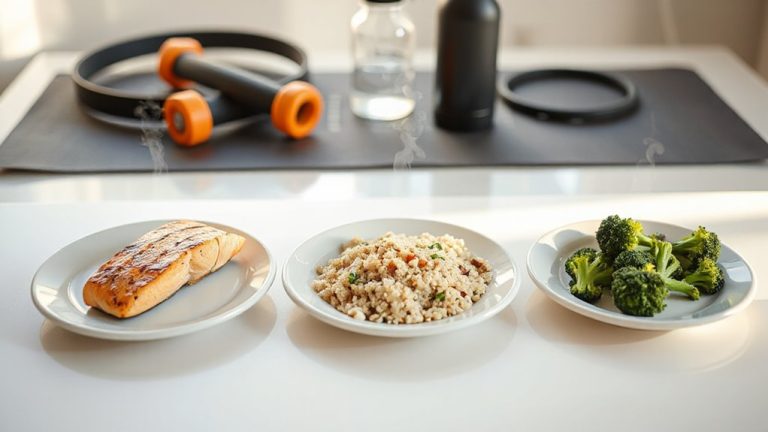
Meal Timing Strategies to Optimize Post-Workout Recovery Efficiency
You boost recovery by eating 20–30g of protein and 30–60g of fast-digesting carbs within 30–60 minutes post-workout, when muscle synthesis and glycogen replenishment peak. While immediate nutrition helps, total daily protein and overall diet matter more for long-term gains. Pre-fueling with a balanced snack also reduces muscle damage. Timing matters, but consistency and proper daily intake drive real results. There’s more to optimizing your recovery than just the clock.
Notable Insights
- Consume 20–30g of high-quality protein within 30–60 minutes post-workout to maximize muscle repair and synthesis.
- Eat 30–60g of fast-digesting carbohydrates immediately after exercise to replenish glycogen stores efficiently.
- Combine protein and carbs post-workout to enhance insulin response and accelerate recovery.
- If pre-workout nutrition was inadequate, prioritize a post-exercise meal within 30 minutes to reduce muscle breakdown.
- Total daily protein and calorie intake matters more than precise timing, but post-workout nutrition boosts recovery when strategically used.
Why Post-Workout Meal Timing Matters
While your workout may end when you step off the treadmill or rack the weights, your body’s recovery process is just getting started, and that’s where post-workout meal timing becomes critical. Your muscles are primed to absorb nutrients, especially protein and carbohydrates, to kickstart muscle protein synthesis. Without timely recovery nutrition, you’re slowing down repair and potentially wasting hard-earned gains. Within 30 to 60 minutes post-exercise, consuming a balanced meal or shake helps replenish glycogen and supports muscle recovery. This window isn’t magic, but it’s strategic-particularly after intense or prolonged sessions. Think of it like cooling down your fitness gear after heavy use; skipping it risks long-term wear. For best results, pair 20–30 grams of high-quality protein with fast-digesting carbs. Consistency matters more than perfection, but getting this right speeds adaptation and enhances performance over time.
Is the Post-Workout Window Overrated?
Could the urgency around refueling right after your workout actually be overstated? The so-called “anabolic window” might not be as narrow as once thought. While timely nutrition supports recovery, the myth frequency of immediate post-exercise feeding has been inflated over time. Newer evidence accuracy suggests muscle protein synthesis stays elevated for hours, especially if you’re well-fueled pre-workout. Recovery isn’t solely dependent on seconds or minutes post-lift.
| Timing | Benefit Level | Practical Need |
|---|---|---|
| 0–30 min | Moderate | High only if fasted |
| 30–60 min | High | Yes, for most |
| 1–2 hr | High | Still effective |
| 2–4 hr | Moderate | Acceptable delay |
| 4+ hr | Low | Suboptimal |
For most, spreading protein intake matters more than rushing post-gym.
Fuel Before You Train to Accelerate Recovery
Since you’re aiming to maximize recovery, fueling before your workout sets the stage for better performance and faster repair. Pre workout fueling isn’t just about immediate energy-it primes your body to handle stress and begin recovery sooner. When you consume carbs and protein about 60–90 minutes pre-exercise, you support energy optimization, maintaining blood glucose and sparing muscle glycogen. That means you train harder with less fatigue, reducing overall damage. Think of it as proactive recovery: the better fueled you are, the less your body has to rebuild post-exercise. A balanced meal or snack-like yogurt with fruit or a peanut butter sandwich-can make a measurable difference in endurance and focus. It’s not just what you do after the workout that counts. Smart pre workout fueling enhances workout quality, which directly influences repair speed.
Time Protein Right to Build Muscle Faster
Getting protein timing right can make a real difference in how quickly your muscles grow and recover. You trigger protein synthesis during resistance training, and consuming high-quality protein within the 30–60 minute post-workout window maximizes this process. This period, often called the “anabolic window,” is when your muscles are primed to absorb nutrients efficiently. Aim for 20–30 grams of fast-absorbing protein, like whey, which delivers essential amino acids rapidly. This immediate supply directly supports muscle hypertrophy by reducing breakdown and boosting repair. While total daily protein matters most, strategic timing enhances recovery speed and adaptation. Consistently pairing workouts with timely protein intake leads to measurable gains over weeks. It’s a simple, evidence-backed habit that complements quality training and recovery gear-think supportive footwear and moisture-wicking apparel that keep your sessions effective. Don’t overlook this step; it’s a small effort with significant returns in muscle growth and performance.
Rebuild Glycogen: The Right Way to Time Carbs After Training
Fueling your recovery starts the moment you finish your last rep, and what you do with carbohydrates in the hours after training can make or break your progress. Right after exercise, your muscles are primed for glycogen resynthesis, especially within the first 30 to 60 minutes. That’s when insulin sensitivity peaks, making it easier for carbs to shuttle into muscle cells instead of being stored as fat. You don’t need a massive carb load-just 30–60 grams of fast-digesting carbohydrates does the trick. Pairing those with protein enhances the insulin response further, accelerating recovery. Timing matters more than total intake here; post-workout carb timing improves glycogen replenishment by up to 50% compared to delaying. Skip sugary recovery drinks if you’re not training again soon-whole food sources work just as well. Consistent carb timing supports better performance, especially in endurance or high-volume training.
Extend Recovery Beyond the Post-Workout Window
While the post-workout window is critical, your recovery doesn’t end once that meal is digested-what you do in the following 24 to 48 hours can substantially influence muscle repair, strength gains, and readiness for the next session. Prioritize active recovery like light cycling or walking, which increases blood flow without adding strain. Pair this with sleep optimization, as growth hormone release peaks during deep sleep, accelerating tissue repair. Quality recovery wear, like compression garments, may support circulation and reduce soreness when used consistently. Below is a quick guide:
| Strategy | Benefit |
|---|---|
| Active recovery | Enhances nutrient delivery, reduces stiffness |
| Sleep optimization | Maximizes hormonal repair processes |
| Compression gear | May decrease swelling and perceived soreness |
| Hydration & meals | Sustains protein synthesis and energy balance |
Recovery isn’t passive-it’s a structured follow-through.
Time Your Post-Workout Meals for Strength vs. Endurance
Why do your post-workout nutrition needs differ if you’re lifting heavy versus logging long miles? For strength training, ideal timing hinges on muscle protein synthesis-aim to consume protein and carbs within 30 to 60 minutes post-lift. This window supports nutrient partitioning toward muscle repair and growth. Endurance sessions, though, deplete glycogen more severely, so replenishing within 30 minutes-especially with a 3:1 carb-to-protein ratio-maximizes recovery. While both benefit from prompt refueling, endurance athletes may need more aggressive carb loading to restore energy stores. Recent research suggests nutrient partitioning is more sensitive to insulin post-exercise, making this period critical. If you’re serious about recovery, precision matters-whether you’re using high-end recovery gear or tailoring your meal plan. Don’t rely on supplements alone; whole foods deliver sustained nutrient delivery. Ideal timing isn’t just theory-it’s practical science that shapes real results.
On a final note
You’re better off focusing on consistent daily nutrition than obsessing over the post-workout window, which isn’t as narrow as once believed. Timing protein and carbs matters, but total intake and training quality weigh more. For strength, aim for 20–40g of protein soon after lifting; endurance athletes should prioritize carb replenishment within 1–2 hours. Recovery extends beyond one meal-spread nutrients evenly across the day. Practical, sustainable habits beat rigid timing for long-term progress.