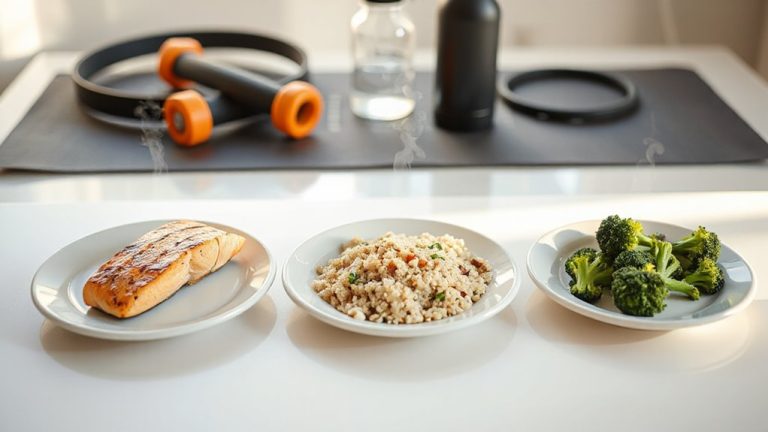
Maximizing Carbohydrate Restores: A Detailed Guide on How, When, and Why to Use Them Post-Workout
You need carbs post-workout because they quickly restore glycogen, especially when muscles are most receptive. Eat 30–60 grams of high-GI carbs like white rice or bananas within 30–60 minutes after training for ideal uptake. Insulin spikes during this window, speeding recovery. Pairing with protein boosts the effect. Adjust amounts based on workout intensity-up to 1.2 g/kg for tough sessions. Timing and choice matter for performance gains. There’s more to optimizing your recovery strategy just ahead.
Notable Insights
- Carbs replenish muscle glycogen stores depleted during exercise by providing glucose for rapid energy restoration.
- Consume carbs within 30 to 60 minutes post-workout to maximize glycogen synthesis rates.
- High-glycemic carbs like white rice, potatoes, and bananas deliver glucose quickly for optimal recovery.
- Pairing carbs with protein enhances insulin response, speeding glycogen replenishment and supporting muscle repair.
- Adjust carb intake based on exercise intensity-1.0–1.2 g/kg for high-intensity, less for moderate or low workouts.
Why Carbs Replenish Glycogen After Workouts
When your muscles burn through stored energy during a tough workout, they’re left depleted and in need of repair-this is where carbohydrates step in, helping to rebuild glycogen stores that power your next session. You rely on glycogen synthesis to restore fuel quickly, and carbs directly fuel this process. After exercise, your muscle cells are primed to absorb glucose, especially when you trigger an insulin response through carb intake. That spike in insulin isn’t just helpful-it’s essential for shuttling nutrients where they’re needed most. Without adequate carbs, glycogen synthesis slows dramatically, hindering recovery and weakening performance. High-quality recovery isn’t just about what gear you wear or how you stretch-it’s biochemical. The right carb intake post-workout maximizes your body’s natural repair systems. You won’t get full restoration through protein alone. For real results, pair smart carb timing with effective recovery practices.
When to Eat Carbs for Fastest Recovery
How soon after your workout do you reach for carbs? Right away, if you want fastest recovery. The timing windows matter most in the first 30 to 60 minutes post-exercise, when your muscles are primed to replenish glycogen. During this period, your insulin response is heightened, making cells more receptive to shuttling glucose from carbs into muscle tissue. Waiting even two hours can reduce glycogen synthesis rates by up to 50%. If you train twice a day or push intense sessions close together, missing this window slows recovery and performance gains. While total daily carb intake counts, strategic timing amplifies results. Pairing carbs with protein post-workout can further boost insulin response, aiding nutrient delivery. This isn’t just theory-it’s backed by performance data from endurance and resistance athletes. Optimize recovery by treating post-workout nutrition like essential gear: precise, reliable, and mission-critical.
Best Carbs to Eat After Exercise
A handful of smart carb choices stand out for post-exercise recovery, especially those with a high glycemic index that deliver glucose rapidly when muscles are most receptive. You’ll want to prioritize carbs like white rice, potatoes, bananas, and sports drinks because they spike blood glucose quickly, supporting immediate glycogen synthesis. Carb timing is essential-consuming these within 30 to 60 minutes post-workout maximizes your muscles’ ability to replenish fuel stores. While whole grains are nutritious, their slower digestion makes them less ideal during this narrow recovery window. Fast-acting carbohydrates aren’t just convenient; they’re strategically effective. In practical terms, combining 30–60 grams of these high-GI carbs with fluid intake guarantees better absorption and faster results. For fitness gear, consider insulated shaker bottles to carry carb-rich shakes, maintaining mix integrity and temperature. Simple design features enhance usability, aligning form with recovery-focused function.
How Protein Enhances Carb Recovery
Although carbs do the heavy lifting in refueling depleted glycogen stores, adding protein to your post-workout meal actually boosts the recovery process in ways carbs alone can’t match. You get a stronger insulin response when combining protein with carbohydrates, which speeds up glycogen replenishment in your muscles. That same insulin spike also creates an ideal environment for muscle synthesis, helping repair and grow tissue more efficiently. Studies show a 3:1 carb-to-protein ratio works well, but even smaller amounts of protein enhance uptake. Unlike relying solely on carbs, this combo supports both energy and structural recovery. Fitness research consistently backs this synergy, making it a smart, evidence-based choice. High-quality protein sources-like whey or lean meats-paired with fast-digesting carbs deliver measurable results. Bottom line: you’re not just refueling; you’re upgrading your recovery with minimal extra effort.
Adjusting Carb Intake by Workout Type
When your workout varies in intensity and duration, so should your carbohydrate intake-tailoring your post-exercise carbs to the type of training you’ve done guarantees maximum glycogen restoration without unnecessary excess. After high-intensity sessions like HIIT or heavy resistance training, your glycogen stores deplete rapidly, so you’ll need 1.0–1.2 grams of carbs per kilogram of body weight within 30–60 minutes-optimal carb timing accelerates recovery. For moderate workouts, like steady-state cardio, a smaller intake of 0.5–0.8 g/kg suffices. Low-intensity activities may not demand aggressive replenishment at all. Workout intensity directly influences how urgently and how much you should consume. Ignoring this balance risks fatigue or unwanted fat storage. Precision in carb timing and portioning shows a deeper understanding of recovery than simply eating post-workout. It’s not just about refueling-it’s about restoring strategically for your next performance.
On a final note
You’ve pushed hard, and now your muscles need fuel. Replenishing glycogen with carbs post-workout speeds recovery, especially when consumed within 30–60 minutes. Fast-digesting carbs like banana or dextrose work best, paired with protein to enhance uptake. Your recovery strategy should match your workout intensity-endurance sessions demand more carbs than light resistance training. Smart timing and choices optimize performance, making your fitness gear and effort truly pay off.