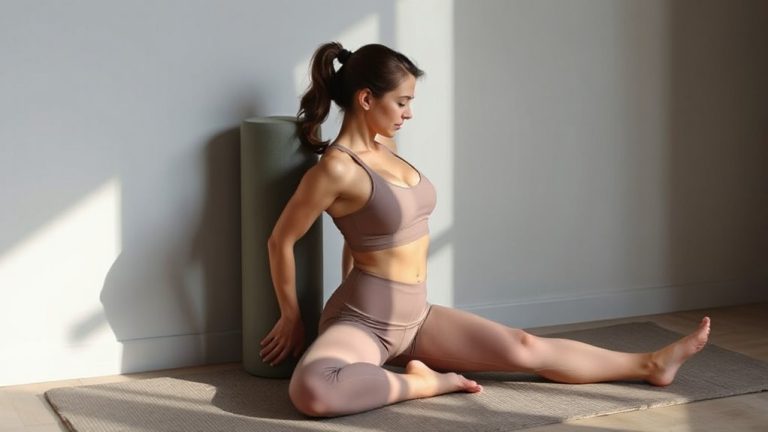
Shoulder Mobility Drills With Cross-Body Arm Swings to Improve Range of Motion
You need better shoulder mobility to prevent impingement and boost performance, especially in overhead movements. Cross-body arm swings help by loosening tight fascia, lubricating the joint, and improving coordination. Do them standing with control, not momentum, and keep your posture tall. Avoid hunching or over-swinging. When paired with wall slides or banded stretches, they work even better - there’s more to discover about fine-tuning your routine.
Notable Insights
- Cross-body arm swings improve shoulder range of motion by enhancing joint lubrication and fascial release in the upper back and posterior shoulder.
- Perform arm swings with controlled motion, keeping the torso stable and avoiding momentum to maximize mobility benefits.
- Engage in 10–15 reps per side, maintaining a slight elbow bend and neutral spine to protect joint integrity.
- Use cross-body arm swings in warm-ups to prep shoulders for overhead movements and boost blood flow dynamically.
- Pair arm swings with wall slides and banded external rotations to address muscle imbalances and improve overall shoulder mobility.
Why Your Shoulders Need Better Mobility
Ever wonder why so many of your movements feel restricted, or why overhead lifts come with a pinch rather than power? You’re likely bumping up against anatomical limitations-your shoulder’s structure simply wasn’t built for full, unrestricted motion in all planes. These design quirks mean that without proper mobility work, joint compression becomes a regular issue, especially when reaching overhead or rotating internally. When surrounding muscles tighten or move inefficiently, they narrow the joint space, causing impingement and discomfort. Poor mobility doesn’t just hinder performance; it increases injury risk over time. Think of it like driving a high-performance car on misaligned tires-efficiency drops, wear increases. Mobility drills aren’t just fluff; they counteract these built-in constraints, improving joint positioning and muscle coordination. For fitness recovery and consistent gains, treating mobility as a non-negotiable part of training makes a measurable difference in both function and longevity.
How Cross-Body Arm Swings Relieve Tightness

While your shoulders may not get the same daily attention as larger muscle groups, their complex mobility demands make targeted movement essential, especially when tightness starts limiting function. Cross-body arm swings help by promoting fascial release across the upper back and posterior shoulder, gently unraveling tension that builds from prolonged sitting or repetitive motions. As you swing your arm across your chest, the dynamic motion encourages joint lubrication, dispersing synovial fluid throughout the glenohumeral joint for smoother movement. This isn’t just about stretching-it’s about restoring glide between tissues and improving internal joint nutrition. You’ll notice reduced stiffness and greater ease in overhead actions. Unlike static stretches, these swings actively engage movement patterns that reflect real-world function, making them more effective for long-term relief. Consistent use leads to measurable improvements in comfort and mobility, helping you maintain shoulder health with minimal time investment.
Perfect Your Cross-Body Arm Swing: Step-by-Step

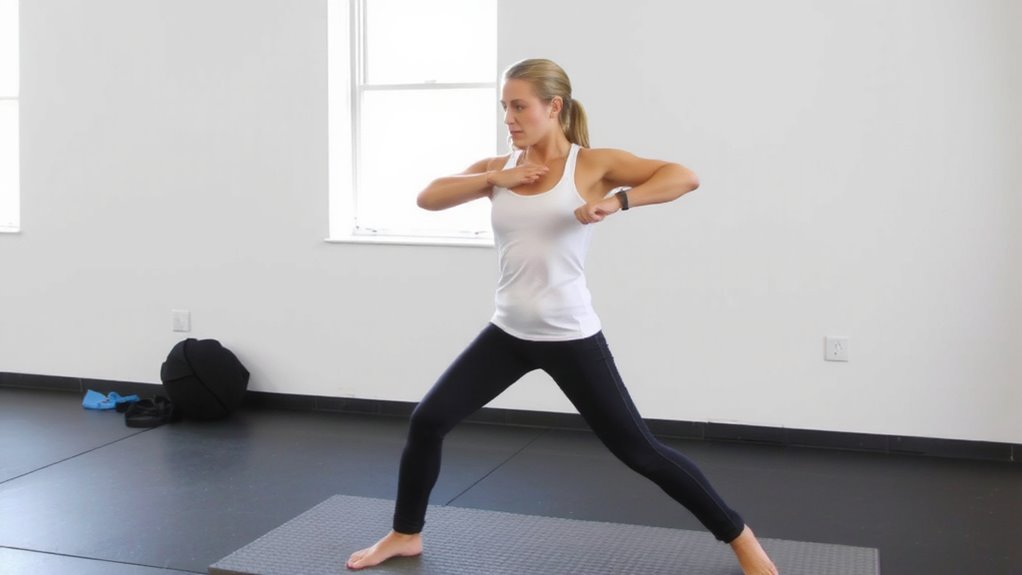
You’ve seen how cross-body arm swings tackle tightness by improving tissue glide and joint lubrication, but executing the movement correctly is what turns a simple motion into a powerful recovery tool. Start standing with feet shoulder-width apart, spine neutral. Swing one arm across your body in a smooth, controlled arc-the arm swing shouldn’t be jerky or forced. Keep your torso stable and avoid rotating your hips. Proper shoulder alignment is critical: maintain a slight bend in the elbow and keep the moving shoulder relaxed, not hiked toward your ear. The motion should originate from the joint, not momentum. Perform 10–15 reps per side, gradually increasing range as tension releases. Consistent form maximizes mobility gains and reduces injury risk. This drill integrates seamlessly into warm-ups or recovery routines, especially when paired with quality recovery gear like foam rollers or resistance bands for added joint prep.
Avoid These 5 Arm Swing Mistakes
Why do some people see gains in shoulder mobility while others feel stuck-or worse, end up with nagging discomfort? It often boils down to five key mistakes. First, you’re likely using too much arm swing momentum, turning a controlled mobility drill into a momentum-fueled jerk that doesn’t actually improve joint function. Second, excessive arm swing frequency without intent reduces effectiveness-more isn’t always better. Third, you might be hunching your shoulders, which defeats the purpose by increasing tension. Fourth, poor posture-like overarching your lower back-compromises alignment. Finally, ignoring asymmetries between sides can create imbalances over time. Correct these errors, and you’ll engage the right muscles safely. Precision beats speed here. Focus on smooth, deliberate motion, not how fast or far you can swing.
When to Use Arm Swings: Warm-Up or Recovery
Arm swings earn their place in your routine, but timing shapes their impact. Using them during warm-ups activates shoulder joints and primes muscles for movement, making them ideal for dynamic preparation. When integrated early, arm swings boost blood flow and neuromuscular readiness-key for overhead lifts or pushing motions. That said, timing strategies matter: avoid high-amplitude swings when fatigued, as control diminishes and injury risk rises. For recovery, lighter arm swings can aid cooldowns by promoting circulation without strain, though static stretching or foam rolling often offer greater restorative value. Your workout integration should prioritize function-match arm swings to movement demands. Pre-workout, they’re a smart activation tool; post-workout, they’re best used sparingly and with reduced range. Proper form and intent define their effectiveness in both contexts.
Best Shoulder Mobility Drills to Pair With Arm Swings
A smart mobility routine builds on momentum-both physical and strategic-so pairing arm swings with complementary shoulder drills amplifies range of motion and joint stability. You’ll gain the most when combining dynamic movement with targeted scapular activation and rotator cuff strengthening. These drills enhance neuromuscular control, preparing your shoulders for load or aiding recovery with precision.
| Drill | Focus | Reps/Sets |
|---|---|---|
| Wall Slides | Scapular activation | 10–12 / 2–3 |
| Banded External Rotations | Rotator cuff strengthening | 12–15 / 2–3 |
| Arm Swings + Doorway Stretch | Mobility + Flexibility | 10 each / 2 |
| Prone Y Raises | Scapular control | 10–12 / 2 |
Each movement integrates smoothly after arm swings, boosting shoulder mechanics with minimal equipment. Banded work, in particular, offers adjustable resistance ideal for recovery days or pre-workout activation.
On a final note
You’ll find cross-body arm swings effective for boosting shoulder mobility when performed correctly. They loosen tight tissue, prime joints for movement, and enhance recovery when paired with smart programming. Used in warm-ups or cooldowns, these drills integrate well with resistance bands or foam rolling for sustained gains. Just avoid over-swinging or compensating with the torso. Consistent use, alongside quality recovery gear, supports long-term joint health-making this drill a practical, low-effort addition to any fitness routine focused on function and resilience.