Optimizing Vitamin C Intake for Collagen Formation After Ligament Reconstruction
You need vitamin C daily to build strong collagen after ligament surgery, and spreading 500–1,000 mg across two or three meals boosts absorption. Foods like guava, red bell pepper, and broccoli offer highly bioavailable vitamin C plus cofactors that supplements lack. Take doses with meals to reduce stomach upset and avoid coffee, which hinders uptake. Pairing it with protein and nutrients like lysine or zinc sharpens its repair potential-consistency outperforms megadoses. There’s more to fine-tuning your recovery stack effectively.
Notable Insights
- Vitamin C is essential for collagen synthesis, directly supporting ligament repair and scar tissue formation.
- Consume 500–1,000 mg daily, split into 250–500 mg doses two to four times for optimal absorption.
- Prioritize vitamin C-rich whole foods like guava, red bell pepper, and broccoli for enhanced bioavailability and cofactor support.
- Take vitamin C with meals to improve uptake, maintain steady blood levels, and reduce gastrointestinal side effects.
- Combine with synergistic nutrients like lysine, proline, zinc, and bioflavonoids to maximize collagen stability and healing.
Why Vitamin C Is Crucial for Ligament Healing
You’ve probably heard that vitamin C matters after ligament surgery, but what makes it so essential goes beyond general wellness. Your body relies on it for collagen synthesis, a non-negotiable process when rebuilding damaged ligaments. Without sufficient vitamin C, collagen fibers weaken, compromising healing integrity. It also delivers potent antioxidant support, neutralizing free radicals produced during inflammation-this protects recovering tissues from oxidative stress. You’ll need consistent intake, as your body doesn’t store vitamin C long-term. Fundamentally, it aids in scar tissue formation, guiding fibroblasts to lay down structured matrix instead of disorganized fibers that limit mobility. Think of it as internal scaffolding: poorly built, and the structure fails. While fitness recovery gear like braces or stimulators support externally, vitamin C works from within, making it a foundational, non-negotiable component. Skipping it undermines both natural repair and rehab performance, no matter how advanced your gear.
Top Vitamin C-Rich Foods That Boost Collagen
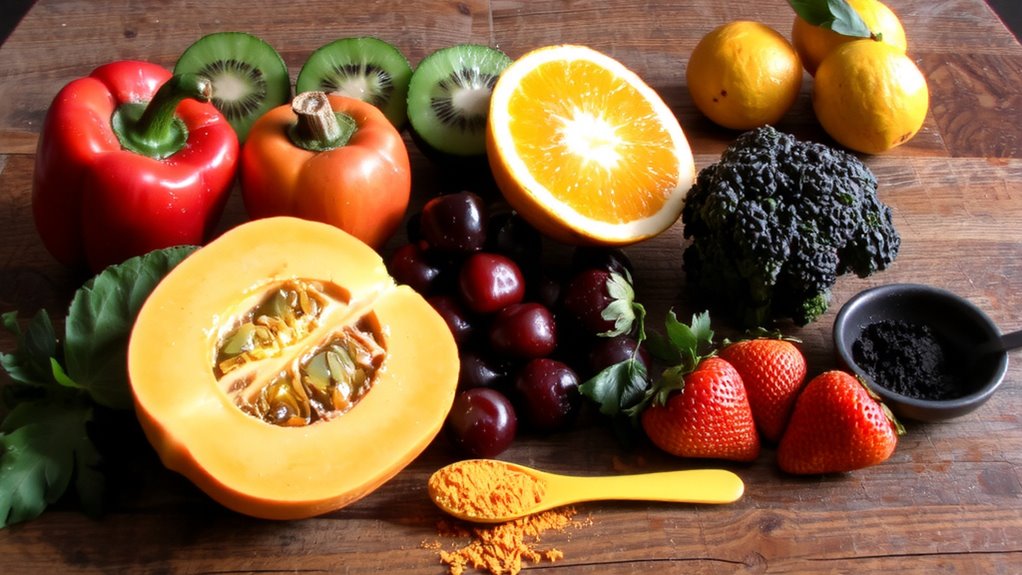
Citrus isn’t the only powerhouse when it comes to fueling collagen production-while oranges and grapefruits deliver a solid vitamin C punch, several other foods outperform them in both concentration and bioavailability. You’ll want to diversify your intake beyond citrus fruits to maximize recovery. Bell peppers, especially red ones, pack nearly three times the vitamin C of an orange per serving. Tropical options like guava and kiwi offer exceptional levels too, with guava leading the scale in absorption. Don’t overlook leafy greens; kale and broccoli are not only rich in vitamin C but also supply cofactors that support collagen stability. Incorporating a variety maintains consistent, high-yield nutrient delivery vital during ligament healing.
| Food | Vitamin C (mg per 100g) | Bioavailability |
|---|---|---|
| Red Bell Pepper | 128 | High |
| Guava | 228 | Very High |
| Kale | 120 | Moderate-High |
Recommended Vitamin C Dosage After Surgery

A daily intake of 500 to 1,000 milligrams of vitamin C is commonly recommended during the postoperative phase, especially when supporting ligament repair through enhanced collagen synthesis. You’ll want to stick to this range because exceeding it offers little added benefit and may cause digestive discomfort. The most effective timing isn’t about a single moment but consistent support-your body can’t store vitamin C, so spreading your intake throughout the day improves absorption. That’s where dosage frequency comes in: taking 250–500 mg two to four times daily maintains steady blood levels, which is essential for continuous collagen production. While supplements are convenient, getting vitamin C from whole foods also delivers cofactors that support healing. You don’t need expensive recovery gear or high-dose regimens-just reliable, evenly spaced doses aligned with your body’s metabolic demands.
When to Take Vitamin C for Best Results
While timing your vitamin C intake won’t make or break your recovery, doing it strategically supports more consistent collagen synthesis, which is essential for ligament healing. Since your body doesn’t store vitamin C well, spacing out your intake improves absorption and maintains steady blood levels. Taking it with meals throughout the day-say, breakfast and lunch-enhances uptake and reduces the risk of gastrointestinal upset. The timing matters most when aiming for maximum bioavailability; doses split two to three times daily are more effective than a single large dose. This approach keeps plasma concentrations stable, fueling continuous collagen production. While immediate post-surgery timing isn’t essential, consistency over weeks is. You’ll get better results by prioritizing regular intake aligned with your body’s absorption limits. Stick to this rhythm, and you’ll support steady tissue repair without overloading your system.
Supplements: When Diet Isn’t Enough
| Emotion | Low Intake | Ideal Intake |
|---|---|---|
| Frustration | Delayed healing | Steady progress |
| Anxiety | Re-injury fears | Increased confidence |
| Fatigue | Persistent soreness | Faster recovery pace |
| Hopefulness | Uncertain outcomes | Visible ligament strength |
Synthetic supplements aren’t replacements for real food, but with smart nutrient timing, they close critical gaps when diet isn’t enough.
Common Vitamin C Mistakes to Avoid
Many people overlook timing when taking vitamin C post-surgery, yet getting it wrong can reduce absorption by as much as 50%. You’re likely not maximizing collagen synthesis if you’re taking doses all at once-vitamin C is water-soluble, so your body flushes out what it doesn’t use. Poor timing, like consuming it irregularly or with iron-blockers such as coffee, limits its effectiveness. Equally risky is excessive intake; more isn’t always better. Over 2,000 mg daily can cause stomach upset and even interfere with recovery. Spacing moderate doses-500 to 1,000 mg-throughout the day supports steady blood levels and ideal tissue repair. You don’t need megadoses, just smart, consistent intake. Avoid assuming bigger pills or extra supplements speed healing-precision beats volume. Stick to evidence-backed amounts and proper scheduling to truly aid ligament regeneration.
Vitamin C Plus: Nutrients That Work Better Together
When you’re rebuilding connective tissue after ligament surgery, vitamin C doesn’t work best alone-it’s more effective when paired with specific co-factors that amplify its role in collagen production. Key nutrients like lysine, proline, zinc, and bioflavonoids support this process through synergistic pairing, enhancing both the stability and synthesis of collagen fibers. Vitamin C helps activate enzymes needed for collagen formation, but without adequate co-nutrients, its impact is limited. Paying attention to nutrient timing also matters-spacing intake throughout the day maintains steady blood levels, optimizing tissue repair. For example, combining vitamin C with protein-rich meals boosts amino acid availability, further supporting healing. Supplements that bundle these nutrients work well, but whole foods like bell peppers, citrus, eggs, and nuts offer natural balance. While fitness recovery gear supports mobility, true healing starts with what you fuel your body with-precision in nutrition is just as critical as physical rehabilitation.
On a final note
You’ve seen how essential vitamin C is for collagen synthesis post-ligament surgery, directly influencing healing speed and tissue strength. Pairing it with nutrients like zinc and protein enhances results, while timing intake around workouts maximizes repair. Supplements help if dietary sources fall short, but avoid megadoses-they offer no added benefit and may cause issues. Consistent, science-backed intake supports recovery far better than sporadic use.